ADVERTISEMENT

Malampaya phase 4 hits full swing as subsea pipelaying begins

Published May 5, 2026 02:38 pm
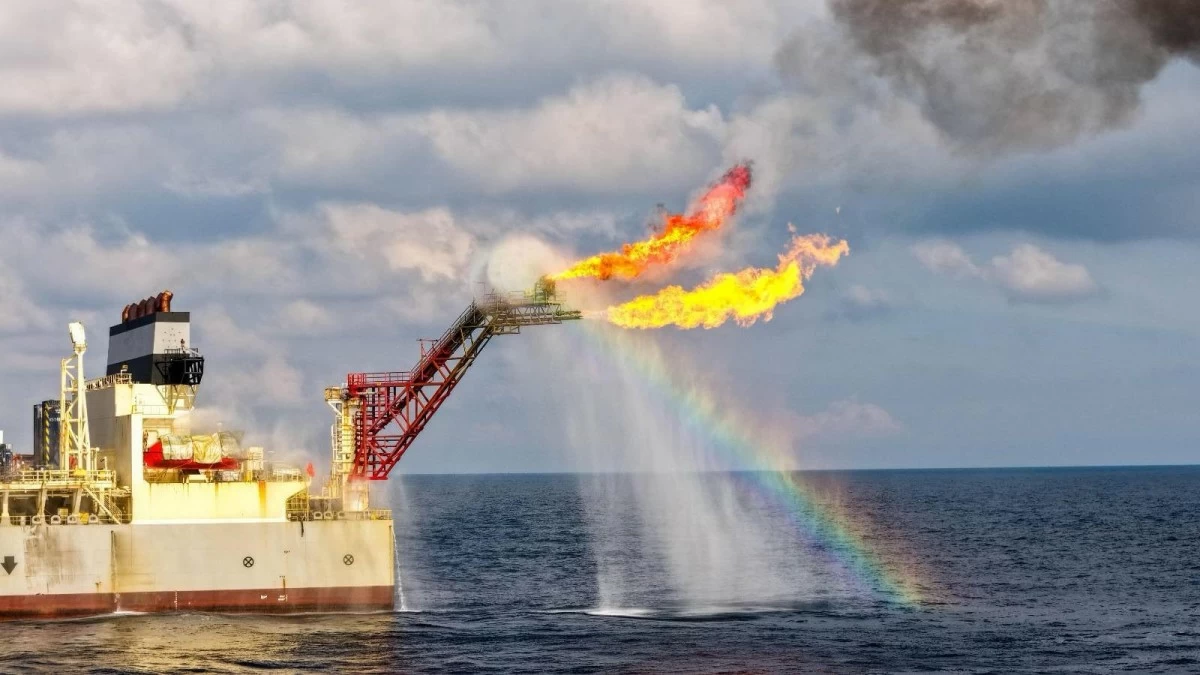
Photo shows the flaring operation off the coast of Palawan following the discovery of a new natural gas field at Malampaya East-1. (Prime Energy)
The Malampaya Phase 4 (MP4) project is advancing at a steady clip with subsea pipelaying and offshore construction activities now in full swing offshore Palawan, according to Prime Energy Resources Development NV.
In a statement on Tuesday, May 5, Prime Energy said that this development follows a successful drilling campaign under the government’s extension of Service Contract No. 38 (SC 38), which recently yielded two confirmed new gas resources intended to bolster the Philippines’ long-term energy security.
President Ferdinand Marcos previously confirmed the successful drilling and testing of the Malampaya East-1 well in January and the Camago-3 well in March, both of which are designated to sustain production levels from the Malampaya gas field.
Parallel to these drilling successes, subsea pipeline works have achieved substantial progress, marking the first instance since 2000 that offshore pipes are being installed in deep water within Philippine territory.
The offshore construction vessel Audacia has concluded the installation of the Malampaya East and Camago flowlines, which serve as the vital link connecting newly drilled wells to the existing Malampaya production system for the efficient transport of indigenous natural gas.
Complementing these efforts, the offshore construction vessel Fortitude has successfully installed critical subsea infrastructure, including flowline end terminations, foundations, and protective mattresses.
In a notable technical feat for the domestic energy industry, 30-meter piles were successfully driven into the seabed at a depth of approximately 1,100 meters using advanced hydraulic hammering technology.
Prime Energy, the operator of SC 38, noted that these recent milestones from drilling to subsea installation reflect the steady advancement of the project toward full system integration.
The operator emphasized that as offshore works progress, these developments ensure that newly discovered indigenous gas resources can be safely integrated into the existing infrastructure.
To further reinforce the subsea system, umbilicals (which are essential for power supply, communications, and hydraulic control) are slated for installation alongside the flowlines in the coming months.
The next major phase of the MP4 project involves commissioning and hook-up activities. This stage will encompass flowline pressure testing, nitrogen drying, and the installation of subsea jumpers to connect the Christmas trees on each well to the flowlines and the Malampaya Main Manifold.
The project remains on track to deliver its first gas by the fourth quarter of the year. Once fully operational, the MP4 expansion is expected to extend the productive life of the Malampaya field by an estimated six years, providing a critical cushion for the nation's power requirements. (Gabriell Christel Galang)

Related Tags

Prime Energy Resources Development Malampaya gas field
ADVERTISEMENT
.most-popular .layout-ratio{ padding-bottom: 79.13%; } @media (min-width: 768px) and (max-width: 1024px) { .widget-title { font-size: 15px !important; } }

{{ articles_filter_1561_widget.title }}

.most-popular .layout-ratio{ padding-bottom: 79.13%; } @media (min-width: 768px) and (max-width: 1024px) { .widget-title { font-size: 15px !important; } }

{{ articles_filter_1562_widget.title }}

.most-popular .layout-ratio{ padding-bottom: 79.13%; } @media (min-width: 768px) and (max-width: 1024px) { .widget-title { font-size: 15px !important; } }

{{ articles_filter_1563_widget.title }}

{{ articles_filter_1564_widget.title }}

.mb-article-details { position: relative; } .mb-article-details .article-body-preview, .mb-article-details .article-body-summary{ font-size: 17px; line-height: 30px; font-family: "Libre Caslon Text", serif; color: #000; } .mb-article-details .article-body-preview iframe , .mb-article-details .article-body-summary iframe{ width: 100%; margin: auto; } .read-more-background { background: linear-gradient(180deg, color(display-p3 1.000 1.000 1.000 / 0) 13.75%, color(display-p3 1.000 1.000 1.000 / 0.8) 30.79%, color(display-p3 1.000 1.000 1.000) 72.5%); position: absolute; height: 200px; width: 100%; bottom: 0; display: flex; justify-content: center; align-items: center; padding: 0; } .read-more-background a{ color: #000; } .read-more-btn { padding: 17px 45px; font-family: Inter; font-weight: 700; font-size: 18px; line-height: 16px; text-align: center; vertical-align: middle; border: 1px solid black; background-color: white; } .hidden { display: none; }
function initializeAllSwipers() { // Get all hidden inputs with cms_article_id document.querySelectorAll('[id^="cms_article_id_"]').forEach(function (input) { const cmsArticleId = input.value; const articleSelector = '#article-' + cmsArticleId + ' .body_images'; const swiperElement = document.querySelector(articleSelector); if (swiperElement && !swiperElement.classList.contains('swiper-initialized')) { new Swiper(articleSelector, { loop: true, pagination: false, navigation: { nextEl: '#article-' + cmsArticleId + ' .swiper-button-next', prevEl: '#article-' + cmsArticleId + ' .swiper-button-prev', }, }); } }); } setTimeout(initializeAllSwipers, 3000); const intersectionObserver = new IntersectionObserver( (entries) => { entries.forEach((entry) => { if (entry.isIntersecting) { const newUrl = entry.target.getAttribute("data-url"); if (newUrl) { history.pushState(null, null, newUrl); let article = entry.target; // Extract metadata const author = article.querySelector('.author-section').textContent.replace('By', '').trim(); const section = article.querySelector('.section-info ').textContent.replace(' ', ' '); const title = article.querySelector('.article-title h1').textContent; // Parse URL for Chartbeat path format const parsedUrl = new URL(newUrl, window.location.origin); const cleanUrl = parsedUrl.host + parsedUrl.pathname; // Update Chartbeat configuration if (typeof window._sf_async_config !== 'undefined') { window._sf_async_config.path = cleanUrl; window._sf_async_config.sections = section; window._sf_async_config.authors = author; } // Track virtual page view with Chartbeat if (typeof pSUPERFLY !== 'undefined' && typeof pSUPERFLY.virtualPage === 'function') { try { pSUPERFLY.virtualPage({ path: cleanUrl, title: title, sections: section, authors: author }); } catch (error) { console.error('ping error', error); } } // Optional: Update document title if (title && title !== document.title) { document.title = title; } } } }); }, { threshold: 0.1 } ); function showArticleBody(button) { const article = button.closest("article"); const summary = article.querySelector(".article-body-summary"); const body = article.querySelector(".article-body-preview"); const readMoreSection = article.querySelector(".read-more-background"); // Hide summary and read-more section summary.style.display = "none"; readMoreSection.style.display = "none"; // Show the full article body body.classList.remove("hidden"); } document.addEventListener("DOMContentLoaded", () => { let loadCount = 0; // Track how many times articles are loaded const offset = [1, 2, 3, 4, 5, 6, 7, 8, 9, 10]; // Offset values const currentUrl = window.location.pathname.substring(1); let isLoading = false; // Prevent multiple calls if (!currentUrl) { console.log("Current URL is invalid."); return; } const sentinel = document.getElementById("load-more-sentinel"); if (!sentinel) { console.log("Sentinel element not found."); return; } function isSentinelVisible() { const rect = sentinel.getBoundingClientRect(); return ( rect.top < window.innerHeight && rect.bottom >= 0 ); } function onScroll() { if (isLoading) return; if (isSentinelVisible()) { if (loadCount >= offset.length) { console.log("Maximum load attempts reached."); window.removeEventListener("scroll", onScroll); return; } isLoading = true; const currentOffset = offset[loadCount]; window.loadMoreItems().then(() => { let article = document.querySelector('#widget_1690 > div:nth-last-of-type(2) article'); intersectionObserver.observe(article) loadCount++; }).catch(error => { console.error("Error loading more items:", error); }).finally(() => { isLoading = false; }); } } window.addEventListener("scroll", onScroll); });

Sign up by email to receive news.