






Manila Bulletin
 Philippines
National
KALINGA bill gains economic managers' blessing in House hearing
Philippines
National
KALINGA bill gains economic managers' blessing in House hearing
Philippines
National
KALINGA bill gains economic managers' blessing in House hearing
KALINGA bill gains economic managers' blessing in House hearing
Published May 5, 2026 03:51 pm


At A Glance
- The proposed KALINGA Act, filed by Speaker Faustino Dy and Majority Leader Sandro Marcos, gains strong backing from economic managers during its first committee hearing.
- Agencies including DBM, DOF, DEPDev, and BSP support the measure, citing its role in cushioning the economy from fuel-driven inflation, ensuring energy security, and providing targeted assistance to vulnerable sectors.
- The bill establishes a whole-of-government emergency response framework, granting limited presidential powers and covering eight response areas to protect households, businesses, and the economy from global oil price shocks.
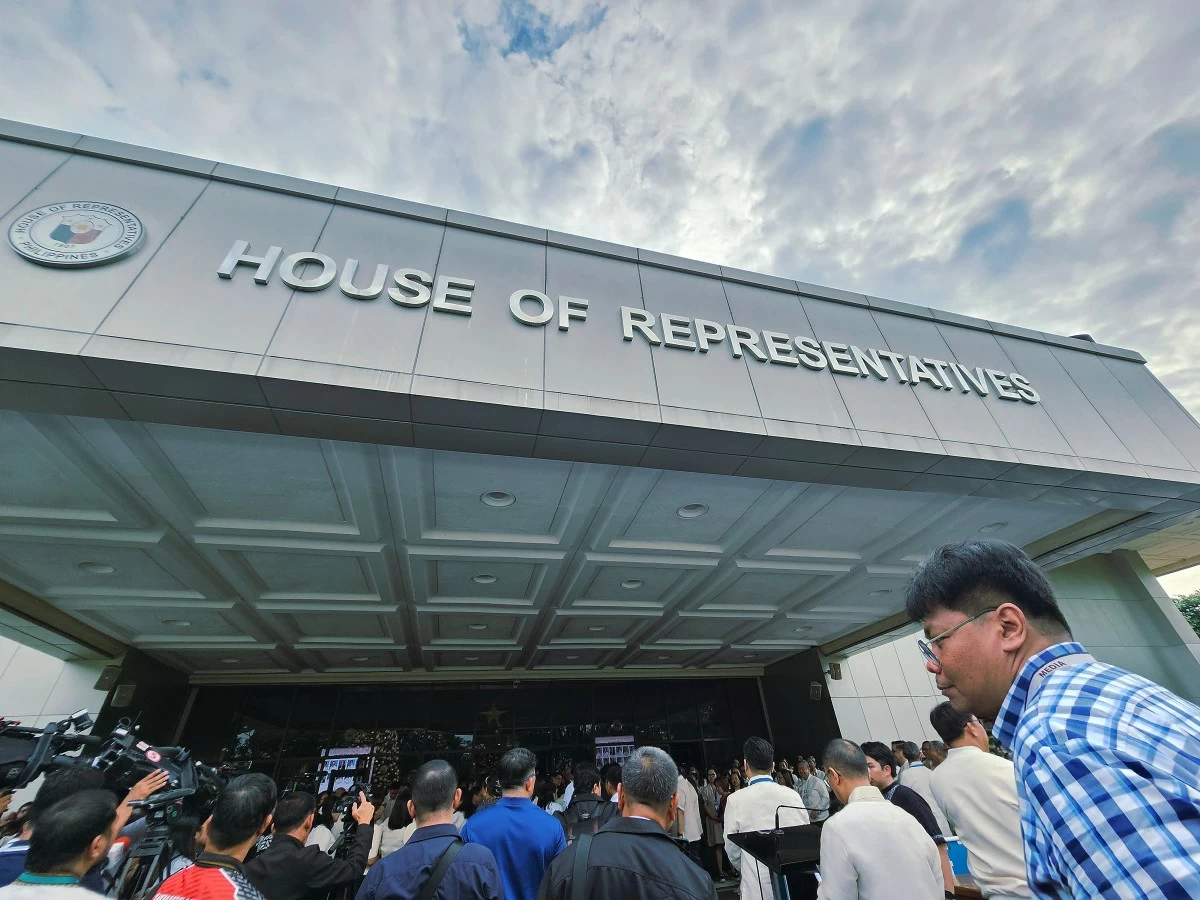
The House of Representatives (Ellson Quismorio/ MANILA BULLETIN)
The House of Representatives' proposed KALINGA Act received a big boost on Tuesday afternoon, May 5 after the country’s economic managers threw their support behind the fuel price crisis response measure.
The expressions of support were made during the first hearing of the House Ad Hoc Committee on Legislative Energy Action and Development (LEAD), chaired by Marikina City 2nd district Rep. Miro Quimbo.
Filed by House Speaker Isabela 6th district Rep. Faustino "Bojie" Dy and Majority Leader Ilocos Norte 1st district Rep. Sandro Marcos, House Bill (HB) No. 8834 sought to establish the KALINGA Program, or the Komprehensibong Alalay sa Livelihood, Inflation, Negosyo at Goods Assistance.
It is as a whole-of-government emergency response framework that ensures energy and essential goods supply security, delivers targeted and time-bound assistance to vulnerable sectors, and activates automatically once key crisis indicators are met.
Acting Budget Secretary Rolando Toledo said the Department of Budget and Management (DBM) supports the measure. He cited global disruptions, particularly Middle East tensions, which threaten energy security and drive up fuel costs.
“The DBM supports the proposed KALINGA bill, which aims to address the national emergency caused by global market disruption from conflict in the Middle East, with energy security at risk and rising fuel prices affecting vulnerable communities,” Toledo said.
He noted that the bill would grant the President limited emergency powers to ensure the continued delivery of essential services, protect livelihoods, and sustain economic activity, while establishing a coordinated framework for rapid resource mobilization and timely relief.
For its part, the Department of Finance (DOF) says the KALINGA bill would institutionalize a comprehensive emergency response framework similar to the Bayanihan laws, and allow the government to cushion the economy from fuel-driven inflation and supply shocks.
“The [DOF] supports the KALINGA Act, which seeks to institutionalize a comprehensive national emergency response framework to mitigate economic instability, much like the Bayanihan laws served as a state shield during the Covid-19 pandemic,” said Finance Undersecretary Karlo Fermin Adriano.
“The KALINGA Act functions as a safeguard against the cascading effects of fuel-driven inflation and energy supply disruptions,” he added, as he noted that the measure would enable targeted assistance to low-income families, farmers, and small businesses.
The Department of Economy, Planning, and Development (DEPDev), formerly the National Economic and Development Authority (NEDA), has also backed the bill, saying it would strengthen the government’s ability to respond decisively to the crisis.
“DEPDev generally supports the objectives and provisions of the draft bill, as we believe that it will fortify the executive’s authority and capacity to address the emergency situation,” said Undersecretary Joseph Capuno. He claimed that the measure would ensures close coordination between the executive and Congress.
The Bangko Sentral ng Pilipinas (BSP) likewise expressed support, while it emphasized the need to anchor interventions on fiscal discipline and accountability.
“The BSP generally supports the objectives of the KALINGA bill… [and] recognizes the bill’s intent to establish a coordinated whole-of-government framework that enables the timely and flexible deployment of policy measures in response to external shocks,” said BSP Department of Economic Research Director Dennis Bautista.
“The BSP further acknowledges the policy objective of strengthening the government’s capacity to manage inflationary pressures and supply disruptions… in a manner that supports macroeconomic stability and protects consumer welfare,” he added.
Economic managers agreed that the proposed KALINGA framework would allow the government to act swiftly, deploy targeted support, and stabilize the economy amid volatile global fuel markets.
The LEAD energy crisis body began as a 13-panel council that explored both short-term and long-term solutions to the elevated costs of fuel. On Monday, May 5, the expansive council was turned into an ad hoc committee through plenary action.
Full cooperation please
Quimbo reiterated Tuesday that Speaker Dy and Marcos' HB No. 8834 would serve as the central legislative framework of consolidated KALINGA measure.
“We are here to synthesize the findings from the briefings we conducted and to begin consolidating them into a single legislative response under the KALINGA bill already
filed by Speaker Bojie Dy and Majority Leader Marcos," Quimbo said.
"The proposals before us today serve as a framework for discussion. They reflect the concerns raised in prior hearings, the recommendations submitted to this ad hoc
Committee, and the initial policy directions that may be pursued through a substitute bill,” he said.
“The challenge is to work on this bill thoroughly, grounding it in real-life experience, but to do so swiftly, delivering relief as soon as possible and initiate systemic changes,” the economist-solon noted.
The proposed framework covers eight response areas: household protection, food security, public transport, micro, small and medium enterprise support, overseas Filipino worker (OFW) protection, energy supply, supply chain continuity and temporary fiscal and regulatory measures.
These pillars are meant to allow government to deliver targeted assistance, subsidies, vouchers and tax relief, while also preparing reforms that can reduce the country’s exposure to imported fuel and repeated global price swings.
“To our agencies, we ask for your full cooperation. Tell us what can be implemented immediately. Tell us where the operational bottlenecks are. We ask that you ground your
assessment in real-world experience and be a partner in crafting this bill," Quimbo said.
“Sa huli, ang layunin ng KALINGA Program ay protektahan ang sambayanang Pilipino, patatagin ang ekonomiya, at tiyakin na sa susunod na pagyanig ng pandaigdigang
presyo ng langis, mas matatag na tayo,” he further said.
(In the end, the goal of the KALINGA Program is to protect the Filipino people, strengthen the economy, and ensure that when the next global oil price shock comes, we are more resilient.)