ADVERTISEMENT

Guia launches AI-powered education platform, debuts college entrance exam prep tool

Published May 5, 2026 09:17 am
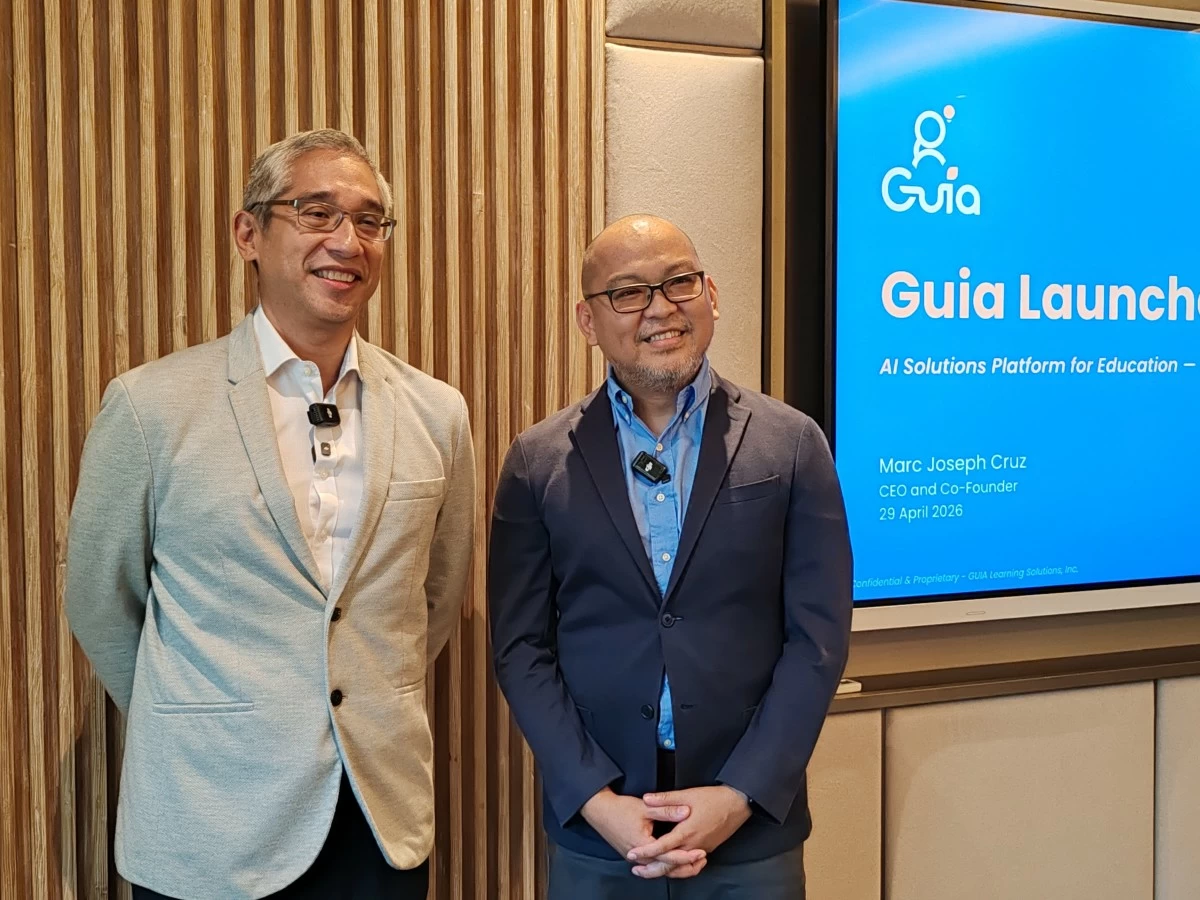
Guia CEO Marc Joseph Cruz (right) and co-founder Simon Villalon (left) during the press launch.
Guia Learning Solutions, Inc. (Guia) has officially launched its AI-driven education platform, beginning with a solution designed to help senior high school students prepare for college entrance examinations.
As graduation season approaches, students across the country are preparing for highly competitive entrance exams required by leading universities such as the University of the Philippines, Ateneo de Manila University, De La Salle University, and University of Santo Tomas. With thousands of applicants competing for limited slots, the pressure to perform well continues to intensify.
For many students, preparation remains a challenge. Some feel underprepared, while others are unsure where to begin. Traditional review centers, though widely used, can be costly and are often concentrated in major cities, making access difficult for many.
Guia aims to address these gaps through a fully digital, AI-powered platform that enables students to prepare anytime, anywhere. The platform features more than 5,000 teacher-validated questions across key subjects, including Mathematics, Science, Reading Comprehension, Language Proficiency, and Abstract Reasoning, making it one of the most comprehensive test banks available for college entrance exam preparation.
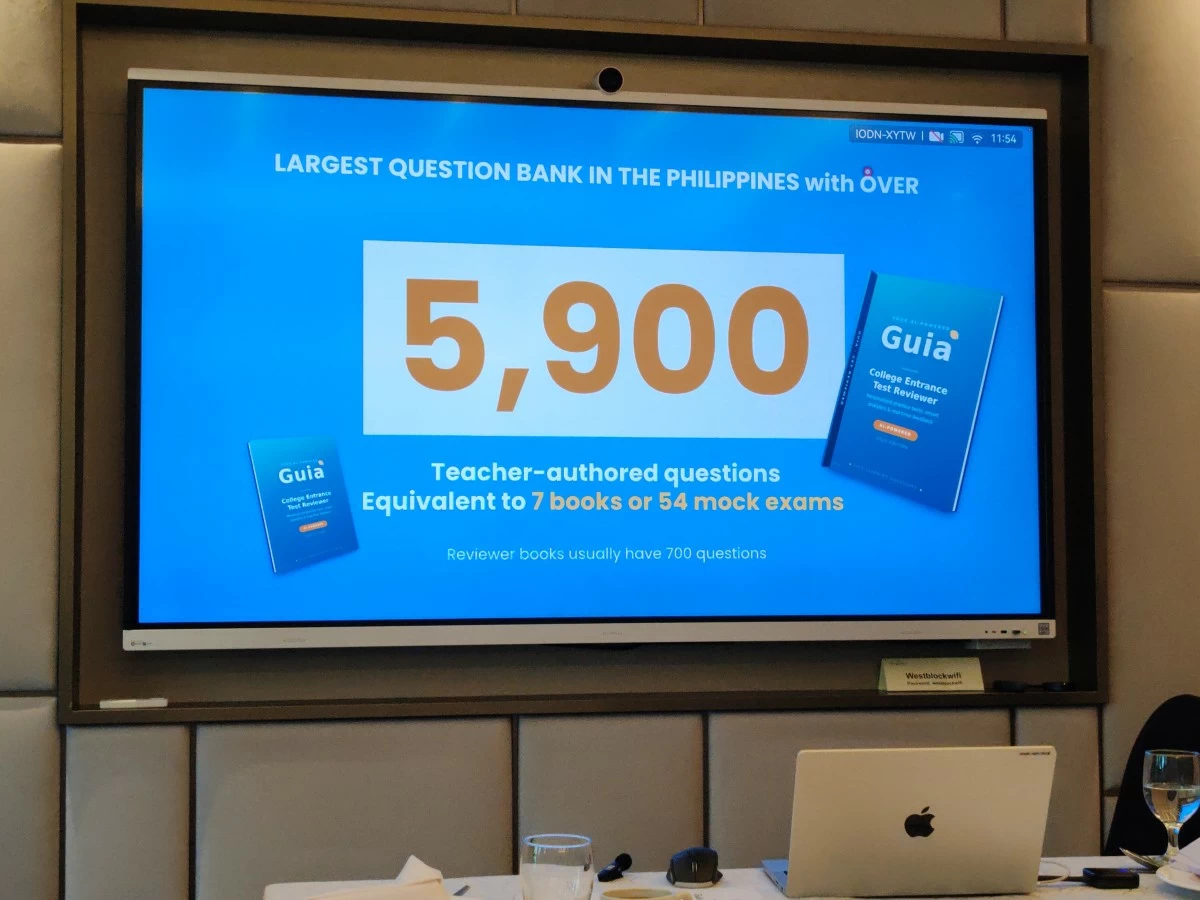
The platform features 5,000+ teacher-validated questions, AI-powered personalized study plans, and fully digital access.
During a press conference in Makati City last Wednesday, Guia CEO Marc Joseph Cruz highlighted the platform’s core advantage. “The moment a student completes a mock exam, Guia generates a personalized study plan and a detailed results breakdown showing exactly how he/she performed across each subject—strengths, areas for improvement, and a clear day-by-day plan for what to study next. Because Guia is fully digital, students can access the platform from any device, from anywhere—no commute, no travel cost, no geographic limitation.”
Guia is built on a responsible AI framework, where all content is developed and validated by educators. This ensures that while artificial intelligence powers personalization and analytics, human expertise remains central to the learning experience.
Early pilot programs have shown promising results. Students using Guia improved their subject proficiency by up to 85% in Mathematics, 83% in Language Proficiency, 56% in Reading Comprehension, and 54% in Science—indicating stronger readiness and confidence ahead of exams.
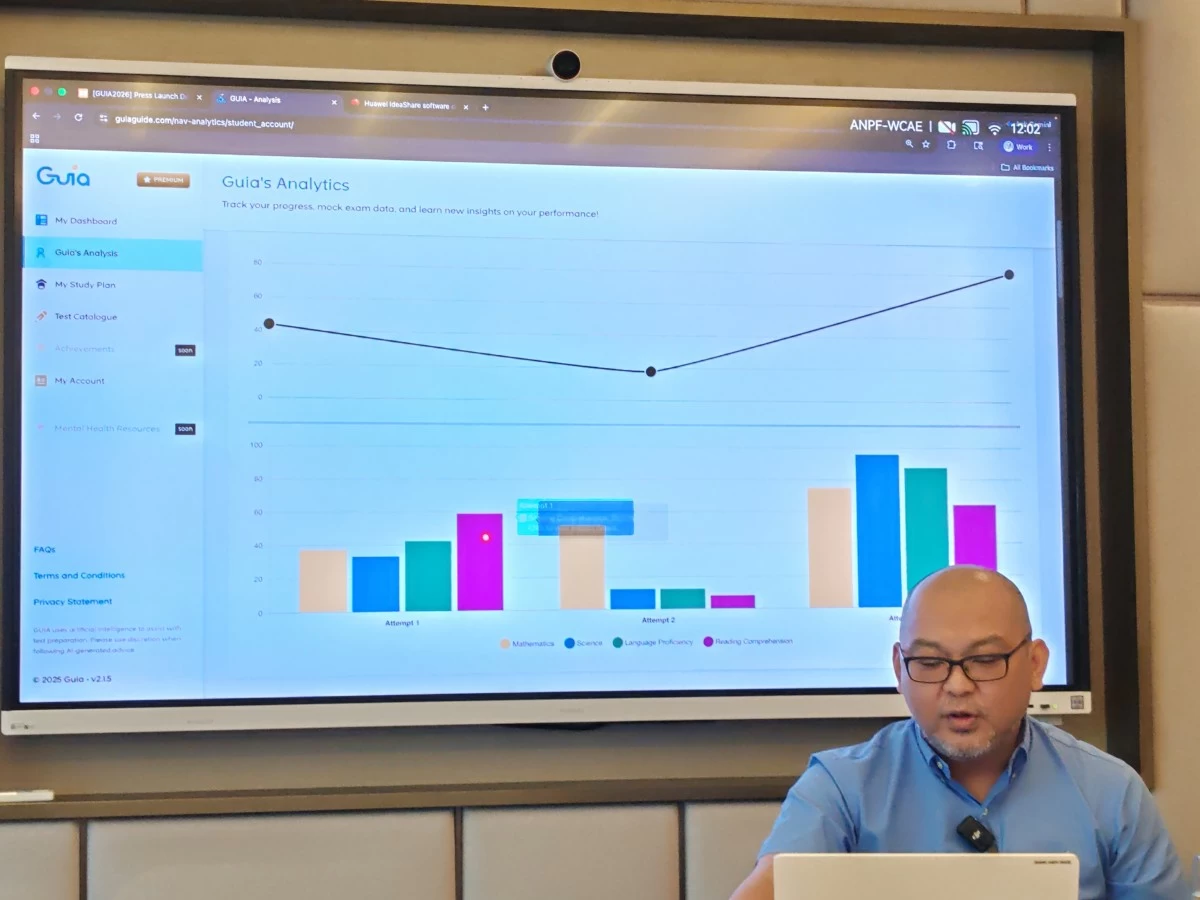
Cruz shows a part of the platform's analytics interface.
Beyond individual users, Guia is also working with schools through its College Entrance Test Readiness Pilot Program. The initiative provides institutions with tools and support to maximize the platform’s benefits. “We organize pilot programs with schools and provide support to help students and teachers get the most out of the platform. We see schools as essential partners in this mission,” Cruz added. Interested institutions may inquire via email at [email protected].
For partner schools, Guia also delivers cohort-level analytics and actionable insights, helping educators identify learning gaps, assess performance trends, and design targeted interventions based on real student data.
The platform’s development is rooted in a shared concern among Filipino families: helping students navigate one of the most competitive stages of their academic journey. Built by a team of technologists, AI practitioners, and educators, and co-developed with students, Guia focuses on addressing a key gap in exam preparation: clarity.
“We didn’t set out to build just another review platform,” says Simon Villalon, Guia Co-Founder. “We focused on a simple but important gap — helping students understand where they stand, so they can prepare with clarity and direction.”
Creating a Guia account is free, with access to selected practice tests and a limited number of mock exams. A premium subscription unlocks unlimited mock exams, the full test bank, and continuously updated personalized study plans.
To celebrate its launch, Guia is offering a limited-time promotion of 30% off all paid plans until December 31, 2026. The Premium Plan is available for as low as ₱875 per month (billed annually). Students can register and activate their accounts at guiaguide.com using the promo code GuiaLaunch30.

Related Tags

Guia Guia Learning Solutions AI learning education
ADVERTISEMENT
.most-popular .layout-ratio{ padding-bottom: 79.13%; } @media (min-width: 768px) and (max-width: 1024px) { .widget-title { font-size: 15px !important; } }

{{ articles_filter_1561_widget.title }}

.most-popular .layout-ratio{ padding-bottom: 79.13%; } @media (min-width: 768px) and (max-width: 1024px) { .widget-title { font-size: 15px !important; } }

{{ articles_filter_1562_widget.title }}

.most-popular .layout-ratio{ padding-bottom: 79.13%; } @media (min-width: 768px) and (max-width: 1024px) { .widget-title { font-size: 15px !important; } }

{{ articles_filter_1563_widget.title }}

{{ articles_filter_1564_widget.title }}

.mb-article-details { position: relative; } .mb-article-details .article-body-preview, .mb-article-details .article-body-summary{ font-size: 17px; line-height: 30px; font-family: "Libre Caslon Text", serif; color: #000; } .mb-article-details .article-body-preview iframe , .mb-article-details .article-body-summary iframe{ width: 100%; margin: auto; } .read-more-background { background: linear-gradient(180deg, color(display-p3 1.000 1.000 1.000 / 0) 13.75%, color(display-p3 1.000 1.000 1.000 / 0.8) 30.79%, color(display-p3 1.000 1.000 1.000) 72.5%); position: absolute; height: 200px; width: 100%; bottom: 0; display: flex; justify-content: center; align-items: center; padding: 0; } .read-more-background a{ color: #000; } .read-more-btn { padding: 17px 45px; font-family: Inter; font-weight: 700; font-size: 18px; line-height: 16px; text-align: center; vertical-align: middle; border: 1px solid black; background-color: white; } .hidden { display: none; }
function initializeAllSwipers() { // Get all hidden inputs with cms_article_id document.querySelectorAll('[id^="cms_article_id_"]').forEach(function (input) { const cmsArticleId = input.value; const articleSelector = '#article-' + cmsArticleId + ' .body_images'; const swiperElement = document.querySelector(articleSelector); if (swiperElement && !swiperElement.classList.contains('swiper-initialized')) { new Swiper(articleSelector, { loop: true, pagination: false, navigation: { nextEl: '#article-' + cmsArticleId + ' .swiper-button-next', prevEl: '#article-' + cmsArticleId + ' .swiper-button-prev', }, }); } }); } setTimeout(initializeAllSwipers, 3000); const intersectionObserver = new IntersectionObserver( (entries) => { entries.forEach((entry) => { if (entry.isIntersecting) { const newUrl = entry.target.getAttribute("data-url"); if (newUrl) { history.pushState(null, null, newUrl); let article = entry.target; // Extract metadata const author = article.querySelector('.author-section').textContent.replace('By', '').trim(); const section = article.querySelector('.section-info ').textContent.replace(' ', ' '); const title = article.querySelector('.article-title h1').textContent; // Parse URL for Chartbeat path format const parsedUrl = new URL(newUrl, window.location.origin); const cleanUrl = parsedUrl.host + parsedUrl.pathname; // Update Chartbeat configuration if (typeof window._sf_async_config !== 'undefined') { window._sf_async_config.path = cleanUrl; window._sf_async_config.sections = section; window._sf_async_config.authors = author; } // Track virtual page view with Chartbeat if (typeof pSUPERFLY !== 'undefined' && typeof pSUPERFLY.virtualPage === 'function') { try { pSUPERFLY.virtualPage({ path: cleanUrl, title: title, sections: section, authors: author }); } catch (error) { console.error('ping error', error); } } // Optional: Update document title if (title && title !== document.title) { document.title = title; } } } }); }, { threshold: 0.1 } ); function showArticleBody(button) { const article = button.closest("article"); const summary = article.querySelector(".article-body-summary"); const body = article.querySelector(".article-body-preview"); const readMoreSection = article.querySelector(".read-more-background"); // Hide summary and read-more section summary.style.display = "none"; readMoreSection.style.display = "none"; // Show the full article body body.classList.remove("hidden"); } document.addEventListener("DOMContentLoaded", () => { let loadCount = 0; // Track how many times articles are loaded const offset = [1, 2, 3, 4, 5, 6, 7, 8, 9, 10]; // Offset values const currentUrl = window.location.pathname.substring(1); let isLoading = false; // Prevent multiple calls if (!currentUrl) { console.log("Current URL is invalid."); return; } const sentinel = document.getElementById("load-more-sentinel"); if (!sentinel) { console.log("Sentinel element not found."); return; } function isSentinelVisible() { const rect = sentinel.getBoundingClientRect(); return ( rect.top < window.innerHeight && rect.bottom >= 0 ); } function onScroll() { if (isLoading) return; if (isSentinelVisible()) { if (loadCount >= offset.length) { console.log("Maximum load attempts reached."); window.removeEventListener("scroll", onScroll); return; } isLoading = true; const currentOffset = offset[loadCount]; window.loadMoreItems().then(() => { let article = document.querySelector('#widget_1690 > div:nth-last-of-type(2) article'); intersectionObserver.observe(article) loadCount++; }).catch(error => { console.error("Error loading more items:", error); }).finally(() => { isLoading = false; }); } } window.addEventListener("scroll", onScroll); });

Sign up by email to receive news.