ADVERTISEMENT

From conflict to community: Making rebel reintegration work

Published May 5, 2026 12:05 am  |  Updated May 4, 2026 06:21 pm
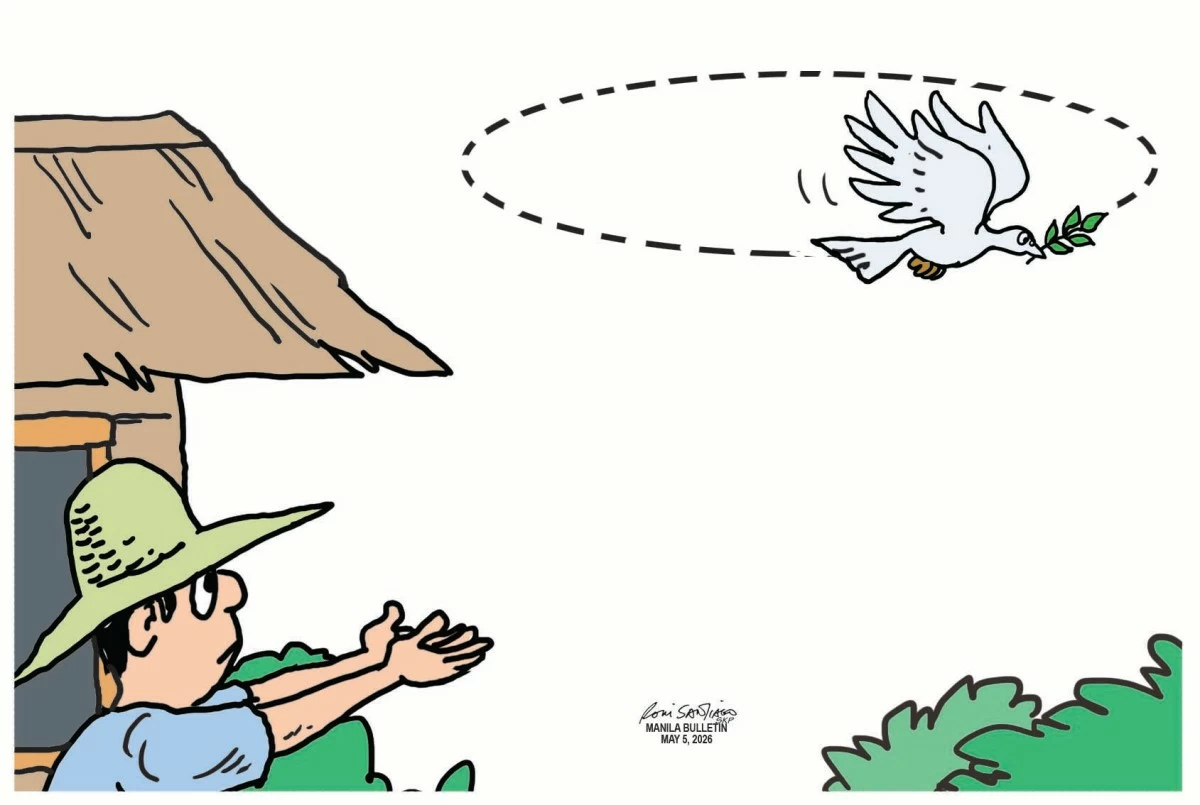
The policy direction articulated by newly appointed Presidential Peace Adviser Mel Senen Sarmiento — anchored on a holistic, civilian-led approach to localized peace engagements and the total reintegration of former rebels — marks a significant recalibration in the country’s long-running quest for peace.
It signals a shift from predominantly security-driven responses toward a more community-centered framework that recognizes the deeply rooted socio-economic and political dimensions of insurgency. On closer analysis, it takes into account Defense Secretary Gilberto Teodoro, Jr.’s assertion on the government’s determination to scuttle “criminal activities” of insurgent organizations.
At its core, the approach acknowledges a simple but often overlooked truth. Armed conflict persists not merely because of ideology, but because of exclusion, poverty, and broken trust between the state and marginalized communities. By placing civilians —local government units, civil society organizations, faith-based groups, and community leaders —at the forefront, the initiative seeks to rebuild that trust from the ground up. This is a welcome and necessary evolution.
Localized peace engagements offer distinct advantages. They allow solutions to be tailored to the unique conditions of each community, avoiding the pitfalls of one-size-fits-all national programs. They also empower local stakeholders, who are often best positioned to understand the grievances and aspirations of their constituents. When former members of the CPP-NPA-NDF are engaged not as enemies but as partners in rebuilding their communities, the prospects for lasting peace improve significantly.
However, the success of this policy hinges on execution. Reintegration is not a one-off event; it is a long-term process that requires sustained support. Former rebels must be provided not only with immediate assistance — such as livelihood packages and financial aid — but also with access to education, healthcare, psychosocial services, and meaningful employment. Without these, the risk of recidivism remains high.
Equally critical is the need to address the concerns of host communities. Reintegration can only succeed if communities are prepared to accept returnees. This requires dialogue, confidence-building measures, and mechanisms for restorative justice where appropriate. Peace cannot be imposed; it must be nurtured through mutual understanding and shared responsibility.
To translate this vision into tangible outcomes, an integrated approach is imperative.
First, institutionalize a whole-of-government, whole-of-society framework. National agencies must align their programs with local peace plans, while civil society and the private sector should be actively engaged in providing resources, expertise, and opportunities for reintegration.
Second, establish community-based reintegration hubs. These hubs can serve as one-stop centers offering skills training, counseling, legal assistance, and access to government services. Managed jointly by LGUs and civil society, they can ensure continuity and accountability.
Third, implement sustainable livelihood ecosystems. Beyond short-term aid, former rebels should be integrated into local value chains consisting of agriculture, micro-enterprises, and cooperatives that are supported by access to credit, markets, and technology. The private sector’s participation here is crucial.
Fourth, strengthen peace education and social cohesion programs. Schools, religious institutions, and community organizations must promote narratives of reconciliation, shared identity, and nation-building.
Fifth, ensure robust monitoring and evaluation. Transparent metrics, such as tracking employment, community acceptance, and recidivism rates, should guide policy adjustments and build public confidence.
Finally, anchor all efforts on good governance and development delivery. Roads, schools, health facilities, and digital connectivity must reach conflict-affected areas. Peace dividends must be visible and felt.
While the policy direction is both timely and promising, its ultimate test lies not in its intent, but in its ability to transform former battlefields into thriving communities. Peace, after all, is not merely the absence of war. It is the presence of opportunity, dignity, and hope.

Related Tags

Editorial presidential peace advisor mel sarmiento rebel peace
ADVERTISEMENT
.most-popular .layout-ratio{ padding-bottom: 79.13%; } @media (min-width: 768px) and (max-width: 1024px) { .widget-title { font-size: 15px !important; } }

{{ articles_filter_1561_widget.title }}

.most-popular .layout-ratio{ padding-bottom: 79.13%; } @media (min-width: 768px) and (max-width: 1024px) { .widget-title { font-size: 15px !important; } }

{{ articles_filter_1562_widget.title }}

.most-popular .layout-ratio{ padding-bottom: 79.13%; } @media (min-width: 768px) and (max-width: 1024px) { .widget-title { font-size: 15px !important; } }

{{ articles_filter_1563_widget.title }}

{{ articles_filter_1564_widget.title }}

.mb-article-details { position: relative; } .mb-article-details .article-body-preview, .mb-article-details .article-body-summary{ font-size: 17px; line-height: 30px; font-family: "Libre Caslon Text", serif; color: #000; } .mb-article-details .article-body-preview iframe , .mb-article-details .article-body-summary iframe{ width: 100%; margin: auto; } .read-more-background { background: linear-gradient(180deg, color(display-p3 1.000 1.000 1.000 / 0) 13.75%, color(display-p3 1.000 1.000 1.000 / 0.8) 30.79%, color(display-p3 1.000 1.000 1.000) 72.5%); position: absolute; height: 200px; width: 100%; bottom: 0; display: flex; justify-content: center; align-items: center; padding: 0; } .read-more-background a{ color: #000; } .read-more-btn { padding: 17px 45px; font-family: Inter; font-weight: 700; font-size: 18px; line-height: 16px; text-align: center; vertical-align: middle; border: 1px solid black; background-color: white; } .hidden { display: none; }
function initializeAllSwipers() { // Get all hidden inputs with cms_article_id document.querySelectorAll('[id^="cms_article_id_"]').forEach(function (input) { const cmsArticleId = input.value; const articleSelector = '#article-' + cmsArticleId + ' .body_images'; const swiperElement = document.querySelector(articleSelector); if (swiperElement && !swiperElement.classList.contains('swiper-initialized')) { new Swiper(articleSelector, { loop: true, pagination: false, navigation: { nextEl: '#article-' + cmsArticleId + ' .swiper-button-next', prevEl: '#article-' + cmsArticleId + ' .swiper-button-prev', }, }); } }); } setTimeout(initializeAllSwipers, 3000); const intersectionObserver = new IntersectionObserver( (entries) => { entries.forEach((entry) => { if (entry.isIntersecting) { const newUrl = entry.target.getAttribute("data-url"); if (newUrl) { history.pushState(null, null, newUrl); let article = entry.target; // Extract metadata const author = article.querySelector('.author-section').textContent.replace('By', '').trim(); const section = article.querySelector('.section-info ').textContent.replace(' ', ' '); const title = article.querySelector('.article-title h1').textContent; // Parse URL for Chartbeat path format const parsedUrl = new URL(newUrl, window.location.origin); const cleanUrl = parsedUrl.host + parsedUrl.pathname; // Update Chartbeat configuration if (typeof window._sf_async_config !== 'undefined') { window._sf_async_config.path = cleanUrl; window._sf_async_config.sections = section; window._sf_async_config.authors = author; } // Track virtual page view with Chartbeat if (typeof pSUPERFLY !== 'undefined' && typeof pSUPERFLY.virtualPage === 'function') { try { pSUPERFLY.virtualPage({ path: cleanUrl, title: title, sections: section, authors: author }); } catch (error) { console.error('ping error', error); } } // Optional: Update document title if (title && title !== document.title) { document.title = title; } } } }); }, { threshold: 0.1 } ); function showArticleBody(button) { const article = button.closest("article"); const summary = article.querySelector(".article-body-summary"); const body = article.querySelector(".article-body-preview"); const readMoreSection = article.querySelector(".read-more-background"); // Hide summary and read-more section summary.style.display = "none"; readMoreSection.style.display = "none"; // Show the full article body body.classList.remove("hidden"); } document.addEventListener("DOMContentLoaded", () => { let loadCount = 0; // Track how many times articles are loaded const offset = [1, 2, 3, 4, 5, 6, 7, 8, 9, 10]; // Offset values const currentUrl = window.location.pathname.substring(1); let isLoading = false; // Prevent multiple calls if (!currentUrl) { console.log("Current URL is invalid."); return; } const sentinel = document.getElementById("load-more-sentinel"); if (!sentinel) { console.log("Sentinel element not found."); return; } function isSentinelVisible() { const rect = sentinel.getBoundingClientRect(); return ( rect.top < window.innerHeight && rect.bottom >= 0 ); } function onScroll() { if (isLoading) return; if (isSentinelVisible()) { if (loadCount >= offset.length) { console.log("Maximum load attempts reached."); window.removeEventListener("scroll", onScroll); return; } isLoading = true; const currentOffset = offset[loadCount]; window.loadMoreItems().then(() => { let article = document.querySelector('#widget_1690 > div:nth-last-of-type(2) article'); intersectionObserver.observe(article) loadCount++; }).catch(error => { console.error("Error loading more items:", error); }).finally(() => { isLoading = false; }); } } window.addEventListener("scroll", onScroll); });

Sign up by email to receive news.