

ADVERTISEMENT

DepEd's summer remediation program to support 2.7 M learners in math, reading

Published May 5, 2026 05:45 pm

At A Glance

  • Around 2.7 million learners from Grades 2 to 11 are expected to benefit from the Department of Education's (DepEd) 2026 Summer Remediation Programs (SRP) nationwide, with focused support in reading and mathematics.
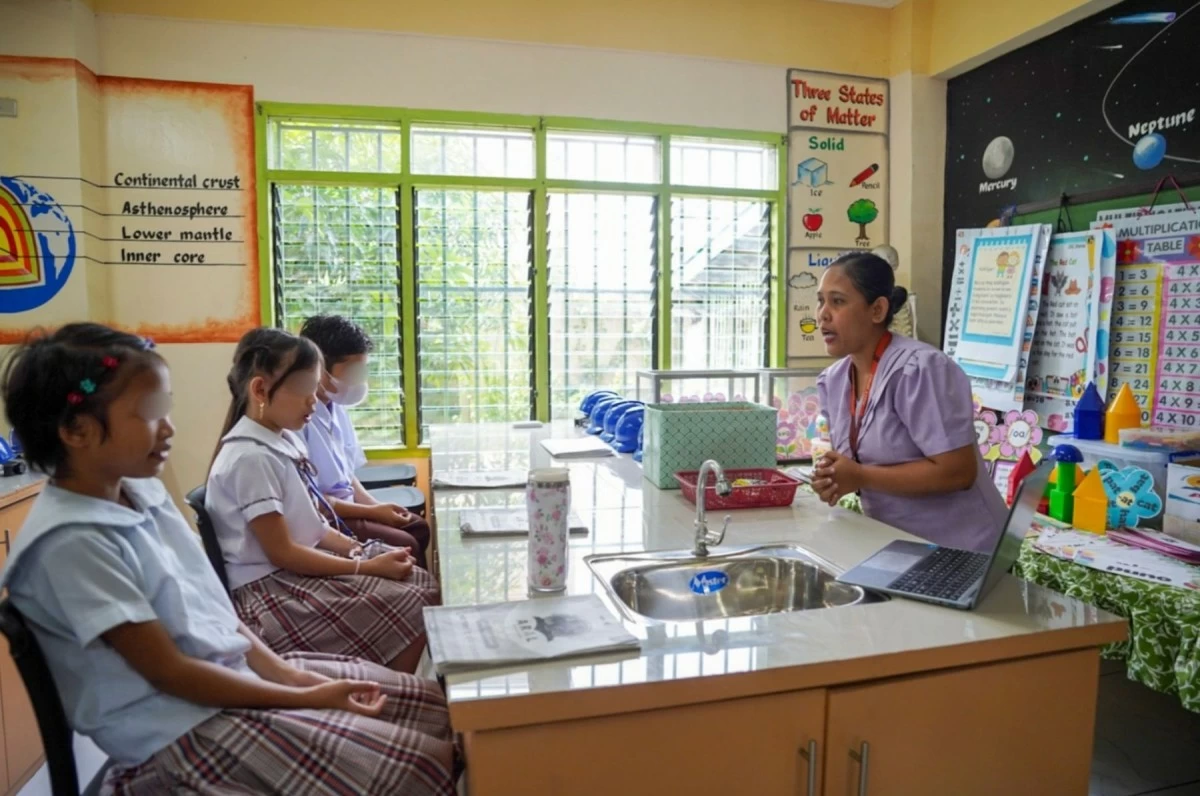
Around 2.7 million learners from Grades 2 to 11 are expected to benefit from the Department of Education's (DepEd) 2026 Summer Remediation Programs (SRP) nationwide, with focused support in reading and mathematics.
(DepEd photo)
(DepEd photo)
DepEd Secretary Sonny Angara highlighted the vital role of teachers and tutors in helping struggling learners gain grade-level proficiency as it officially kicks off from May 6 to June 2, 2026. The initiative comes as DepEd is working to sustain gains in learning recovery and address remaining gaps in foundational skills, in line with the directive of President Marcos to prioritize learning recovery.
Central to this effort is the Academic Recovery and Accessible Learning (ARAL) Program, one of the key components of the SRP, which delivers structured, targeted interventions through a network of tutors composed of teachers, para-teachers, pre-service teachers, and qualified volunteers. Alongside ARAL, other school-based remediation efforts are being implemented to respond to learner needs more directly.
“Sa bawat batang umaangat, may mga guro at tutor na nagtitiyaga at naglalaan ng oras. Kinikilala natin ang sakripisyong ito. Kaya kasabay ng SRP at ARAL ay ang patuloy na pagtiyak na ang ating mga guro at tutors ay suportado, nirerespeto, at inaalagaan (For every child who rises, there are teachers and tutors who persevere and devote their time. We recognize this sacrifice. That is why, alongside SRP and ARAL, we continue to ensure that our teachers and tutors are supported, respected, and cared for),” Angara said.
“Sa pamamagitan ng SRP at ARAL, at ng tulong ng ating mga guro at tutors, masisiguro natin ang tuloy-tuloy na pag-unlad ng bawat mag-aaral hanggang sa makamit ang grade-level proficiency (Through SRP and ARAL, and with the help of our teachers and tutors, we can ensure the continuous progress of every learner until they achieve grade-level proficiency),” he added.
Across communities, teachers and tutors have become key partners in supporting learners’ progress.
For Sangguniang Kabataan Chairman CJ Gaoat from Ilocos Sur, volunteering as an ARAL tutor was a way to extend support within her community. “When my high school teachers contacted me, I realized that learners need guidance not only from our teachers, but also from us — those who can extend help,” she shared.
In Tacurong City, Sultan Kudarat, ARAL tutor Mie Camasura emphasized the importance of patience and presence. “When you step in as a tutor, you aren’t just teaching ABCs. You’re pulling up a chair and telling a child that they aren’t slow; they just need someone to listen.”
Master Teacher Elsie Apigo from San Fernando, La Union highlighted the importance of mentorship in strengthening the program, noting, “I make sure to provide technical assistance to ARAL tutors by sharing innovative teaching strategies to encourage fun and engaging ARAL sessions. I always tell them that the ARAL program is an apt venue for them to grow professionally.”
For aspiring teacher Mark Sumatra, ARAL serves as a meaningful entry point into the profession.
“It’s a big help for us teacher applicants because it serves as a proper and formal way to hone and mold us as tutors while helping learners improve,” he said.
The program builds on end-of-year results showing that 4.5 million learners improved in literacy and numeracy, reducing the number of struggling learners from 6.7 million to 2.2 million, based on end-of-school-year assessments.
At the same time, DepEd noted that challenges remain, including sustaining progress at the secondary level and addressing persistent difficulties in mathematics and higher-order skills such as analysis and application.
The learning recovery initiative is aligned with Sec. Angara’s broader policy and legislative efforts to strengthen foundational education. Having helped author Republic Act No. 12028 or the ARAL Program Act as a senator, he signed its Implementing Rules and Regulations (IRR) in December 2024 in his capacity as DepEd Secretary, turning policy into direct support for learners.
DepEd emphasized that learning recovery requires sustained and collective effort, with ARAL and the SRP working together to ensure that early improvements translate into lasting learning outcomes across the system.d

Related Tags

Department of Education academic recovery Secretary Sonny Angara Summer
ADVERTISEMENT
.most-popular .layout-ratio{ padding-bottom: 79.13%; } @media (min-width: 768px) and (max-width: 1024px) { .widget-title { font-size: 15px !important; } }

{{ articles_filter_1561_widget.title }}

.most-popular .layout-ratio{ padding-bottom: 79.13%; } @media (min-width: 768px) and (max-width: 1024px) { .widget-title { font-size: 15px !important; } }

{{ articles_filter_1562_widget.title }}

.most-popular .layout-ratio{ padding-bottom: 79.13%; } @media (min-width: 768px) and (max-width: 1024px) { .widget-title { font-size: 15px !important; } }

{{ articles_filter_1563_widget.title }}

{{ articles_filter_1564_widget.title }}

.mb-article-details { position: relative; } .mb-article-details .article-body-preview, .mb-article-details .article-body-summary{ font-size: 17px; line-height: 30px; font-family: "Libre Caslon Text", serif; color: #000; } .mb-article-details .article-body-preview iframe , .mb-article-details .article-body-summary iframe{ width: 100%; margin: auto; } .read-more-background { background: linear-gradient(180deg, color(display-p3 1.000 1.000 1.000 / 0) 13.75%, color(display-p3 1.000 1.000 1.000 / 0.8) 30.79%, color(display-p3 1.000 1.000 1.000) 72.5%); position: absolute; height: 200px; width: 100%; bottom: 0; display: flex; justify-content: center; align-items: center; padding: 0; } .read-more-background a{ color: #000; } .read-more-btn { padding: 17px 45px; font-family: Inter; font-weight: 700; font-size: 18px; line-height: 16px; text-align: center; vertical-align: middle; border: 1px solid black; background-color: white; } .hidden { display: none; }
function initializeAllSwipers() { // Get all hidden inputs with cms_article_id document.querySelectorAll('[id^="cms_article_id_"]').forEach(function (input) { const cmsArticleId = input.value; const articleSelector = '#article-' + cmsArticleId + ' .body_images'; const swiperElement = document.querySelector(articleSelector); if (swiperElement && !swiperElement.classList.contains('swiper-initialized')) { new Swiper(articleSelector, { loop: true, pagination: false, navigation: { nextEl: '#article-' + cmsArticleId + ' .swiper-button-next', prevEl: '#article-' + cmsArticleId + ' .swiper-button-prev', }, }); } }); } setTimeout(initializeAllSwipers, 3000); const intersectionObserver = new IntersectionObserver( (entries) => { entries.forEach((entry) => { if (entry.isIntersecting) { const newUrl = entry.target.getAttribute("data-url"); if (newUrl) { history.pushState(null, null, newUrl); let article = entry.target; // Extract metadata const author = article.querySelector('.author-section').textContent.replace('By', '').trim(); const section = article.querySelector('.section-info ').textContent.replace(' ', ' '); const title = article.querySelector('.article-title h1').textContent; // Parse URL for Chartbeat path format const parsedUrl = new URL(newUrl, window.location.origin); const cleanUrl = parsedUrl.host + parsedUrl.pathname; // Update Chartbeat configuration if (typeof window._sf_async_config !== 'undefined') { window._sf_async_config.path = cleanUrl; window._sf_async_config.sections = section; window._sf_async_config.authors = author; } // Track virtual page view with Chartbeat if (typeof pSUPERFLY !== 'undefined' && typeof pSUPERFLY.virtualPage === 'function') { try { pSUPERFLY.virtualPage({ path: cleanUrl, title: title, sections: section, authors: author }); } catch (error) { console.error('ping error', error); } } // Optional: Update document title if (title && title !== document.title) { document.title = title; } } } }); }, { threshold: 0.1 } ); function showArticleBody(button) { const article = button.closest("article"); const summary = article.querySelector(".article-body-summary"); const body = article.querySelector(".article-body-preview"); const readMoreSection = article.querySelector(".read-more-background"); // Hide summary and read-more section summary.style.display = "none"; readMoreSection.style.display = "none"; // Show the full article body body.classList.remove("hidden"); } document.addEventListener("DOMContentLoaded", () => { let loadCount = 0; // Track how many times articles are loaded const offset = [1, 2, 3, 4, 5, 6, 7, 8, 9, 10]; // Offset values const currentUrl = window.location.pathname.substring(1); let isLoading = false; // Prevent multiple calls if (!currentUrl) { console.log("Current URL is invalid."); return; } const sentinel = document.getElementById("load-more-sentinel"); if (!sentinel) { console.log("Sentinel element not found."); return; } function isSentinelVisible() { const rect = sentinel.getBoundingClientRect(); return ( rect.top < window.innerHeight && rect.bottom >= 0 ); } function onScroll() { if (isLoading) return; if (isSentinelVisible()) { if (loadCount >= offset.length) { console.log("Maximum load attempts reached."); window.removeEventListener("scroll", onScroll); return; } isLoading = true; const currentOffset = offset[loadCount]; window.loadMoreItems().then(() => { let article = document.querySelector('#widget_1690 > div:nth-last-of-type(2) article'); intersectionObserver.observe(article) loadCount++; }).catch(error => { console.error("Error loading more items:", error); }).finally(() => { isLoading = false; }); } } window.addEventListener("scroll", onScroll); });

Sign up by email to receive news.