







What Chornobyl should teach us, 40 years later
Published May 4, 2026 01:01 pm


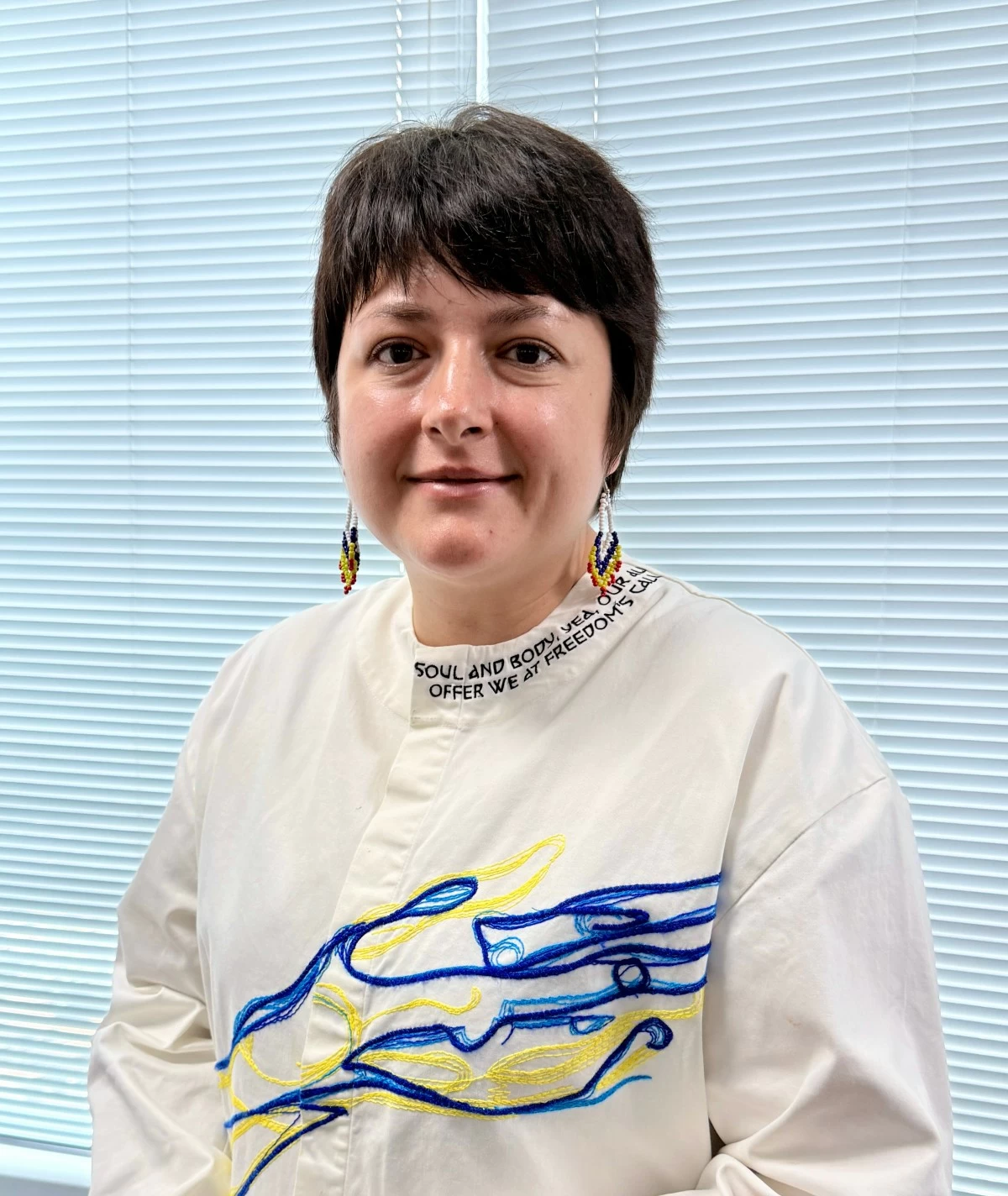
Ukrainian Ambassador Yuliia Fediv makes a statement with her fashion. Her top, made by a Ukrainian designer, features words from their national anthem and strong words against Russia.
Forty years is a long time. Long enough to forget the taste of fear, to let the headlines fade, to convince yourself that a thing that happened is a thing that is finished.
It is not.
On April 26, the Embassy of Ukraine in Manila, in partnership with the Friedrich Naumann Foundation, marked the 40th anniversary of the Chornobyl nuclear disaster—the largest man-made catastrophe in human history—with a gathering that drew media, academics, and diplomats. The question at the center of it all was immediate: what should a country like the Philippines take from a 40-year-old disaster that is very much alive today?
But first, a note on the spelling. Most of us may have grown up reading “Chernobyl”—the Russian transliteration that dominated Cold War-era coverage. Ukraine now insists on “Chornobyl,” the Ukrainian spelling, as part of a broader effort to reclaim its own language and identity from centuries of Russian cultural dominance. It is a small word, but it carries an argument: that the names of places, disasters, and histories belong to the people who actually lived them.
The culture of secrecy
Prof. Chad Michael Briggs, a senior professor at the Asian Institute of Management who has worked across Ukraine, NATO, and the European Union, has visited the Exclusion Zone himself. He teaches the lessons of 1986 not as ancient history, but as living instruction.
The Soviet government knew about the reactor’s design flaws before the accident and chose not to tell the operators. Medical records on radiation exposure were falsified or classified until 1989. “The official numbers—I think the Soviets said that only 37 people died in the accident,” Briggs noted. “Some environmental groups put the number up to around 100,000.”
More than 600,000 liquidators—firefighters, engineers, soldiers, and civilians—were brought in to contain the disaster, many permitted only minutes of exposure at a time.
When asked whether cultural secrecy can ever be overcome, Briggs was direct. “It’s a trust issue,” he said. “Locals may know what’s happening, but they won’t tell you unless they trust you first.” He added, with a nod to the journalists in the room.
He pointed to flood control infrastructure, disaster preparedness, and institutional trust as local parallels to the same fundamental failure that produced the 1986 disaster. “How can we get people to trust that the government will do the right thing?” he asked.
What actually happened
On April 26, 1986, Reactor No. 4 exploded during a safety test conducted in violation of fundamental safety protocols. The Soviet RBMK-1000 reactor had no containment vessel—unlike most Western designs. “When the explosion occurred,” Briggs said, “it was simply completely open to the sky.”
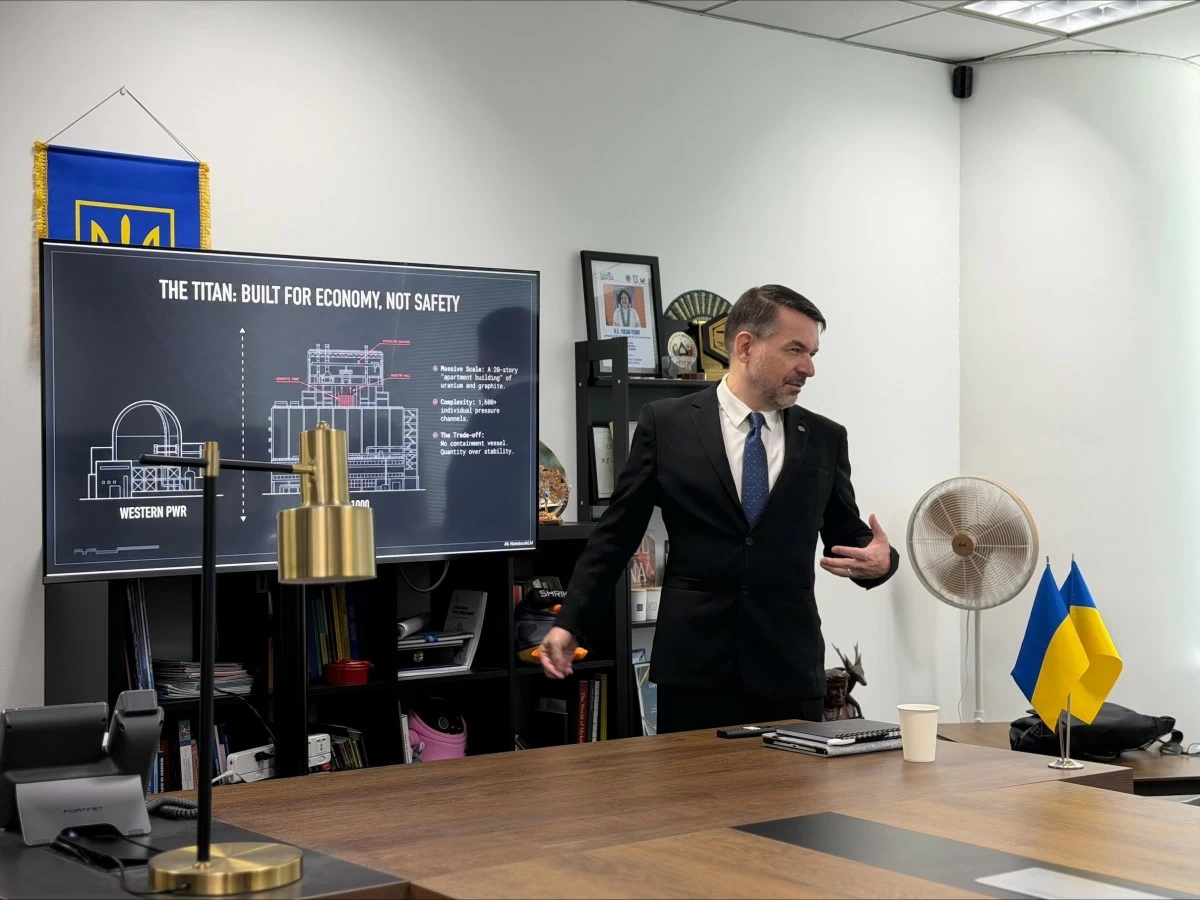
The radioactive release was roughly 30 times the fallout from the Hiroshima atomic bomb. More than 145,000 square kilometers were contaminated and around 8.5 million people were exposed to radiation—yet the Soviet government said almost nothing. Pripyat was not immediately evacuated. On May 1, families marched in May Day parades in Kyiv as radioactive clouds continued rising from the site. The world only found out 36 hours later, when workers at a Swedish nuclear plant kept triggering radiation detectors on their way in, and engineers traced the contamination back to Ukraine.
Which brings us to the most pointed lesson for Filipino audiences. When asked about the country’s renewed interest in nuclear energy, Briggs did not mince words.
“If I’m going to be brutally honest,” he said, “the Philippine government cannot handle nuclear facilities right now. It doesn’t have the experience in doing it. It requires an enormous amount of investment in terms of safety, in terms of expertise, that it makes it so prohibitively expensive that either you do it really well, or you just don’t do it.“
His recommendation instead: renewable energy microgrids, starting in far-flung provinces like Batanes, where diesel dependency and storm-season supply disruptions are already chronic. “Solar panels tend not to explode spectacularly when they fail,” he said.
Only one truth
Ukrainian Ambassador Yuliia Fediv was clear-eyed about the pattern she sees repeating. “It was Moscow’s decision, and it was Ukrainians who suffered the most, because we were actually there,” she said. “When we talk about the Russian full-scale aggression against Ukraine, it’s also the same narratives which are used by Russia—that it was the fault of Ukraine, that we provoked them.”
Her message to the press was direct. “There is only one truth,” she said. “In the post-truth society, we like to talk about ‘each side has its own truth.’ But you, as media, should rely on facts and just transmit the message that there is only one truth which matters. All others are interpretations.”
The same machinery of disinformation that kept Chornobyl’s victims in the dark, she argued, is at work today. Her ask was simple: keep Ukraine on the pages.