






 Business
The Economy
Philippine manufacturing shrinks in April as war-driven costs bite
Business
The Economy
Philippine manufacturing shrinks in April as war-driven costs bite
Philippine manufacturing shrinks in April as war-driven costs bite


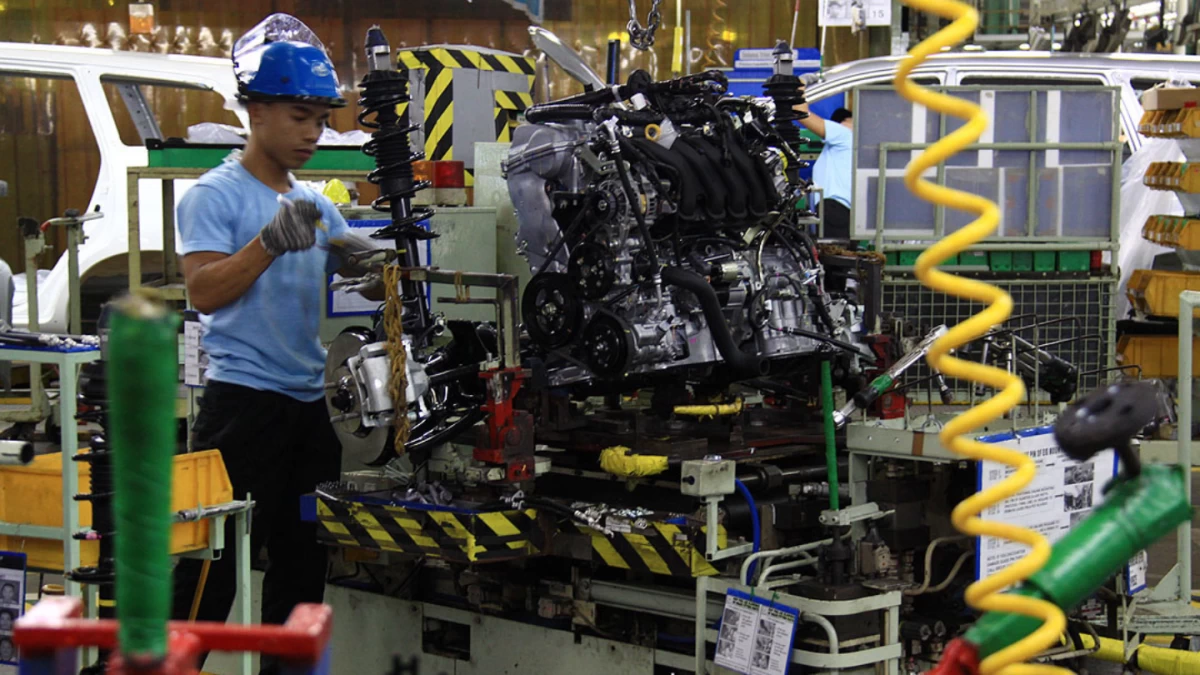
The Philippines’ manufacturing sector slipped into contraction in April amid the prolonged war in the Middle East that has driven up costs and disrupted trade flows, according to market intelligence firm S&P Global.
The country’s purchasing managers’ index (PMI) fell to 48.3 last month from 51.3 in March, marking the first sub-50 reading since November last year and signaling a deterioration in operating conditions, S&P Global reported on Monday, May 4. A PMI reading above 50 indicates expansion, while a figure below 50 points to contraction.
S&P Global said April’s decline reflected a renewed weakening in demand, with new orders falling sharply, the first drop in five months and the steepest since August 2021. Export demand also worsened significantly, with the downturn in new export orders the most pronounced since mid-2020 at the height of the Covid-19 pandemic lockdowns, as firms cited halted shipments and customer hesitancy linked to trade route disruptions.
“The Filipino manufacturing sector started the second quarter of 2026 with a renewed worsening of operating conditions... Demand conditions took a notable hit with April data marking a sharp fall in new orders,” S&P Global Market Intelligence economist Maryam Baluch said.
The drop in new business led to stagnation in production, with output posting a neutral reading of 50 in April, reversing the growth seen in the first quarter of the year.
Cost pressures intensified further during the month, with input price inflation accelerating to its fastest pace since December 2022, driven by higher energy and shipping costs tied to the Middle East conflict. These increases were largely passed on to customers, resulting in the fastest rise in factory gate prices in 41 months.
Firms responded by cutting back on purchasing activity for a second straight month and drawing down inventories to meet production needs. Pre-production inventories fell sharply, marking the steepest decline since May 2020, while stocks of finished goods were also reduced after four consecutive months of buildup.
Higher costs also prompted manufacturers to trim their workforce, with April marking the first instance of job shedding in 2026, although the reduction was described as modest.
“Total new sales were also weighed down by a deteriorating export market demand picture. Moreover, production levels stagnated, and firms made cuts to purchasing and hiring activity as they grappled with high costs, often said to be feeding through from the war in the Middle East,” Baluch said.
Supply chain conditions also worsened, as vendor performance deteriorated further, with delivery times lengthening due to the ongoing conflict.
Despite the weaker conditions, manufacturers remained optimistic about the outlook, with business confidence rising on expectations of improved demand and a growing client base.
“[M]anufacturing firms in the Philippines expect to shake off current woes, as confidence for the year ahead rose to a 17-month high,” Baluch said.