






Manila Bulletin
 Business
Trade & Industry
FAO: Philippines faces long-term price hikes without farm reform
Business
Trade & Industry
FAO: Philippines faces long-term price hikes without farm reform
Business
Trade & Industry
FAO: Philippines faces long-term price hikes without farm reform
FAO: Philippines faces long-term price hikes without farm reform
Published May 4, 2026 12:00 am
|
Updated May 2, 2026 02:25 pm


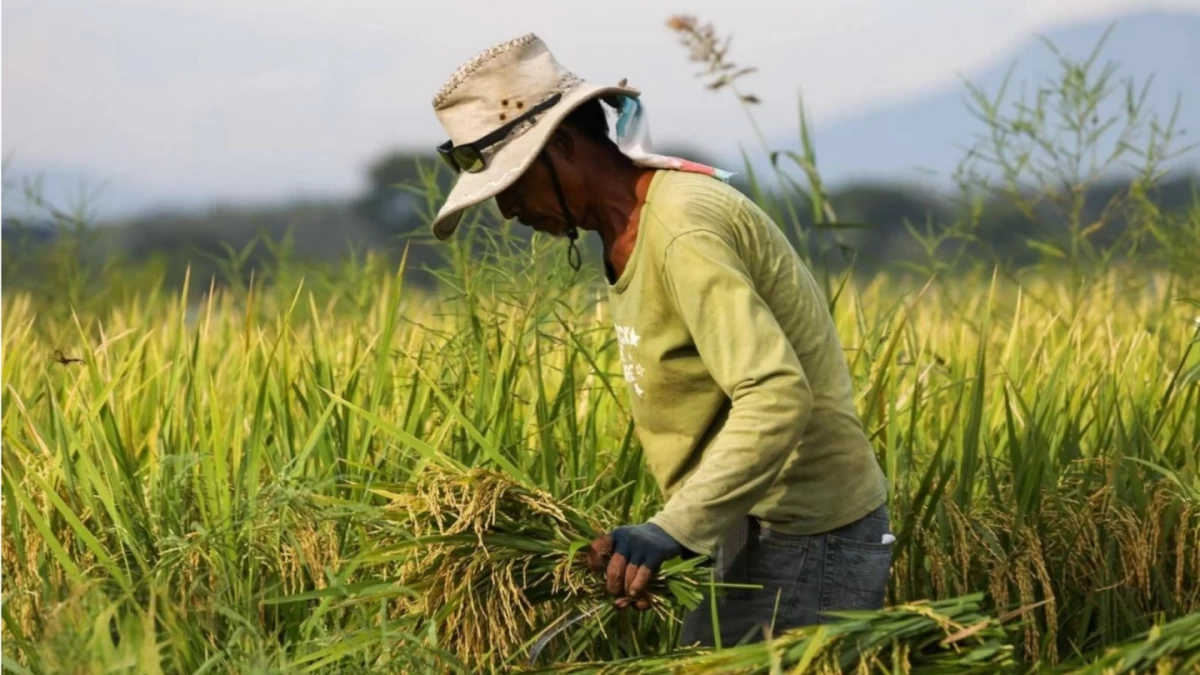
High food prices in the Philippines are likely to persist over the long term unless the government accelerates the adoption of technologies that reduce dependence on foreign inputs and safeguard local production, the United Nations’ Food and Agriculture Organization (FAO) said.
In its latest policy brief, the FAO said the adoption of appropriate intervention measures aims not only to minimize the impact of higher food costs, but also to improve the country’s resilience to future shocks.
Fuel and fertilizer costs have remained elevated as the ongoing war in the Middle East restricts the flow of these commodities, which is expected to disrupt the next planting cycle, creating uncertainty over the production of key crops like rice and corn.
For crop production, the FAO said the immediate priority for the government should be reducing dependence on imported synthetic fertilizers, which rely heavily on natural gas as a feedstock.
Instead, it is recommending a shift towards organic fertilizers such as biofertilizers, compost, and other organic soil amendments.
“Their main value lies in their contribution to integrated soil fertility management, particularly where fertilizer prices are rising sharply, or supply is uncertain,” the FAO said.
The agency is proposing a similar approach to the country’s livestock production, where manure could be decomposed into organic fertilizer or converted into renewable energy through anaerobic digestion.
“In livestock systems, the main opportunities lie in strengthening feed security and making better use of manure and by-products,” it said.
In terms of fisheries, the FAO said the government should work on reducing fuel use per trip through practical measures like fuel-efficient engines, improved vessel operation, as well as better hull and propeller performance.
Beyond the current provision of fuel subsidies, these measures are seen as more crucial in ensuring that fuel costs do not directly impact the country’s fish output and the livelihoods of fisherfolk.
The FAO also wants interventions in the post-harvest stage as rising fuel prices push up the cost of cooling, icing, storage, and transport, which amplifies the risks of spoilage and loss of income.
In particular, solar-powered cold storage, refrigeration, and ice production can reduce diesel dependence and help maintain product quality, especially in remote areas, the FAO said.
The FAO said the adoption of these technologies and practices would be most effective when implemented as part of sequenced packages that combine efficient use of inputs, renewable and energy-saving options, and the management required for adoption at scale.
“These should be complemented by enabling investments in advisory services, finance, maintenance systems, and water control infrastructure,” the FAO said.
“Safeguards, particularly groundwater use and equitable access, are necessary to ensure that short-term adaptation does not create longer-term risks,” it added.