







Beyond Labor Day: Rebuilding livelihoods in an energy-constrained economy
Published May 4, 2026 12:05 am
|
Updated May 3, 2026 04:08 pm


FROM THE MARGINS
Labor Day has always been about honoring workers. But this year, it also compels us to confront a more uncomfortable reality: many Filipino workers are not just struggling — they are being displaced.
Across the country, stories are emerging of jeepney drivers parking their units for good, delivery riders cutting back hours, and transport operators downsizing routes. The ongoing energy crisis has driven fuel prices to punishing levels, reshaping livelihoods almost overnight.
The Philippines, which imports nearly all of its oil, remains highly vulnerable to global supply shocks. What began as a geopolitical crisis has quickly become a household crisis.
And for workers in fuel-dependent sectors, it is becoming a livelihood crisis.
When work no longer works
For public utility vehicle (PUV) drivers, the math no longer adds up.
Rising fuel prices have significantly eroded daily earnings, even with government subsidies. For many drivers, continuing operations means taking home little to nothing. Increasingly, they are seeking alternative sources of income in vending, small-scale trading, or other informal work.
This quiet exodus is a warning sign: when entire sectors become economically unviable, employment does not just decline — it transforms, often into more precarious forms.
A labor market under strain
The broader labor picture reflects this strain.
Recent government data show unemployment at 5.1 percent, equivalent to 2.6 million Filipinos without jobs. While this marks a modest improvement from earlier months, it remains higher than last year’s levels. Meanwhile, underemployment persists at 11.8 percent — 5.84 million of the 49.43 million employed want another job or additional work hours.
These are the drivers taking fewer trips, the workers accepting part-time roles, and the families stretching every peso.
This is the hidden face of the crisis: not just joblessness, but diminished livelihoods.
The rise of necessity entrepreneurship
In this environment, entrepreneurship is no longer just an opportunity — it is becoming a necessity.
Displaced workers are turning into entrepreneurs – selling online, offering delivery services, or opening small businesses. These are not stories of instant success; they are stories of adaptation.
But necessity-driven entrepreneurship, without support, is fragile. Many of these new microentrepreneurs face familiar constraints: limited capital, unstable demand, and rising costs.
The role of microfinance
This is where microfinance institutions play a crucial role.
For decades, microfinance has enabled low-income Filipinos to start and sustain small enterprises — providing access to credit, savings, and financial services often unavailable through traditional banks. In times of crisis, this role becomes even more critical.
As more workers transition into microenterprise, microfinance can serve as a bridge — offering not just capital, but also financial discipline, business guidance, and community support. Strengthening these services and providing resilience-building products, such as microinsurance, will be key to ensuring that new entrepreneurs do not merely survive, but grow.
Beyond stopgap solutions
Government interventions, like fuel subsidies and cash assistance, are necessary but they are not enough.
Subsidies can keep workers afloat for a time, but they do not address a deeper structural challenge: an economy heavily dependent on volatile imported energy.
What is needed is a transition strategy.
First, support livelihood shifts, not just livelihood survival. Workers leaving fuel-dependent sectors should have access to retraining, startup capital, and market linkages.
Second, strengthen the microenterprise ecosystem. This includes expanding access to microfinance, simplifying regulatory requirements, and enabling small businesses to integrate into larger value chains.
Third, invest in energy-resilient livelihoods. Encouraging enterprises that are less fuel-dependent — such as local food production, repair services, and digital-based work — can help communities better withstand future shocks.
Fourth, accelerate efforts toward more sustainable and efficient transport and energy systems, reducing long-term vulnerability.
Reframing Labor Day
Labor Day should not only celebrate workers — it should also recognize the changing nature of work.
Today, a worker may be a driver one month and a small entrepreneur the next. The line between employment and entrepreneurship is increasingly fluid.
Yet, policies often treat these as separate worlds.
Recognizing this reality means building systems that support workers not just in jobs, but in transitions — ensuring they have the tools to adapt as economic conditions shift.
From displacement to dignity
The energy crisis has exposed deep vulnerabilities, but it has also highlighted the resilience of Filipino workers.
The question is whether we will match that resilience with the right support.
If we do, this moment of disruption can become a turning point — where displaced workers are empowered to rebuild livelihoods through entrepreneurship, supported by strong microenterprise ecosystems and inclusive finance.
If we do not, we risk entrenching a cycle of instability and insecurity.
The challenge is clear: not just to protect jobs, but to protect the capacity of Filipinos to create livelihoods of their own.
Because in an uncertain world, resilience is not just about surviving. It is about having the means to start again.
* * *
“Be a star in someone’s dark sky.” — Matshona Dhliwayo
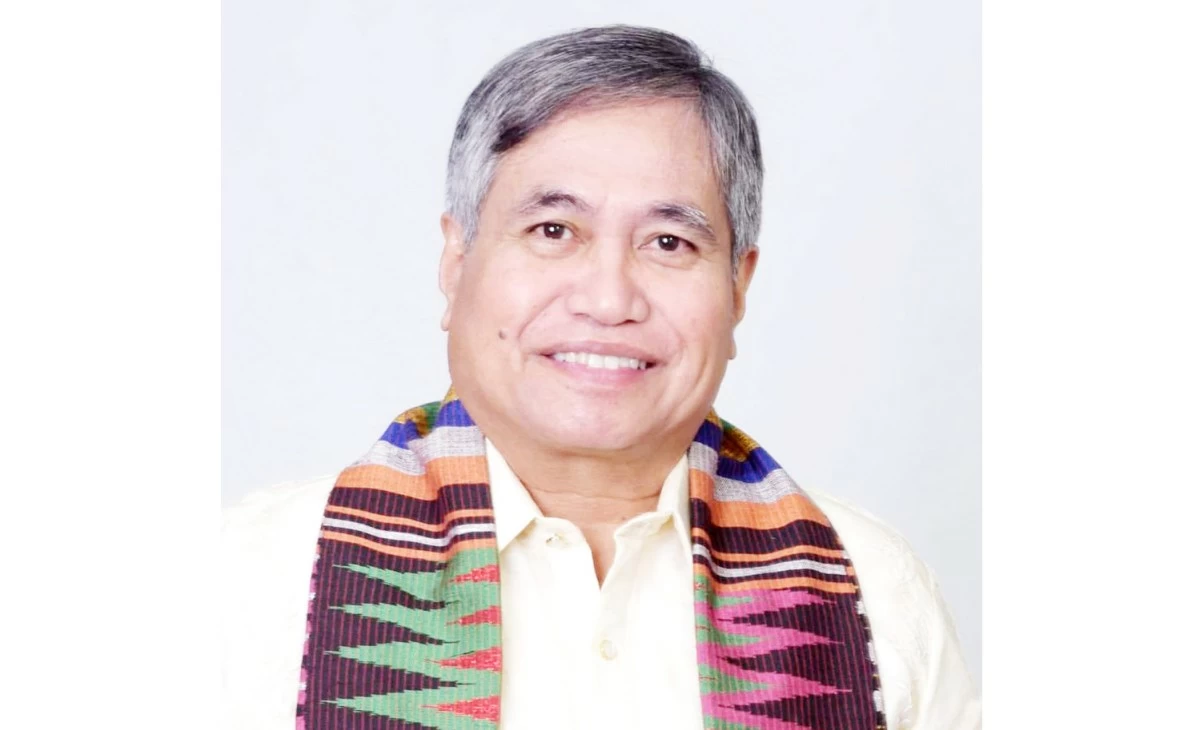
(Dr. Jaime Aristotle B. Alip is a poverty eradication advocate. He is the founder of the Center for Agriculture and Rural Development Mutually-Reinforcing Institutions (CARD MRI), a group of 23 organizations that provide social development services to 8 million economically-disadvantaged Filipinos and insure more than 27 million nationwide.)