






Manila Bulletin
 Business
Trade & Industry
Beijing aims to merge top trade blocs into one massive Asia-Pacific deal
Business
Trade & Industry
Beijing aims to merge top trade blocs into one massive Asia-Pacific deal
Business
Trade & Industry
Beijing aims to merge top trade blocs into one massive Asia-Pacific deal
Beijing aims to merge top trade blocs into one massive Asia-Pacific deal
Published May 4, 2026 12:00 am
|
Updated May 3, 2026 05:42 am


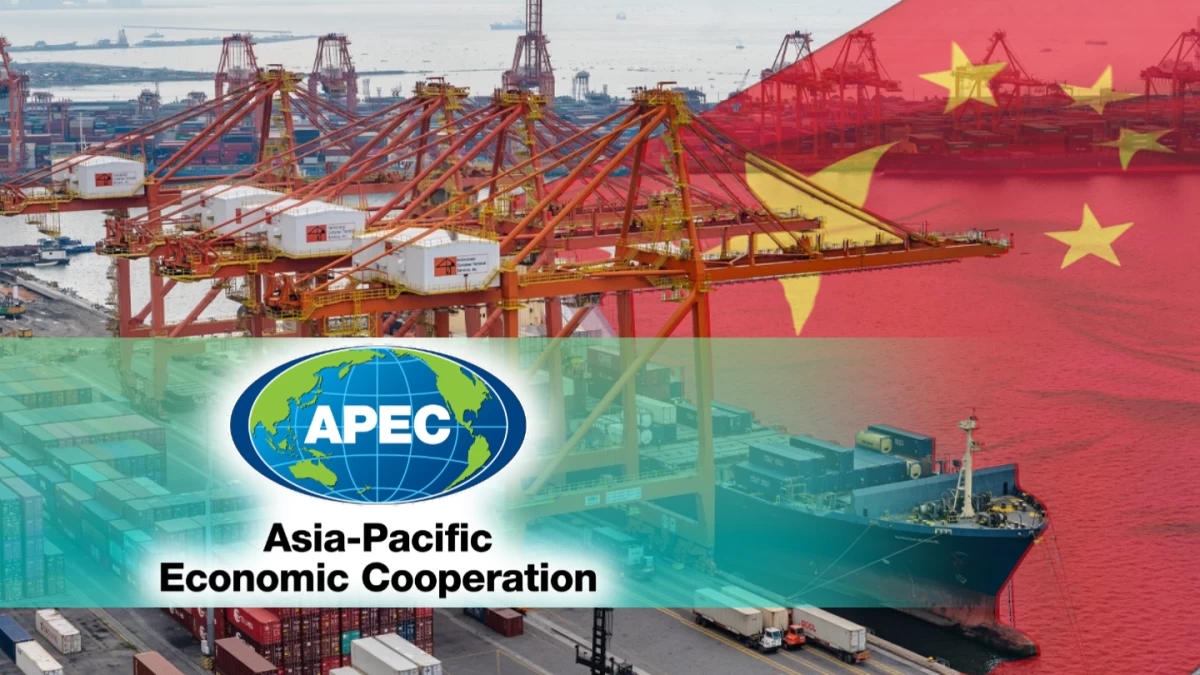
BEIJING — China is stepping up its push to harmonize the Asia-Pacific’s two largest trade blocs, seeking to bridge the gap between competing frameworks to finally realize a long-delayed vision for a unified regional free trade zone.
As the current chair of the Asia-Pacific Economic Cooperation (APEC) forum, Beijing is positioning itself to deliver the most significant advancement for the Free Trade Area of the Asia-Pacific (FTAAP) since the concept was introduced over 20 years ago.
The proposed pact aims to integrate the 21 APEC member economies into a single market by dismantling long-standing trade barriers.
Chen Xu, China’s former permanent representative to the United Nations (UN), said talks are now underway to coordinate different pathways toward the FTAAP.
One of these is to explore the alignment between the Regional Comprehensive Economic Partnership (RCEP) and the Comprehensive and Progressive Agreement for Trans-Pacific Partnership (CPTPP) to help advance the FTAAP.
RCEP is the world’s largest free trade zone, accounting for around 30 percent of global gross domestic product (GDP). Meanwhile, the CPTPP contributes around 14 percent of global GDP.
Pacific Economic Cooperation Council (PECC) member Zhang Jianping said the CPTPP could serve as a platform toward the FTAAP, but he stressed that the agreement largely reflects the interests of developed countries. At present, China has formally applied to join the CPTPP but has yet to be accepted.
He said developing countries prefer to use the RCEP as the basis for advancing toward a unified trade agreement, especially since developed countries play a smaller role within its framework.
To help advance regional integration among APEC members, Zhang said China is keen on harnessing the advantages of the two trade blocs by helping lead negotiations toward their alignment to fast-track progress for the FTAAP.
He said the upcoming APEC meetings in the southern city of Shenzhen would be a key platform for China and other member economies to “reach greater consensus toward regional integration.”
“This will help members better utilize existing FTAs to unlock their benefits, including increased trade, investment, and employment,” Zhang said in a press briefing here.
Once entered into force, he said the FTAAP would strengthen supply chain cooperation and strategic coordination within the region.
“This will enable us to better respond to challenges such as decoupling, supply chain disruptions, and geopolitical conflicts, which place pressure on economic growth and employment,” he added.
The Philippines, one of the founding members of APEC, is a member of RCEP.
Last year, the country submitted its application to the CPTPP, with its accession process to the trade bloc expected to begin within the year.