ADVERTISEMENT

ADB flooded with 'so many' funding requests amid war-driven crisis

Published May 4, 2026 05:16 pm

Samarkand, UZBEKISTAN — “So many” developing Asia-Pacific economies are scrambling to secure concessional financing from the Asian Development Bank (ADB) to bankroll their response to crises caused by the war in the Middle East.

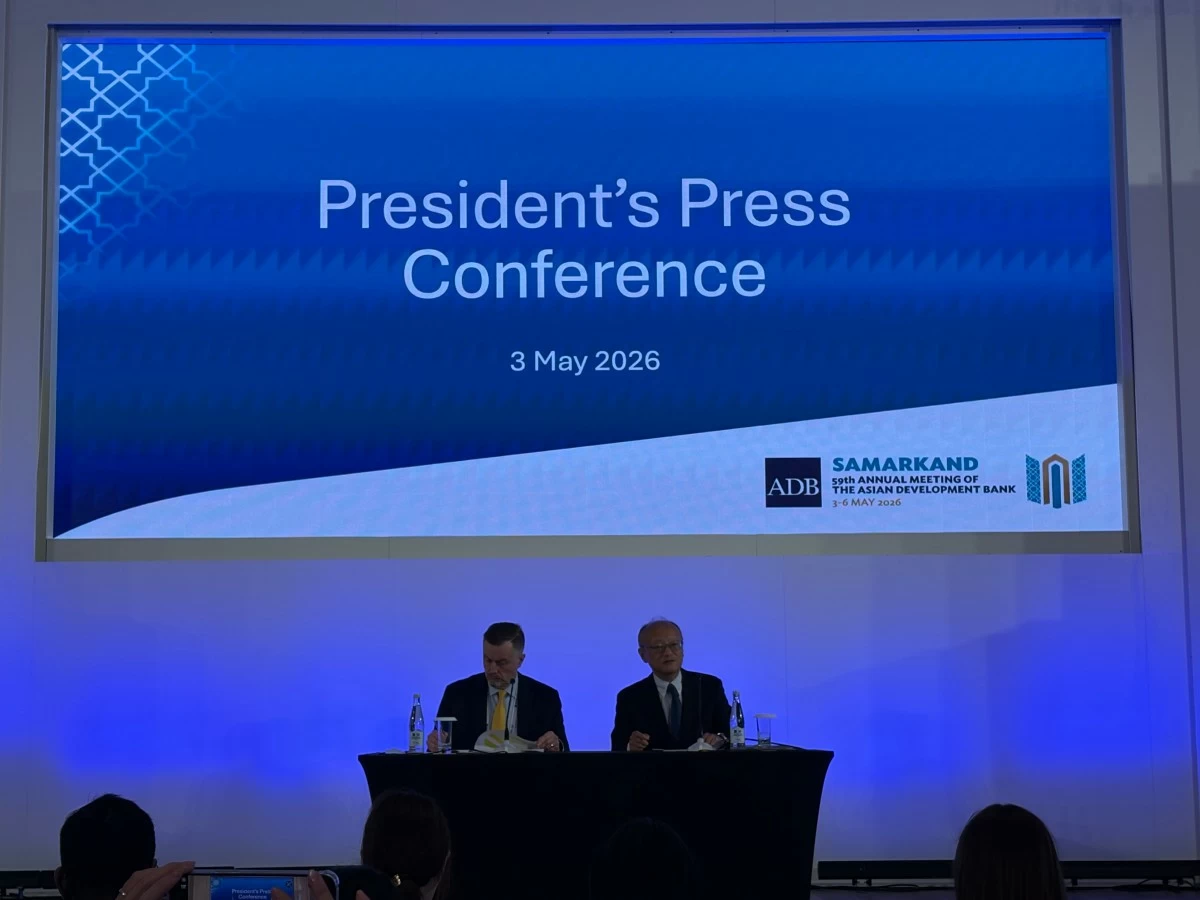
“We have already received so many requests from so many countries,” ADB president Masato Kanda told a press conference on Sunday, May 3, reflecting mounting economic pressures from the prolonged conflict, which has driven up energy prices and disrupted global supply chains.

Responding to a question from Manila Bulletin, Kanda cited that he recently spoke directly with the president of Sri Lanka, which is seeking an additional $100 million in fiscal support.

Among the Manila-based multilateral lender’s developing member countries (DMCs), “many, many countries are coming to us, including Cambodia, Bangladesh, but I can’t list [all of them down]—so many countries now under discussion,” Kanda said.

“And we would deliver as soon as possible,” he added.

In his opening remarks, Kanda said the region has been among the hardest hit by the fallout from the Middle East crisis.

“The first blow landed in energy, but it did not stop there, with higher prices quickly spilling into fuel, freight, food, and fertilizer,” he noted.

“What we are seeing is not only a security crisis, but a stress test of the global order,” Kanda added, noting that the shock has exposed vulnerabilities tied to over-reliance on key trade corridors.

Beyond sovereign financing, Kanda pointed to strong take-up for private-sector financing, particularly for trade and supply-chain support.

“It has met enormous demand, particularly the energy imports. So our program is already operating quite effectively,” he said.

At the onset of the war, the ADB was the first among multilateral development banks (MDBs) to roll out a financial support package to help its DMCs cope with the economic and financial fallout from the conflict, including fast-disbursing budget support, trade and supply-chain financing, and rapid-response instruments.

Kanda said the lender is structuring its response in stages, beginning with short-term liquidity support and extending to medium-term resilience measures aimed at stabilizing economies.

At the same time, the ADB is pushing ahead with long-term investments to strengthen regional resilience, including plans to mobilize $70 billion by 2035 for energy and digital connectivity projects.

Kanda said the Pan-Asia Power Grid Initiative, which aims to mobilize $50 billion, will connect national and subregional grids to enable cross-border electricity trade and accelerate renewable energy (RE) integration.

Asked if the planned regional Association of Southeast Asian Nations (ASEAN) Power Grid would become part of the wider Pan-Asia Power Grid, Kanda pointed out that the ADB had committed $10 billion for the ASEAN initiative.

He noted that the ASEAN Power Grid is already in advanced stages, such that it would be an “important” part of the Pan-Asia Power Grid.

The newest ADB initiative is expected to integrate about 20 gigawatts (GW) of RE across borders, connect around 22,000 circuit-kilometers of transmission lines, and improve energy access for about 200 million people.

Parallel to this, the ADB is advancing the Asia-Pacific Digital Highway, which aims to mobilize $20 billion to expand broadband access, strengthen digital infrastructure, and support artificial intelligence (AI)-ready economies.

The ADB is supporting this effort through initiatives aimed at building digital infrastructure and human capital, including training millions of people in digital and AI-related skills across the region.

Kanda said the digital push is also closely tied to managing emerging risks associated with new technologies like AI.

“There are fundamental risks not only for the economy but [also an] existential risk for human history,” he said, referring to AI.

“Starting from cybersecurity and job replacement, but, even more, how humans can be independent and continue to be the master of the environment and the planet. It’s really a difficult issue. So, of course, we are very much concerned about the risks,” he added.

Despite these risks, Kanda emphasized the opportunities presented by AI, particularly in expanding access to development.

Kanda said the ADB is promoting responsible adoption of AI to help manage risks while maximizing its benefits, as the institution sees it as a major opportunity, particularly for vulnerable and remote populations, to leapfrog traditional growth pathways.

Related Tags

Asian Development Bank (ADB) Masato Kanda artificial intelligence (AI) Association of Southeast Asian Nations (ASEAN) ASEAN Power Grid
ADVERTISEMENT
.most-popular .layout-ratio{ padding-bottom: 79.13%; } @media (min-width: 768px) and (max-width: 1024px) { .widget-title { font-size: 15px !important; } }

{{ articles_filter_1561_widget.title }}

.most-popular .layout-ratio{ padding-bottom: 79.13%; } @media (min-width: 768px) and (max-width: 1024px) { .widget-title { font-size: 15px !important; } }

{{ articles_filter_1562_widget.title }}

.most-popular .layout-ratio{ padding-bottom: 79.13%; } @media (min-width: 768px) and (max-width: 1024px) { .widget-title { font-size: 15px !important; } }

{{ articles_filter_1563_widget.title }}

{{ articles_filter_1564_widget.title }}

.mb-article-details { position: relative; } .mb-article-details .article-body-preview, .mb-article-details .article-body-summary{ font-size: 17px; line-height: 30px; font-family: "Libre Caslon Text", serif; color: #000; } .mb-article-details .article-body-preview iframe , .mb-article-details .article-body-summary iframe{ width: 100%; margin: auto; } .read-more-background { background: linear-gradient(180deg, color(display-p3 1.000 1.000 1.000 / 0) 13.75%, color(display-p3 1.000 1.000 1.000 / 0.8) 30.79%, color(display-p3 1.000 1.000 1.000) 72.5%); position: absolute; height: 200px; width: 100%; bottom: 0; display: flex; justify-content: center; align-items: center; padding: 0; } .read-more-background a{ color: #000; } .read-more-btn { padding: 17px 45px; font-family: Inter; font-weight: 700; font-size: 18px; line-height: 16px; text-align: center; vertical-align: middle; border: 1px solid black; background-color: white; } .hidden { display: none; }
function initializeAllSwipers() { // Get all hidden inputs with cms_article_id document.querySelectorAll('[id^="cms_article_id_"]').forEach(function (input) { const cmsArticleId = input.value; const articleSelector = '#article-' + cmsArticleId + ' .body_images'; const swiperElement = document.querySelector(articleSelector); if (swiperElement && !swiperElement.classList.contains('swiper-initialized')) { new Swiper(articleSelector, { loop: true, pagination: false, navigation: { nextEl: '#article-' + cmsArticleId + ' .swiper-button-next', prevEl: '#article-' + cmsArticleId + ' .swiper-button-prev', }, }); } }); } setTimeout(initializeAllSwipers, 3000); const intersectionObserver = new IntersectionObserver( (entries) => { entries.forEach((entry) => { if (entry.isIntersecting) { const newUrl = entry.target.getAttribute("data-url"); if (newUrl) { history.pushState(null, null, newUrl); let article = entry.target; // Extract metadata const author = article.querySelector('.author-section').textContent.replace('By', '').trim(); const section = article.querySelector('.section-info ').textContent.replace(' ', ' '); const title = article.querySelector('.article-title h1').textContent; // Parse URL for Chartbeat path format const parsedUrl = new URL(newUrl, window.location.origin); const cleanUrl = parsedUrl.host + parsedUrl.pathname; // Update Chartbeat configuration if (typeof window._sf_async_config !== 'undefined') { window._sf_async_config.path = cleanUrl; window._sf_async_config.sections = section; window._sf_async_config.authors = author; } // Track virtual page view with Chartbeat if (typeof pSUPERFLY !== 'undefined' && typeof pSUPERFLY.virtualPage === 'function') { try { pSUPERFLY.virtualPage({ path: cleanUrl, title: title, sections: section, authors: author }); } catch (error) { console.error('ping error', error); } } // Optional: Update document title if (title && title !== document.title) { document.title = title; } } } }); }, { threshold: 0.1 } ); function showArticleBody(button) { const article = button.closest("article"); const summary = article.querySelector(".article-body-summary"); const body = article.querySelector(".article-body-preview"); const readMoreSection = article.querySelector(".read-more-background"); // Hide summary and read-more section summary.style.display = "none"; readMoreSection.style.display = "none"; // Show the full article body body.classList.remove("hidden"); } document.addEventListener("DOMContentLoaded", () => { let loadCount = 0; // Track how many times articles are loaded const offset = [1, 2, 3, 4, 5, 6, 7, 8, 9, 10]; // Offset values const currentUrl = window.location.pathname.substring(1); let isLoading = false; // Prevent multiple calls if (!currentUrl) { console.log("Current URL is invalid."); return; } const sentinel = document.getElementById("load-more-sentinel"); if (!sentinel) { console.log("Sentinel element not found."); return; } function isSentinelVisible() { const rect = sentinel.getBoundingClientRect(); return ( rect.top < window.innerHeight && rect.bottom >= 0 ); } function onScroll() { if (isLoading) return; if (isSentinelVisible()) { if (loadCount >= offset.length) { console.log("Maximum load attempts reached."); window.removeEventListener("scroll", onScroll); return; } isLoading = true; const currentOffset = offset[loadCount]; window.loadMoreItems().then(() => { let article = document.querySelector('#widget_1690 > div:nth-last-of-type(2) article'); intersectionObserver.observe(article) loadCount++; }).catch(error => { console.error("Error loading more items:", error); }).finally(() => { isLoading = false; }); } } window.addEventListener("scroll", onScroll); });

Sign up by email to receive news.