







When four quarts/parts make a 'galleon'
Published May 3, 2026 12:05 am
|
Updated May 2, 2026 04:09 pm


HEARD IT THROUGH THE GRIPE-VINE
As an archipelagic nation, it’s only natural that the Philippines will have a rich and textured martime history. Seafaring people, ship-builders, sailors, marine biologists, fishermen, enterprises and trading that connect to water and aquatic life - there will be a myriad of ways in which this deep relationship to the bodies of water that surround us will find meaningful expression up to the present day. So as I counted myself among those who attended the launch of the Museo de Galeón at the Mall of Asia complex, and thanked Christina Salinas Manzano for the invite; I was really struck by the notion that this new museum has been long overdue, and we can be extremely thankful that it has finally come to such glorious and enthralling fruition.
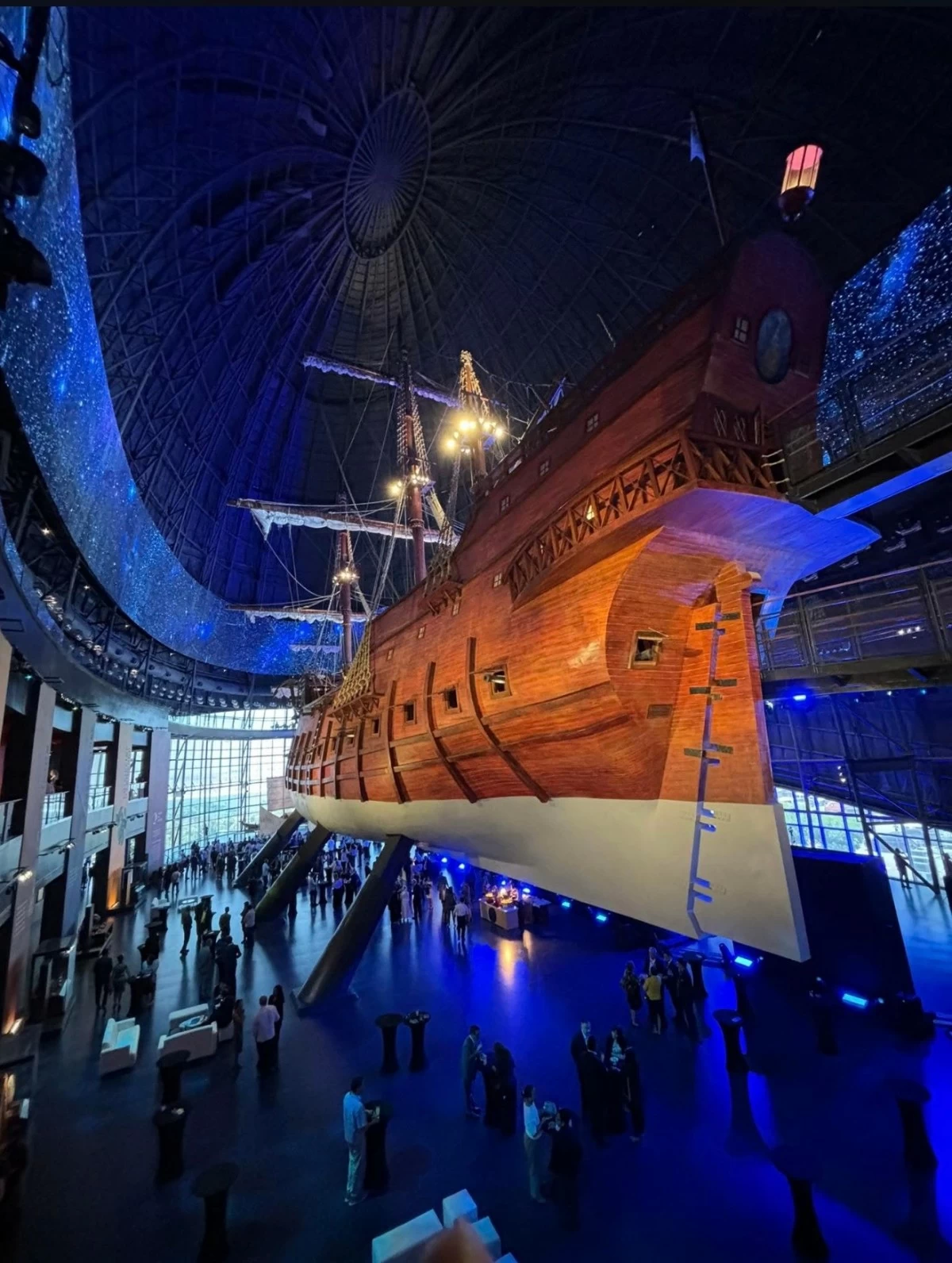
A view of the 60-meter Galeón Espíritu Santo replica; and note how it can be boarded from the upper floor.
The Museo del Galeón officially opened to the public on May 1st, and it is housed in a dome structure that rises to four levels, found at one end of the Mall of Asia, Pasay City. Its approximately 9,000 square meters, and one finds four distinct galleries within the museum - hence my title of four part, and the pun on gallon/galeón. Of particular emphasis is how the galleries will chronicle the galleon trade that linked the Philippines to both Europe and the Americas for close to three centuries - from 1565 to 1815. This is the famous Manila - Acapulco trade route; that many historians from both sides, and from Spain, have written about.
The chairman of the Museo de Galeón Foundation is Ambassador Carlos Salinas, and the Foundation President is Doris Magsaysay-Ho. Its Executive Director and resident historian is Manuel Quezon III; and all involved with the Museum are quick to point out that the original visionary for this Museo is the late Senator Edgardo Angara. It was he who first spoke of a space dedicated to the significance of the galleon trade. Secretary of Education Sonny Angara is the son of the late Senator and legendary legal mind that was Ed Angara - former senate president and University of the Philippines chancellor and president.
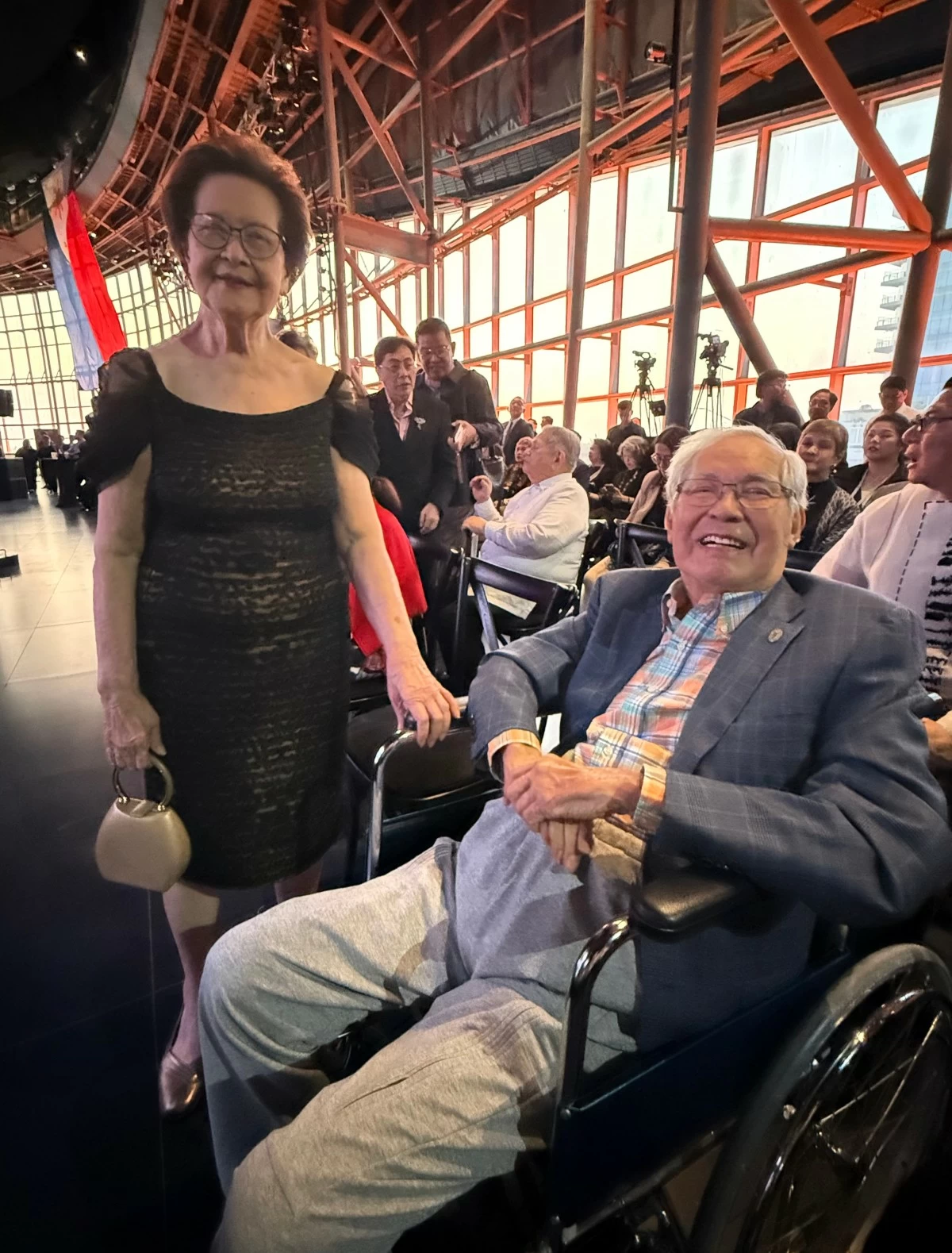
Ambassador Carlos Salinas, and Mrs. Lita Tanseco-Salinas. The ambassador is chairman of the Museo de Galeón Foundation.
The Culture Collective handled the museum design to its final stages, and mentioned was how the Museo would initially open with two of the four intended galleries functioning as public spaces that could be accessed. The overriding idea is to make the Museo a living, interactive space, where one can explore, learn, touch and feel, and be engaged in a manner that will make the museum-goer feel their visit is a true experience, and so they’ll both spread the word, and want to come back for more.
Towering within this space would be the 60-meter replica of the Galeón Espíritu Santo. This is a full scale reconstruction of the 17th century seafaring vessel that would ply the Manila -Acapulco trade route. Museum visitors can ascend to the fourth floor, and actually board the ‘galleon’ - exploring the main deck, the gun decks, the captain’s quarters, as well as that of the crew. There are displays of cannons, and the mess hall of the time - giving one a deeper insight on what it would have been like to have sailed on this ship.
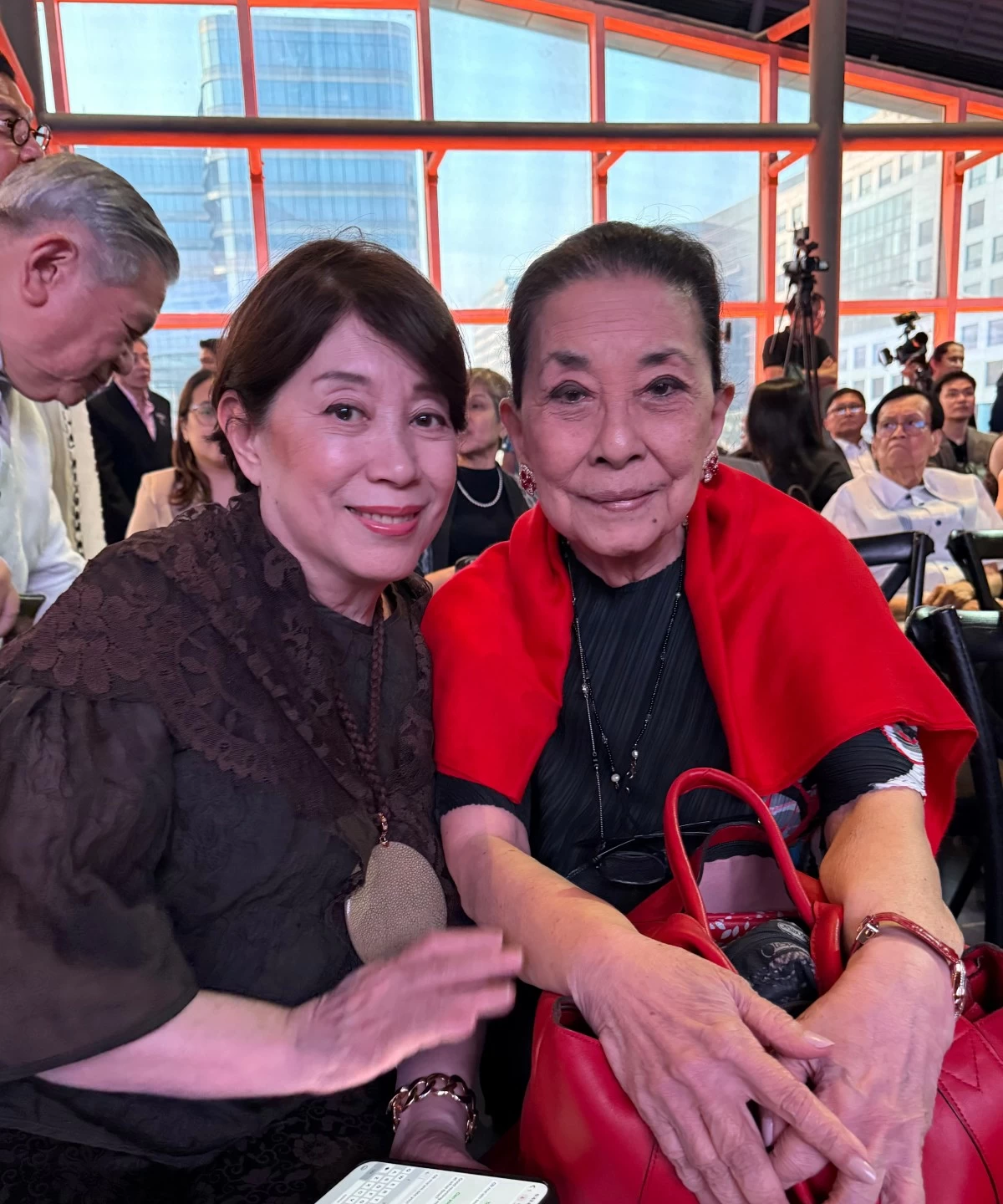
Doris Magsaysay-Ho, president of the Museo de Galeón Foundation, with Helen Yuchengco-Dee.
The original Espíritu Santo was constructed in Cavite in 1603, and would sail voyages from Manila to Acapulco, and back, from 1603 to 1618. In the 250 years of the documented galleon trade; recorded are 181 vessels, making 798 voyages.
It’s vital to note how the trade routes connected Asia to both the Americas and Europe. They were how the exchange of goods, of ideas, language, and traditions would take place. It’s often overlooked in Philippine history; and yet these routes play such an important role in how our culture, language, and even cuisine, evolved over those long-forgotten centuries.
The plan is to have the Museo become part of the International Congress of Maritime Museums. Gerardo Borromeo, a member of the Museo Board, explained how sharing of information would then happen among those on the Congress. Borromeo is the Chief Executive Officer of the Philippine Transmarine Carriers Group of Companies (PTC).
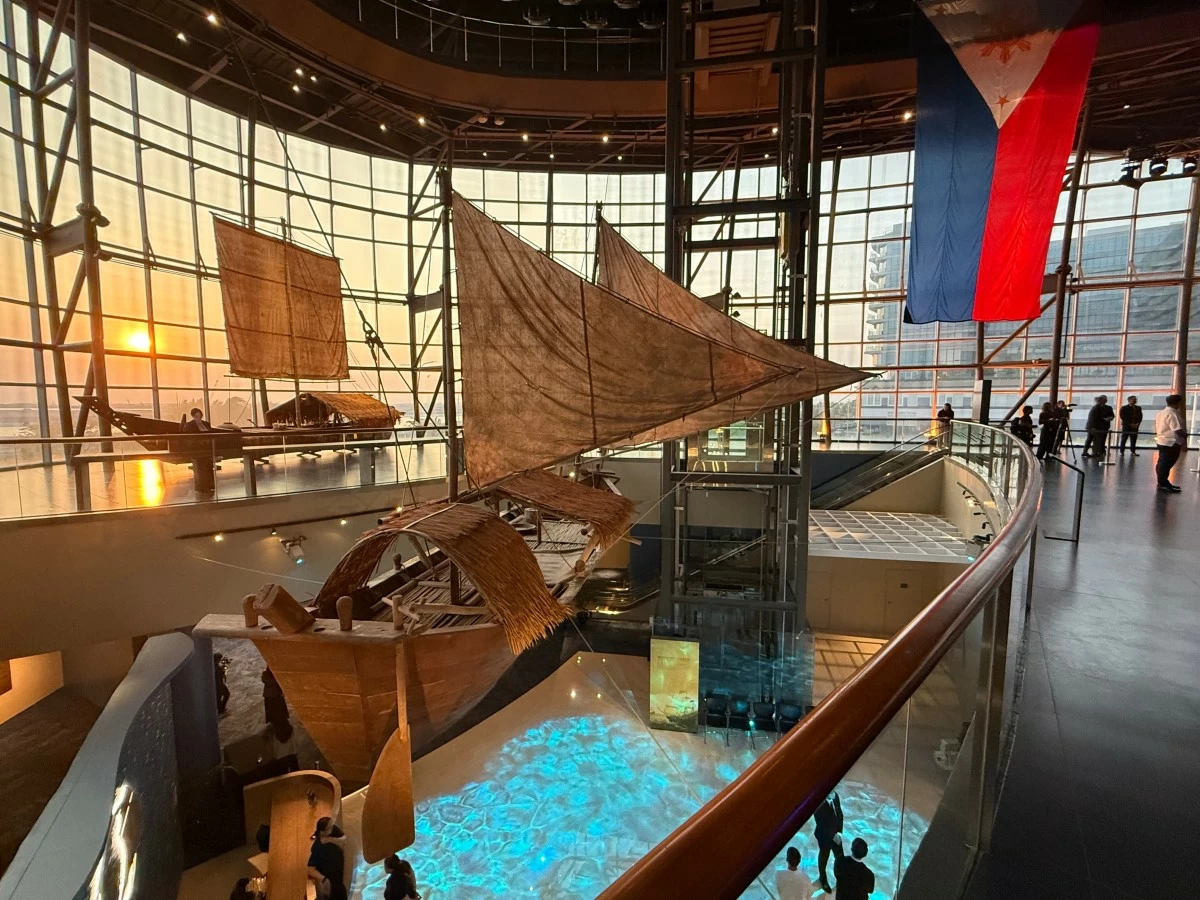
The Filipino sailing vessels that are on display by the Museo entrance.
Ambassador Carlos Salinas was visibly happy and proud during the launch. His message states that, “The Museo del Galeón stands as a unique beacon, illuminating the rich tapestry of the Philippines’ maritime legacy. Within our halls, visitors are transported back in time, tracing the footsteps of explorers and traders who navigated the vast seas centuries ago.”
And Doris Magsaysay-Ho was insistent with, “It is time to tell our story! As an archipelago, our history and our people have been shaped by the waters that embrace us, transformed through the centuries by the waves of migrants of myriad cultures, who were attracted to our beautiful islands, and made them home.”
It was not lost on me how in the Seafarers Manpower industry, the companies of Ambassador Salinas and of Doris Magsaysay-Ho could be considered as competitors; and yet the two are united on the Museo Board, making a strong statement about nationalism, and about gifting the Filipino with a museum that ably speaks of heritage, and our cultural inheritance. Do head to the Museo, as it is so worth the visit!