






Manila Bulletin
 Philippines
National
UP to gather industry, government, academia at innovation summit on May 5–6
Philippines
National
UP to gather industry, government, academia at innovation summit on May 5–6
Philippines
National
UP to gather industry, government, academia at innovation summit on May 5–6
UP to gather industry, government, academia at innovation summit on May 5–6
Published May 3, 2026 03:46 pm


UNIVERSITY OF THE PHILIPPINES
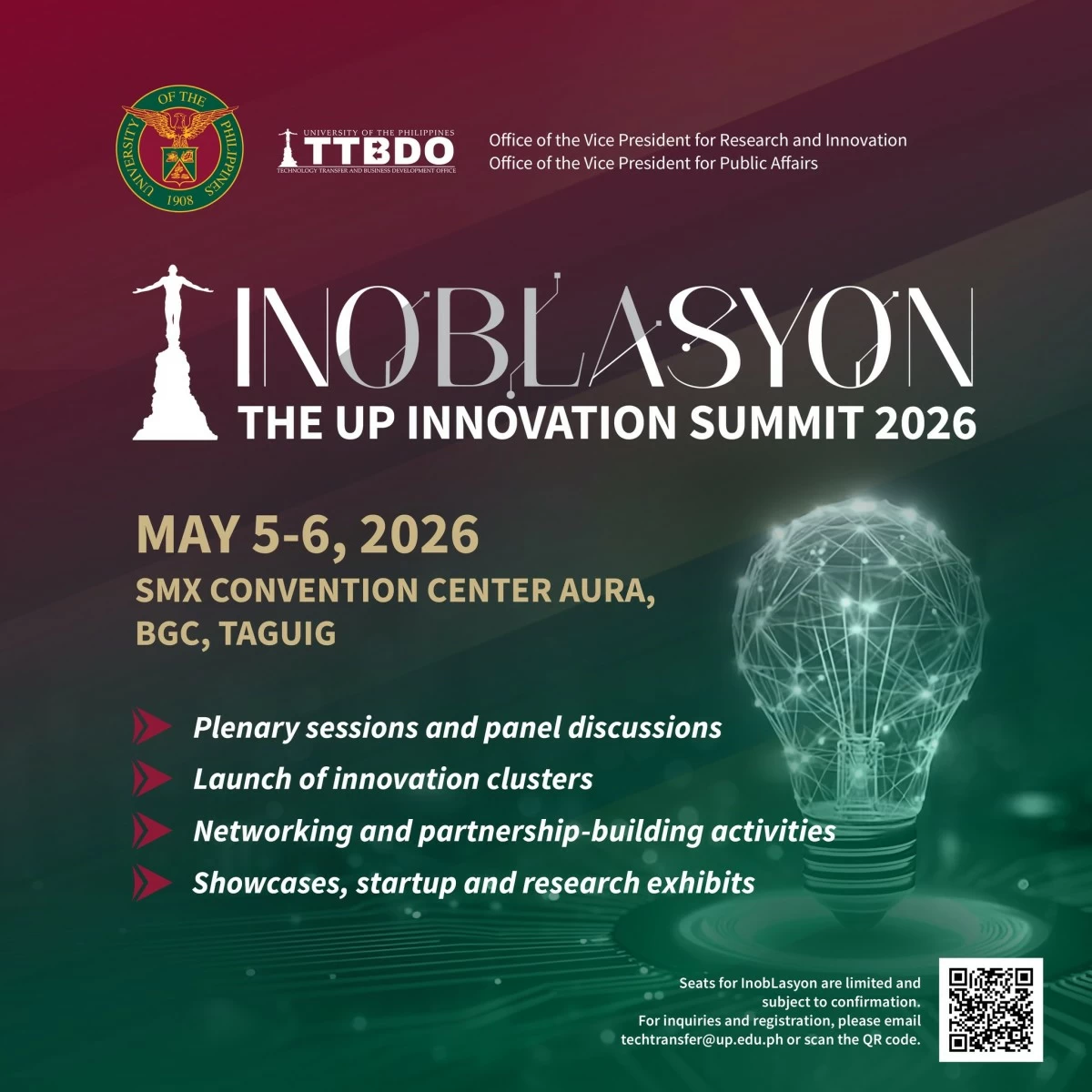
The University of the Philippines (UP) will bring together leaders from industry, government, and academia for its first Inoblasyon innovation summit, set on May 5 to 6 at the SMX Convention Center Aura in Bonifacio Global City.
Dubbed “Inoblasyon: The UP Innovation Summit 2026,” the two-day gathering will focus on strengthening collaboration among researchers, inventors, industry players, government agencies, investors, and community partners to advance the university’s innovation ecosystem.
The summit centers on the concept of “Inoblasyon,” which combines innovation and oblation, reflecting UP’s framing of innovation as a form of service to society.
According to UP Vice President for Research and Innovation Joel Marciano Jr., the initiative underscores efforts to promote solutions that address social gaps, support communities, strengthen industries, and contribute to national development through evidence-based approaches.
A keynote address will be delivered by Anuj Jain, director of the National GRIP and Activate Global Fellows Singapore at Nanyang Technological University.
Jain leads programs that help researchers translate laboratory-based discoveries into commercial ventures, with work spanning academia, industry, and investment networks across the Asia-Pacific region.
The morning program will include a panel discussion on energy resilience and the Philippines’ transition toward low-carbon and inclusive energy systems, followed by a session on social entrepreneurship and inclusive innovation.
A closing panel will tackle university-industry collaboration, including chip design initiatives, talent development, research and development, and integration into global supply chains.
In the afternoon, the summit will host knowledge exchange sessions and showcase UP-developed technologies, startups, and research across eight innovation clusters.
These include health, biotechnology and biomedical systems; agri-aqua biotechnology and smart food systems; functional foods and nutraceuticals; climate, energy, and environmental technologies; sustainable materials, circular economy and green manufacturing; creative industries and cultural enterprises; digital governance and public-sector innovation; and digital technologies in education and legal sectors.