ADVERTISEMENT

Pope Leo XIV encourages wealthy US Catholics to keep donating

Published May 3, 2026 08:24 am
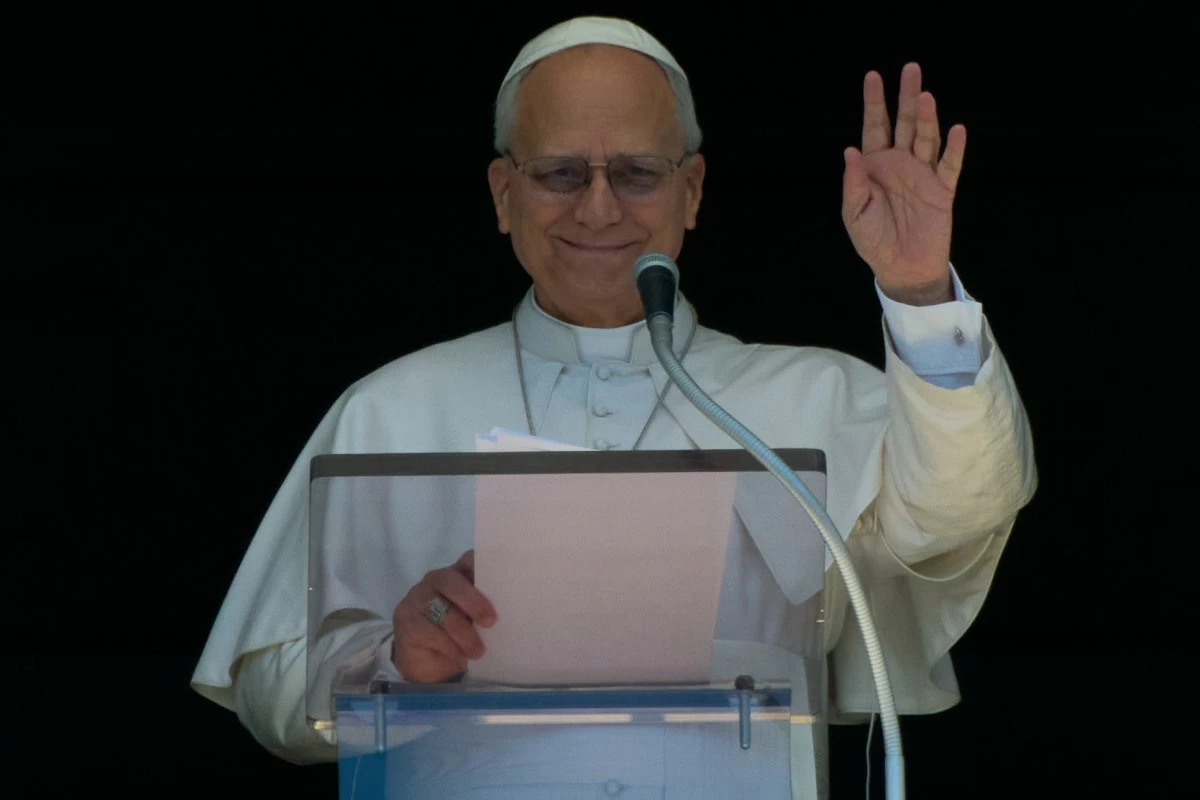
Pope Leo XIV delivers his blessing as he recites the Regina Coeli noon prayer from the window of his studio overlooking St.Peter's Square, at the Vatican, Monday, April 6, 2026. (AP Photo/Andrew Medichini)
ROME (AP) — Pope Leo XIV on Saturday encouraged some of the wealthiest U.S. Catholics to keep on giving to support his charitable works, in an audience that confirmed how the election of the first U.S.-born pope has invigorated American Catholics and their donations.
The Chicago-born Leo met with members of The Papal Foundation, a major funder of papal development projects in the developing world, in the Apostolic Palace at the end of their annual pilgrimage to Rome.
In his remarks, Leo thanked the foundation stewards for their generosity, which he said had allowed "countless people to experience in a concrete fashion the goodness and kindness of God in their own communities."
He noted in particular the priests and nuns from poor countries who are able to study at Rome's pontifical universities to earn advanced degrees thanks to scholarships funded by foundation's grants, which combined over the past four decades have totaled more than $270 million.
While The Papal Foundation contributions to the Vatican remained strong during Pope Francis' 12-year pontificate, other donations to the Holy See tanked during the global financial crisis, COVID-19 and other strains. Some U.S. Catholics also soured on donating to the Holy See following years of unrelenting stories of mismanagement, corruption and scandal, as well as Francis' known criticism of American-style capitalism.
The election of Leo seems to have reinvigorated the U.S. church, especially the donor class. On Saturday The Papal Foundation announced that its members had approved more than $15 million in grants for 2026, a record in the foundation's 38-year history.
The foundation also announced that 25 new families had joined it in the year since Leo's election, in the strongest sign yet that the election of an American, English-speaking pope — and a math major with an eye to the Vatican's balance sheet — has been good news for church fundraising.
"The growth we're seeing is incredibly encouraging, as it reflects a shared commitment to serve, to give, and to bring the church's mission to life in meaningful ways across the globe," David Savage, the foundation's executive director, said in a statement.
The foundation was created by the late Cardinal John Krol of Philadelphia in 1988, as a way for wealthy U.S. Catholics to directly fund charitable initiatives of the pope.
To become a steward requires a $1 million gift to a fund that then helps support papal projects, such as building orphanages or monasteries. For 2026, for example, some of the approved projects include the construction or renovation of a safe school for marginalized tribal children in India, and professional technical training for vulnerable women in the Philippines.
The foundation currently has as its members all the U.S. cardinals, and is governed by a board of trustees made up of Catholic laypeople and bishops.

Related Tags

world news Pope Leo XIV
ADVERTISEMENT
.most-popular .layout-ratio{ padding-bottom: 79.13%; } @media (min-width: 768px) and (max-width: 1024px) { .widget-title { font-size: 15px !important; } }

{{ articles_filter_1561_widget.title }}

.most-popular .layout-ratio{ padding-bottom: 79.13%; } @media (min-width: 768px) and (max-width: 1024px) { .widget-title { font-size: 15px !important; } }

{{ articles_filter_1562_widget.title }}

.most-popular .layout-ratio{ padding-bottom: 79.13%; } @media (min-width: 768px) and (max-width: 1024px) { .widget-title { font-size: 15px !important; } }

{{ articles_filter_1563_widget.title }}

{{ articles_filter_1564_widget.title }}

.mb-article-details { position: relative; } .mb-article-details .article-body-preview, .mb-article-details .article-body-summary{ font-size: 17px; line-height: 30px; font-family: "Libre Caslon Text", serif; color: #000; } .mb-article-details .article-body-preview iframe , .mb-article-details .article-body-summary iframe{ width: 100%; margin: auto; } .read-more-background { background: linear-gradient(180deg, color(display-p3 1.000 1.000 1.000 / 0) 13.75%, color(display-p3 1.000 1.000 1.000 / 0.8) 30.79%, color(display-p3 1.000 1.000 1.000) 72.5%); position: absolute; height: 200px; width: 100%; bottom: 0; display: flex; justify-content: center; align-items: center; padding: 0; } .read-more-background a{ color: #000; } .read-more-btn { padding: 17px 45px; font-family: Inter; font-weight: 700; font-size: 18px; line-height: 16px; text-align: center; vertical-align: middle; border: 1px solid black; background-color: white; } .hidden { display: none; }
function initializeAllSwipers() { // Get all hidden inputs with cms_article_id document.querySelectorAll('[id^="cms_article_id_"]').forEach(function (input) { const cmsArticleId = input.value; const articleSelector = '#article-' + cmsArticleId + ' .body_images'; const swiperElement = document.querySelector(articleSelector); if (swiperElement && !swiperElement.classList.contains('swiper-initialized')) { new Swiper(articleSelector, { loop: true, pagination: false, navigation: { nextEl: '#article-' + cmsArticleId + ' .swiper-button-next', prevEl: '#article-' + cmsArticleId + ' .swiper-button-prev', }, }); } }); } setTimeout(initializeAllSwipers, 3000); const intersectionObserver = new IntersectionObserver( (entries) => { entries.forEach((entry) => { if (entry.isIntersecting) { const newUrl = entry.target.getAttribute("data-url"); if (newUrl) { history.pushState(null, null, newUrl); let article = entry.target; // Extract metadata const author = article.querySelector('.author-section').textContent.replace('By', '').trim(); const section = article.querySelector('.section-info ').textContent.replace(' ', ' '); const title = article.querySelector('.article-title h1').textContent; // Parse URL for Chartbeat path format const parsedUrl = new URL(newUrl, window.location.origin); const cleanUrl = parsedUrl.host + parsedUrl.pathname; // Update Chartbeat configuration if (typeof window._sf_async_config !== 'undefined') { window._sf_async_config.path = cleanUrl; window._sf_async_config.sections = section; window._sf_async_config.authors = author; } // Track virtual page view with Chartbeat if (typeof pSUPERFLY !== 'undefined' && typeof pSUPERFLY.virtualPage === 'function') { try { pSUPERFLY.virtualPage({ path: cleanUrl, title: title, sections: section, authors: author }); } catch (error) { console.error('ping error', error); } } // Optional: Update document title if (title && title !== document.title) { document.title = title; } } } }); }, { threshold: 0.1 } ); function showArticleBody(button) { const article = button.closest("article"); const summary = article.querySelector(".article-body-summary"); const body = article.querySelector(".article-body-preview"); const readMoreSection = article.querySelector(".read-more-background"); // Hide summary and read-more section summary.style.display = "none"; readMoreSection.style.display = "none"; // Show the full article body body.classList.remove("hidden"); } document.addEventListener("DOMContentLoaded", () => { let loadCount = 0; // Track how many times articles are loaded const offset = [1, 2, 3, 4, 5, 6, 7, 8, 9, 10]; // Offset values const currentUrl = window.location.pathname.substring(1); let isLoading = false; // Prevent multiple calls if (!currentUrl) { console.log("Current URL is invalid."); return; } const sentinel = document.getElementById("load-more-sentinel"); if (!sentinel) { console.log("Sentinel element not found."); return; } function isSentinelVisible() { const rect = sentinel.getBoundingClientRect(); return ( rect.top < window.innerHeight && rect.bottom >= 0 ); } function onScroll() { if (isLoading) return; if (isSentinelVisible()) { if (loadCount >= offset.length) { console.log("Maximum load attempts reached."); window.removeEventListener("scroll", onScroll); return; } isLoading = true; const currentOffset = offset[loadCount]; window.loadMoreItems().then(() => { let article = document.querySelector('#widget_1690 > div:nth-last-of-type(2) article'); intersectionObserver.observe(article) loadCount++; }).catch(error => { console.error("Error loading more items:", error); }).finally(() => { isLoading = false; }); } } window.addEventListener("scroll", onScroll); });

Sign up by email to receive news.