






Manila Bulletin
 Philippines
National
PCG mobilizes assets to drive away 4 Chinese research vessels operating in PH waters
Philippines
National
PCG mobilizes assets to drive away 4 Chinese research vessels operating in PH waters
Philippines
National
PCG mobilizes assets to drive away 4 Chinese research vessels operating in PH waters
PCG mobilizes assets to drive away 4 Chinese research vessels operating in PH waters
Atin Ito civilian mission to Pag-asa Island hailed
Published May 3, 2026 02:33 pm


At A Glance
- The Philippine Coast Guard (PCG) deployed ships and aircraft on May 3 to challenge and drive away four Chinese research vessels detected operating in Philippine waters without authorization.
- The PCG identified the vessels as Zhuhaiyun, Xiangyanghong 33, Shi Yan 1, and Jia Geng, which were tracked in various locations near Palawan, Batanes, and Pangasinan.
- Meanwhile, the Armed Forces of the Philippines praised the Atin Ito Coalition after its civilian mission successfully reached Pag-asa Island and planted the Philippine flag on Pag-asa Cay 2.
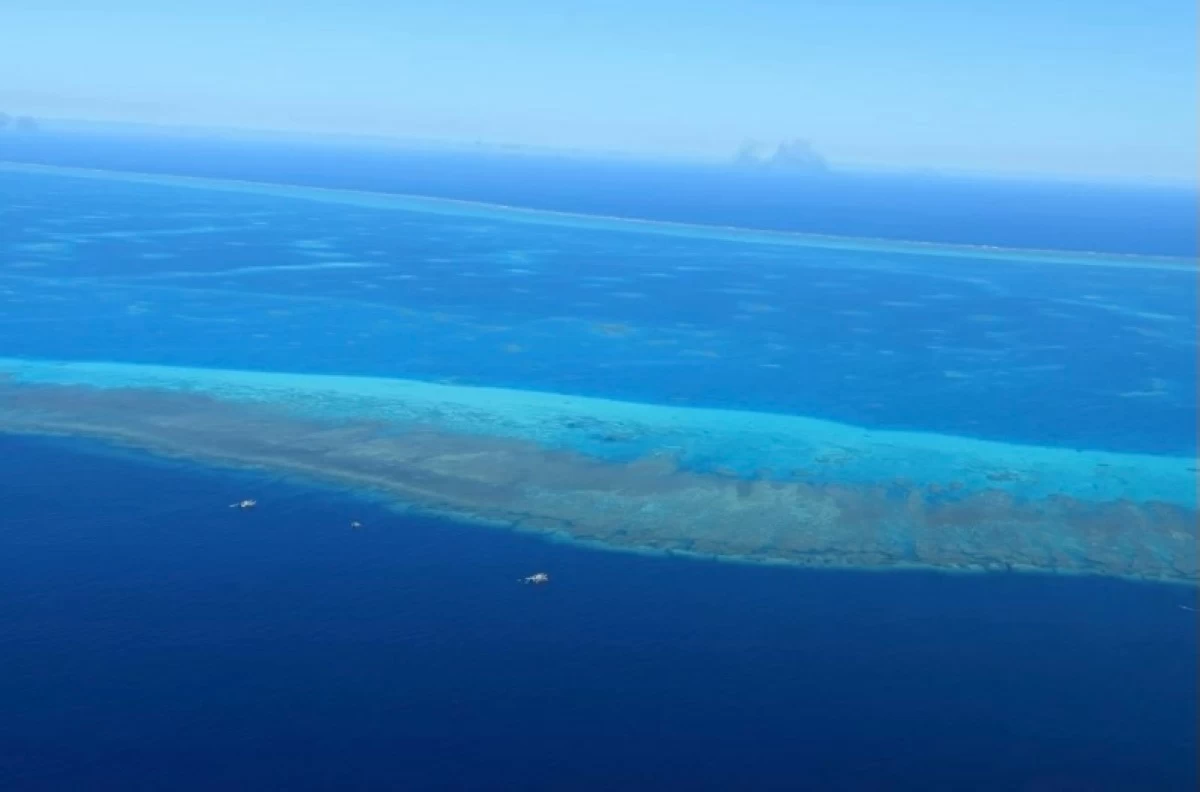
Filipino fishing boats are monitored at Bajo de Masinloc in the West Philippine Sea during an aerial search of the Philippine Coast Guard (PCG) on Oct. 6, 2022. (Photo: PCG)
The Philippine Coast Guard (PCG) deployed its ships and aircraft to drive away four Chinese research vessels detected operating in Philippine waters without authorization on Sunday, May 3, as a separate civilian mission to Pag-asa (Thitu) Island in the West Philippine Sea (WPS) drew praise from the military.
The PCG assessed that the Chinese vessels, monitored using Canada’s Dark Vessel Detection system, were conducting research activities without the consent of the Philippine government, in clear violation of the United Nations Convention on the Law of the Sea (UNCLOS).
The PCG identified the Chinese ships as Zhuhaiyun, the world’s first intelligent drone mothership; Xiangyanghong 33, an advanced oceanographic survey vessel; Shi Yan 1, a research vessel specializing in marine science and hydro-acoustics; and Jia Geng, a modern deep-sea research vessel.
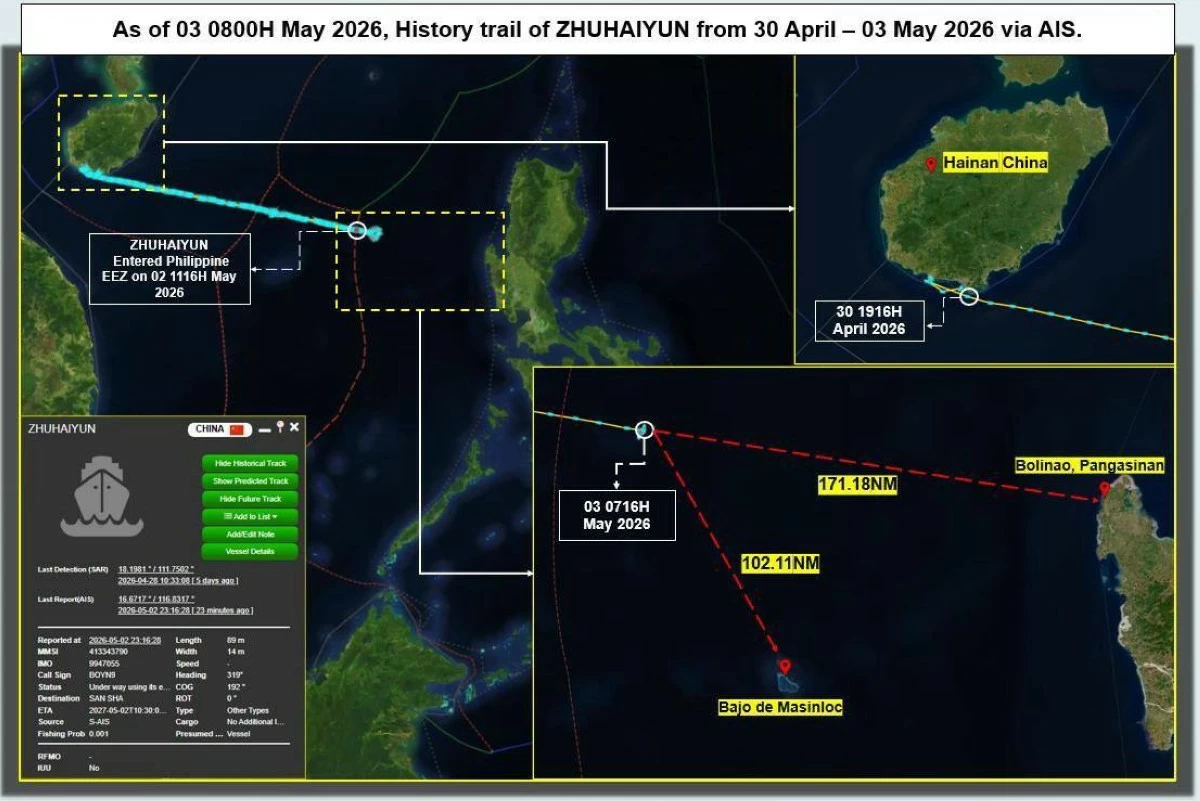
It said Zhuhaiyun was monitored 102.11 nautical miles northwest off Bajo de Masinloc (BDM) or 171.18 nautical miles west off Bolinao, Pangasinan; Xiangyanghong 33 was spotted 140.47 nautical miles northwest off Rizal, Palawan and within the vicinity of Quirino Atoll; Shi Yan 1 was detected approximately 118 nautical miles west off Itbayat, Batanes; and Jia Geng was located 88.36 nautical miles northeast off Itbayat.
PCG Commandant, Admiral Ronnie Gil Gavan ordered the immediate deployment of PCG aircraft and vessels to challenge and drive away the Chinese research vessels.
“In furtherance of the policy directive of President Ferdinand R Marcos Jr, the Philippine Coast Guard remains steadfast in safeguarding the country’s maritime domain. We will not tolerate any illegal marine scientific research conducted without our government’s consent,” Gavan said.
“We are deploying aircraft and vessels to challenge and drive away these unauthorized vessels to protect Philippine sovereignty and sovereign rights,” he added.
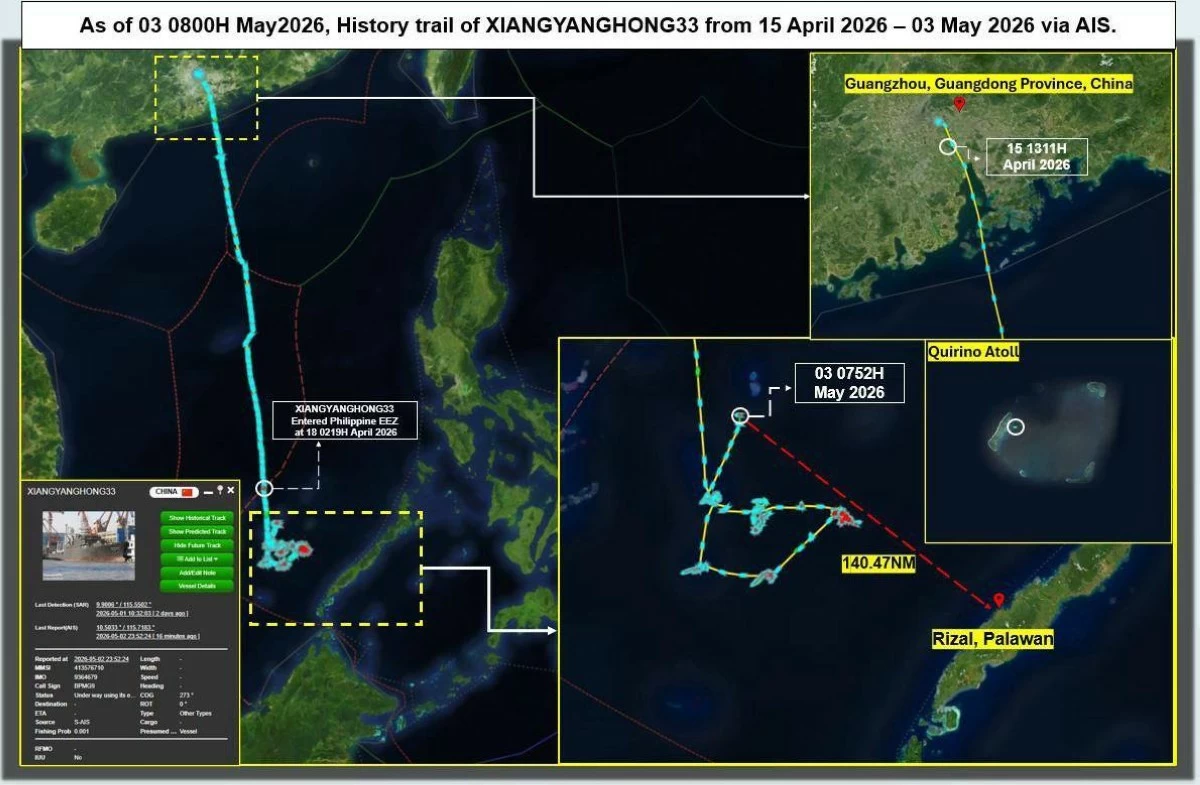
(Courtesy of PCG spokesperson for WPS, Rear Admiral. Jay Tarriela)
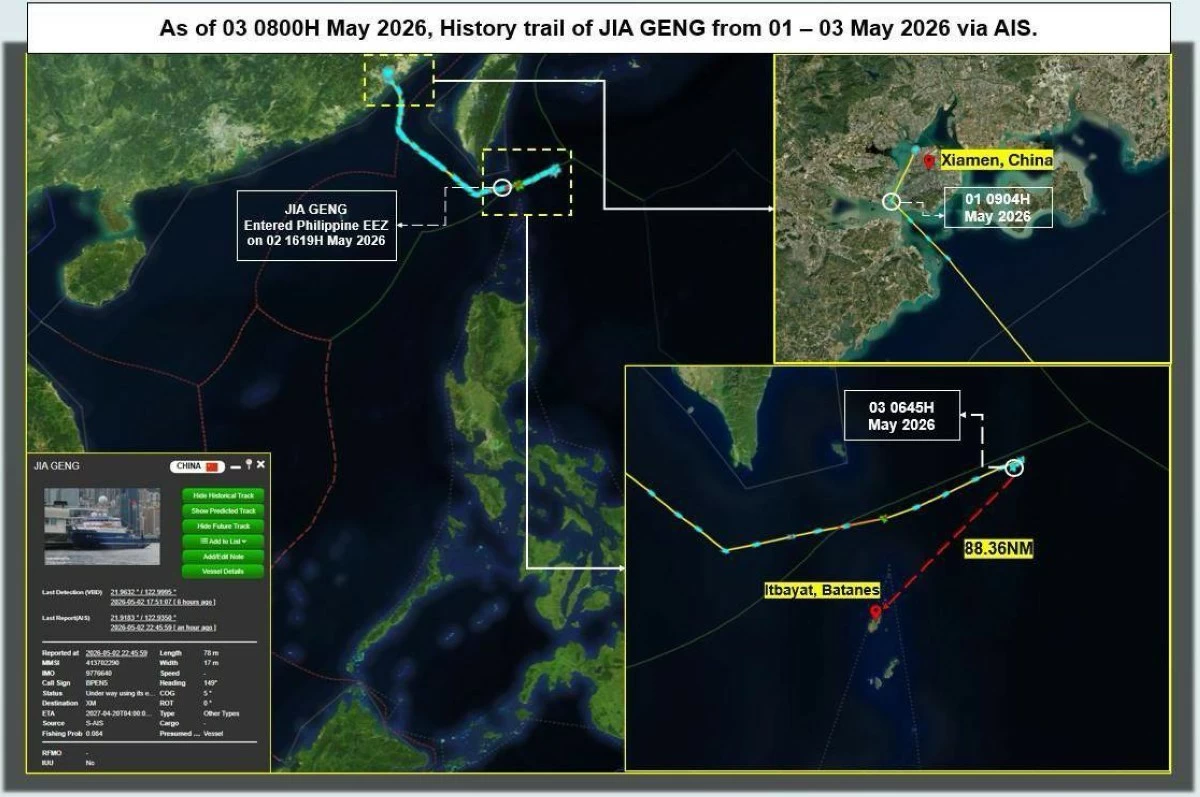
(Courtesy of PCG spokesperson for WPS, Rear Admiral. Jay Tarriela)
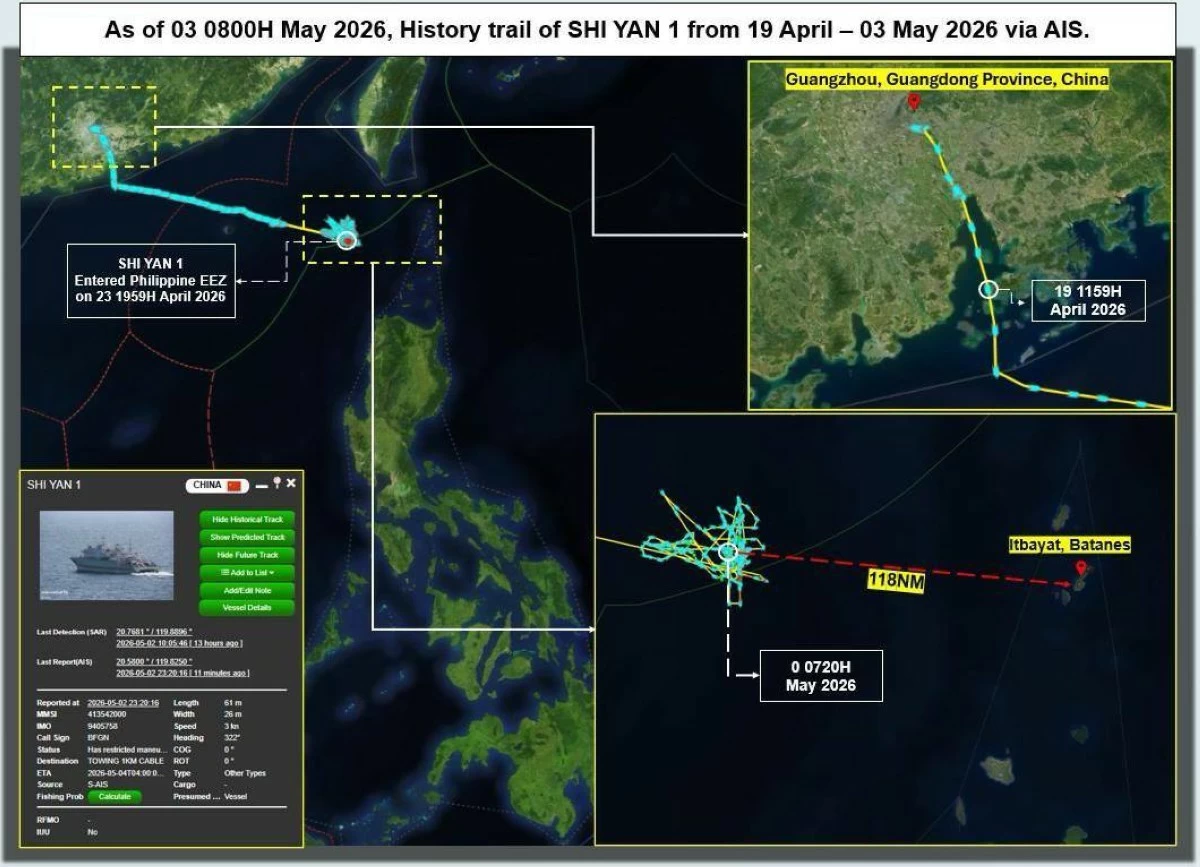
(Courtesy of PCG spokesperson for WPS, Rear Admiral. Jay Tarriela)
(Courtesy of PCG spokesperson for WPS, Rear Admiral. Jay Tarriela)
However, the Chinese Embassy in Manila said the Chinese research vessels operating near Philippine waters were conducting lawful scientific activities and denied claims that they violated international law.
Chinese Embassy Deputy Spokesperson Guo Wei said the vessel Jiageng was proceeding east of the Philippines on a normal transit through the Bashi Channel while carrying out scientific research.
“The Chinese research vessel Jiageng is proceeding as planned to waters east of the Philippines to conduct scientific research. It is making a normal transit through the Bashi Channel,” Guo said.
He added that three other Chinese research vessels were operating in areas he described as “Chinese jurisdiction in the South China Sea.”
Guo stressed that the activities complied with international law and maritime practice.
“The navigation and research activities of these vessels comply with international law and practice, including the relevant conventions, and are beyond reproach,” he said.
Successful civilian mission
Meanwhile, the Armed Forces of the Philippines (AFP) lauded the “Atin Ito” Coalition after the civilian-led group successfully reached Pag-asa (Thitu) Island and planted the Philippine flag on a nearby maritime flashpoint in the WPS.
Philippine Navy (PN) reservist Roy Vincent Trinidad, Armed Forces of the Philippines (AFP) spokesperson for WPS, described the mission by the Atin Ito Coalition to Pag-asa Island as a “profound testament to the indomitable spirit of the Filipino people.”
“This is not merely a symbolic gesture; it is a powerful assertion of our sovereign rights and a demonstration of active citizenship in the face of external challenges,” said Trinidad, a retired Navy admiral.
(Courtesy of Atin Ito Coalition)
The Atin Ito Coalition’s fourth civilian mission was deemed a success after its main vessel, MV Kapitan Felix Oca, reached Pag-asa Island around 5:30 p.m. on Saturday, May 2.
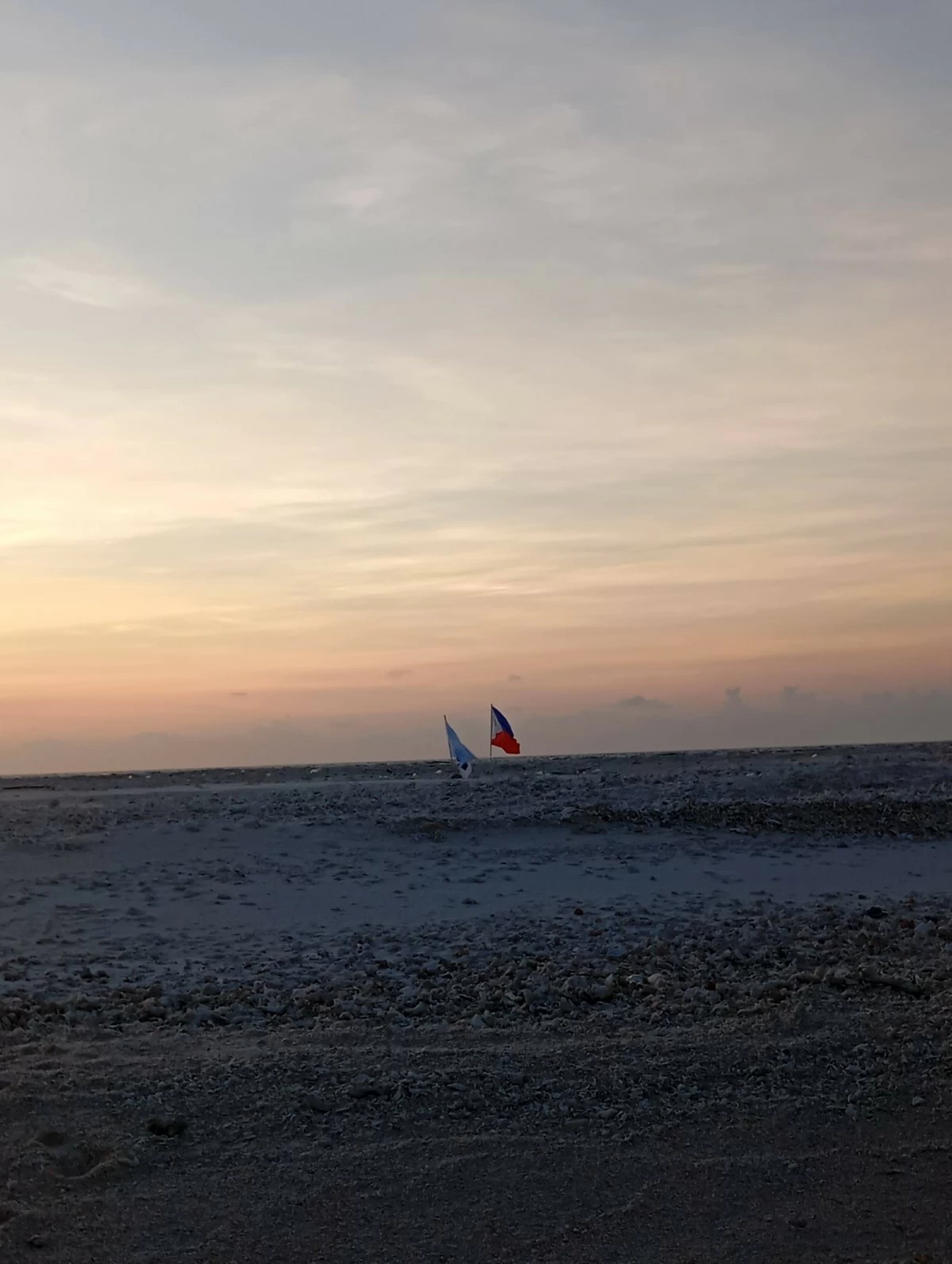
Around 5:40 a.m. on Sunday, a small team led by Akbayan Rep. Dadah Kiram Ismula navigated a rubber boat from Pag-asa Island to Pag-asa Cay 2, slipping past multiple Chinese vessels monitoring the area to plant a Philippine flag.
Pag-asa Cay 2 is an extension of Pag-asa Island and sits firmly within Philippine territorial waters. It has recently become a site of intense friction due to the constant presence of the China Coast Guard (CCG) and reports of nearby artificial island-building.
Trinidad emphasized that the voyage amplified the voices of local fisherfolk, noting that it reinforced the truth that the WPS is an integral part of national heritage and livelihood.
“The AFP remains committed to its mandate of protecting our territory and supporting peaceful, rules-based initiatives that uphold the 2016 Arbitral Award,” Trinidad said, referring to the landmark decision that invalidated China’s claims in the South China Sea.
“We stand in solidarity with every Filipino who bravely stands for what is rightfully ours,” he noted.
Shadowed by Chinese ships
However, Atin Ito Coalition said the journey to Pag-asa Island was marked by significant tension.
Before it reached Pag-asa Island, the civilian convoy was shadowed by three CCG vessels with bow numbers “5102”, which was monitored only four nautical miles away from MV Kapitan Felix Oca; “5101”, which was positioned 10 nautical miles out; and “3103” which had been tailing the group since Friday, May 1, hours after it left Manila.
Despite the heavy shadowing, the advance party led by ML Chowee arrived at Pag-asa Island late Friday and immediately began unloading food and fuel supplies for island residents.
“Matagumpay po nating naitaas ang ating bandila sa Pag-asa Cay 2 sa kabila ng mabigat na presensiya ng Tsina (We successfully raised our flag on Pag-asa Cay 2 despite the heavy presence of China),” Ismula said.
She described the flag-planting as a peaceful but firm act of defiance against China. She further stated that no amount of intimidation from Beijing can erase the fact that the waters belong to the Philippines.