






Manila Bulletin
 Philippines
National
OCD rushes disaster response as Mayon Volcano's ashfall affects 52 barangays
Philippines
National
OCD rushes disaster response as Mayon Volcano's ashfall affects 52 barangays
Philippines
National
OCD rushes disaster response as Mayon Volcano's ashfall affects 52 barangays
OCD rushes disaster response as Mayon Volcano's ashfall affects 52 barangays
30,500 families affected in Albay, says OCD official
Published May 3, 2026 10:52 am
|
Updated May 3, 2026 03:29 pm


At A Glance
- The Office of Civil Defense (OCD) intensified response efforts in Albay after ashfall from Mayon Volcano affected 52 barangays.
- Affected barangays were in Guinobatan, Camalig, and Ligao City.
- The Phivolcs maintained Alert Level 3 over Mayon Volcano and enforced a six-kilometer Permanent Danger Zone.
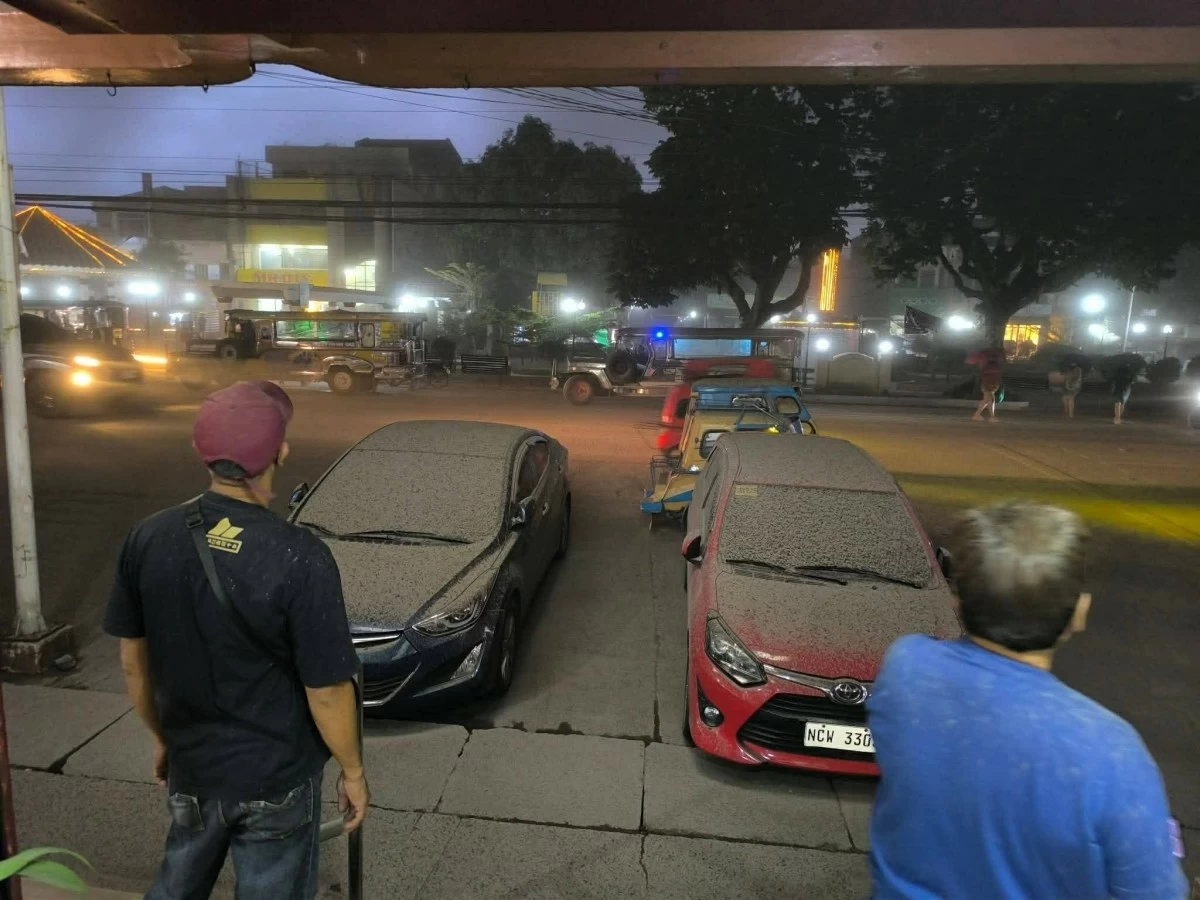
ASHFALL from Mayon Volcano in Legazpi City, Albay (Philippine Red Cross FB)
(UPDATED)
The Office of Civil Defense (OCD) stepped up road clearing, water delivery, and mask distribution in Albay on Sunday, May 3, as ashfall from Mayon Volcano spread across 52 barangays, with authorities keeping Alert Level 3 in place and enforcing a six-kilometer Permanent Danger Zone (PDZ) that prevents the public from entering or staying within the radius of the volcano’s crater because it is considered highly dangerous.
OCD deputy spokesperson Diego Mariano said the situation on the ground remained fluid, with the worst impact in Guinobatan, Camalig, and Ligao City.
As of 3 p.m., Mariano said more than 30,500 families were affected in Albay, including about 1,400 residents who were temporarily sheltered in evacuation centers.
“Alert Level 3 and six-km PDZ remain in effect. Most affected is Guinobatan, Camalig, and Ligao,” he said.
“The continuous dissemination of warnings and advisories in affected and nearby areas is still ongoing, along with coordination of response efforts among agencies. Initially, we distributed face masks, especially in Camalig, and there are more on standby for further distribution,” he added.
Affected barangays were:
Camalig: Anoling, Barangay 1, Barangay 2, Barangay 3, Barangay 4, Barangay 5, Barangay 6, Barangay 7, Cabangan, Gapo (portion), Ilawod, Ilawod (portion), Quirangay, Salugan, Sua, Sumlang (portion), Tumpa;
Guinobatan: Agpay, Bubulusan, Calzada, Doña Tomasa, Inamnan Grande, Inamnan Pequeño Iraya, Ilawod, Lomacao, Lower Binogsacan, Maguiron, Malabnig, Maninila, Mapaco, Minto, Muladbucad Grande, San Rafael, Travesia;
Ligao City: Abella, Allang, Bacong, Balanac, Busac, Francia, Maonon, Malama, Oma-Oma, Palapas, Pandan, Paulba, Pinamaniquian, San Vicente, Tandarura, Tiongson, and Tupas.
Clearing operations
Asst. Sec. Bernardo Rafaelito Alejandro IV, OCD deputy administrator for administration, traveled to Albay to oversee operations and assess needs on site. He met with local officials in Guinobatan, along with the Bureau of Fire Protection (BFP), the Philippine National Police (PNP) Region 5, and the Department of Public Works and Highways (DPWH) to speed up ash clearing on major roads.
The OCD said BFP fire trucks led flushing operations while DPWH handled debris collection. The PNP ensured road safety for responders and motorists.
All national roads remained passable but Alejandro pushed for same-day completion of clearing to reduce risks from thick ash deposits.
The OCD also arranged fuel assistance and the delivery of bottled water to affected communities for ongoing cleanup. It warned that water sources in affected areas could be contaminated by ashfall.
Alejandro also visited the Philippine Institute of Volcanology and Seismology (Phivolcs) Mayon Observatory and inspected Camalig and Guinobatan, which experienced heavy ashfall. He was also set to meet with the Regional Disaster Risk Reduction and Management Council (RDRRMC) Bicol to determine further national government support.
In Ligao City, OCD-5 disaster risk reduction and management (DRRM) division officer-in-charge Akim S. Berces coordinated with local authorities as ashfall reached upland barangays.
Ashfall cleanup began as early as Saturday, with firefighters and residents clearing roads and homes in Camalig.
Mayon’s outburst
Phivolcs reported that over the past 24 hours, Mayon’s activity included lava effusion, collapse pyroclastic density currents, and minor Strombolian eruptions. Short-lived lava fountaining was also observed.
Lava flowed through the Basud, Bonga, and Mi-isi gullies, reaching up to 3.8 kilometers. Sulfur dioxide emissions hit 1,586 tons per day and the volcano generated 32 earthquakes, including 25 tremors lasting up to 15 minutes, along with hundreds of rockfall events and pyroclastic density current signals.
Ashfall drifted toward the southwest as moderate plumes moved west-northwest. Ground deformation showed slight deflation, with early signs of swelling on the northeastern flank. Crater glow also remained visible at night.
The OCD reiterated strict prohibitions on entering the six-kilometer PDZ and cautioned against flying aircraft near the volcano.
Meanwhile, the Phivolcs warned of possible hazards such as rockfalls, ballistic fragments, lava flows, pyroclastic density currents, moderate explosions, and lahars during heavy rains.