







Marcos urged to prioritize Japan-led AZEC
Published May 3, 2026 09:40 am


At A Glance
- The Marcos administration was urged to accelerate ooperation under the Japan-led Asia Zero Emissions Community (AZEC), especially at at a time when the country grapples with the effects of the Middle East crisis.
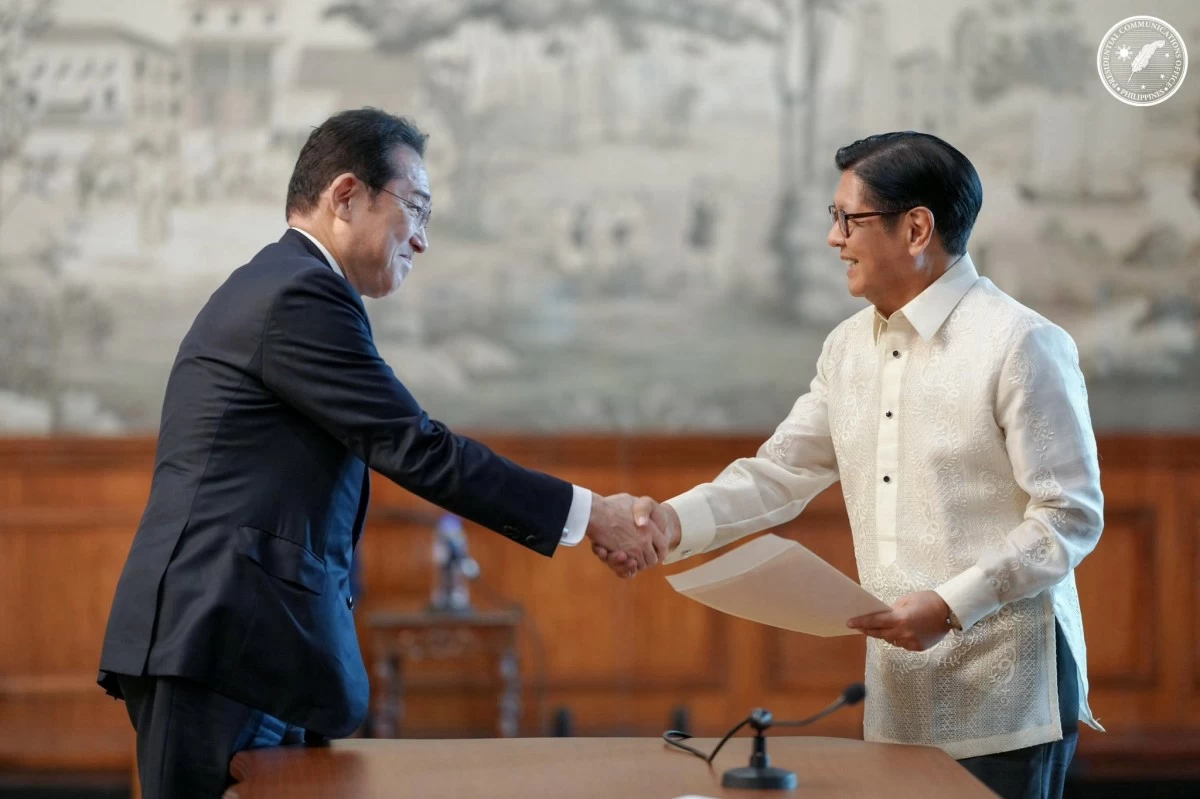
President Ferdinand R. Marcos Jr. meets former Japanese Prime Minister and now Supreme Adviser AZEC Kishida Fumio in a courtesy call at Malacañan Palace on April 30, 2026. (Photo courtesy of PCO)
President Marcos was urged to fast-track cooperation under the Japan-led Asia Zero Emissions Community (AZEC) and steer clear of energy arrangements that may compromise national interests.
Stratbase Institute President Victor Andres “Dindo” Manhit called on the Marcos administration to accelerate energy projects under AZEC and to pursue such initiative with Tokyo and other like-minded partners, rather than get into energy arrangements that could expose the country to geopolitical pressure.
Marcos recently met with former Japanese Prime Minister and now Supreme Adviser AZEC Kishida Fumio in a courtesy call at Malacañan Palace on April 30, where they reaffirmed their commitment to deepen cooperation on energy security and accelerate the transition from fossil fuels to renewable energy.
“The Philippines must be unequivocal in its direction and choose arrangements that deliver real, sustainable prosperity. It must build its energy future with partners that respect its sovereignty and share its support for a rules-based order. More importantly, it must choose a path where it can strengthen its own capabilities without compromising on its national interests,” Stratbase Institute said in statement on Sunday, May 3.
Manhit underscored that the Philippines’ participation in AZEC comes at a critical time as the world grapples with a global energy crisis triggered by the Middle East conflict, prompting countries to accelerate the shift toward cleaner and more resilient energy systems.
The Stratbase Institute President said that AZEC offered the Philippines a “credible and forward-looking framework that advances three essential goals simultaneously: energy security, economic growth, and decarbonization.”
Manhit also noted that Japan has demonstrated a model of cooperation anchored on transparency, respect for international law, and capacity-building.
He stressed that the Philippines must remain cautious of risky proposals which carry serious geopolitical costs.
“Any energy arrangement that comes with implicit or explicit concessions in the West Philippine Sea, or that turns a blind eye on the ongoing coercion there, directly undermines the country’s sovereign and national interests,” the institute said.
During the meeting between Marcos and Kishida, Marcos underscored the importance of the initiative at a time when the country grapples with the effects of the Middle East crisis.
“I understand that you are here to promote AZEC, a very important initiative, especially in this time. It was already very important before, but it has become especially pressing and critical with all of the events that are transpiring in the Middle East and the effects that it has had on the entire energy system of the world,” the President said.
Marcos said disruptions in global energy supply highlight the urgency of accelerating the country’s shift toward cleaner and more resilient energy systems.
“We hope that we can continue our work in moving our countries away from fossil fuels and absorb more of the renewables technology that we have been trying to shift to,” he added.