

ADVERTISEMENT

What if an impeached official resigns mid-trial? Sotto gives his two cents

Published May 2, 2026 04:52 pm

At A Glance

  • If an impeached official resigns while his or her trial in the Senate is underway, legal uncertainties emerge—particularly on whether the case becomes moot or if disqualification from future office remains on the table.
If an impeached official resigns while his or her trial in the Senate is underway, legal uncertainties emerge—particularly on whether the case becomes moot or if disqualification from future office remains on the table.
Senate President Vicente
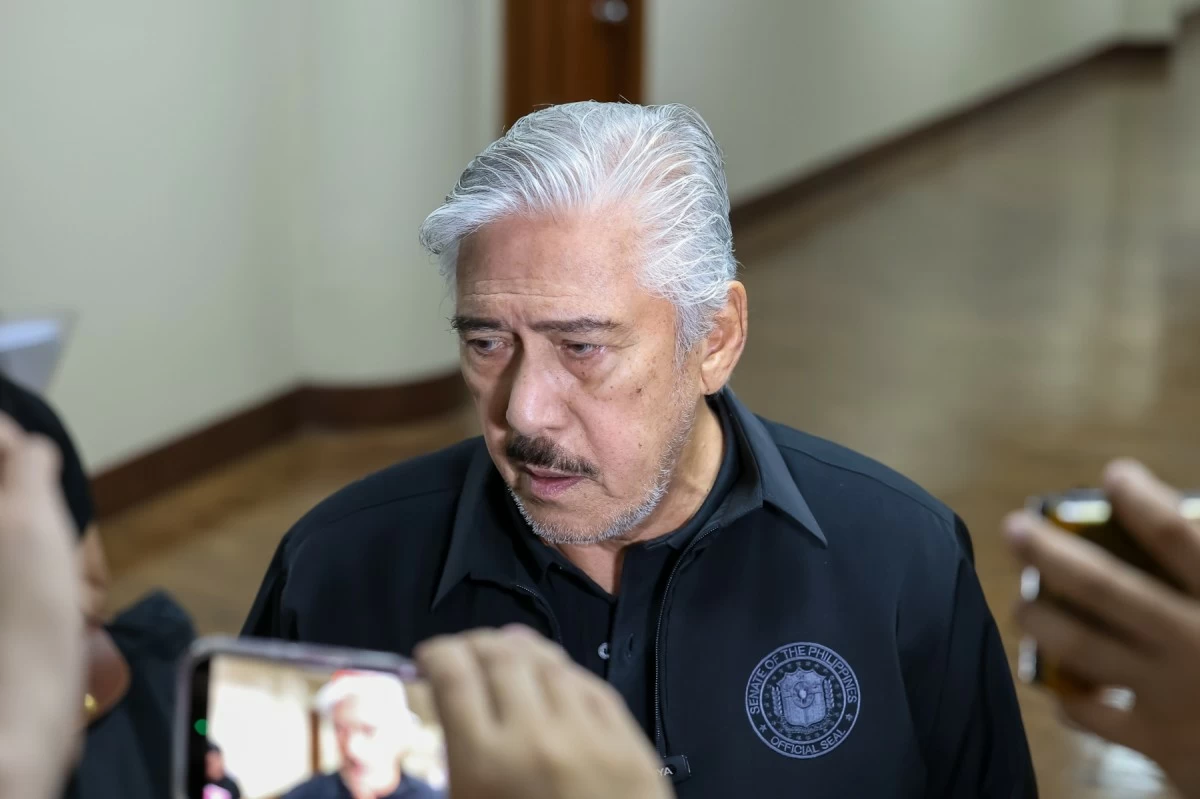
Senate President Vicente "Tito" Sotto III (Senate PRIB photo)
Based on the impeachment primer from the University of the Philippines College of Law, if an official is “impeached", Congress has essentially found sufficient grounds to charge the official so that he or she may be tried in the Senate.
Senate President Vicente "Tito" Sotto III gave his take on the matter.
According to him, there are differing legal views on whether an impeachment trial should proceed if an official resigns mid-proceedings, noting that the prevailing opinion leans toward terminating the case once the official steps down.
“Dalawang view ang nabasa ko na sa ganyan eh...Mayroong nagsasabi at ito yung mas maraming naniniwala, nagresign eh sinong i-impeach mo? Kung nag-resign yung opisyal, wala ka nang i-impeach. Mayroong namang nagsasabi na dapat daw ituloy para malaman etc. pero mas mabigat yung isang view sa tingin ko (I’ve read two views about that… One says—and this is what more people believe—if the official resigned, then who are you going to impeach? If the official already resigned, there’s no one left to impeach. But there’s another view that says it should still be pursued so the truth can be known, etc. However, the first view seems weightier to me),” Sotto said in an interview with Usapang Senado on DWIZ radio.
He notes that the issue requires further study, and that he has been reviewing past impeachment proceedings in the Philippines and the United States.
“Pag aralan nating mabuti tanungin natin ang mga libro tungkol diyan...binabasa ko lahat ng proceedings ng tatlong impeachment na nangyari sa atin, dalawang nabuo eh. At pinag-aaralan ko yung tatlong impeachment sa Amerika (Let us study it carefully and consult the books on the matter. I am reviewing all the proceedings of the three impeachment cases that took place in the Philippines—two of which were completed—and I am also studying the three impeachment cases in the United States),” he said.
Sotto also addressed the question about whether an impeachable official who resigned before a verdict could still run for public office in the future.
“Siyempre, dahil una hindi siya na-impeach, pangalawa walang desisyon ng perpetual disqualification. Di kasama sa ano yun ah, na-impeach ka, separate penalty yung perpetual disqualification (Of course, first, the official would not have been impeached. Second, there would be no ruling on perpetual disqualification. That is not included in the impeachment itself; perpetual disqualification is a separate penalty),” he said.
He explained that, based on his understanding, a vote on guilt in an impeachment trial is distinct from a vote on the penalty of perpetual disqualification from public office.
This was also stated in the impeachment primer of the UP College of Law, it states that an impeached official is “convicted” (or acquitted) if at least two-thirds of all the members of the Senate find her guilty (or not guilty) of the charges filed by the House of Representatives.
"Once convicted, the respondent is removed from public office and the Senate has the discretion to impose the additional penalty of permanent disqualification from holding any and all further public office."
Recently, the House Committee on Justice unanimously declared the existence of probable cause in the two active impeachment complaints this year against Vice President Sara Duterte.

Related Tags

impeachment trial Senate President Vicente \"Tito\" Sotto III Vice President Sara Duterte
ADVERTISEMENT
.most-popular .layout-ratio{ padding-bottom: 79.13%; } @media (min-width: 768px) and (max-width: 1024px) { .widget-title { font-size: 15px !important; } }

{{ articles_filter_1561_widget.title }}

.most-popular .layout-ratio{ padding-bottom: 79.13%; } @media (min-width: 768px) and (max-width: 1024px) { .widget-title { font-size: 15px !important; } }

{{ articles_filter_1562_widget.title }}

.most-popular .layout-ratio{ padding-bottom: 79.13%; } @media (min-width: 768px) and (max-width: 1024px) { .widget-title { font-size: 15px !important; } }

{{ articles_filter_1563_widget.title }}

{{ articles_filter_1564_widget.title }}

.mb-article-details { position: relative; } .mb-article-details .article-body-preview, .mb-article-details .article-body-summary{ font-size: 17px; line-height: 30px; font-family: "Libre Caslon Text", serif; color: #000; } .mb-article-details .article-body-preview iframe , .mb-article-details .article-body-summary iframe{ width: 100%; margin: auto; } .read-more-background { background: linear-gradient(180deg, color(display-p3 1.000 1.000 1.000 / 0) 13.75%, color(display-p3 1.000 1.000 1.000 / 0.8) 30.79%, color(display-p3 1.000 1.000 1.000) 72.5%); position: absolute; height: 200px; width: 100%; bottom: 0; display: flex; justify-content: center; align-items: center; padding: 0; } .read-more-background a{ color: #000; } .read-more-btn { padding: 17px 45px; font-family: Inter; font-weight: 700; font-size: 18px; line-height: 16px; text-align: center; vertical-align: middle; border: 1px solid black; background-color: white; } .hidden { display: none; }
function initializeAllSwipers() { // Get all hidden inputs with cms_article_id document.querySelectorAll('[id^="cms_article_id_"]').forEach(function (input) { const cmsArticleId = input.value; const articleSelector = '#article-' + cmsArticleId + ' .body_images'; const swiperElement = document.querySelector(articleSelector); if (swiperElement && !swiperElement.classList.contains('swiper-initialized')) { new Swiper(articleSelector, { loop: true, pagination: false, navigation: { nextEl: '#article-' + cmsArticleId + ' .swiper-button-next', prevEl: '#article-' + cmsArticleId + ' .swiper-button-prev', }, }); } }); } setTimeout(initializeAllSwipers, 3000); const intersectionObserver = new IntersectionObserver( (entries) => { entries.forEach((entry) => { if (entry.isIntersecting) { const newUrl = entry.target.getAttribute("data-url"); if (newUrl) { history.pushState(null, null, newUrl); let article = entry.target; // Extract metadata const author = article.querySelector('.author-section').textContent.replace('By', '').trim(); const section = article.querySelector('.section-info ').textContent.replace(' ', ' '); const title = article.querySelector('.article-title h1').textContent; // Parse URL for Chartbeat path format const parsedUrl = new URL(newUrl, window.location.origin); const cleanUrl = parsedUrl.host + parsedUrl.pathname; // Update Chartbeat configuration if (typeof window._sf_async_config !== 'undefined') { window._sf_async_config.path = cleanUrl; window._sf_async_config.sections = section; window._sf_async_config.authors = author; } // Track virtual page view with Chartbeat if (typeof pSUPERFLY !== 'undefined' && typeof pSUPERFLY.virtualPage === 'function') { try { pSUPERFLY.virtualPage({ path: cleanUrl, title: title, sections: section, authors: author }); } catch (error) { console.error('ping error', error); } } // Optional: Update document title if (title && title !== document.title) { document.title = title; } } } }); }, { threshold: 0.1 } ); function showArticleBody(button) { const article = button.closest("article"); const summary = article.querySelector(".article-body-summary"); const body = article.querySelector(".article-body-preview"); const readMoreSection = article.querySelector(".read-more-background"); // Hide summary and read-more section summary.style.display = "none"; readMoreSection.style.display = "none"; // Show the full article body body.classList.remove("hidden"); } document.addEventListener("DOMContentLoaded", () => { let loadCount = 0; // Track how many times articles are loaded const offset = [1, 2, 3, 4, 5, 6, 7, 8, 9, 10]; // Offset values const currentUrl = window.location.pathname.substring(1); let isLoading = false; // Prevent multiple calls if (!currentUrl) { console.log("Current URL is invalid."); return; } const sentinel = document.getElementById("load-more-sentinel"); if (!sentinel) { console.log("Sentinel element not found."); return; } function isSentinelVisible() { const rect = sentinel.getBoundingClientRect(); return ( rect.top < window.innerHeight && rect.bottom >= 0 ); } function onScroll() { if (isLoading) return; if (isSentinelVisible()) { if (loadCount >= offset.length) { console.log("Maximum load attempts reached."); window.removeEventListener("scroll", onScroll); return; } isLoading = true; const currentOffset = offset[loadCount]; window.loadMoreItems().then(() => { let article = document.querySelector('#widget_1690 > div:nth-last-of-type(2) article'); intersectionObserver.observe(article) loadCount++; }).catch(error => { console.error("Error loading more items:", error); }).finally(() => { isLoading = false; }); } } window.addEventListener("scroll", onScroll); });

Sign up by email to receive news.