ADVERTISEMENT

Embracing intelligence

Published May 2, 2026 12:05 am  |  Updated May 1, 2026 04:00 pm
Artificial intelligence (AI) is no longer a futuristic concept reserved for Silicon Valley or global banks—it is already reshaping how Filipinos save, borrow, spend, work, and do business. The question now is no longer whether AI will change the Philippine economy; it already is. The more urgent question is whether individuals, businesses, and policymakers are moving fast enough to adapt.
Two recent studies paint a compelling picture of both the opportunities and the challenges AI presents.
The first, from state-run think tank Philippine Institute for Development Studies (PIDS), showed that digital finance and AI can significantly widen financial inclusion. Filipinos who actively use digital financial platforms are far more likely to own formal financial accounts, use mobile money, and conduct online financial transactions. A one-unit increase in the Digital Financial Engagement Index was linked to a 78.5-percentage-point (ppt) rise in formal account ownership, a 59.3-ppt increase in mobile money use, and a 157-ppt increase in online financial transactions. These are not just statistics—they reflect real opportunities for millions of Filipinos to access credit, build savings, and participate more fully in the formal economy.
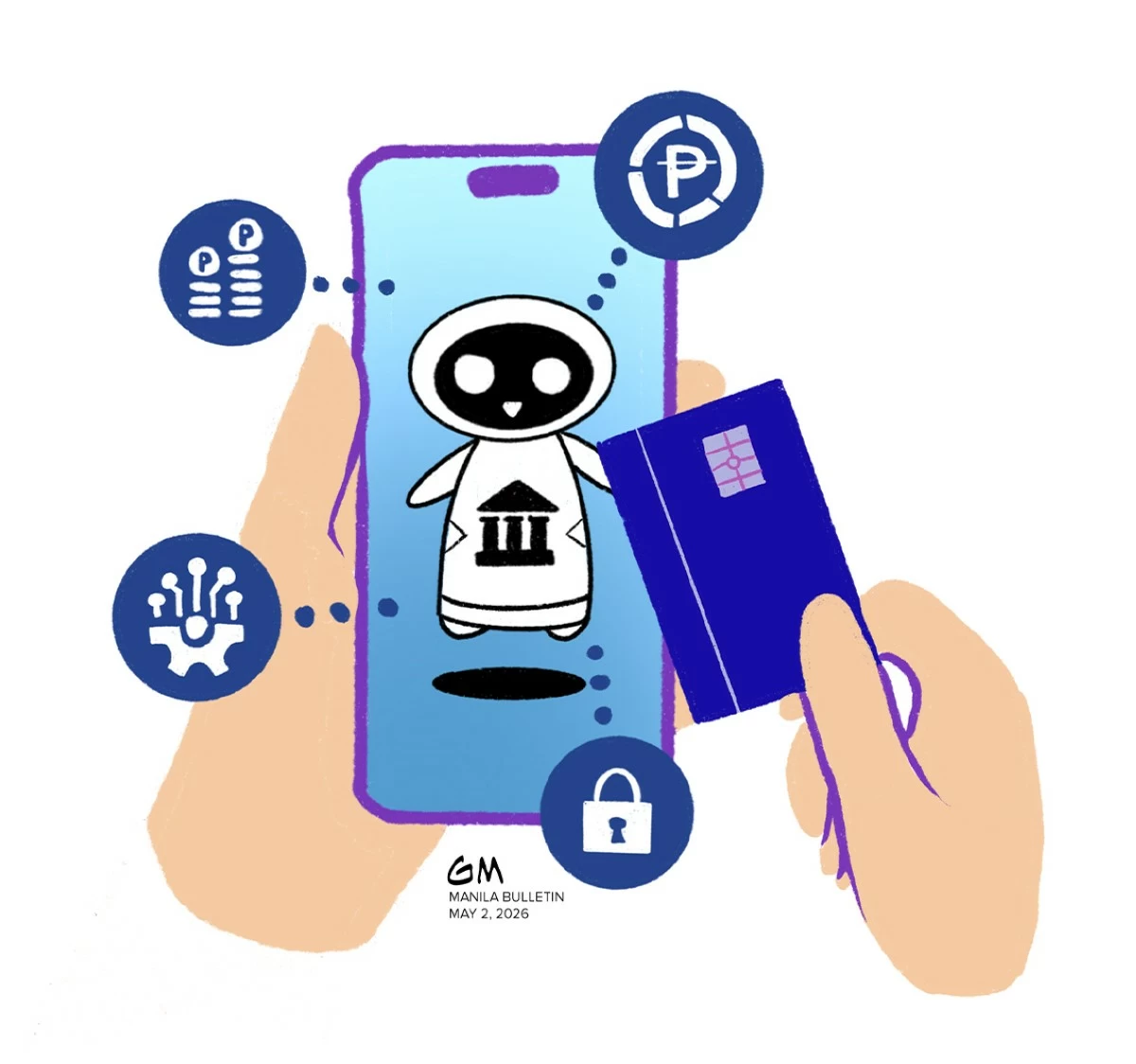
AI is already making this possible. Large banks are using it for fraud detection, anti-money laundering (AML), customer engagement, and credit risk management, while digital platforms increasingly rely on AI to assess creditworthiness, personalize services, and protect consumers from scams. In a country where distance, cost, and documentation remain barriers to financial inclusion, AI can help bridge longstanding gaps.
But the same PIDS study also sounded the alarm. Financial exclusion remains stubbornly high, with more than half of Filipino adults still unbanked. Cybersecurity threats are rising, financial literacy remains weak, and rural communities risk being left behind. Without targeted investments in digital infrastructure, AI education, and cybersecurity, AI could deepen inequality instead of narrowing it.
The second study, by global professional services firm Aon, focused on the labor market—and the findings were just as sobering. Only 17 percent of Philippine employers said they are able to recruit and retain enough workers with AI skills, seven ppts below the global average. This is happening even as AI adoption accelerates, with nearly half of Philippine firms already fully deploying AI and another 25 percent piloting it.
Businesses clearly understand the benefits of AI and are using it to automate routine tasks, improve efficiency, and drive innovation. Encouragingly, most employers do not see AI as a wholesale job killer: 94 percent believe AI will create new opportunities and require new skills, while 92 percent say existing roles will still be necessary even if some tasks are automated. This should reassure workers who fear displacement, because AI is more likely to augment jobs than erase them—but augmentation still demands preparation.
Workers must invest in continuous learning, as skills such as adaptability, change management, data literacy, and digital fluency are becoming as important as traditional technical expertise. Employers, for their part, must do more than simply deploy AI tools. They must invest in people by reskilling and upskilling employees, improving pay transparency, benchmarking compensation, and offering compelling employee value propositions to attract scarce AI talent. Businesses that automate without investing in human capital may enjoy short-term efficiency gains, but they risk long-term talent shortages and operational weakness.
Government also has a crucial role to play. It must improve internet connectivity and electricity access in rural areas, strengthen cybersecurity safeguards, align policies with the National AI Strategy Roadmap 2.0, and modernize education systems to prepare students for an AI-driven economy.
AI is not inherently good or bad; it is a tool. Used wisely, it can expand financial inclusion, improve productivity, create better jobs, and strengthen economic growth. Used poorly—or ignored—it can widen inequality, deepen skills gaps, and leave businesses and workers behind.
The future will not wait. The Philippines must embrace AI with urgency, but also with discipline, investment, and foresight. For businesses, this means adopting AI strategically while building stronger, smarter teams. For individuals, it means learning new skills and staying adaptable. For the country, it means ensuring this technological revolution becomes an opportunity for all—not just for the few.

Related Tags

artificial intelligence AI Editorial
ADVERTISEMENT
.most-popular .layout-ratio{ padding-bottom: 79.13%; } @media (min-width: 768px) and (max-width: 1024px) { .widget-title { font-size: 15px !important; } }

{{ articles_filter_1561_widget.title }}

.most-popular .layout-ratio{ padding-bottom: 79.13%; } @media (min-width: 768px) and (max-width: 1024px) { .widget-title { font-size: 15px !important; } }

{{ articles_filter_1562_widget.title }}

.most-popular .layout-ratio{ padding-bottom: 79.13%; } @media (min-width: 768px) and (max-width: 1024px) { .widget-title { font-size: 15px !important; } }

{{ articles_filter_1563_widget.title }}

{{ articles_filter_1564_widget.title }}

.mb-article-details { position: relative; } .mb-article-details .article-body-preview, .mb-article-details .article-body-summary{ font-size: 17px; line-height: 30px; font-family: "Libre Caslon Text", serif; color: #000; } .mb-article-details .article-body-preview iframe , .mb-article-details .article-body-summary iframe{ width: 100%; margin: auto; } .read-more-background { background: linear-gradient(180deg, color(display-p3 1.000 1.000 1.000 / 0) 13.75%, color(display-p3 1.000 1.000 1.000 / 0.8) 30.79%, color(display-p3 1.000 1.000 1.000) 72.5%); position: absolute; height: 200px; width: 100%; bottom: 0; display: flex; justify-content: center; align-items: center; padding: 0; } .read-more-background a{ color: #000; } .read-more-btn { padding: 17px 45px; font-family: Inter; font-weight: 700; font-size: 18px; line-height: 16px; text-align: center; vertical-align: middle; border: 1px solid black; background-color: white; } .hidden { display: none; }
function initializeAllSwipers() { // Get all hidden inputs with cms_article_id document.querySelectorAll('[id^="cms_article_id_"]').forEach(function (input) { const cmsArticleId = input.value; const articleSelector = '#article-' + cmsArticleId + ' .body_images'; const swiperElement = document.querySelector(articleSelector); if (swiperElement && !swiperElement.classList.contains('swiper-initialized')) { new Swiper(articleSelector, { loop: true, pagination: false, navigation: { nextEl: '#article-' + cmsArticleId + ' .swiper-button-next', prevEl: '#article-' + cmsArticleId + ' .swiper-button-prev', }, }); } }); } setTimeout(initializeAllSwipers, 3000); const intersectionObserver = new IntersectionObserver( (entries) => { entries.forEach((entry) => { if (entry.isIntersecting) { const newUrl = entry.target.getAttribute("data-url"); if (newUrl) { history.pushState(null, null, newUrl); let article = entry.target; // Extract metadata const author = article.querySelector('.author-section').textContent.replace('By', '').trim(); const section = article.querySelector('.section-info ').textContent.replace(' ', ' '); const title = article.querySelector('.article-title h1').textContent; // Parse URL for Chartbeat path format const parsedUrl = new URL(newUrl, window.location.origin); const cleanUrl = parsedUrl.host + parsedUrl.pathname; // Update Chartbeat configuration if (typeof window._sf_async_config !== 'undefined') { window._sf_async_config.path = cleanUrl; window._sf_async_config.sections = section; window._sf_async_config.authors = author; } // Track virtual page view with Chartbeat if (typeof pSUPERFLY !== 'undefined' && typeof pSUPERFLY.virtualPage === 'function') { try { pSUPERFLY.virtualPage({ path: cleanUrl, title: title, sections: section, authors: author }); } catch (error) { console.error('ping error', error); } } // Optional: Update document title if (title && title !== document.title) { document.title = title; } } } }); }, { threshold: 0.1 } ); function showArticleBody(button) { const article = button.closest("article"); const summary = article.querySelector(".article-body-summary"); const body = article.querySelector(".article-body-preview"); const readMoreSection = article.querySelector(".read-more-background"); // Hide summary and read-more section summary.style.display = "none"; readMoreSection.style.display = "none"; // Show the full article body body.classList.remove("hidden"); } document.addEventListener("DOMContentLoaded", () => { let loadCount = 0; // Track how many times articles are loaded const offset = [1, 2, 3, 4, 5, 6, 7, 8, 9, 10]; // Offset values const currentUrl = window.location.pathname.substring(1); let isLoading = false; // Prevent multiple calls if (!currentUrl) { console.log("Current URL is invalid."); return; } const sentinel = document.getElementById("load-more-sentinel"); if (!sentinel) { console.log("Sentinel element not found."); return; } function isSentinelVisible() { const rect = sentinel.getBoundingClientRect(); return ( rect.top < window.innerHeight && rect.bottom >= 0 ); } function onScroll() { if (isLoading) return; if (isSentinelVisible()) { if (loadCount >= offset.length) { console.log("Maximum load attempts reached."); window.removeEventListener("scroll", onScroll); return; } isLoading = true; const currentOffset = offset[loadCount]; window.loadMoreItems().then(() => { let article = document.querySelector('#widget_1690 > div:nth-last-of-type(2) article'); intersectionObserver.observe(article) loadCount++; }).catch(error => { console.error("Error loading more items:", error); }).finally(() => { isLoading = false; }); } } window.addEventListener("scroll", onScroll); });

Sign up by email to receive news.