







DND chief rejects peace talks with Reds
Gov't peace adviser pushes for rebel integration
Published May 2, 2026 12:34 pm
|
Updated May 2, 2026 01:28 pm


At A Glance
- Defense Secretary Gilberto Teodoro Jr. rejected calls to resume peace talks with the CPP–NPA–NDF.
- He insisted the group's actions are "criminal" and "terrorism," not a legitimate political struggle.
- He argued that negotiating would wrongly legitimize their cause.
- Meanwhile, Presidential Peace Adviser Mel Senen Sarmiento is promoting a different approach: localized peace talks and reintegration programs.
- Backed by President Ferdinand Marcos Jr., this strategy focuses on community-level dialogue, amnesty, and support services to address root causes of conflict and encourage former rebels to return to civilian life.
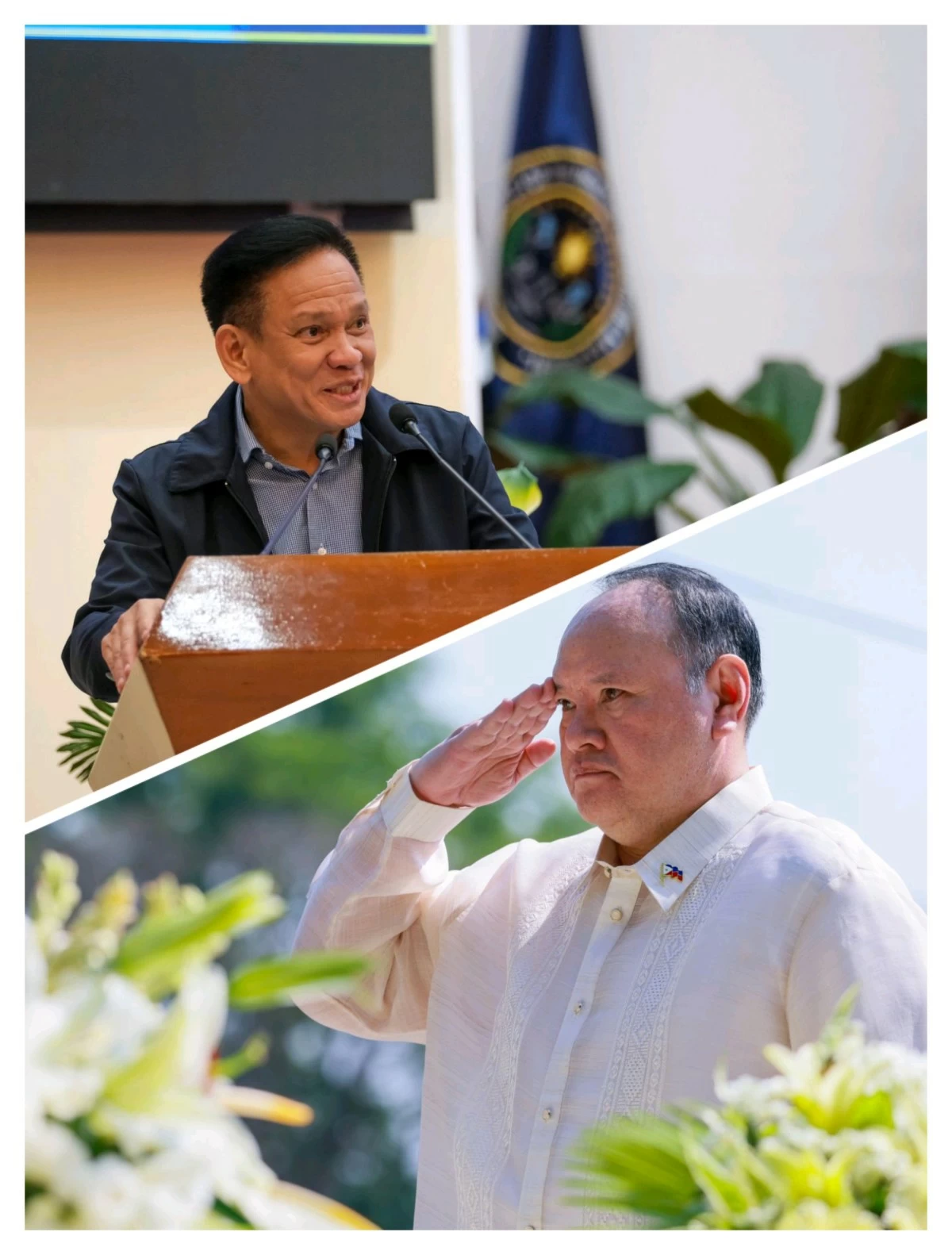
(Top-bottom) Presidential Peace Adviser Mel Senen Sarmiento and Department of National Defense Secretary Gilberto Teodoro Jr. (Photos: OPAPRU, DND)
Department of National Defense (DND) Secretary Gilberto Teodoro Jr. on Saturday, May 2, rejected calls for renewed peace negotiations with the Communist Party of the Philippines-New People’s Army-National Democratic Front (CPP-NPA-NDF), characterizing the group’s activities as criminal acts rather than political struggle.
Teodoro emphasized that the government should not engage in formal dialogue with a group he classified as a “terrorist” organization.
“No, I object to any peace talks with the NPA. The Filipinos are at peace. They are the ones disturbing the peace so why should we talk to them?” Teodoro said.
The defense chief argued that formal talks would validate the insurgents' motives.
“They’re committing crimes, plain and simple, and it’s terrorism, plain and simple. So to call for peace talks is to elevate the morality of their cause to something legitimate, which I cannot accept. Hindi ko matatanggap ‘yun (I cannot accept that),” he added.
Teodoro made the remarks weeks after a bloody encounter between the Philippine Army and remnants of an NPA group in Toboso, Negros Occidental on April 19.
The clash resulted in the deaths of 19 alleged NPA rebels, but the CPP claimed only 10 rebel deaths, saying nine other fatalities were civilians, including University of the Philippines student leader Alyssa Alano, community journalist RJ Ledesma, and Filipino-American activists Lyle Prijoles and Kai Dana-Rene Sorem among others.
The Philippine government and the CPP-NPA-NDF remain without formal peace negotiations, years after talks collapsed amid renewed fighting and political disagreements.
Peace efforts between the two sides have spanned decades, beginning in the late 1980s under then president Corazon Aquino. While early negotiations opened channels for dialogue, they were repeatedly disrupted by clashes on the ground and mutual accusations of bad faith.
In the 1990s and 2000s, negotiations facilitated by Norway led to interim agreements, including accords on human rights and international humanitarian law. However, the parties failed to reach a comprehensive settlement addressing core issues such as land reform, governance, and disarmament.
Talks saw a brief revival in 2016 under former president Rodrigo Duterte, with both sides declaring temporary ceasefires and resuming formal discussions. The process broke down the following year after renewed hostilities and disagreements over conditions for continuing negotiations.
Since then, the government has taken a harder stance, including designating the CPP and NPA as terrorist organizations, while pursuing localized peace engagements and reintegration programs for former rebels.
Sarmiento sees localized peace talks as key to sustainable peace
While the defense sector maintained a hardline stance, the Office of the Presidential Adviser on Peace, Reconciliation and Unity (OPAPRU) pivoted toward a “holistic” civilian-led approach as newly-appointed Presidential Peace Adviser Mel Senen Sarmiento shifted the government's weight toward localized peace engagements and the total reintegration of former rebels.
Sarmiento vowed to deepen community integration efforts as the government pushed to sustain peace gains and bring former members of the CPP–NPA–NDF back into civilian life.
“Under the guidance of President Ferdinand R. Marcos Jr., our goal is not merely the cessation of hostilities but the cultivation of a lasting peace that addresses the root causes of conflict and reinforces positive peace,” Sarmiento said.
The communist insurgency has spanned nearly six decades, affecting rural communities and straining local economies. The government has shifted to localized peace talks in recent years after national negotiations stalled.
“By bringing the government closer to the people, we are proving that the path of peace is far more rewarding than the path of armed struggle,” Sarmiento noted.
“We are committed to ensuring that every individual who chooses to lay down their arms is met with the tools and support necessary to become a partner in national nation-building,” he added.
OPAPRU said it was working closely with local government units, security forces, and national agencies to deliver basic services directly to communities once affected by conflict.
Sarmiento identified localized peace engagements as a key pillar in the peace efforts which involve dialogues and surrender processes at the municipal and provincial levels to address specific grievances.
He also pointed to the government’s amnesty program carried out with the National Amnesty Commission to provide legal normalization for former combatants. Reintegration programs were also expanded including livelihood aid, education, and psychosocial services for former rebels and their families.
“These initiatives aim to address the root causes of conflict while helping former combatants return to peaceful and productive civilian life,” Sarmiento said.