






 Business
Banking & Finance
Landbank says strong fundamentals back Fitch investment-grade rating despite outlook cut
Business
Banking & Finance
Landbank says strong fundamentals back Fitch investment-grade rating despite outlook cut
Landbank says strong fundamentals back Fitch investment-grade rating despite outlook cut


At A Glance
- State-run Land Bank of the Philippines (Landbank) said the reason why global debt watcher Fitch Ratings opted to retain its 'BBB' investment rating was the institution's sound fundamentals and solid governance.
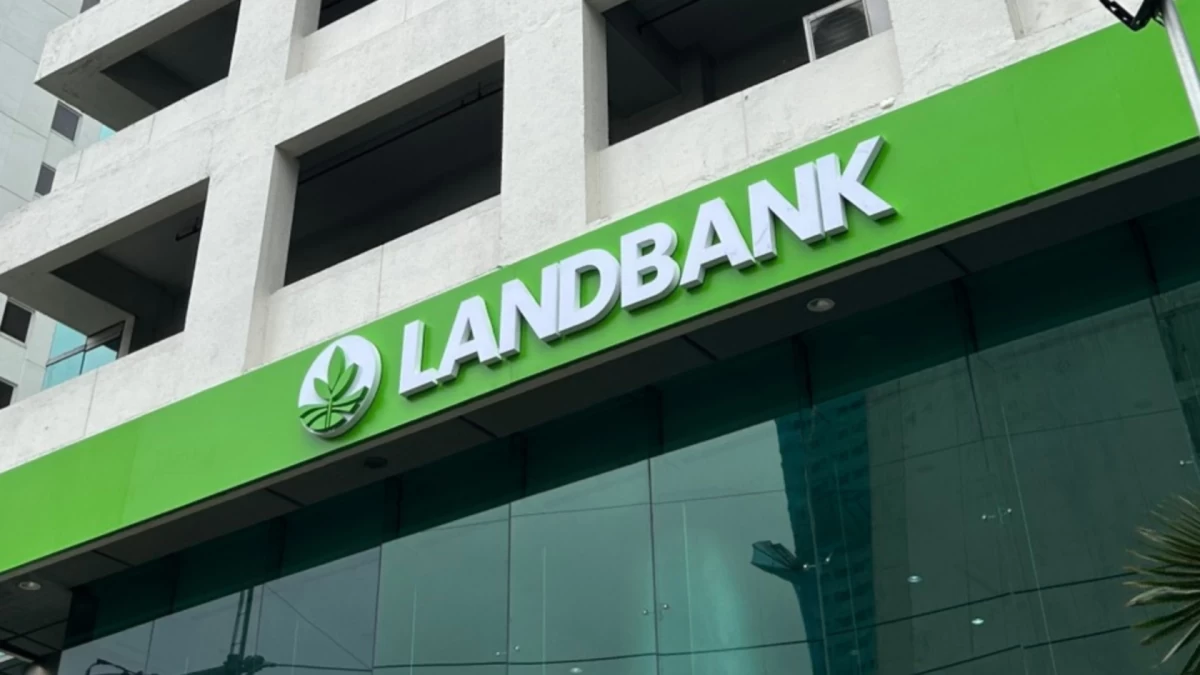
State-run Land Bank of the Philippines (Landbank) said the reason debt watcher Fitch Ratings opted to retain the government financial institution’s (GFI) ‘BBB’ investment rating was its sound fundamentals and solid governance.
“Our investment-grade rating was affirmed because our fundamentals are sound, our governance is strong, and our mandate remains clear,” Landbank President and Chief Executive Officer (CEO) Lynette V. Ortiz said in a statement.
This comes on the heels of Fitch Ratings affirming Landbank’s triple ‘B’ investment grade, even as the credit rating agency tweaked downward the lender’s credit outlook to ‘negative’ from ‘stable’, which only reflects the assessment of the Philippine sovereign credit outlook.
Landbank explained that the downward outlook revision is “sovereign-driven, reflecting current national economic conditions and the close linkage between the bank’s credit ratings and the country’s sovereign credit profile.”
A downgrade in the bank’s credit rating could materialize if the government’s commitment to supporting the bank weakens, possibly through a reduction in state ownership, Fitch said.
Another trigger would be if the bank’s essential policy duties, such as supporting the agricultural sector, are significantly diminished or moved elsewhere.
Although these shifts are currently viewed as unlikely, the bank’s financial standing remains highly sensitive to the country’s overall economic performance.
Fitch said the national government (NG) “has strong capacity and propensity to prioritize any required state support for Landbank” as a preemptive safeguard against macroeconomic risks and downside pressures on the domestic economy.
Landbank holds a significant 14-percent share of all bank deposits in the country, making its stability vital to the health of the entire financial system.
Landbank is mandated to serve and support the agriculture and fisheries sectors, rural development, and priority sectors, including farmers, fishers, agrarian reform beneficiaries (ARBs), and micro, small, and medium enterprises (MSMEs).
Fitch said these segments remain key policy priorities for the Philippines, with the bank’s broader mandate to expand financial inclusion for MSMEs becoming even more important “during periods of slower economic growth.”
Fitch earlier downgraded its outlook on the Philippines’ investment-grade status from ‘stable’ to ‘negative’ due to stalling public investments, compounded by the local economy’s vulnerability to the escalating impacts of the ongoing global energy shock.
This shift in outlook places the Philippines at risk of a potential credit rating downgrade. A ‘negative’ outlook means there is a higher likelihood of a downgrade over a one- to two-year horizon if underlying risks persist or worsen.
Amid the intensifying spillover of global energy disruptions, Landbank vowed to continue supporting its clients, advancing financial inclusion, and contributing to both countryside and national development.
Fitch likewise downgraded its outlook on another GFI, Development Bank of the Philippines (DBP), to ‘negative’ from ‘stable’, while affirming the rating, mirroring the credit watcher’s outlook shift on Landbank. DBP refused to issue a statement on this matter. - Derco Rosal