






Manila Bulletin
 Philippines
National
Lacson vows transparency in flood control probe; Cayetano bats for full-picture approach
Philippines
National
Lacson vows transparency in flood control probe; Cayetano bats for full-picture approach
Philippines
National
Lacson vows transparency in flood control probe; Cayetano bats for full-picture approach
Lacson vows transparency in flood control probe; Cayetano bats for full-picture approach
Published May 1, 2026 05:55 pm


At A Glance
- Senate President Pro Tempore Panfilo Lacson prepared to elevate the Blue Ribbon Committee's progress report on flood control projects to the plenary, and stressed the need to counter false narratives and ensure the public is properly informed.
- Lacson emphasized that while some senators declined to sign the partial report, he respected their decisions and would present a chairman's progress report in a privilege speech.
- Senate Minority Leader Alan Peter Cayetano cautioned against focusing too narrowly on the partial report, and argued that the inquiry must establish the broader systemic issues in flood control projects and avoid misleading narratives.
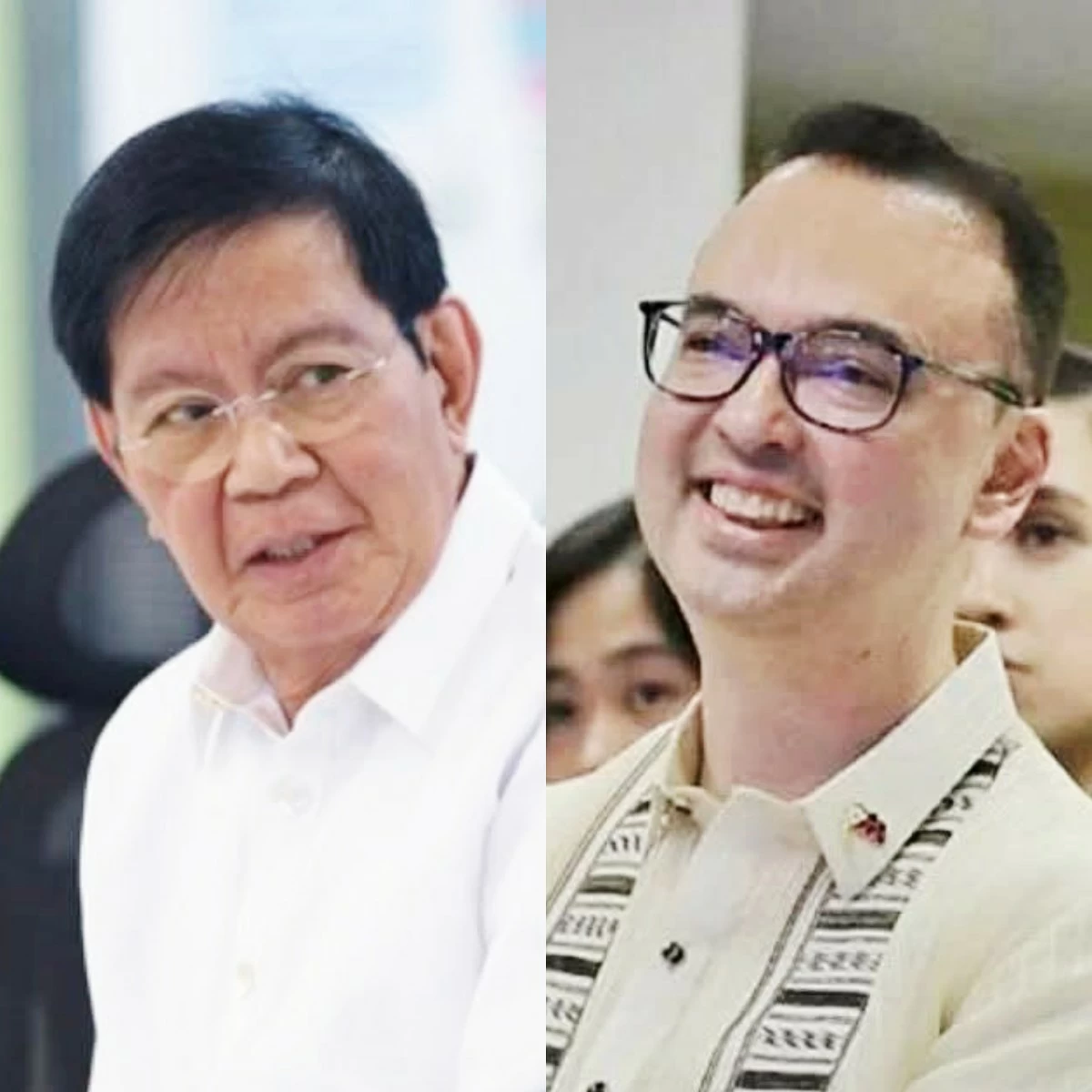
Senate President Pro Tempore Panfilo “Ping” Lacson (left), Senate Minority Leader Alan Peter Cayetano (Facebook)
Senate President Pro Tempore Panfilo “Ping” Lacson underscored the need to provide the public with facts, not false narratives, on the flood control projects mess as he prepared to elevate the Blue Ribbon Committee’s progress report to the plenary.
Lacson, who chairs the Senate Blue Ribbon Committee, says he is determined to present the panel’s accomplishments from seven to eight hearings to keep the public properly informed and to counter misinformation.
“I am decided to bring up in plenary the contents and more of what we have accomplished so far. The Filipino people not only deserve to be updated but more so properly and accurately informed amid the false narratives being floated by some critics,” he said.
(I am decided to bring up in plenary the contents and more of what we have accomplished so far. The Filipino people not only deserve to be updated but more so properly and accurately informed amid the false narratives being floated by some critics.)
The ranking senator stressed that while members of the committee were entitled to their opinions, signing the partial report does not necessarily signify full agreement but allows it to be debated, amended, and eventually adopted in plenary.
With the partial report still lacking signatures for filing and sponsorship, Lacson said he will present a chairman’s progress report containing its substance in a privilege speech.
He reiterated that while he disagrees with colleagues who do not want to sign the report, he respects their individual decisions, including that of Senate Minority Leader Alan Peter Cayetano.
“While I disagree with those who do not want to sign, let me be clear that I respect and understand their individual decisions whatever their reasons are, including that of the minority leader,” Lacson said.
(While I disagree with those who do not want to sign, let me be clear that I respect and understand their individual decisions whatever their reasons are, including that of the minority leader.)
Lacson pointed out that the hearings exposed vital evidence that led to case buildups against personalities involved in the flood control projects corruption scandal.
“It must be recalled that it was President Marcos who triggered, even motivated me and my team to follow through on his ‘Mahiya naman kayo (Shame on you)’ SONA (State of the Nation Address) message last year and I sincerely believe that the hearings triggered and exposed many vital pieces of evidence,” Lacson said.
What's the fuss with the partial report?
Earlier this week, Cayetano questioned the attention given to the partial report, and said the inquiry should focus on establishing the bigger picture.
“Sa tingin ko, we’re making a mountain out of a molehill doon sa partial report. May opportunity tayo na ayusin ang ugat, hindi lang one-time, big-time,” Cayetano said during an inspection of infrastructure projects in Taguig City.
(In my view, we’re making a mountain out of a molehill with the partial report. We have the opportunity to fix the root cause, not just a one-time, big-time solution.)
Cayetano warned that the current discussion risks narrowing the scope of the investigation, with several aspects still unresolved. He noted that some senators have read the report but do not agree with certain portions, underscoring the need for continued deliberation.
“Marami sa amin ang nakabasa na and we don’t agree with the report. Hindi sa ayaw naming pumirma (Many of us have read it and we don’t agree with the report. It’s not that we don’t want to sign), we just have a lot of disagreements there… That’s the beauty of having 24 senators – everyone can question,” he said.
The minority leader emphasized that the inquiry is ongoing, with more stages expected as additional testimonies and evidence are examined. “Ako personally, hindi pa tapos. Iniimbestigahan mo pa lang, marami pang yugto, marami pang nabubuksan,” he added.
(For me personally, it’s not yet finished. You are just starting the investigation, there are still many stages, many things being uncovered.)
Cayetano also raised concern over how the issue has been framed, and noted that early narratives portrayed all projects as “ghost projects” when in fact not all were.
“Ang unang naging problema is we didn’t start with the truth. ‘Di ba, from the start, sinasabi natin na hindi lahat ‘yan ghost projects, pero pinalabas na lahat ghost para mas maraming magalit. Ngayon, ina-admit nila na hindi naman pala lahat ghost,” he said.
(The first problem is we didn’t start with the truth. From the start, we said not all of those were ghost projects, but it was presented as if all were ghost projects to stir anger. Now, they admit not all were ghost projects.)
He stressed that corruption in flood control projects was systemic and not isolated. He reiterated that the objective of the inquiry must be to establish the full picture.
While Cayetano called for a broader approach, Lacson maintained that presenting the committee’s progress in plenary was essential to ensure transparency and accountability, and to keep the public properly informed. (Ellson Quismorio)