ADVERTISEMENT

Filipinos top Asia in viewing climate change as 'very serious problem'

Published May 1, 2026 04:00 pm
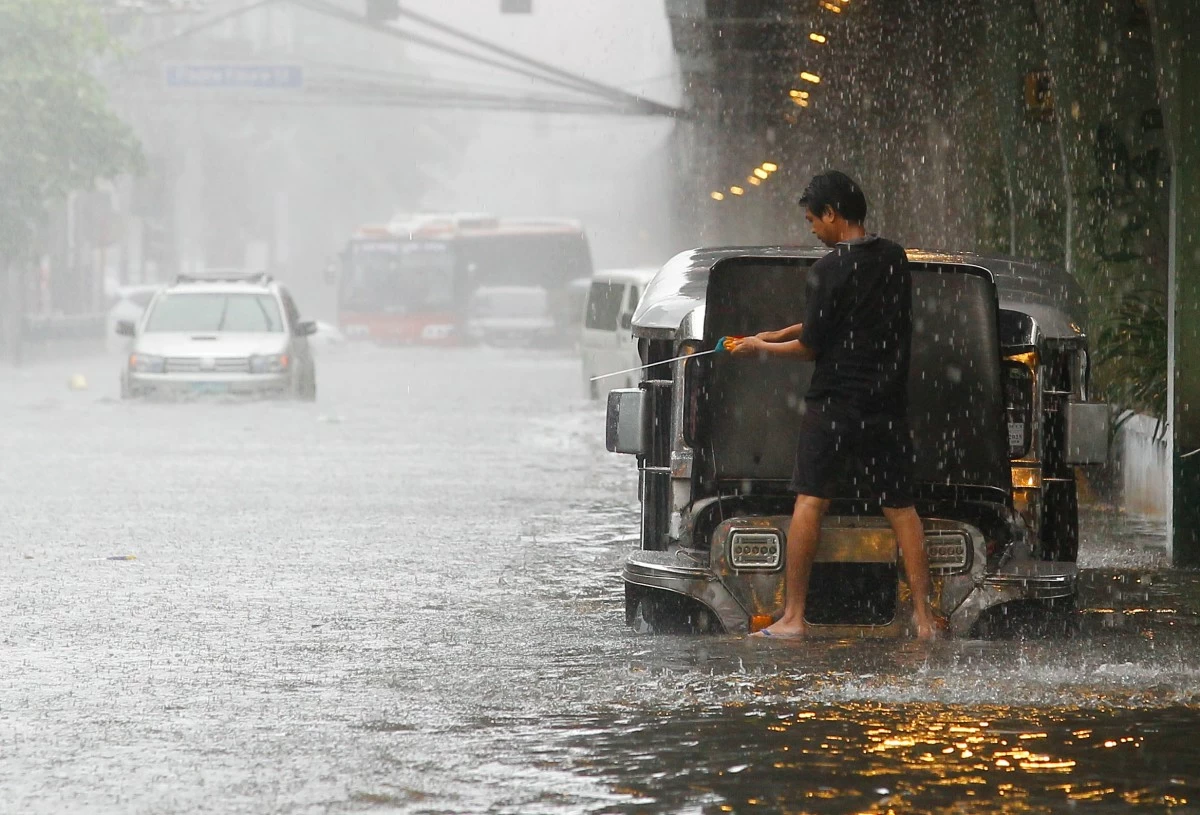
The Philippines tops the WorldRiskIndex 2025 as the most disaster-prone country, with floods, typhoons, and climate change driving high vulnerability. (MARK BALMORES / MANILA BULLETIN / FILE)

Filipinos are the most alarmed in Asia about climate change, with more than four-fifths of respondents viewing it as a “very serious problem,” the highest share among the economies surveyed, according to the Manila-based multilateral lender Asian Development Bank (ADB).

In an economics working paper titled “Predictors of Climate Change Concern and Climate Policy Support: An Analysis Across Asian Economies,” the ADB said its host country recorded the highest level of intense concern among 14 economies covered in the study.

“While concern about climate change is widespread, support for climate policies varies across economies and demographic groups,” said the paper published last Thursday, April 30.

At 81 percent of respondents, the figure places the Philippines ahead of second-placer India (75 percent), as well as Pakistan and Vietnam (both 71 percent), underscoring the country’s heightened awareness of climate risks amid frequent typhoons, earthquakes, volcanic eruptions, and other natural disasters. In contrast, only 28 percent of respondents in Hong Kong and 36 percent in China viewed climate change as a “very serious problem.”

Across the region, climate concern remains widespread, with 91 percent of respondents describing it as either a “very serious” or “fairly serious” issue. However, the intensity of concern varies significantly, with the Philippines at the upper end of the spectrum.

The report noted that countries more exposed to severe weather events tend to show higher levels of concern, citing the Philippines as among those frequently affected by climate-related disasters.

Filipinos also reported high awareness of climate impacts. Around 82 percent of respondents in the Philippines said climate change is already affecting people worldwide, placing the country among those with the strongest perception of real-time climate effects, alongside Vietnam (89 percent) and India (81 percent).

Among specific risks, flooding emerged as a major concern for Filipinos, with 71 percent citing it as one of the most worrying impacts of climate change.

Despite high concern, support for certain climate policies in the Philippines was more mixed. The report showed that 45 percent of respondents supported carbon taxes, reflecting relatively weaker acceptance compared with other economies such as India (74 percent) and Vietnam (68 percent).

This aligns with broader regional trends, where Southeast Asian economies tend to show strong concern about climate change but more cautious support for policies perceived to have direct economic costs.

More broadly, the ADB found that public awareness of climate policies is the strongest factor influencing support, followed by personal experiences with climate impacts and demographic characteristics such as age and income.

The study also showed that respondents generally favor measures with visible benefits and lower perceived costs, such as investments in low-carbon infrastructure, which received majority support across all surveyed economies.

The survey, conducted in July 2024, covered 13,547 respondents across 14 Asian economies, providing one of the most comprehensive snapshots of public sentiment on climate change in the region.

The ADB said the findings highlight the importance of tailoring climate policies to local contexts while strengthening public awareness, noting that strong concern does not automatically translate into support for all policy measures.

Related Tags

Asian Development Bank (ADB) climate change
ADVERTISEMENT
.most-popular .layout-ratio{ padding-bottom: 79.13%; } @media (min-width: 768px) and (max-width: 1024px) { .widget-title { font-size: 15px !important; } }

{{ articles_filter_1561_widget.title }}

.most-popular .layout-ratio{ padding-bottom: 79.13%; } @media (min-width: 768px) and (max-width: 1024px) { .widget-title { font-size: 15px !important; } }

{{ articles_filter_1562_widget.title }}

.most-popular .layout-ratio{ padding-bottom: 79.13%; } @media (min-width: 768px) and (max-width: 1024px) { .widget-title { font-size: 15px !important; } }

{{ articles_filter_1563_widget.title }}

{{ articles_filter_1564_widget.title }}

.mb-article-details { position: relative; } .mb-article-details .article-body-preview, .mb-article-details .article-body-summary{ font-size: 17px; line-height: 30px; font-family: "Libre Caslon Text", serif; color: #000; } .mb-article-details .article-body-preview iframe , .mb-article-details .article-body-summary iframe{ width: 100%; margin: auto; } .read-more-background { background: linear-gradient(180deg, color(display-p3 1.000 1.000 1.000 / 0) 13.75%, color(display-p3 1.000 1.000 1.000 / 0.8) 30.79%, color(display-p3 1.000 1.000 1.000) 72.5%); position: absolute; height: 200px; width: 100%; bottom: 0; display: flex; justify-content: center; align-items: center; padding: 0; } .read-more-background a{ color: #000; } .read-more-btn { padding: 17px 45px; font-family: Inter; font-weight: 700; font-size: 18px; line-height: 16px; text-align: center; vertical-align: middle; border: 1px solid black; background-color: white; } .hidden { display: none; }
function initializeAllSwipers() { // Get all hidden inputs with cms_article_id document.querySelectorAll('[id^="cms_article_id_"]').forEach(function (input) { const cmsArticleId = input.value; const articleSelector = '#article-' + cmsArticleId + ' .body_images'; const swiperElement = document.querySelector(articleSelector); if (swiperElement && !swiperElement.classList.contains('swiper-initialized')) { new Swiper(articleSelector, { loop: true, pagination: false, navigation: { nextEl: '#article-' + cmsArticleId + ' .swiper-button-next', prevEl: '#article-' + cmsArticleId + ' .swiper-button-prev', }, }); } }); } setTimeout(initializeAllSwipers, 3000); const intersectionObserver = new IntersectionObserver( (entries) => { entries.forEach((entry) => { if (entry.isIntersecting) { const newUrl = entry.target.getAttribute("data-url"); if (newUrl) { history.pushState(null, null, newUrl); let article = entry.target; // Extract metadata const author = article.querySelector('.author-section').textContent.replace('By', '').trim(); const section = article.querySelector('.section-info ').textContent.replace(' ', ' '); const title = article.querySelector('.article-title h1').textContent; // Parse URL for Chartbeat path format const parsedUrl = new URL(newUrl, window.location.origin); const cleanUrl = parsedUrl.host + parsedUrl.pathname; // Update Chartbeat configuration if (typeof window._sf_async_config !== 'undefined') { window._sf_async_config.path = cleanUrl; window._sf_async_config.sections = section; window._sf_async_config.authors = author; } // Track virtual page view with Chartbeat if (typeof pSUPERFLY !== 'undefined' && typeof pSUPERFLY.virtualPage === 'function') { try { pSUPERFLY.virtualPage({ path: cleanUrl, title: title, sections: section, authors: author }); } catch (error) { console.error('ping error', error); } } // Optional: Update document title if (title && title !== document.title) { document.title = title; } } } }); }, { threshold: 0.1 } ); function showArticleBody(button) { const article = button.closest("article"); const summary = article.querySelector(".article-body-summary"); const body = article.querySelector(".article-body-preview"); const readMoreSection = article.querySelector(".read-more-background"); // Hide summary and read-more section summary.style.display = "none"; readMoreSection.style.display = "none"; // Show the full article body body.classList.remove("hidden"); } document.addEventListener("DOMContentLoaded", () => { let loadCount = 0; // Track how many times articles are loaded const offset = [1, 2, 3, 4, 5, 6, 7, 8, 9, 10]; // Offset values const currentUrl = window.location.pathname.substring(1); let isLoading = false; // Prevent multiple calls if (!currentUrl) { console.log("Current URL is invalid."); return; } const sentinel = document.getElementById("load-more-sentinel"); if (!sentinel) { console.log("Sentinel element not found."); return; } function isSentinelVisible() { const rect = sentinel.getBoundingClientRect(); return ( rect.top < window.innerHeight && rect.bottom >= 0 ); } function onScroll() { if (isLoading) return; if (isSentinelVisible()) { if (loadCount >= offset.length) { console.log("Maximum load attempts reached."); window.removeEventListener("scroll", onScroll); return; } isLoading = true; const currentOffset = offset[loadCount]; window.loadMoreItems().then(() => { let article = document.querySelector('#widget_1690 > div:nth-last-of-type(2) article'); intersectionObserver.observe(article) loadCount++; }).catch(error => { console.error("Error loading more items:", error); }).finally(() => { isLoading = false; }); } } window.addEventListener("scroll", onScroll); });

Sign up by email to receive news.