ADVERTISEMENT

Blue moon, meteor showers among key night sky events this month

Published May 1, 2026 11:44 am
Pixabay photo
Pixabay photo
A rare blue moon and two meteor showers will be among the notable celestial events visible in May, the Philippine Atmospheric, Geophysical and Astronomical Services Administration (PAGASA) said in its astronomical diary.
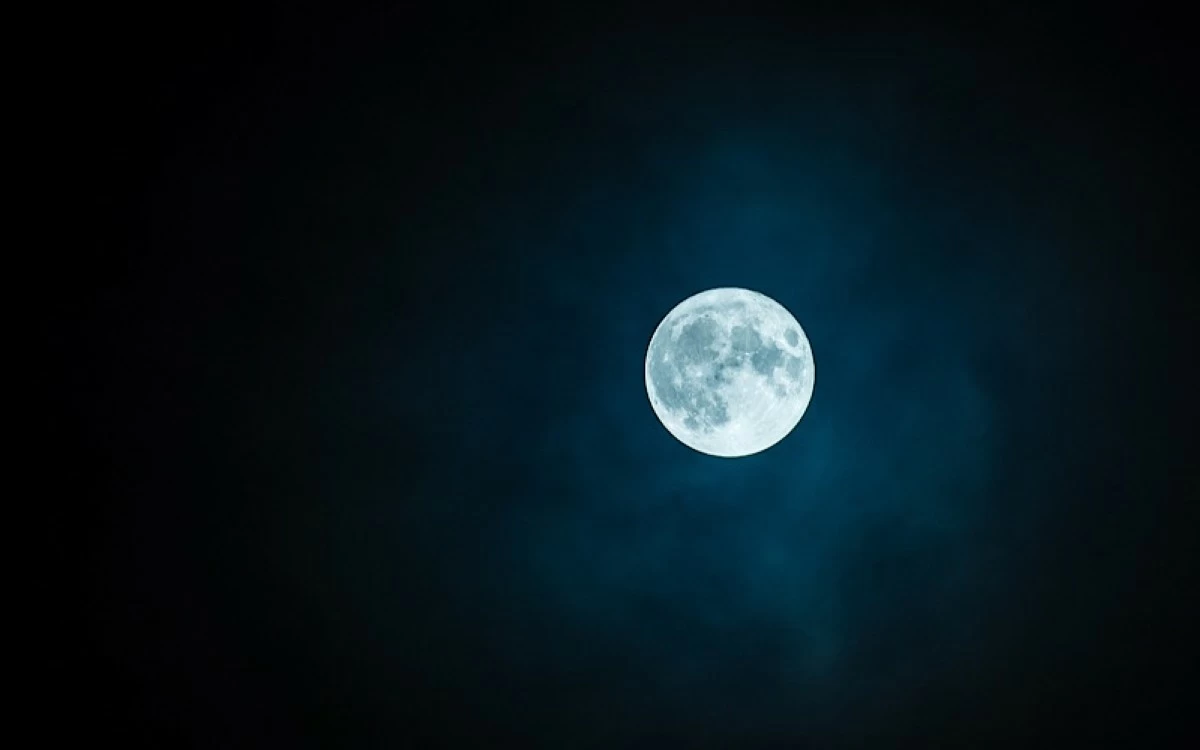
On May 31 at 4:45 p.m., the Moon will reach its full phase for the second time within the month, an event known as a “blue moon.”
PAGASA said this occurs when two full moons fall within a single calendar month, a timing outcome of the mismatch between the lunar cycle and the standard calendar.
“A blue moon happens because the lunar cycle is about 29.53 days, which does not align perfectly with the calendar month,” PAGASA explained.
This cycle results in about 12.37 full moons in a year, meaning an extra full moon occurs roughly every 2.8 years.
The agency added that this makes a blue moon a relatively uncommon occurrence, often referenced in the phrase “once in a blue moon.”
The most recent recorded blue moon occurred on August 31, 2023.
Shooting stars
Before the month closes with the Blue Moon, the η-Aquariid meteor shower will already be active from April 19 to May 28, peaking on May 5.
PAGASA said the shower, produced by debris from Comet 1P/Halley, may generate around 40 meteors per hour under favorable conditions.
“The η-Aquariids are best observed in the pre-dawn sky when the radiant is above the eastern horizon,” PAGASA said.
It added that viewing is possible from around 1:31 a.m. until dawn at approximately 5:06 a.m., though visibility of fainter meteors may be affected by moonlight during the peak period.
A second meteor display, the η-Lyrids, will be active from May 3 to 14, peaking on May 8.
PAGASA said this weaker shower, associated with debris from Comet C/1983 H1 (IRAS-Araki-Alcock), may produce up to three meteors per hour under ideal conditions.
“The η-Lyrids can be observed once the constellation Lyra rises in the evening and are best viewed in the pre-dawn hours when the radiant is highest,” PAGASA said.
The radiant becomes visible at about 8:59 p.m. and remains above the horizon until around 5:05 a.m.
PAGASA noted that viewing conditions for both meteor showers may be affected by moonlight, as the Moon will be near its last quarter phase during their peak periods, increasing sky brightness.
The agency added that meteor showers can be observed with the naked eye and do not require telescopes or binoculars.
Skywatchers are advised to choose dark observation sites away from city lights and to view under clear skies for the best visibility.

Related Tags

PAGASA METEOR SHOWER SHOOTING STARS BLUE MOON
ADVERTISEMENT
.most-popular .layout-ratio{ padding-bottom: 79.13%; } @media (min-width: 768px) and (max-width: 1024px) { .widget-title { font-size: 15px !important; } }

{{ articles_filter_1561_widget.title }}

.most-popular .layout-ratio{ padding-bottom: 79.13%; } @media (min-width: 768px) and (max-width: 1024px) { .widget-title { font-size: 15px !important; } }

{{ articles_filter_1562_widget.title }}

.most-popular .layout-ratio{ padding-bottom: 79.13%; } @media (min-width: 768px) and (max-width: 1024px) { .widget-title { font-size: 15px !important; } }

{{ articles_filter_1563_widget.title }}

{{ articles_filter_1564_widget.title }}

.mb-article-details { position: relative; } .mb-article-details .article-body-preview, .mb-article-details .article-body-summary{ font-size: 17px; line-height: 30px; font-family: "Libre Caslon Text", serif; color: #000; } .mb-article-details .article-body-preview iframe , .mb-article-details .article-body-summary iframe{ width: 100%; margin: auto; } .read-more-background { background: linear-gradient(180deg, color(display-p3 1.000 1.000 1.000 / 0) 13.75%, color(display-p3 1.000 1.000 1.000 / 0.8) 30.79%, color(display-p3 1.000 1.000 1.000) 72.5%); position: absolute; height: 200px; width: 100%; bottom: 0; display: flex; justify-content: center; align-items: center; padding: 0; } .read-more-background a{ color: #000; } .read-more-btn { padding: 17px 45px; font-family: Inter; font-weight: 700; font-size: 18px; line-height: 16px; text-align: center; vertical-align: middle; border: 1px solid black; background-color: white; } .hidden { display: none; }
function initializeAllSwipers() { // Get all hidden inputs with cms_article_id document.querySelectorAll('[id^="cms_article_id_"]').forEach(function (input) { const cmsArticleId = input.value; const articleSelector = '#article-' + cmsArticleId + ' .body_images'; const swiperElement = document.querySelector(articleSelector); if (swiperElement && !swiperElement.classList.contains('swiper-initialized')) { new Swiper(articleSelector, { loop: true, pagination: false, navigation: { nextEl: '#article-' + cmsArticleId + ' .swiper-button-next', prevEl: '#article-' + cmsArticleId + ' .swiper-button-prev', }, }); } }); } setTimeout(initializeAllSwipers, 3000); const intersectionObserver = new IntersectionObserver( (entries) => { entries.forEach((entry) => { if (entry.isIntersecting) { const newUrl = entry.target.getAttribute("data-url"); if (newUrl) { history.pushState(null, null, newUrl); let article = entry.target; // Extract metadata const author = article.querySelector('.author-section').textContent.replace('By', '').trim(); const section = article.querySelector('.section-info ').textContent.replace(' ', ' '); const title = article.querySelector('.article-title h1').textContent; // Parse URL for Chartbeat path format const parsedUrl = new URL(newUrl, window.location.origin); const cleanUrl = parsedUrl.host + parsedUrl.pathname; // Update Chartbeat configuration if (typeof window._sf_async_config !== 'undefined') { window._sf_async_config.path = cleanUrl; window._sf_async_config.sections = section; window._sf_async_config.authors = author; } // Track virtual page view with Chartbeat if (typeof pSUPERFLY !== 'undefined' && typeof pSUPERFLY.virtualPage === 'function') { try { pSUPERFLY.virtualPage({ path: cleanUrl, title: title, sections: section, authors: author }); } catch (error) { console.error('ping error', error); } } // Optional: Update document title if (title && title !== document.title) { document.title = title; } } } }); }, { threshold: 0.1 } ); function showArticleBody(button) { const article = button.closest("article"); const summary = article.querySelector(".article-body-summary"); const body = article.querySelector(".article-body-preview"); const readMoreSection = article.querySelector(".read-more-background"); // Hide summary and read-more section summary.style.display = "none"; readMoreSection.style.display = "none"; // Show the full article body body.classList.remove("hidden"); } document.addEventListener("DOMContentLoaded", () => { let loadCount = 0; // Track how many times articles are loaded const offset = [1, 2, 3, 4, 5, 6, 7, 8, 9, 10]; // Offset values const currentUrl = window.location.pathname.substring(1); let isLoading = false; // Prevent multiple calls if (!currentUrl) { console.log("Current URL is invalid."); return; } const sentinel = document.getElementById("load-more-sentinel"); if (!sentinel) { console.log("Sentinel element not found."); return; } function isSentinelVisible() { const rect = sentinel.getBoundingClientRect(); return ( rect.top < window.innerHeight && rect.bottom >= 0 ); } function onScroll() { if (isLoading) return; if (isSentinelVisible()) { if (loadCount >= offset.length) { console.log("Maximum load attempts reached."); window.removeEventListener("scroll", onScroll); return; } isLoading = true; const currentOffset = offset[loadCount]; window.loadMoreItems().then(() => { let article = document.querySelector('#widget_1690 > div:nth-last-of-type(2) article'); intersectionObserver.observe(article) loadCount++; }).catch(error => { console.error("Error loading more items:", error); }).finally(() => { isLoading = false; }); } } window.addEventListener("scroll", onScroll); });

Sign up by email to receive news.