







PCSO out to bridge islands to save lives
Published Apr 30, 2026 12:02 am
|
Updated Apr 29, 2026 03:43 pm


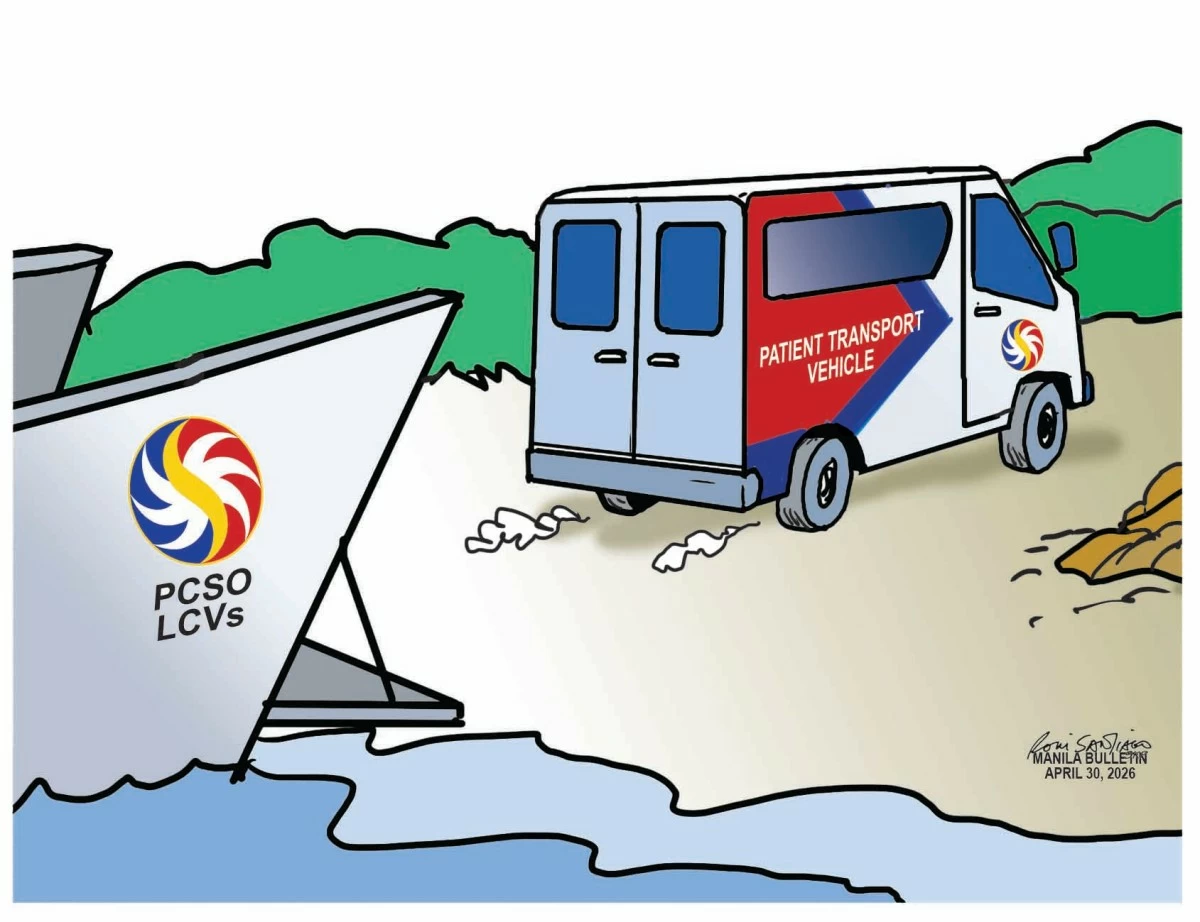
In an archipelagic nation like the Philippines, access to healthcare is often defined by fate. For many residents of island-municipalities, the journey to a hospital is not simply a ride away. It is a fragile chain of transfers: from home to boat, from boat to shore, from shore to ambulance, and finally to the hospital. Every handoff costs time. In medical emergencies, these interruptions are inconvenient and can pose risks. Time, in such circumstances, spells survival.
This is why the Philippine Charity Sweepstakes Office’s plan to deploy this prototype civilian medical landing craft vessels (LCVs) is a lifeline. It represents a deliberate effort to address one of the most persistent barriers to equitable healthcare delivery: the safe, and timely transport of patients from isolated communities to appropriate medical facilities. No critical minutes lost in transition. The patient remains inside the ambulance, monitored, stabilized, and moving steadily toward care. In places where seas can be unpredictable and infrastructure limited, this seamless transfer is crucial in saving lives.
We often speak of healthcare in terms of hospitals, doctors, and medicines. But the reality is that care begins long before a patient reaches a hospital bed. The journey itself is part of the process. A delayed arrival can mean a worsened condition; a rough transfer can undo fragile stability. For patients in cardiac distress, severe trauma, complicated pregnancies, or acute infections, the difference between life and death may lie in whether they arrive on time and without interruption.
This is the gap the LCVs aim to close.
The vision of PCSO General Manager Melquiades Robles deserves recognition because it is grounded in reality. His visit to Batanes, one of the country’s most isolated provinces, underscored a truth long faced by those who live far from urban centers: that survival should not depend on proximity to the mainland. By prioritizing patient mobility as a component of healthcare delivery, he underscores that access must be continuous, not fragmented, and that every stage of the patient journey warrants equal attention.
Moreover, the introduction of LCVs signals a broader shift in perspective. In a country defined by its seas, mobility must extend beyond land-based systems. Maritime transport, when properly equipped and integrated, can function as an essential extension of emergency medical services. The LCVs, in this regard, are not merely vessels; they are mobile links in a continuum of care, designed to preserve stability and expedite access.
The implications of this initiative are both practical and ethical. It affirms that the value of a life should not be contingent upon location, and that those in remote areas deserve the same immediacy of care as those in urban centers. By reducing transit time and eliminating unnecessary transfers, the LCVs have the potential to improve outcomes, alleviate distress for patients and families, and strengthen public confidence in the healthcare system.
Ultimately, the measure of any healthcare initiative lies in its capacity to save lives and uphold human dignity. This is why urgency begins the moment help is needed. Ensuring that patients can move swiftly, safely, and without interruption is therefore not a peripheral concern, but a central obligation.
In bridging the physical divide between islands and essential care, the LCVs may well redefine what it means to deliver healthcare in an archipelagic nation. It is bringing the system closer to those who need it most, and doing so with the timeliness that every life deserves.