ADVERTISEMENT

Indonesia urges social media platforms to disclose the number of accounts closed for users under 16

Published Apr 30, 2026 10:57 am
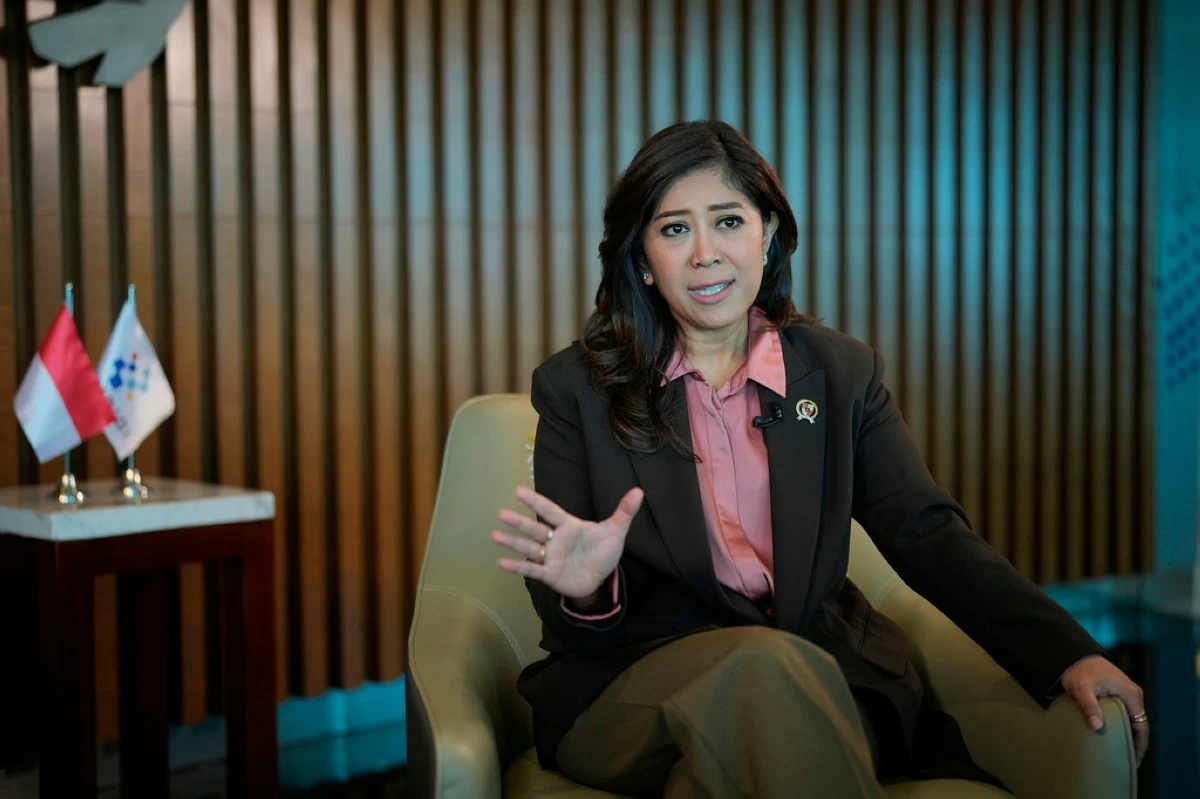
Indonesia's Communication and Digital Affairs Minister Meutya Hafid gestures during an interview with The Associated Press in Jakarta, Indonesia, Wednesday, April 29, 2026. (AP Photo/Achmad Ibrahim)
JAKARTA, Indonesia (AP) — Indonesia is urging social media companies and digital platforms to report the number of accounts that have been suspended as part of the implementation of government regulations restricting access for children under 16, authorities said Wednesday.
“We will continue to insist that compliance alone is not enough; we must also report the figures to the public in the interest of transparency,” said Communication and Digital Affairs Minister Meutya Hafid.
Indonesia began implementing a new government regulation at the end of March banning children younger than 16 from accessing digital platforms that could expose them to pornography, cyberbullying, online scams and addiction.
Hafid said that young people in Indonesia spend up to eight hours a day online.
Not all social media and digital platforms immediately complied with the regulation, which affects some 70 million children and young people in Indonesia.
TikTok became the first platform to report measurable progress in compliance when it said it deactivated 1.7 million accounts belonging to children under 16.
The country’s large population likely "explains the platforms’ reluctance to accelerate compliance with this regulation,” Hafid said.
Seven of the eight platforms classified as high-risk, including YouTube, TikTok, Facebook, Instagram, Threads, X, Bigo Live, have committed to restricting children’s access to their services.
Only Roblox, the gaming platform, has yet to agree to block access for children under 16. The company did not immediately reply to requests for comment from The Associated Press.
YouTube announced its commitment to restricting access for younger users three weeks after the restrictions took effect, but has not yet specified how many accounts belonging to children were identified and suspended.
“We remain focused on protecting the community and will continue working closely with the Indonesian government to support a secure digital future for the next generation,” a YouTube spokesperson said in a statement on Wednesday.
Restrictions on social media access for children under 16 first began in December in Australia, where social media companies revoked access to about 4.7 million accounts identified as belonging to children.
Indonesia became the first country in Southeast Asia to follow suit.
Some other countries — including Spain, France and the United Kingdom — are also taking or considering measures to restrict children’s access to social media amid growing concern that they are being harmed by exposure to unregulated social media content.
Hafid believes there are still challenges in implementing the regulation, and the Indonesian government has said it would allow platforms to determine their own methods for account verification.
“We understand the technology will continue to evolve rapidly. However, the platform is responsible for determining the best and most appropriate technology for its needs,” Hafid said.
Critics have highlighted the practical challenges of enforcing the rule. Reliable age verification often requires collecting sensitive personal data, prompting concerns over privacy and data security. Some children will find a way to use fake identification, such as using their parents’ account, said Nenden Sekar Arum, executive director of the Southeast Asia Freedom of Expression Network, or SAFEnet, a digital rights group.
Arum said that is why the government needs to oversee the user identity verification methods employed by each platform to ensure consistent compliance.
“The core problem is not the presence of children in the digital space, but how that digital space is shaped into a safe ecosystem. And how to ensure that those who are actually making this ecosystem harmful are held accountable. That is what needs to be addressed,” Arum said.
Indonesia's Communication and Digital Affairs Minister Meutya Hafid gestures during an

Related Tags

world news Indonesia SOCIAL MEDIA BAN
ADVERTISEMENT
.most-popular .layout-ratio{ padding-bottom: 79.13%; } @media (min-width: 768px) and (max-width: 1024px) { .widget-title { font-size: 15px !important; } }

{{ articles_filter_1561_widget.title }}

.most-popular .layout-ratio{ padding-bottom: 79.13%; } @media (min-width: 768px) and (max-width: 1024px) { .widget-title { font-size: 15px !important; } }

{{ articles_filter_1562_widget.title }}

.most-popular .layout-ratio{ padding-bottom: 79.13%; } @media (min-width: 768px) and (max-width: 1024px) { .widget-title { font-size: 15px !important; } }

{{ articles_filter_1563_widget.title }}

{{ articles_filter_1564_widget.title }}

.mb-article-details { position: relative; } .mb-article-details .article-body-preview, .mb-article-details .article-body-summary{ font-size: 17px; line-height: 30px; font-family: "Libre Caslon Text", serif; color: #000; } .mb-article-details .article-body-preview iframe , .mb-article-details .article-body-summary iframe{ width: 100%; margin: auto; } .read-more-background { background: linear-gradient(180deg, color(display-p3 1.000 1.000 1.000 / 0) 13.75%, color(display-p3 1.000 1.000 1.000 / 0.8) 30.79%, color(display-p3 1.000 1.000 1.000) 72.5%); position: absolute; height: 200px; width: 100%; bottom: 0; display: flex; justify-content: center; align-items: center; padding: 0; } .read-more-background a{ color: #000; } .read-more-btn { padding: 17px 45px; font-family: Inter; font-weight: 700; font-size: 18px; line-height: 16px; text-align: center; vertical-align: middle; border: 1px solid black; background-color: white; } .hidden { display: none; }
function initializeAllSwipers() { // Get all hidden inputs with cms_article_id document.querySelectorAll('[id^="cms_article_id_"]').forEach(function (input) { const cmsArticleId = input.value; const articleSelector = '#article-' + cmsArticleId + ' .body_images'; const swiperElement = document.querySelector(articleSelector); if (swiperElement && !swiperElement.classList.contains('swiper-initialized')) { new Swiper(articleSelector, { loop: true, pagination: false, navigation: { nextEl: '#article-' + cmsArticleId + ' .swiper-button-next', prevEl: '#article-' + cmsArticleId + ' .swiper-button-prev', }, }); } }); } setTimeout(initializeAllSwipers, 3000); const intersectionObserver = new IntersectionObserver( (entries) => { entries.forEach((entry) => { if (entry.isIntersecting) { const newUrl = entry.target.getAttribute("data-url"); if (newUrl) { history.pushState(null, null, newUrl); let article = entry.target; // Extract metadata const author = article.querySelector('.author-section').textContent.replace('By', '').trim(); const section = article.querySelector('.section-info ').textContent.replace(' ', ' '); const title = article.querySelector('.article-title h1').textContent; // Parse URL for Chartbeat path format const parsedUrl = new URL(newUrl, window.location.origin); const cleanUrl = parsedUrl.host + parsedUrl.pathname; // Update Chartbeat configuration if (typeof window._sf_async_config !== 'undefined') { window._sf_async_config.path = cleanUrl; window._sf_async_config.sections = section; window._sf_async_config.authors = author; } // Track virtual page view with Chartbeat if (typeof pSUPERFLY !== 'undefined' && typeof pSUPERFLY.virtualPage === 'function') { try { pSUPERFLY.virtualPage({ path: cleanUrl, title: title, sections: section, authors: author }); } catch (error) { console.error('ping error', error); } } // Optional: Update document title if (title && title !== document.title) { document.title = title; } } } }); }, { threshold: 0.1 } ); function showArticleBody(button) { const article = button.closest("article"); const summary = article.querySelector(".article-body-summary"); const body = article.querySelector(".article-body-preview"); const readMoreSection = article.querySelector(".read-more-background"); // Hide summary and read-more section summary.style.display = "none"; readMoreSection.style.display = "none"; // Show the full article body body.classList.remove("hidden"); } document.addEventListener("DOMContentLoaded", () => { let loadCount = 0; // Track how many times articles are loaded const offset = [1, 2, 3, 4, 5, 6, 7, 8, 9, 10]; // Offset values const currentUrl = window.location.pathname.substring(1); let isLoading = false; // Prevent multiple calls if (!currentUrl) { console.log("Current URL is invalid."); return; } const sentinel = document.getElementById("load-more-sentinel"); if (!sentinel) { console.log("Sentinel element not found."); return; } function isSentinelVisible() { const rect = sentinel.getBoundingClientRect(); return ( rect.top < window.innerHeight && rect.bottom >= 0 ); } function onScroll() { if (isLoading) return; if (isSentinelVisible()) { if (loadCount >= offset.length) { console.log("Maximum load attempts reached."); window.removeEventListener("scroll", onScroll); return; } isLoading = true; const currentOffset = offset[loadCount]; window.loadMoreItems().then(() => { let article = document.querySelector('#widget_1690 > div:nth-last-of-type(2) article'); intersectionObserver.observe(article) loadCount++; }).catch(error => { console.error("Error loading more items:", error); }).finally(() => { isLoading = false; }); } } window.addEventListener("scroll", onScroll); });

Sign up by email to receive news.