ADVERTISEMENT

Head of organization overseeing nuclear test ban treaty issues warning to US and Russia

Published Apr 30, 2026 10:58 am
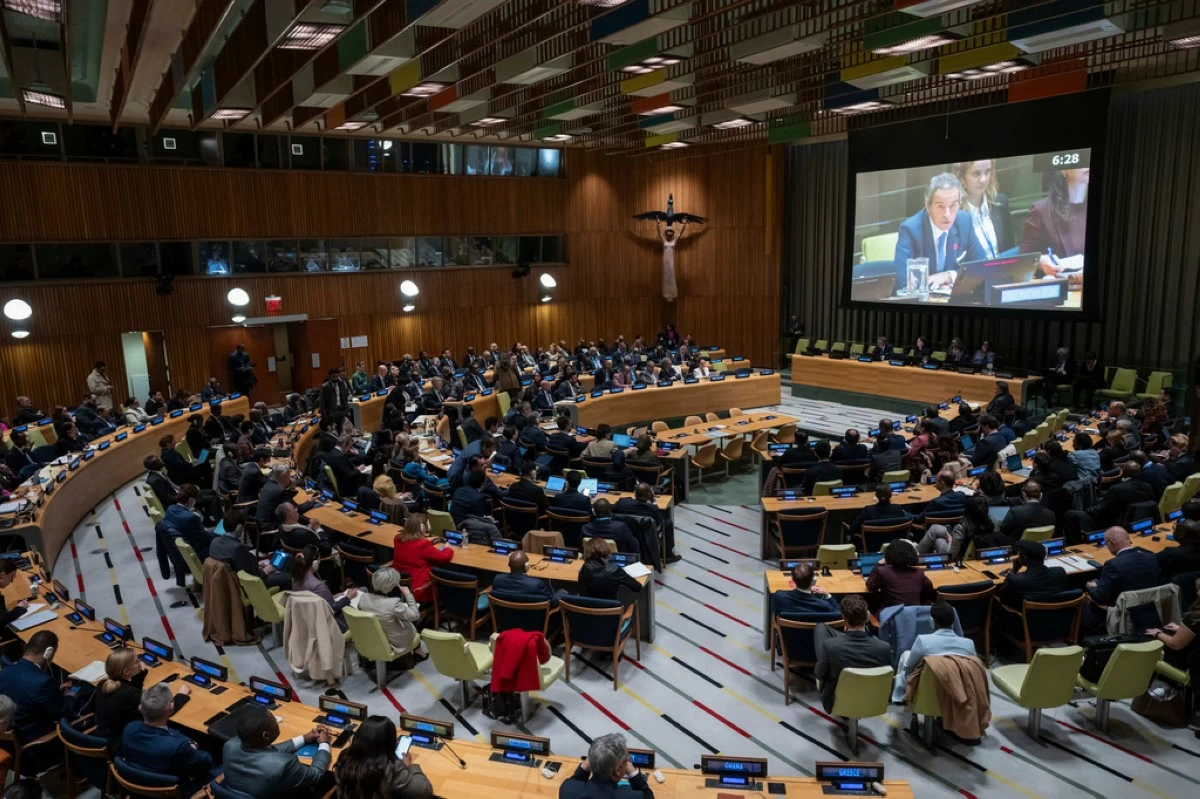
Rafael Grossi, International Atomic Energy Agency (IAEA) Director General and a candidate for United Nations Secretary-General, speaks during an informal dialogue at U.N. headquarters, Tuesday, April 21, 2026. (AP Photo/Yuki Iwamura)
UNITED NATIONS (AP) — The head of the organization overseeing a treaty banning nuclear testing warned Wednesday that if the United States, Russia or any other nation goes ahead with a test, other nations will follow.
“That is a spiral that we do not want to see start, because it may never be able to be stopped,” Robert Floyd, executive secretary of the Comprehensive Nuclear Test Ban Treaty Organization, told U.N. correspondents.
Late last year, both the United States and Russia, which have the world’s largest nuclear arsenals, threatened to resume nuclear testing, setting off global alarm bells.
When the treaty known as the CTBT opened for signatures 30 years ago, Floyd said over 2,000 nuclear tests had taken place, but since then there have been fewer than a dozen, including six by North Korea.
Floyd issued his warning as the United Nations this week began its review of a separate treaty meant to prevent the spread of nuclear weapons. The review is taking place against the backdrop of the Iran war, which President Donald Trump said was necessary to prevent Tehran from obtaining a nuclear weapon.
The test ban treaty was adopted in 1996 but has not entered into force because it must be ratified by 44 specific countries, and nine of them have not yet done so.
The United States, China, Iran, Egypt and Israel have signed but not ratified the treaty. India, Pakistan and North Korea have neither signed nor ratified. Russia signed and ratified, but revoked its ratification in 2023.
Floyd said a way needs to be found for China, Russia and the U.S. to ratify the treaty together, which he said would “certainly be a powerful step forward.”
China and Russia have said they adhere to a nuclear testing moratorium, but since 2019 the U.S. State Department has publicly expressed concerns about the activities of both countries. At the end of last year, Trump accused Russia and China of conducting tests and said he had instructed the Defense Department to start testing nuclear weapons “on an equal basis.”
Russian Deputy Foreign Minister Sergei Ryabkov said in response that Russia would only resume nuclear tests if Washington did so first.
Floyd said he was recently in Moscow and made the case to Foreign Minister Sergey Lavrov “that it is not in any state’s interest to see an unconstrained return to testing.” He said he has met with U.S. State Department officials and would welcome the opportunity to meet with Secretary of State Marco Rubio.
Floyd said the treaty's international monitoring system can detect even a relatively small nuclear weapons explosion anywhere in the world. Any state thinking of developing a nuclear weapon would need to test one and “if they did it will be known to all,” he said.

Related Tags

world news
ADVERTISEMENT
.most-popular .layout-ratio{ padding-bottom: 79.13%; } @media (min-width: 768px) and (max-width: 1024px) { .widget-title { font-size: 15px !important; } }

{{ articles_filter_1561_widget.title }}

.most-popular .layout-ratio{ padding-bottom: 79.13%; } @media (min-width: 768px) and (max-width: 1024px) { .widget-title { font-size: 15px !important; } }

{{ articles_filter_1562_widget.title }}

.most-popular .layout-ratio{ padding-bottom: 79.13%; } @media (min-width: 768px) and (max-width: 1024px) { .widget-title { font-size: 15px !important; } }

{{ articles_filter_1563_widget.title }}

{{ articles_filter_1564_widget.title }}

.mb-article-details { position: relative; } .mb-article-details .article-body-preview, .mb-article-details .article-body-summary{ font-size: 17px; line-height: 30px; font-family: "Libre Caslon Text", serif; color: #000; } .mb-article-details .article-body-preview iframe , .mb-article-details .article-body-summary iframe{ width: 100%; margin: auto; } .read-more-background { background: linear-gradient(180deg, color(display-p3 1.000 1.000 1.000 / 0) 13.75%, color(display-p3 1.000 1.000 1.000 / 0.8) 30.79%, color(display-p3 1.000 1.000 1.000) 72.5%); position: absolute; height: 200px; width: 100%; bottom: 0; display: flex; justify-content: center; align-items: center; padding: 0; } .read-more-background a{ color: #000; } .read-more-btn { padding: 17px 45px; font-family: Inter; font-weight: 700; font-size: 18px; line-height: 16px; text-align: center; vertical-align: middle; border: 1px solid black; background-color: white; } .hidden { display: none; }
function initializeAllSwipers() { // Get all hidden inputs with cms_article_id document.querySelectorAll('[id^="cms_article_id_"]').forEach(function (input) { const cmsArticleId = input.value; const articleSelector = '#article-' + cmsArticleId + ' .body_images'; const swiperElement = document.querySelector(articleSelector); if (swiperElement && !swiperElement.classList.contains('swiper-initialized')) { new Swiper(articleSelector, { loop: true, pagination: false, navigation: { nextEl: '#article-' + cmsArticleId + ' .swiper-button-next', prevEl: '#article-' + cmsArticleId + ' .swiper-button-prev', }, }); } }); } setTimeout(initializeAllSwipers, 3000); const intersectionObserver = new IntersectionObserver( (entries) => { entries.forEach((entry) => { if (entry.isIntersecting) { const newUrl = entry.target.getAttribute("data-url"); if (newUrl) { history.pushState(null, null, newUrl); let article = entry.target; // Extract metadata const author = article.querySelector('.author-section').textContent.replace('By', '').trim(); const section = article.querySelector('.section-info ').textContent.replace(' ', ' '); const title = article.querySelector('.article-title h1').textContent; // Parse URL for Chartbeat path format const parsedUrl = new URL(newUrl, window.location.origin); const cleanUrl = parsedUrl.host + parsedUrl.pathname; // Update Chartbeat configuration if (typeof window._sf_async_config !== 'undefined') { window._sf_async_config.path = cleanUrl; window._sf_async_config.sections = section; window._sf_async_config.authors = author; } // Track virtual page view with Chartbeat if (typeof pSUPERFLY !== 'undefined' && typeof pSUPERFLY.virtualPage === 'function') { try { pSUPERFLY.virtualPage({ path: cleanUrl, title: title, sections: section, authors: author }); } catch (error) { console.error('ping error', error); } } // Optional: Update document title if (title && title !== document.title) { document.title = title; } } } }); }, { threshold: 0.1 } ); function showArticleBody(button) { const article = button.closest("article"); const summary = article.querySelector(".article-body-summary"); const body = article.querySelector(".article-body-preview"); const readMoreSection = article.querySelector(".read-more-background"); // Hide summary and read-more section summary.style.display = "none"; readMoreSection.style.display = "none"; // Show the full article body body.classList.remove("hidden"); } document.addEventListener("DOMContentLoaded", () => { let loadCount = 0; // Track how many times articles are loaded const offset = [1, 2, 3, 4, 5, 6, 7, 8, 9, 10]; // Offset values const currentUrl = window.location.pathname.substring(1); let isLoading = false; // Prevent multiple calls if (!currentUrl) { console.log("Current URL is invalid."); return; } const sentinel = document.getElementById("load-more-sentinel"); if (!sentinel) { console.log("Sentinel element not found."); return; } function isSentinelVisible() { const rect = sentinel.getBoundingClientRect(); return ( rect.top < window.innerHeight && rect.bottom >= 0 ); } function onScroll() { if (isLoading) return; if (isSentinelVisible()) { if (loadCount >= offset.length) { console.log("Maximum load attempts reached."); window.removeEventListener("scroll", onScroll); return; } isLoading = true; const currentOffset = offset[loadCount]; window.loadMoreItems().then(() => { let article = document.querySelector('#widget_1690 > div:nth-last-of-type(2) article'); intersectionObserver.observe(article) loadCount++; }).catch(error => { console.error("Error loading more items:", error); }).finally(() => { isLoading = false; }); } } window.addEventListener("scroll", onScroll); });

Sign up by email to receive news.