ADVERTISEMENT

Celebrating 20 years of Google Translate: Fun facts, tips and new features to try

Published Apr 30, 2026 10:12 am
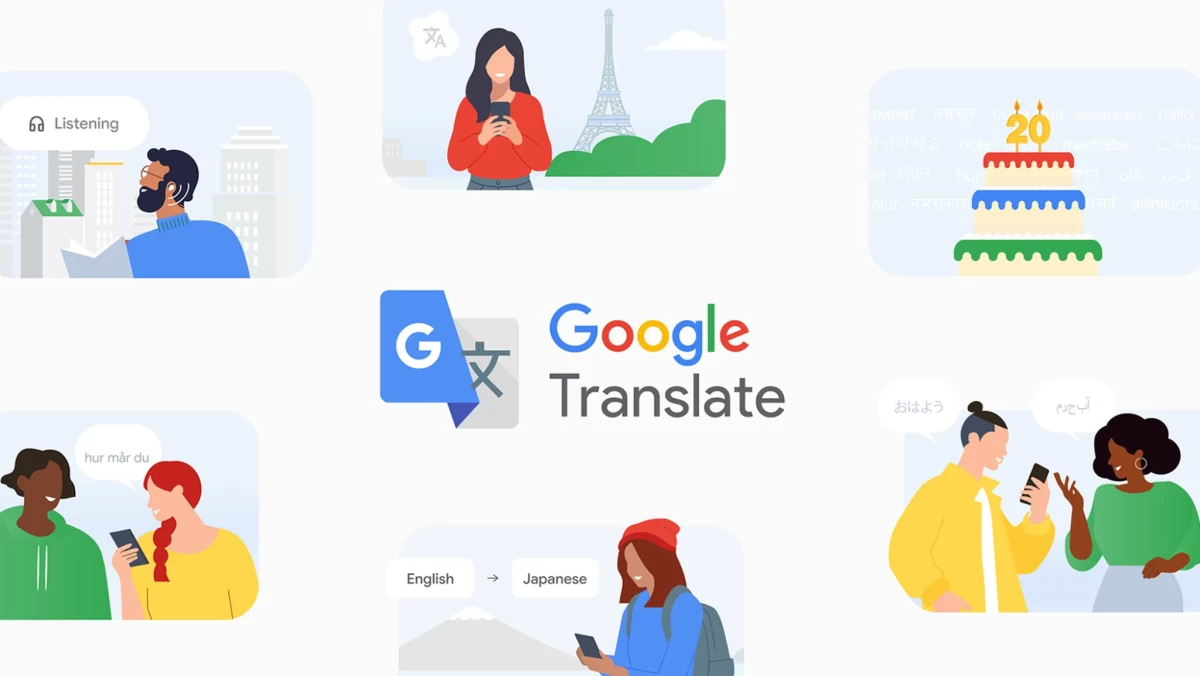
Twenty years ago, Google Translate began with a mission to help people understand one another. What started as an experiment is now a global bridge, turning the science of language into the magic of human connection for over a billion people.
To celebrate two decades of progress, here are 20 facts about how Translate is shaping the way the world communicates:
Master Your Accent: New AI-powered "pronunciation practice" provides instant feedback to help you nail the delivery of your next real-world conversation.
AI From Day One: Translate was a founding experiment for Google’s machine learning, evolving from statistical models to the trillions of words analyzed today.
Global Reach: Google now supports nearly 250 languages—covering 95% of the world’s population—including endangered and indigenous tongues.
A Billion Strong: Over 1 billion users turn to Google for translation help every single month.
A Trillion Words: Every month, Google translates 1 trillion words—enough text to keep someone reading out loud for 12,000 years.
Personal Translator: Using your headphones, "Live Translate" preserves the speaker's original tone while providing real-time audio translation.
Fluid Conversations: Powered by Gemini, Google’s latest audio-to-audio models enable natural, real-time dialogue that tracks context and nuance.
Meaningful Connections: Over a third of Live Translate sessions last longer than five minutes, facilitating deep cultural exchanges and interviews.
Cultural Access: From half-time shows to national addresses, language is no longer a barrier to joining global live events.
Slang Savvy: Gemini models have mastered the "untranslatable," capturing tricky idioms, local slang, and subtle regional context.
The Ultimate Tutor: About one-third of mobile users use Translate as a learning tool, utilizing AI-powered goals to track their language progress.
Confidence Builder: Nearly half of Google’s "Practice" feature users focus specifically on interactive speaking scenarios to build real-world confidence.
Offline Access: Anyone can download languages for signal-free travel; English, Spanish, and French remain the top offline downloads.
Visual Menus: Lens has turned the camera into a travel essential, instantly overlaying translations on menus and street signs.
Circle to Translate: Translation is now one of the top use cases for Circle to Search on Android, from social lyrics to beauty routines.
Surprising Pairs: While English-to-Spanish is #1, pairs like English-to-Indonesian and English-to-Bengali are seeing massive global growth.
Decoding Gen Alpha: Parents are increasingly using AI Mode in Search to translate trending slang like “clock it” and “mogging.”
Emoji Translator: Users are now asking AI to "translate" prose into emojis, turning standard text into a playful, visual language.
Inclusive Tech: Search interest in American Sign Language (ASL) translations has hit an all-time high over the last five years.
Gratitude is Universal: After 20 years, the most translated phrase remains the same: "Thank you."
Two decades later, Translate’s mission remains unchanged: removing barriers so the world can understand, and be understood by, everyone.

Related Tags

Google Google Translate
ADVERTISEMENT
.most-popular .layout-ratio{ padding-bottom: 79.13%; } @media (min-width: 768px) and (max-width: 1024px) { .widget-title { font-size: 15px !important; } }

{{ articles_filter_1561_widget.title }}

.most-popular .layout-ratio{ padding-bottom: 79.13%; } @media (min-width: 768px) and (max-width: 1024px) { .widget-title { font-size: 15px !important; } }

{{ articles_filter_1562_widget.title }}

.most-popular .layout-ratio{ padding-bottom: 79.13%; } @media (min-width: 768px) and (max-width: 1024px) { .widget-title { font-size: 15px !important; } }

{{ articles_filter_1563_widget.title }}

{{ articles_filter_1564_widget.title }}

.mb-article-details { position: relative; } .mb-article-details .article-body-preview, .mb-article-details .article-body-summary{ font-size: 17px; line-height: 30px; font-family: "Libre Caslon Text", serif; color: #000; } .mb-article-details .article-body-preview iframe , .mb-article-details .article-body-summary iframe{ width: 100%; margin: auto; } .read-more-background { background: linear-gradient(180deg, color(display-p3 1.000 1.000 1.000 / 0) 13.75%, color(display-p3 1.000 1.000 1.000 / 0.8) 30.79%, color(display-p3 1.000 1.000 1.000) 72.5%); position: absolute; height: 200px; width: 100%; bottom: 0; display: flex; justify-content: center; align-items: center; padding: 0; } .read-more-background a{ color: #000; } .read-more-btn { padding: 17px 45px; font-family: Inter; font-weight: 700; font-size: 18px; line-height: 16px; text-align: center; vertical-align: middle; border: 1px solid black; background-color: white; } .hidden { display: none; }
function initializeAllSwipers() { // Get all hidden inputs with cms_article_id document.querySelectorAll('[id^="cms_article_id_"]').forEach(function (input) { const cmsArticleId = input.value; const articleSelector = '#article-' + cmsArticleId + ' .body_images'; const swiperElement = document.querySelector(articleSelector); if (swiperElement && !swiperElement.classList.contains('swiper-initialized')) { new Swiper(articleSelector, { loop: true, pagination: false, navigation: { nextEl: '#article-' + cmsArticleId + ' .swiper-button-next', prevEl: '#article-' + cmsArticleId + ' .swiper-button-prev', }, }); } }); } setTimeout(initializeAllSwipers, 3000); const intersectionObserver = new IntersectionObserver( (entries) => { entries.forEach((entry) => { if (entry.isIntersecting) { const newUrl = entry.target.getAttribute("data-url"); if (newUrl) { history.pushState(null, null, newUrl); let article = entry.target; // Extract metadata const author = article.querySelector('.author-section').textContent.replace('By', '').trim(); const section = article.querySelector('.section-info ').textContent.replace(' ', ' '); const title = article.querySelector('.article-title h1').textContent; // Parse URL for Chartbeat path format const parsedUrl = new URL(newUrl, window.location.origin); const cleanUrl = parsedUrl.host + parsedUrl.pathname; // Update Chartbeat configuration if (typeof window._sf_async_config !== 'undefined') { window._sf_async_config.path = cleanUrl; window._sf_async_config.sections = section; window._sf_async_config.authors = author; } // Track virtual page view with Chartbeat if (typeof pSUPERFLY !== 'undefined' && typeof pSUPERFLY.virtualPage === 'function') { try { pSUPERFLY.virtualPage({ path: cleanUrl, title: title, sections: section, authors: author }); } catch (error) { console.error('ping error', error); } } // Optional: Update document title if (title && title !== document.title) { document.title = title; } } } }); }, { threshold: 0.1 } ); function showArticleBody(button) { const article = button.closest("article"); const summary = article.querySelector(".article-body-summary"); const body = article.querySelector(".article-body-preview"); const readMoreSection = article.querySelector(".read-more-background"); // Hide summary and read-more section summary.style.display = "none"; readMoreSection.style.display = "none"; // Show the full article body body.classList.remove("hidden"); } document.addEventListener("DOMContentLoaded", () => { let loadCount = 0; // Track how many times articles are loaded const offset = [1, 2, 3, 4, 5, 6, 7, 8, 9, 10]; // Offset values const currentUrl = window.location.pathname.substring(1); let isLoading = false; // Prevent multiple calls if (!currentUrl) { console.log("Current URL is invalid."); return; } const sentinel = document.getElementById("load-more-sentinel"); if (!sentinel) { console.log("Sentinel element not found."); return; } function isSentinelVisible() { const rect = sentinel.getBoundingClientRect(); return ( rect.top < window.innerHeight && rect.bottom >= 0 ); } function onScroll() { if (isLoading) return; if (isSentinelVisible()) { if (loadCount >= offset.length) { console.log("Maximum load attempts reached."); window.removeEventListener("scroll", onScroll); return; } isLoading = true; const currentOffset = offset[loadCount]; window.loadMoreItems().then(() => { let article = document.querySelector('#widget_1690 > div:nth-last-of-type(2) article'); intersectionObserver.observe(article) loadCount++; }).catch(error => { console.error("Error loading more items:", error); }).finally(() => { isLoading = false; }); } } window.addEventListener("scroll", onScroll); });

Sign up by email to receive news.