








Back in 1993, a movie called “Cool Runnings” came out, inspired by the story of the first Jamaican bobsled team to join the Winter Olympics. While the idea of athletes from tropical country, which receives no snow whatsoever, participating in Winter Olympic sports seems absurd, the movie showed that with the right determination and commitment, it can in fact be done. The lessons of this heartwarming movie continue to resonate today, some 30 years after, with yet another tropical country, this time our own, and our dreams of securing a spot in the Winter Olympics.
Cool Runnings of ASEAN
The Philippine Bobsled Team has actually been pursuing this dream for nine years now. Founded in 2017 as the Philippine National Bobsled Luge & Skeleton Association, Inc. (PNBLSA), it is led by President Consul (a.h.) Thelmo Luis O. Cunanan Jr. The team recently made their debut appearance at the International Bobsleigh Skeleton Federation-sanctioned (IBSF) North American Cup monobob race in Lake Placid, New York. The team still has a few events to participate in before becoming eligible to compete for a spot in the Winter Olympics, but it’s already a lot of progress from its humble beginnings.
“We all grew up with that movie, Cool Runnings,” shares Thelmo ‘Buddy’ Cunanan. “If they can do it from a little island in the Caribbean, why can’t we? That was the inspiration. Why can’t there be a Cool Runnings from Asia?”
Servicemen and athletes
The next step was gathering the athletes. Contrary to the movie, that depicts the athletes as former Olympic sprinters, the real Jamaican bobsled team was actually composed of members of the Jamaican military.
“When I was first starting this, I approached all the military services. They weren’t too interested. When I approached the Coast Guard, they loved the idea right away.”
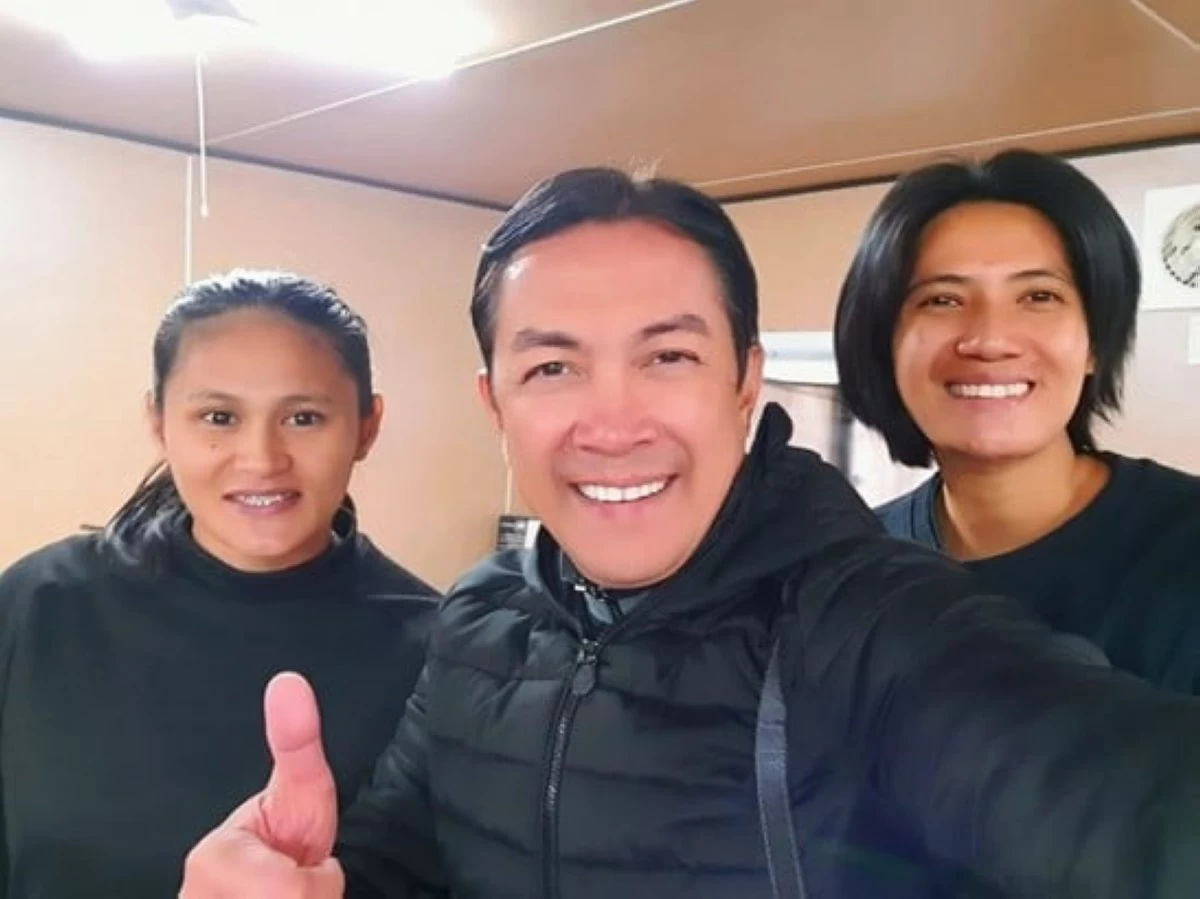
From left: ASW Reah Sumalpong PCG, PNBLSA President, Consul (a.h.) Thelmo Luis O. Cunanan Jr., and ASW Shirley Salamagos PCG.
The Philippine Coast Guard is no stranger to raising the flag in international sports. The military branch has had its servicemen and women participate in international events like the Southeast Asian Games, and fielding a renowned dragon boat team. It actively promotes sports through the Coast Guard Special Service Center (CGSSC).
Cunanan started the team in 2017 and worked to secure accreditation from the International Bobsleigh Skeleton Federation (IBSF), the global governing body for bobsled, ice luge, and skeleton sports. The team became a member of the IBSF in 2019, the first ASEAN nation to do so.
Naturally, with no snow, much less a bobsled track in the country, training had to be done abroad. The team took its first steps on the ice track in Innsbruck in Austria.
From 2017 to 2019, the team moved from country to country, in hopes of finding an accessible and affordable place to train. Thankfully, support for the Philippine Team was also abundant.
“We got help from our Austrian friends from Innsbruck. In Olympia World, they got us started for several months with free training, accommodation, even food for the athletes. We also got some support from the Pinoy community in Innsbruck.
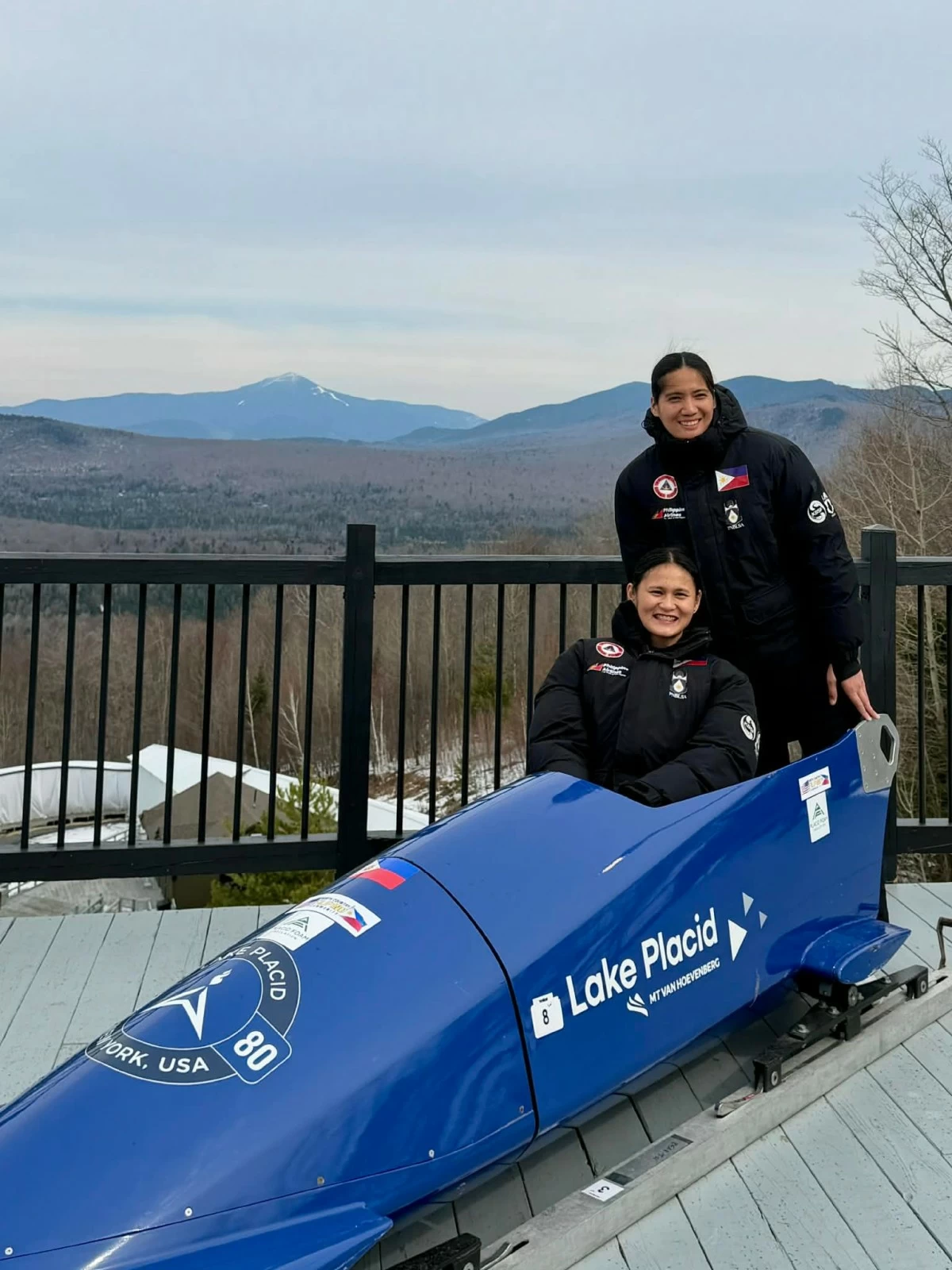
NATIONAL TEAM — The Philippine Team at the solo bobsled competition in Lake Placid, New York.
“We transitioned to Canada with the help from the Philippine Embassy in Canada. Calgary was great, affordable, and the track was in the city. We even had an MOU with the Alberta Bobsled Association, who would to help us train.”
Calgary in Canada had hosted the Winter Olympics in the past and, coincidentally, was also the venue where the Jamiacan Bobsled Team made their Olympic debut. However, the region’s government decided to close the facilities due to the age of the facilities and their state of disrepair.
“In the process of looking for a new place, COVID happened, and we couldn’t get out of the country,” Cunanan shared.
When COVID restrictions began to ease, the team got back together and decided to renew its push for a Winter Olympic debut in 2023.
Post Covid
By late 2023, a new and more promising training venue came into the picture. Fresh from hosting the Winter Olympics in 2018, Pyeongchang in South Korea was keen to put their facilities to good use. Through the help of former Philippine Ambassador to Korea, Amb. Tess Dizon de Vega and the Pyeongchang 2018 Legacy Foundation, the Philippine Team was able to secure a new training home.
“The Pyeongchang Foundation was very helpful. They gave us free training, free use of bobsled facilities, subsidized housing. We had to pay for a little bit, but the training and gear was free. Korea became our training home base. Our athletes were there for almost five months.”
Months of training would soon bear fruit as the team made its debut appearance at the IBSF North American Cup monobob race in Lake Placid, New York just this March. This event is one of the seven races, in three tracks in three continents the team needs to participate in to be eligible to compete for a spot in the next Winter Olympics.
ASW Rhea Sumalpong PCG and ASW Shirley Salamagos PCG placed sixth and seventh places, respectively. The team was accompanied by manager Heins Lundberg Arlegui and coach Jeffrey dela Cruz.
Support needed
While the team receives support from the Pyeonchang Foundation, as well as from Philippine Airlines as their official carrier, the road to the Olympics is still a long and possibly financially challenging one.
“If I had a more sizeable amount at our disposal, I could let the men in our team compete as well,” laments Cunanan. “However, with meager resources, you have to pick your battles.”
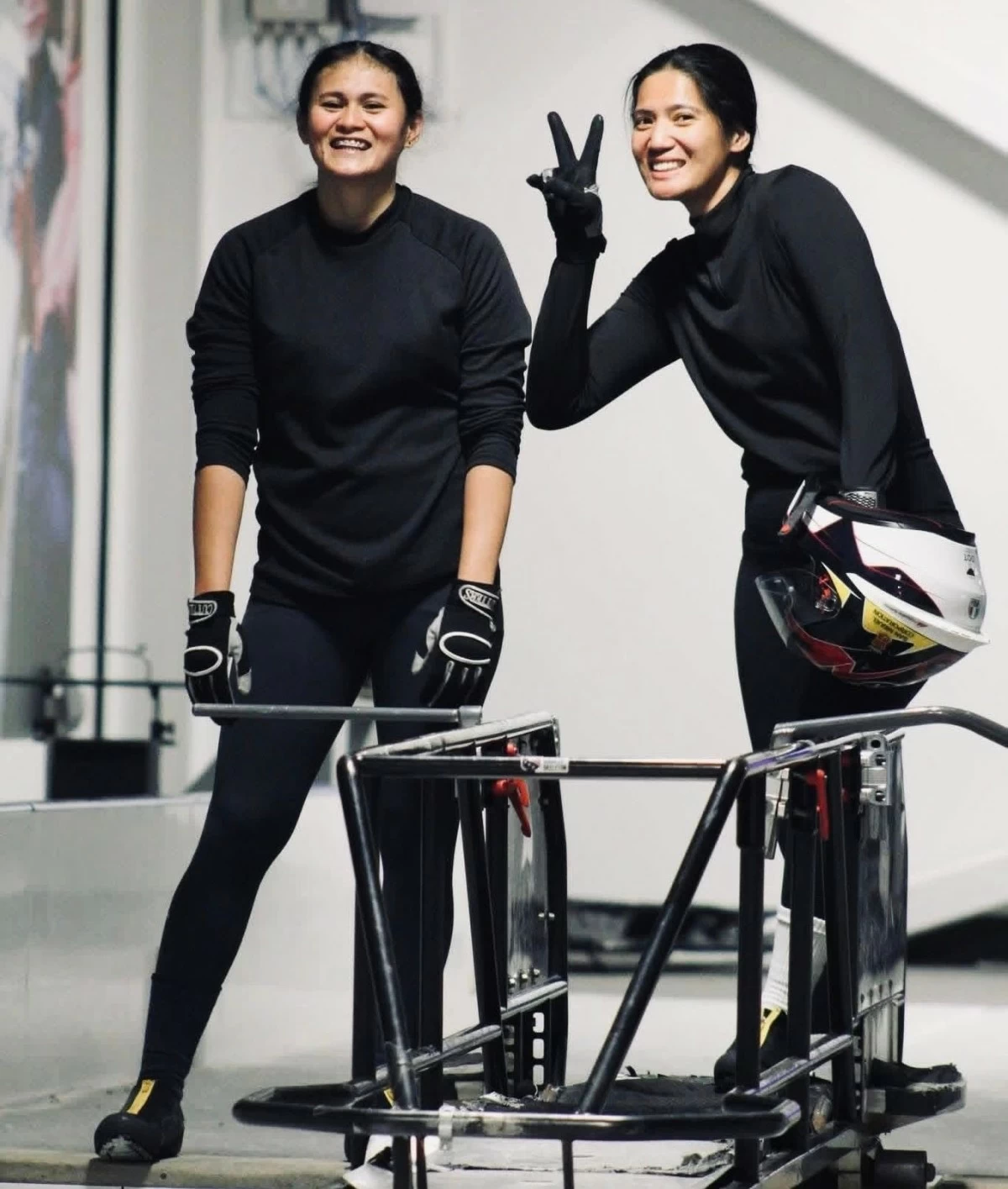
From left: ASW Reah Sumalpong PCG and ASW Shirley Salamagos PCG training in South Korea.
The Philippine Bobsled team already has athletes for the men’s 2-person and women’s 2-person bobsled events, as well as women’s solo bobsled events. However it is open for keen athletes to compete in the Skeleton category.
More financial support would also be appreciated to allow the team to continue to train in Korea, as well as fly to IBSF-sanctioned events to participate in and be eligible to compete for a spot in the Winter Olympics.
“With just ₱1M to ₱1.5M a year, we can get our team in a competitive position for the Olympics in France by 2030,” Cunanan reveals.
Circular inspiration
Over the course of the researching this story, the movie “Cool Runnings” came up quite a bit, most often as inspiration and proof of concept. Yet in truth, Jamaica’s bobsled team would not have dared to compete in the Winter Olympics of 1988 were it not for another tropical country that first had that absurd idea. That country is, surprisingly, the Philippines, which was the first tropical and Southeast Asian country to participate in the Winter Olympics in Sapporo, Japan in 1972, fielding two athletes in alpine skiing.
It turns out, the country that inspired us to bring this fever dream to reality was inspired by our own daring efforts long ago. (Photos courtesy of PNBLSA)