

ADVERTISEMENT

Grab Philippines mobilizes ₱350M Bayanihan Fund to fuel resilience among driver and delivery partners

By MBrand
Published Apr 29, 2026 10:46 am

At A Glance

  • Grab Philippines has mobilized ₱350 million through its Grab Bayanihan Fuel Crisis Support Program for its partners as rising fuel prices continue to impact the earnings of transport and delivery professionals.
Grab Philippines has mobilized ₱350 million through its Grab Bayanihan Fuel Crisis Support Program for its partners as rising fuel prices continue to impact the earnings of transport and delivery professionals.
The program brings together multiple initiatives aimed at helping protect the viability and stability of driver- and delivery-partner livelihoods amid the fuel crisis. These include expanded incentives, spot bonuses, and commission rebates – a key component of the program.
The rebates are distributed through Grab Turbo, a newly introduced driving mode designed to help driver-partners optimize their earning potential and access a more responsive incentive structure. Collectively, these initiatives have helped bring Grab’s effective commission rates for its four-wheel mobility services down to 15-percent.
As part of its commitment to transparency, Grab has launched the Digital Earnings Tracker — a portal where GrabCar driver-partners can generate and review detailed earnings statements, including total fare, effective commission, incentives, and gross and net earnings.
The program also extends beyond mobility. On the delivery side, Grab rolled out spot bonuses for completed delivery trips, with total delivery rider bonus outlays exceeding ₱50-million as of mid-April. The superapp has also provided bicycle subsidies for delivery-partners who wish to transition to bike-based deliveries. Driver- and delivery-partners may also qualify for various platform rewards, including grocery credits, fuel subsidies, and medical vouchers, depending on their performance tier.
The Grab Bayanihan Fuel Crisis Support Program will remain in place, with Grab continuing to assess and refine its initiatives in response to fuel price movements and the evolving needs of driver- and delivery-partners. The goal is to help safeguard their welfare, while ensuring that transport and delivery professionals are able to sustain their livelihoods through the crisis.
Grab Philippines Managing Director Ronald Roda shares, "When fuel prices rise, livelihoods are the first to feel it, and platforms like ours carry a responsibility to respond with the scale and speed that the moment requires. The ₱350-million we have mobilized is resilience, designed to keep our driver- and delivery-partners on the road and their families steady through the crisis. This is what a platform is for, and it is the role Grab intends to keep playing as the country navigates the fuel crisis."
Private-sector partnerships have also figured into the response. Through tie-ups with fuel companies, Grab secured pump discounts for both its four-wheel and two-wheel partners, while similar arrangements were facilitated for Move It to benefit its own rider-partners. Under its partnership with Seaoil alone, Grab and Move It partners have claimed over ₱2-million in fuel savings to date. Grab has also extended fuel support through Shell Fleet Cards enabled by Grab Financial Group, with March rebates alone reaching ₱1-million.
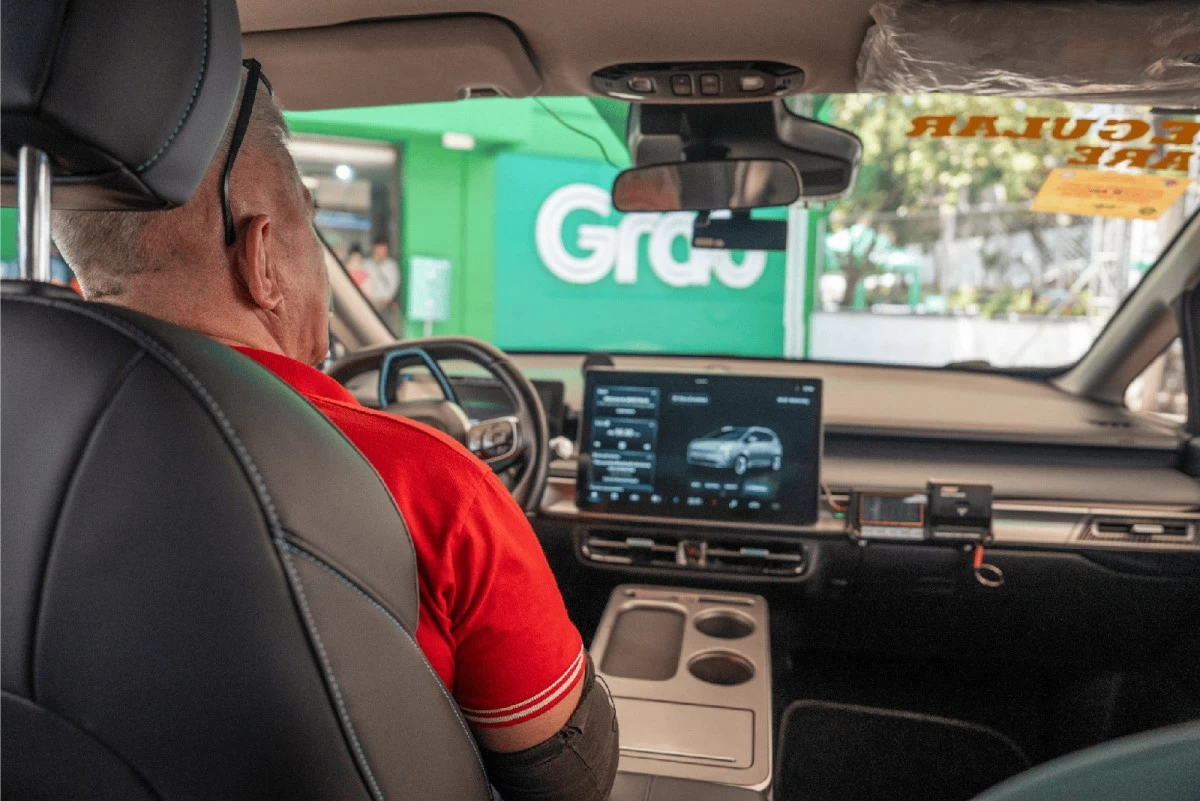
GrabTaxi Electric passengers and drivers also benefit from the full suite of safety and security features and protection programs available across Grab rides, from Trip Monitoring and in-app emergency tools to insurance coverage.
Looking further ahead, Grab pointed to its newly launched Eco-Drive Initiative — billed as Southeast Asia's largest EV financing coalition for ride-hailing — as a cornerstone of its longer-term strategy. The program, unveiled in April 2026, brings together BDO and BPI; global automakers such as Toyota, BYD, and GAC; and automotive distributors such as Autohub Group and QSJ Motors Phil to give TNVS drivers fast-tracked access to electric and hybrid vehicles through preferential "green" auto loans, flexible daily repayments via the Grab Driver Wallet, and exclusive vehicle discounts.

Related Tags

Grab Philippines fuel crisis Philippines
ADVERTISEMENT
.most-popular .layout-ratio{ padding-bottom: 79.13%; } @media (min-width: 768px) and (max-width: 1024px) { .widget-title { font-size: 15px !important; } }

{{ articles_filter_1561_widget.title }}

.most-popular .layout-ratio{ padding-bottom: 79.13%; } @media (min-width: 768px) and (max-width: 1024px) { .widget-title { font-size: 15px !important; } }

{{ articles_filter_1562_widget.title }}

.most-popular .layout-ratio{ padding-bottom: 79.13%; } @media (min-width: 768px) and (max-width: 1024px) { .widget-title { font-size: 15px !important; } }

{{ articles_filter_1563_widget.title }}

{{ articles_filter_1564_widget.title }}

.mb-article-details { position: relative; } .mb-article-details .article-body-preview, .mb-article-details .article-body-summary{ font-size: 17px; line-height: 30px; font-family: "Libre Caslon Text", serif; color: #000; } .mb-article-details .article-body-preview iframe , .mb-article-details .article-body-summary iframe{ width: 100%; margin: auto; } .read-more-background { background: linear-gradient(180deg, color(display-p3 1.000 1.000 1.000 / 0) 13.75%, color(display-p3 1.000 1.000 1.000 / 0.8) 30.79%, color(display-p3 1.000 1.000 1.000) 72.5%); position: absolute; height: 200px; width: 100%; bottom: 0; display: flex; justify-content: center; align-items: center; padding: 0; } .read-more-background a{ color: #000; } .read-more-btn { padding: 17px 45px; font-family: Inter; font-weight: 700; font-size: 18px; line-height: 16px; text-align: center; vertical-align: middle; border: 1px solid black; background-color: white; } .hidden { display: none; }
function initializeAllSwipers() { // Get all hidden inputs with cms_article_id document.querySelectorAll('[id^="cms_article_id_"]').forEach(function (input) { const cmsArticleId = input.value; const articleSelector = '#article-' + cmsArticleId + ' .body_images'; const swiperElement = document.querySelector(articleSelector); if (swiperElement && !swiperElement.classList.contains('swiper-initialized')) { new Swiper(articleSelector, { loop: true, pagination: false, navigation: { nextEl: '#article-' + cmsArticleId + ' .swiper-button-next', prevEl: '#article-' + cmsArticleId + ' .swiper-button-prev', }, }); } }); } setTimeout(initializeAllSwipers, 3000); const intersectionObserver = new IntersectionObserver( (entries) => { entries.forEach((entry) => { if (entry.isIntersecting) { const newUrl = entry.target.getAttribute("data-url"); if (newUrl) { history.pushState(null, null, newUrl); let article = entry.target; // Extract metadata const author = article.querySelector('.author-section').textContent.replace('By', '').trim(); const section = article.querySelector('.section-info ').textContent.replace(' ', ' '); const title = article.querySelector('.article-title h1').textContent; // Parse URL for Chartbeat path format const parsedUrl = new URL(newUrl, window.location.origin); const cleanUrl = parsedUrl.host + parsedUrl.pathname; // Update Chartbeat configuration if (typeof window._sf_async_config !== 'undefined') { window._sf_async_config.path = cleanUrl; window._sf_async_config.sections = section; window._sf_async_config.authors = author; } // Track virtual page view with Chartbeat if (typeof pSUPERFLY !== 'undefined' && typeof pSUPERFLY.virtualPage === 'function') { try { pSUPERFLY.virtualPage({ path: cleanUrl, title: title, sections: section, authors: author }); } catch (error) { console.error('ping error', error); } } // Optional: Update document title if (title && title !== document.title) { document.title = title; } } } }); }, { threshold: 0.1 } ); function showArticleBody(button) { const article = button.closest("article"); const summary = article.querySelector(".article-body-summary"); const body = article.querySelector(".article-body-preview"); const readMoreSection = article.querySelector(".read-more-background"); // Hide summary and read-more section summary.style.display = "none"; readMoreSection.style.display = "none"; // Show the full article body body.classList.remove("hidden"); } document.addEventListener("DOMContentLoaded", () => { let loadCount = 0; // Track how many times articles are loaded const offset = [1, 2, 3, 4, 5, 6, 7, 8, 9, 10]; // Offset values const currentUrl = window.location.pathname.substring(1); let isLoading = false; // Prevent multiple calls if (!currentUrl) { console.log("Current URL is invalid."); return; } const sentinel = document.getElementById("load-more-sentinel"); if (!sentinel) { console.log("Sentinel element not found."); return; } function isSentinelVisible() { const rect = sentinel.getBoundingClientRect(); return ( rect.top < window.innerHeight && rect.bottom >= 0 ); } function onScroll() { if (isLoading) return; if (isSentinelVisible()) { if (loadCount >= offset.length) { console.log("Maximum load attempts reached."); window.removeEventListener("scroll", onScroll); return; } isLoading = true; const currentOffset = offset[loadCount]; window.loadMoreItems().then(() => { let article = document.querySelector('#widget_1690 > div:nth-last-of-type(2) article'); intersectionObserver.observe(article) loadCount++; }).catch(error => { console.error("Error loading more items:", error); }).finally(() => { isLoading = false; }); } } window.addEventListener("scroll", onScroll); });

Sign up by email to receive news.