

ADVERTISEMENT

ERC urged to implement staggered increase to prevent electricity 'bill shock'

Published Apr 29, 2026 06:25 pm

At A Glance

  • Senator Sherwin Gatchalian, chairman of the Proactive Response and Oversight for Timely and Effective Crisis Strategy (PROTECT) Committee, made the suggestion to the ERC at the continuation of the Senate's hearing into the government's response on the Middle East conflict on Wednesday, April 29.


The Energy Regulatory Commission (ERC) has been asked to implement a staggered increase on electricity bills to prevent consumers suffer from “bill shock.”
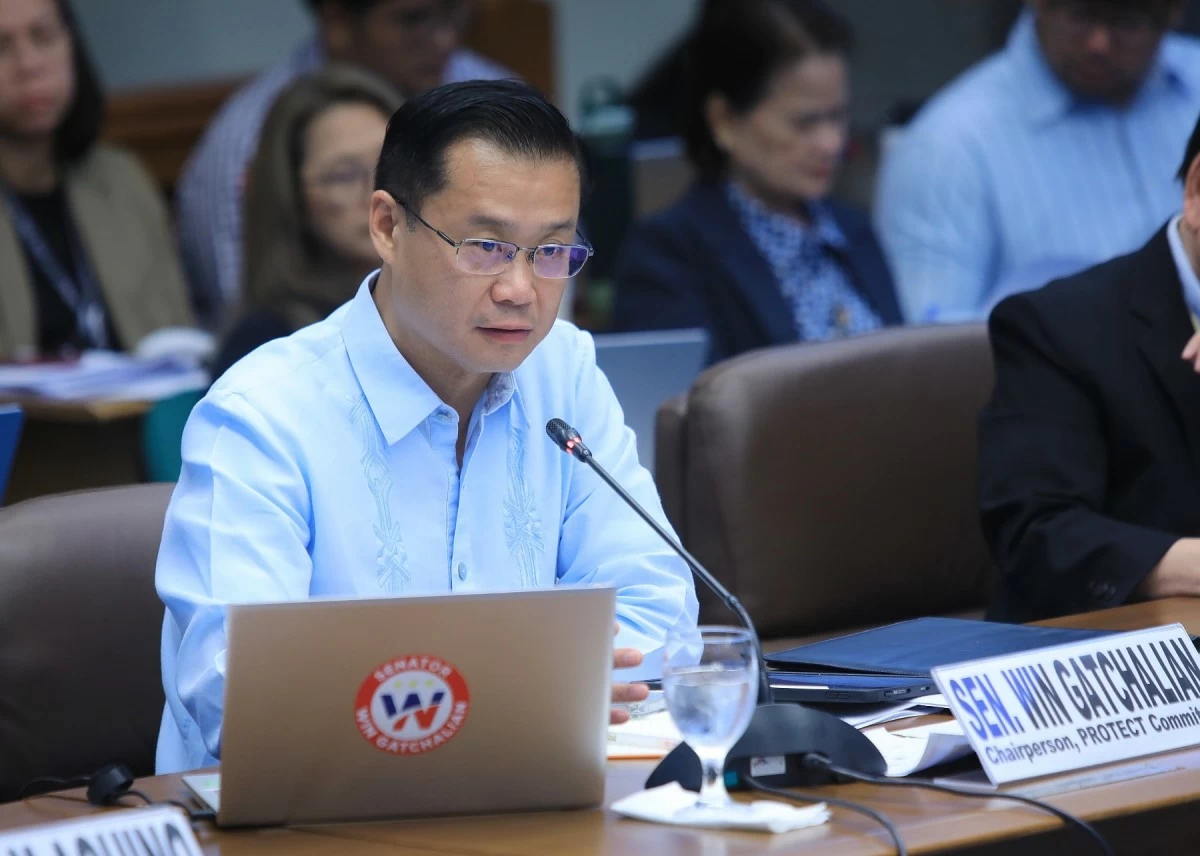
Senator Sherwin Gatchalian, chairman of the Proactive Response and Oversight for Timely and Effective Crisis Strategy (PROTECT) Committee, made the suggestion to the ERC at the continuation of the Senate’s hearing into the government’s response on the Middle East conflict on Wednesday, April 29.

Gatchalian pointed out that there is currently an increase in the cost for generation charges which he foresees will “further increase in the next few months.”

“What we want to happen, and this was also the recommendation of the Protect Committee, is to have a staggered increase,” Gatchalian said in Filipino during the hearing.

“Our call to the ERC is not to synchronize the increase in electricity (charges) with the increase in petrol, the increase in rice (prices). I saw that the cost of rice also increased, bit by bit. So our consumers, especially our poorest countrymen, are in for a triple whammy,” he explained.

The senator pointed out this scheme was already implemented during the global Covid-19 pandemic, and therefore, can be replicated by the government at this time.

“During the pandemic, we already did this. If you remember, during the pandemic, there was also bill shock because the meter readers couldn't read it. When they did, after one or two months, the electricity bill of our countrymen got so big, because they also could not report to work. So, the ERC issued an advisory to have staggered payment,” he recalled.

“So, (implementing a) staggered payment is not new. So, my call, the committee's call and recommendation, is for the ERC to implement staggered payment,” he stressed.

Moreover, Gatchalian electricity is a utility that the government can control through regulation.

“And I know, you have issued a circular that when the generation is one peso, you will review and implement on a case-to-case basis. But, I think that one peso is high. Because, our context here, it is the same for gasoline, the same for rice,” he pointed out.

“So, I think that one peso is high. I think, for each increase, especially at this time, we should implement a staggered increase because our consumers really can't afford it. Because, our consumers, they are also our riders. They are also our commuters. So, that is our strong recommendation to the ERC,” the lawmaker further reiterated.

In response, the ERC committed to reviewing its existing advisory and “look into the possibility of lowering the trigger.”

“We will revisit our advisory and look into the possibility of lowering the trigger for the mandatory reporting by distribution utilities of their generation charge calculation and also the staggering mandate for them, which will include also the mandate for generation companies to settle with partial payments from the distribution utilities,” said Francis Saturnino C. Juan, ERC Chairperson and CEO.

Government already spent P41.6B

Also during the resumption of the PROTECT hearing, Gatchalian called for a clearer accounting of beneficiaries and updates on the status of government assistance amid the global energy crisis.

He noted that the government has already disbursed P41.6-billion in the first 60 days to cushion the impact of the Middle East conflict.

The lawmaker lamented that global energy markets remain unstable due to the conflict, particularly around the Strait of Hormuz, a key route in global oil supply.

“Negotiations seem to be going very slow and because of this, uncertainty surrounds this situation,” he observed.

While global crude prices briefly eased to around $100, or about P6,149, per barrel following a ceasefire, Gatchalian noted that prices remained elevated.

Thus, the need to evaluate the effectiveness of state interventions, including fuel subsidies and other support programs.

“We want to know where are we in terms of intervention programs, how many PUV (public utility vehicle) drivers and other constituents have already received assistance, and how many more we need to help?” the Senate finance committee chair also said.

Related Tags

bill shock MERALCO Sherwin Gatchalian ERC Electricity bills Protect ad hoc committee Senate
ADVERTISEMENT
.most-popular .layout-ratio{ padding-bottom: 79.13%; } @media (min-width: 768px) and (max-width: 1024px) { .widget-title { font-size: 15px !important; } }

{{ articles_filter_1561_widget.title }}

.most-popular .layout-ratio{ padding-bottom: 79.13%; } @media (min-width: 768px) and (max-width: 1024px) { .widget-title { font-size: 15px !important; } }

{{ articles_filter_1562_widget.title }}

.most-popular .layout-ratio{ padding-bottom: 79.13%; } @media (min-width: 768px) and (max-width: 1024px) { .widget-title { font-size: 15px !important; } }

{{ articles_filter_1563_widget.title }}

{{ articles_filter_1564_widget.title }}

.mb-article-details { position: relative; } .mb-article-details .article-body-preview, .mb-article-details .article-body-summary{ font-size: 17px; line-height: 30px; font-family: "Libre Caslon Text", serif; color: #000; } .mb-article-details .article-body-preview iframe , .mb-article-details .article-body-summary iframe{ width: 100%; margin: auto; } .read-more-background { background: linear-gradient(180deg, color(display-p3 1.000 1.000 1.000 / 0) 13.75%, color(display-p3 1.000 1.000 1.000 / 0.8) 30.79%, color(display-p3 1.000 1.000 1.000) 72.5%); position: absolute; height: 200px; width: 100%; bottom: 0; display: flex; justify-content: center; align-items: center; padding: 0; } .read-more-background a{ color: #000; } .read-more-btn { padding: 17px 45px; font-family: Inter; font-weight: 700; font-size: 18px; line-height: 16px; text-align: center; vertical-align: middle; border: 1px solid black; background-color: white; } .hidden { display: none; }
function initializeAllSwipers() { // Get all hidden inputs with cms_article_id document.querySelectorAll('[id^="cms_article_id_"]').forEach(function (input) { const cmsArticleId = input.value; const articleSelector = '#article-' + cmsArticleId + ' .body_images'; const swiperElement = document.querySelector(articleSelector); if (swiperElement && !swiperElement.classList.contains('swiper-initialized')) { new Swiper(articleSelector, { loop: true, pagination: false, navigation: { nextEl: '#article-' + cmsArticleId + ' .swiper-button-next', prevEl: '#article-' + cmsArticleId + ' .swiper-button-prev', }, }); } }); } setTimeout(initializeAllSwipers, 3000); const intersectionObserver = new IntersectionObserver( (entries) => { entries.forEach((entry) => { if (entry.isIntersecting) { const newUrl = entry.target.getAttribute("data-url"); if (newUrl) { history.pushState(null, null, newUrl); let article = entry.target; // Extract metadata const author = article.querySelector('.author-section').textContent.replace('By', '').trim(); const section = article.querySelector('.section-info ').textContent.replace(' ', ' '); const title = article.querySelector('.article-title h1').textContent; // Parse URL for Chartbeat path format const parsedUrl = new URL(newUrl, window.location.origin); const cleanUrl = parsedUrl.host + parsedUrl.pathname; // Update Chartbeat configuration if (typeof window._sf_async_config !== 'undefined') { window._sf_async_config.path = cleanUrl; window._sf_async_config.sections = section; window._sf_async_config.authors = author; } // Track virtual page view with Chartbeat if (typeof pSUPERFLY !== 'undefined' && typeof pSUPERFLY.virtualPage === 'function') { try { pSUPERFLY.virtualPage({ path: cleanUrl, title: title, sections: section, authors: author }); } catch (error) { console.error('ping error', error); } } // Optional: Update document title if (title && title !== document.title) { document.title = title; } } } }); }, { threshold: 0.1 } ); function showArticleBody(button) { const article = button.closest("article"); const summary = article.querySelector(".article-body-summary"); const body = article.querySelector(".article-body-preview"); const readMoreSection = article.querySelector(".read-more-background"); // Hide summary and read-more section summary.style.display = "none"; readMoreSection.style.display = "none"; // Show the full article body body.classList.remove("hidden"); } document.addEventListener("DOMContentLoaded", () => { let loadCount = 0; // Track how many times articles are loaded const offset = [1, 2, 3, 4, 5, 6, 7, 8, 9, 10]; // Offset values const currentUrl = window.location.pathname.substring(1); let isLoading = false; // Prevent multiple calls if (!currentUrl) { console.log("Current URL is invalid."); return; } const sentinel = document.getElementById("load-more-sentinel"); if (!sentinel) { console.log("Sentinel element not found."); return; } function isSentinelVisible() { const rect = sentinel.getBoundingClientRect(); return ( rect.top < window.innerHeight && rect.bottom >= 0 ); } function onScroll() { if (isLoading) return; if (isSentinelVisible()) { if (loadCount >= offset.length) { console.log("Maximum load attempts reached."); window.removeEventListener("scroll", onScroll); return; } isLoading = true; const currentOffset = offset[loadCount]; window.loadMoreItems().then(() => { let article = document.querySelector('#widget_1690 > div:nth-last-of-type(2) article'); intersectionObserver.observe(article) loadCount++; }).catch(error => { console.error("Error loading more items:", error); }).finally(() => { isLoading = false; }); } } window.addEventListener("scroll", onScroll); });

Sign up by email to receive news.