ADVERTISEMENT

China seeks wider trade cooperation with US under APEC chairmanship

Published Apr 29, 2026 06:40 am
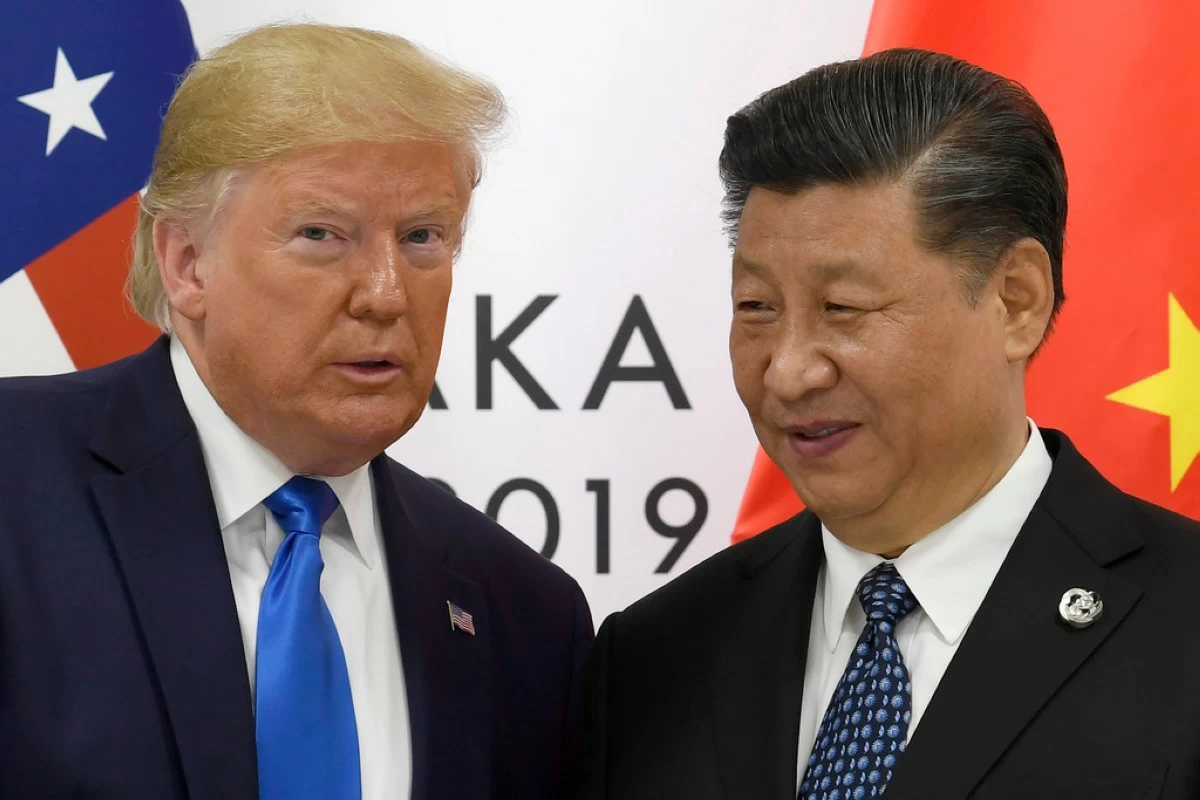
U.S. President Donald Trump poses for a photo with Chinese President Xi Jinping during a meeting on the sidelines of the G-20 summit in Osaka, western Japan, on June 29, 2019. (AP Photo/Susan Walsh, File)

BEIJING, China — The trade relationship between two of the world’s largest economies is expected to expand significantly in the near term as China looks to secure bilateral commitments with the United States (US) at the upcoming Asia-Pacific Economic Cooperation (APEC) Summit.

Ambassador Chen Xu, chair of the 2026 APEC Senior Officials’ Meeting (SOM), said the APEC Economic Leaders’ Meeting in November is expected to play a crucial role in global trade, especially with China serving as chair of the influential regional bloc.

He said the clear objective is to engage in effective dialogue to reach a mutually beneficial consensus, moving away from years-long trade tensions that have shaped global trade.

“From China’s perspective, as long as there is mutual respect, peaceful coexistence, and win-win cooperation, the scope of cooperation will continue to expand, while differences will gradually diminish,” Chen said during a press conference here.

“Our intentions and direction are very clear, and we hope the US side will meet us halfway in the same spirit,” he added.

Since he first assumed office, US President Donald Trump has imposed a barrage of restrictions and levies aimed at reducing China’s competitiveness as he shifted US trade policy toward a more protectionist stance.

Last year, Trump implemented significantly higher reciprocal tariffs on Chinese goods entering the US, which Beijing countered with its own set of restrictions.

While the US’ tariff policy has largely simmered down this year, partly due to the impact of the conflict in the Middle East that it triggered, China has maintained its commitment to open trade.

With its goal of upholding “openness” at this year’s APEC Summit, Chen said China remains willing to build a strong relationship with the US, in line with efforts to further facilitate trade between the two countries.

Still, he said the US needs to address “many uncertainties” that are not conducive to maintaining healthy bilateral relations.

For instance, Chen said the US continues to interfere in China’s internal affairs, implement actions that directly harm China’s interests, and impose unilateral sanctions on Chinese companies.

“Especially on critical issues such as Taiwan, the US side should adhere to the One China policy in order to jointly maintain a long-term stable and balanced China-US relationship,” Chen said.

“This relationship is important not only for the two countries but also for the entire world,” he stressed.

In the same vein, Chen sees the upcoming APEC Summit as a platform to address the diplomatic row between China and Japan over remarks by the latter’s prime minister involving potential military action concerning Chinese Taipei.

He said he is hopeful that Tokyo will affirm its commitment to the One China policy to safeguard the political foundation of bilateral ties.

As is customary, heads of state from APEC member economies will convene at the Economic Leaders’ Meeting to issue a joint declaration aimed at addressing the most urgent issues affecting the region.

China National Committee for Pacific Economic Cooperation (CNCPEC) vice chairman Liu Chenyang said APEC’s initiatives make it more relevant at a time of economic and geopolitical challenges.

Compared with traditional regional agreements, he said APEC’s cooperation mechanism is designed to address specific issues, making it more inclusive for both developed and developing economies.

“From this perspective of multidimensional and diversified cooperation space, APEC remains more prominent and significant compared to other regional mechanisms,” Liu said.

“Returning to a world of fragmentation and confrontation would not be a rational choice for any member. Therefore, it is even more important to proactively make use of this platform,” he added.

Related Tags

Asia-Pacific Economic Cooperation (APEC) China United States (US) Donald Trump United States (US) tariffs
ADVERTISEMENT
.most-popular .layout-ratio{ padding-bottom: 79.13%; } @media (min-width: 768px) and (max-width: 1024px) { .widget-title { font-size: 15px !important; } }

{{ articles_filter_1561_widget.title }}

.most-popular .layout-ratio{ padding-bottom: 79.13%; } @media (min-width: 768px) and (max-width: 1024px) { .widget-title { font-size: 15px !important; } }

{{ articles_filter_1562_widget.title }}

.most-popular .layout-ratio{ padding-bottom: 79.13%; } @media (min-width: 768px) and (max-width: 1024px) { .widget-title { font-size: 15px !important; } }

{{ articles_filter_1563_widget.title }}

{{ articles_filter_1564_widget.title }}

.mb-article-details { position: relative; } .mb-article-details .article-body-preview, .mb-article-details .article-body-summary{ font-size: 17px; line-height: 30px; font-family: "Libre Caslon Text", serif; color: #000; } .mb-article-details .article-body-preview iframe , .mb-article-details .article-body-summary iframe{ width: 100%; margin: auto; } .read-more-background { background: linear-gradient(180deg, color(display-p3 1.000 1.000 1.000 / 0) 13.75%, color(display-p3 1.000 1.000 1.000 / 0.8) 30.79%, color(display-p3 1.000 1.000 1.000) 72.5%); position: absolute; height: 200px; width: 100%; bottom: 0; display: flex; justify-content: center; align-items: center; padding: 0; } .read-more-background a{ color: #000; } .read-more-btn { padding: 17px 45px; font-family: Inter; font-weight: 700; font-size: 18px; line-height: 16px; text-align: center; vertical-align: middle; border: 1px solid black; background-color: white; } .hidden { display: none; }
function initializeAllSwipers() { // Get all hidden inputs with cms_article_id document.querySelectorAll('[id^="cms_article_id_"]').forEach(function (input) { const cmsArticleId = input.value; const articleSelector = '#article-' + cmsArticleId + ' .body_images'; const swiperElement = document.querySelector(articleSelector); if (swiperElement && !swiperElement.classList.contains('swiper-initialized')) { new Swiper(articleSelector, { loop: true, pagination: false, navigation: { nextEl: '#article-' + cmsArticleId + ' .swiper-button-next', prevEl: '#article-' + cmsArticleId + ' .swiper-button-prev', }, }); } }); } setTimeout(initializeAllSwipers, 3000); const intersectionObserver = new IntersectionObserver( (entries) => { entries.forEach((entry) => { if (entry.isIntersecting) { const newUrl = entry.target.getAttribute("data-url"); if (newUrl) { history.pushState(null, null, newUrl); let article = entry.target; // Extract metadata const author = article.querySelector('.author-section').textContent.replace('By', '').trim(); const section = article.querySelector('.section-info ').textContent.replace(' ', ' '); const title = article.querySelector('.article-title h1').textContent; // Parse URL for Chartbeat path format const parsedUrl = new URL(newUrl, window.location.origin); const cleanUrl = parsedUrl.host + parsedUrl.pathname; // Update Chartbeat configuration if (typeof window._sf_async_config !== 'undefined') { window._sf_async_config.path = cleanUrl; window._sf_async_config.sections = section; window._sf_async_config.authors = author; } // Track virtual page view with Chartbeat if (typeof pSUPERFLY !== 'undefined' && typeof pSUPERFLY.virtualPage === 'function') { try { pSUPERFLY.virtualPage({ path: cleanUrl, title: title, sections: section, authors: author }); } catch (error) { console.error('ping error', error); } } // Optional: Update document title if (title && title !== document.title) { document.title = title; } } } }); }, { threshold: 0.1 } ); function showArticleBody(button) { const article = button.closest("article"); const summary = article.querySelector(".article-body-summary"); const body = article.querySelector(".article-body-preview"); const readMoreSection = article.querySelector(".read-more-background"); // Hide summary and read-more section summary.style.display = "none"; readMoreSection.style.display = "none"; // Show the full article body body.classList.remove("hidden"); } document.addEventListener("DOMContentLoaded", () => { let loadCount = 0; // Track how many times articles are loaded const offset = [1, 2, 3, 4, 5, 6, 7, 8, 9, 10]; // Offset values const currentUrl = window.location.pathname.substring(1); let isLoading = false; // Prevent multiple calls if (!currentUrl) { console.log("Current URL is invalid."); return; } const sentinel = document.getElementById("load-more-sentinel"); if (!sentinel) { console.log("Sentinel element not found."); return; } function isSentinelVisible() { const rect = sentinel.getBoundingClientRect(); return ( rect.top < window.innerHeight && rect.bottom >= 0 ); } function onScroll() { if (isLoading) return; if (isSentinelVisible()) { if (loadCount >= offset.length) { console.log("Maximum load attempts reached."); window.removeEventListener("scroll", onScroll); return; } isLoading = true; const currentOffset = offset[loadCount]; window.loadMoreItems().then(() => { let article = document.querySelector('#widget_1690 > div:nth-last-of-type(2) article'); intersectionObserver.observe(article) loadCount++; }).catch(error => { console.error("Error loading more items:", error); }).finally(() => { isLoading = false; }); } } window.addEventListener("scroll", onScroll); });

Sign up by email to receive news.