







Buried warnings in landfills
Published Apr 29, 2026 12:05 am
|
Updated Apr 28, 2026 04:42 pm


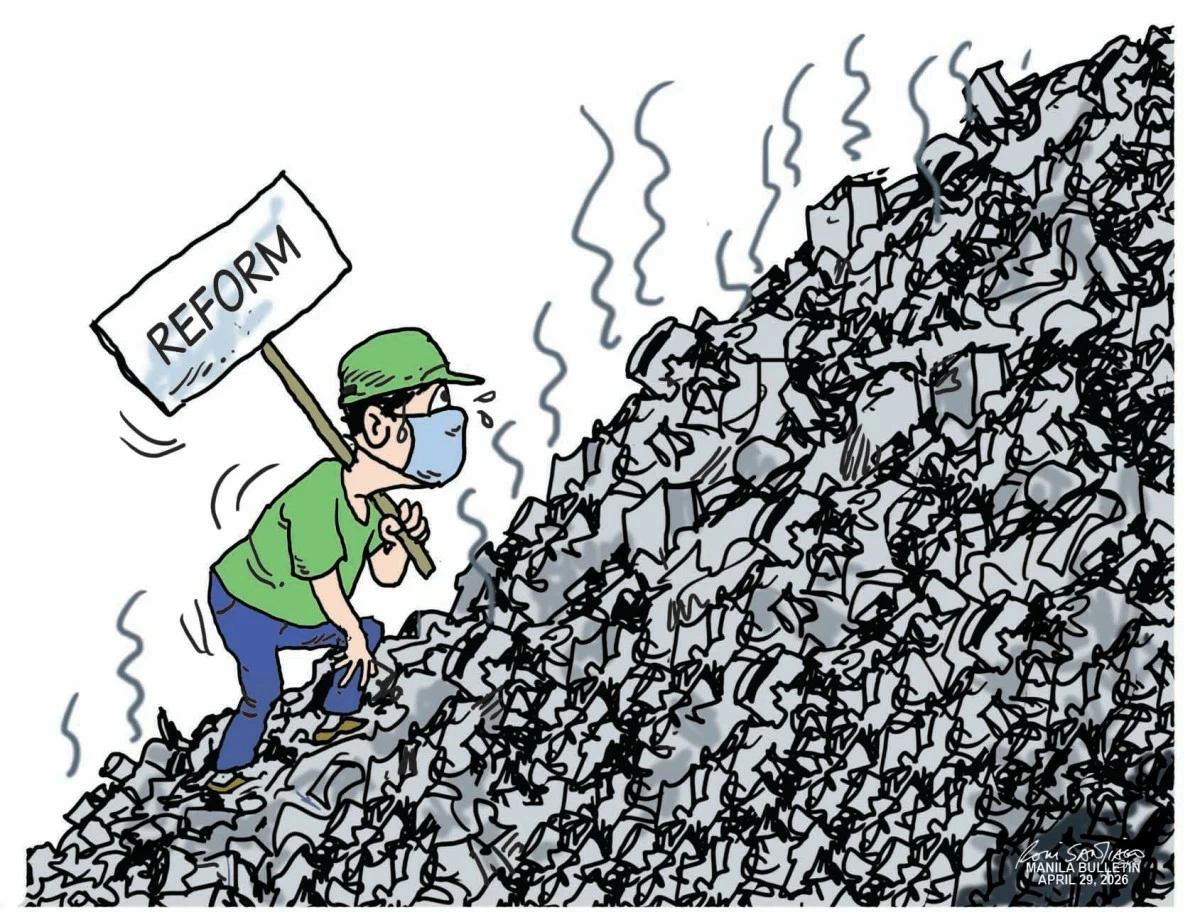
The smoke drifting across Metro Manila from the recent Navotas landfill fire is a clear warning sign.
The number of incidents linked to sanitary landfills, from persistent fires to catastrophic collapses, underscores a system under considerable strain. These events are not isolated incidents but manifestations of deeper structural deficiencies: policy gaps, inconsistent enforcement, and an increasingly outdated approach to waste management that struggles to keep pace with rapid urbanization.
Sanitary landfills were conceived as controlled and engineered solutions for waste containment. In practice, however, many have evolved into significant environmental and public safety risks. Landfill fires release hazardous particulates that compromise air quality and endanger nearby communities. Structural failures, such as collapsing waste mounds, point to inadequate oversight and engineering safeguards. Meanwhile, leachate continues to pose a less visible but equally serious threat, seeping into soil and waterways and causing long-term ecological damage. These risks have immediate, measurable, and consequential impacts across all sectors.
Addressing these challenges requires the government to elevate landfill safety to a matter of urgent national priority. This entails the establishment of stricter monitoring systems, enhanced transparency, and real-time reporting mechanisms for landfill conditions. Regulatory bodies must be equipped with both the authority and the resources to enforce compliance rigorously, including the closure of facilities that fail to meet established standards. While environmental regulations are already in place, their effectiveness is undermined by inconsistent enforcement; bridging this gap is essential.
However, improved oversight alone will not suffice. The fundamental issue lies in the country’s continued reliance on landfills as the primary method of waste disposal. A more sustainable strategy must prioritize waste reduction at its source. This involves substantial investment in waste segregation, recycling infrastructure, and composting initiatives at the community level. Policy instruments should be recalibrated to incentivize waste minimization among households and businesses, shifting the focus from disposal to prevention.
In this context, it is also necessary to revisit the potential role of modern waste-to-energy technologies. Incineration has long been met with public concern, largely due to historical environmental and health risks. Nevertheless, technological advancements have significantly improved emissions control and operational safety. Countries such as Singapore have demonstrated that high-efficiency incineration facilities, when properly regulated, can reduce dependence on landfills while contributing to energy generation. Should such options be considered, they must adhere to the most stringent environmental standards and be subject to independent, transparent oversight to ensure public trust.
The private sector likewise has a critical role to play. Effective waste management requires not only public leadership but also private sector participation, particularly in terms of investment, innovation, and operational efficiency. Public-private partnerships should be structured with clear accountability mechanisms and aligned with environmental performance objectives. Furthermore, producers—especially those responsible for large volumes of packaging—must be held accountable through extended producer responsibility frameworks that ensure they contribute to the lifecycle management of their products.
Finally, any comprehensive reform must address the issue of environmental equity. Landfills are frequently situated near communities with limited socio-economic capacity to oppose them, thereby exacerbating existing inequalities. Policymaking must incorporate inclusive consultation processes and safeguards to ensure that no sector disproportionately bears environmental burdens.
Waste disposal remains an inevitable aspect of modern society. However, the methods by which it is managed reflect broader governance priorities and societal values. The recent landfill tragedies highlight not only environmental vulnerabilities but also institutional shortcomings. Meaningful reform will require a coordinated approach to build a waste management system that is both sustainable and just. It must be grounded in sound policy, effective enforcement, technological innovation, and social accountability. Anything short of this may be disastrous.