






 Business
The Economy
BSP rate hike a one-off move as Philippine economy stays under strain—think tank
Business
The Economy
BSP rate hike a one-off move as Philippine economy stays under strain—think tank
BSP rate hike a one-off move as Philippine economy stays under strain—think tank
By Derco Rosal


At A Glance
- UK-based Pantheon Macroeconomics said the Philippine economy remains too fragile to quickly pass through surging energy prices into demand-side pressures, suggesting that the latest interest rate hike is likely a one-off move.
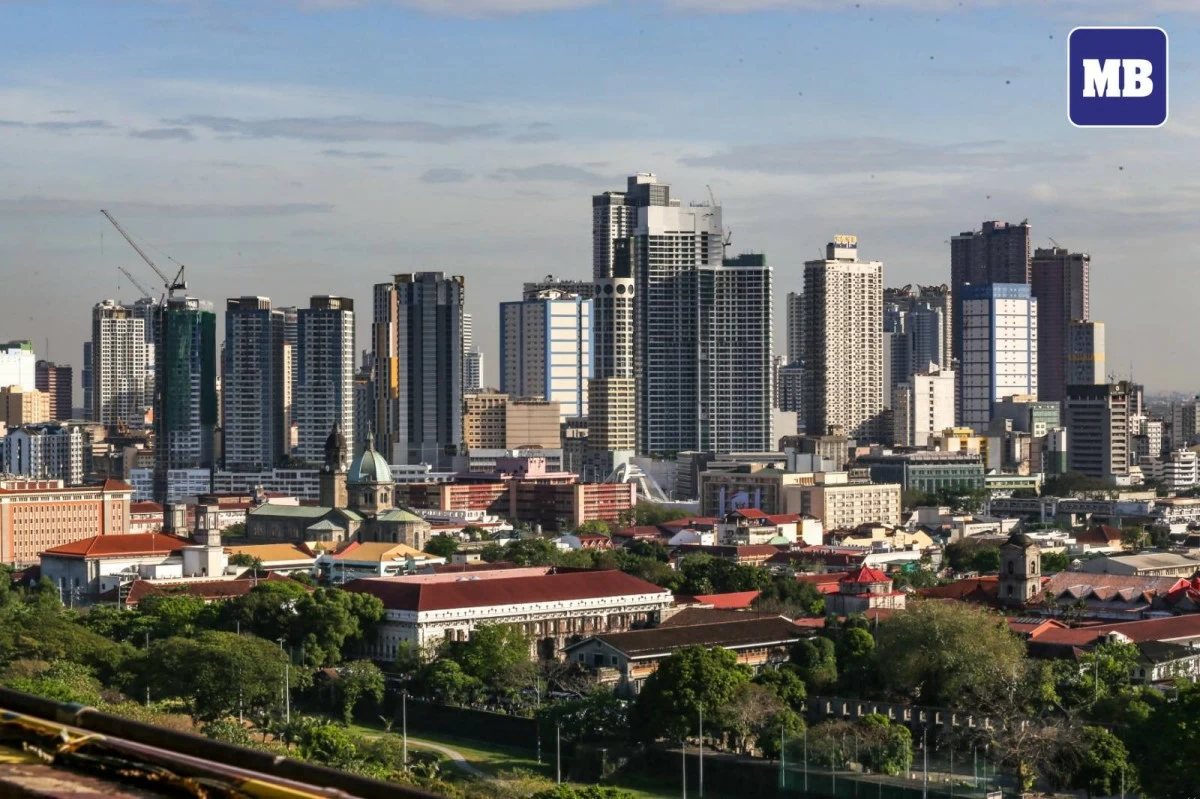
United Kingdom (UK)-based think tank Pantheon Macroeconomics said the Philippine economy remains too fragile to quickly pass through surging energy prices into demand-side pressures, suggesting that the latest interest rate hike is likely a one-off move.
As such, the benchmark rate at 4.5 percent is poised to remain unchanged throughout the year, with the Bangko Sentral ng Pilipinas (BSP) expected to return to monetary policy easing in 2027.
Pantheon Macroeconomics said in a report published last Tuesday, April 28, that consumer prices will remain elevated for an extended period, contrary to the central bank’s assumption that inflation will stay above the four-percent ceiling only until next year.
In its latest monetary policy meeting, the BSP revised upward its inflation assumptions for 2026 and 2027 from 5.1 percent and 3.8 percent to 6.3 percent and 4.3 percent, respectively. Both projections are higher than the four-percent ceiling set by the central bank.
If the BSP’s 2026 headline inflation forecast is achieved, it would mark a 28-year high since the 8.2 percent recorded at the height of the global financial crisis (GFC) in 2008.
“We still doubt this will be the case, so our core view is that the April move is a ‘one and done,’” Pantheon Macroeconomics chief emerging Asia economist Miguel Chanco and Asia economist Meekita Gupta said, referring to the expectation of prolonged elevated prices.
Chanco and Gupta forecast inflation to average 4.6 percent in 2026 and ease back within the two- to four-percent target band by 2027.
“The BSP’s worries about ‘second-round effects’ in inflation are overblown, as the economy is nowhere near healthy enough to suggest that this supply-side shock could quickly translate into persistent demand-side pressures,” they added.
Pantheon Macroeconomics’ projections point to the policy rate holding at 4.5 percent through the year before declining to 4.25 percent by end-2027 to support gross domestic product (GDP) growth.
Data from Pantheon Macroeconomics showed domestic demand has steadily rebounded from the sharp contraction during the pandemic, with the volume of net sales index now exceeding pre-2020 levels. After plunging in 2020, demand recovered strongly through 2021 and 2022.
By 2023, the uptrend had become more pronounced, signaling improving economic activity. Gains continued through 2025, with the index reaching its highest levels in the series, indicating resilient consumer and business spending.
Prior to disruptions driven by the Middle East conflict, domestic demand had been on a firm recovery path.
Pantheon Macroeconomics expects the Philippine economy to grow by 4.8 percent this year from 4.4 percent in 2025. If realized, this would still fall short of the minimum five-percent growth target, extending a streak of missed goals.
Output growth is projected to further improve to 5.2 percent, but remain below the minimum target of 5.5 percent.