






Manila Bulletin
 Philippines
National
Balikatan air defense drills highlight drone threat as China expands island in South China Sea
Philippines
National
Balikatan air defense drills highlight drone threat as China expands island in South China Sea
Philippines
National
Balikatan air defense drills highlight drone threat as China expands island in South China Sea
Balikatan air defense drills highlight drone threat as China expands island in South China Sea
Published Apr 29, 2026 11:09 am
|
Updated Apr 29, 2026 02:45 pm


At A Glance
- Filipino and United States forces conducted a joint Integrated Air and Missile Defense (IAMD) exercise during the 41st Exercise Balikatan in San Antonio, Zambales.
- The drill focused on countering modern aerial threats like drones.
- It showcased coordinated "sensor-to-shooter" operations using systems such as the Philippine Air Force's SPYDER and US platforms like Avenger and MADIS.
- Live-fire tests successfully intercepted simulated drone targets, which highlighted the growing importance of air defense amid evolving warfare tactics seen in global conflicts.
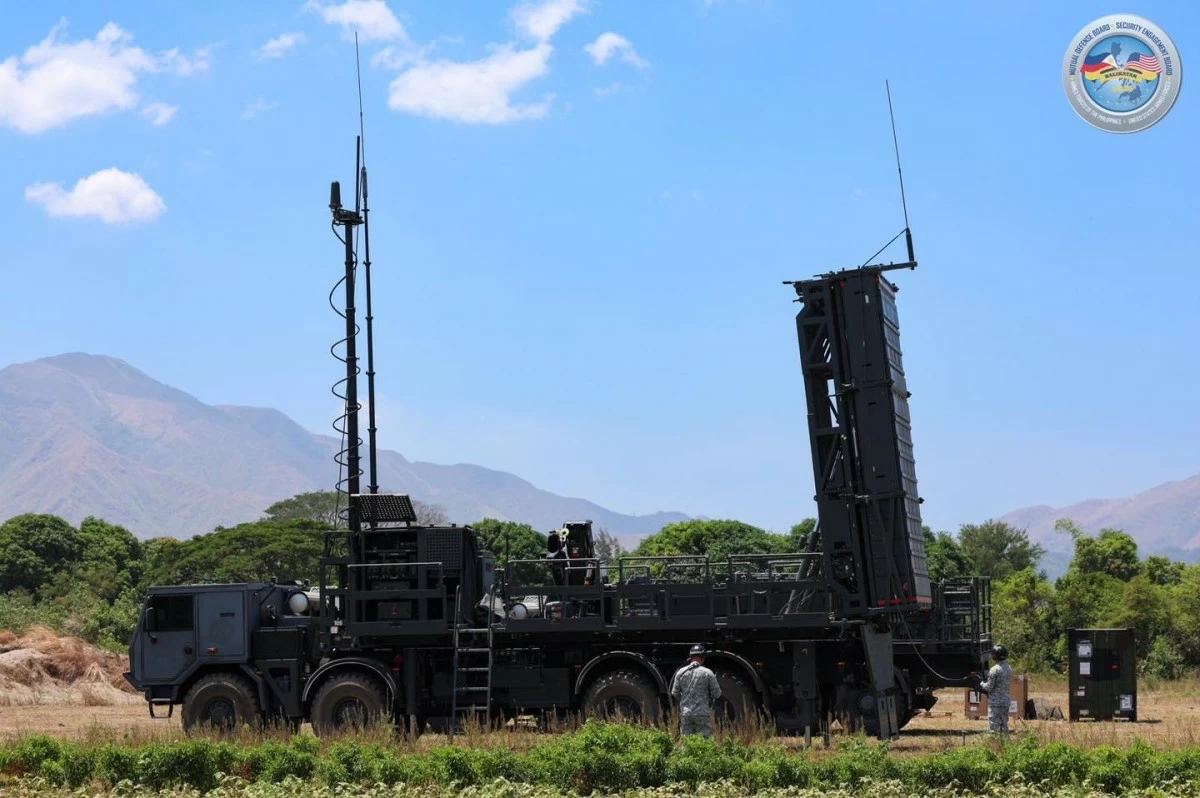
The Armed Forces of the Philippines (AFP) showcases aerial defense capability as the Philippine Air Force SPYDER Air Defense System joins the Integrated Air and Missile Defense (IAMD) drill under Exercise Balikatan on April 28, 2026 at Naval Station Leovigildo Gantioqui (NSLG), San Antonio, Zambales. (Photo: AFP)
Filipino and American forces have successfully integrated advanced air defense systems to counter “drone warfare” during the 41st interation of Exercise Balikatan, just as reports revealed a massive new Chinese dredging project in the South China Sea (SCS).
The four-day Integrated Air and Missile Defense (IAMD) exercise, which concluded on Wednesday, April 29, at Naval Station Leovigildo Gantioqui in San Antonio, Zambales, featured the first high-level coordination of specific missile platforms designed to neutralize modern aerial threats such as the use of drones and other unmanned aerial vehicles (UAVs), that was observed in the ongoing Ukraine-Russia conflict as well as United States and Israel’s war with Iran.
“These are modern threats and different strategies that we have to consider. Basically, in this part of the exercise, we can see drone operations and how to counter them,” said Col. Xerxes Trinidad, chief of the Armed Forces of the Philippines (AFP) public affairs office.
For the AFP, the IAMD exercise underscored how coordinated, ground-to-air defense systems provide a robust defense against increasingly complex aerial threats.
“This is part of how we protect our airspace—not just from drones, but from different threats in the airspace,” Trinidad added.
Integrated air and missile defense
The drill utilized a “sensor-to-shooter” process where early warning data from radar systems were analyzed and relayed to tactical units.
This allowed for rapid engagement using the Philippine Air Force’s (PAF) SPYDER Air Defense System alongside US assets, including the Army’s Avenger and the Marine Corps’ Marine Air Defense Integrated System (MADIS).
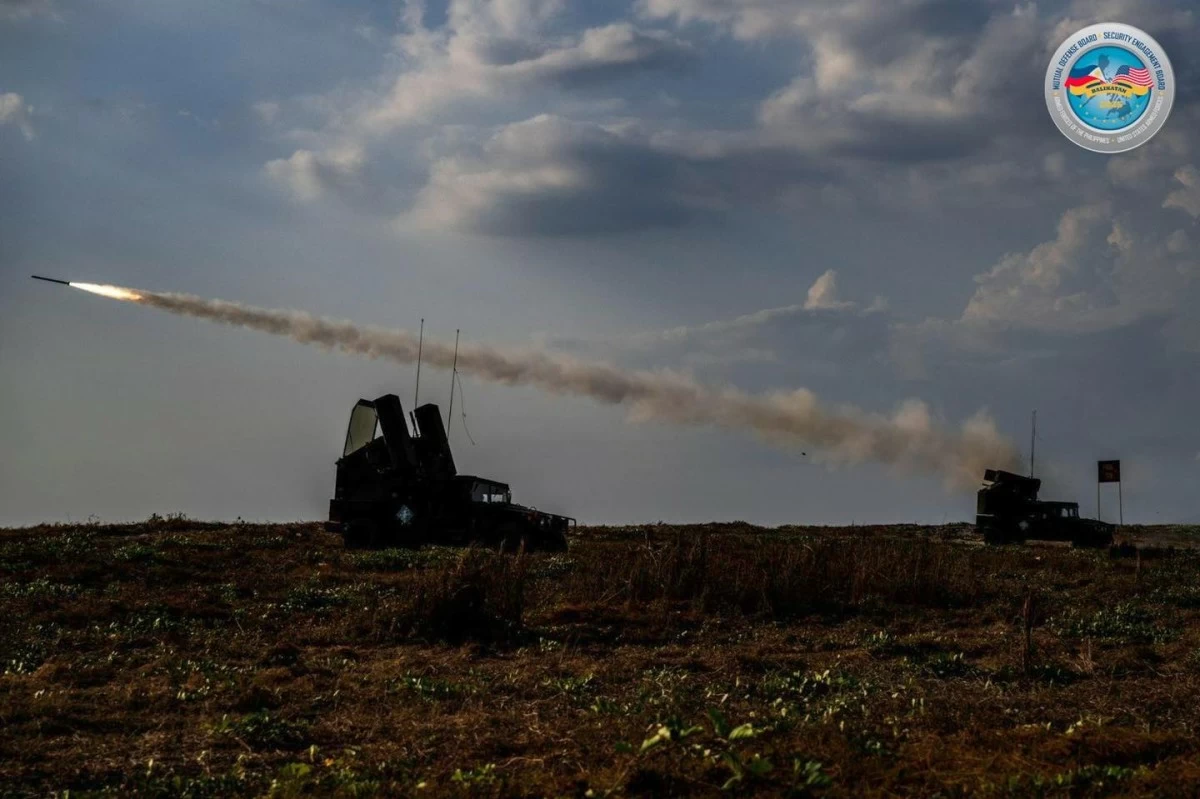
United States Army’s Avenger launches fires during the Integrated Air and Missile Defense (IAMD) drill under Exercise Balikatan on April 28, 2026 at Naval Station Leovigildo Gantioqui (NSLG) in San Antonio, Zambales. (Photo: Armed Forces of the Philippines)
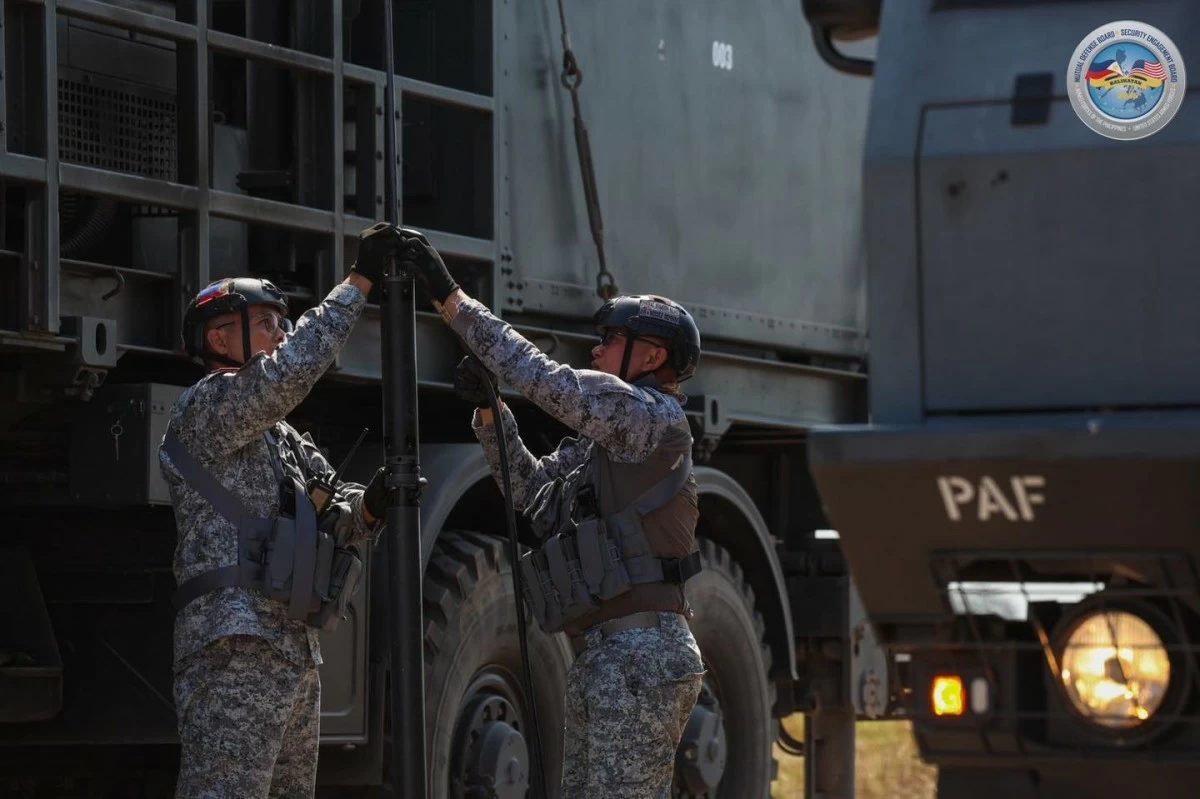
Philippine Air Force personnel conduct a security check prior to the activity as the PAF SPYDER Air Defense System takes part in the Integrated Air and Missile Defense (IAMD) drill under Exercise Balikatan on April 28, 2026 at Naval Station Leovigildo Gantioqui (NSLG) in San Antonio, Zambales. (Photo: Armed Forces of the Philippines)
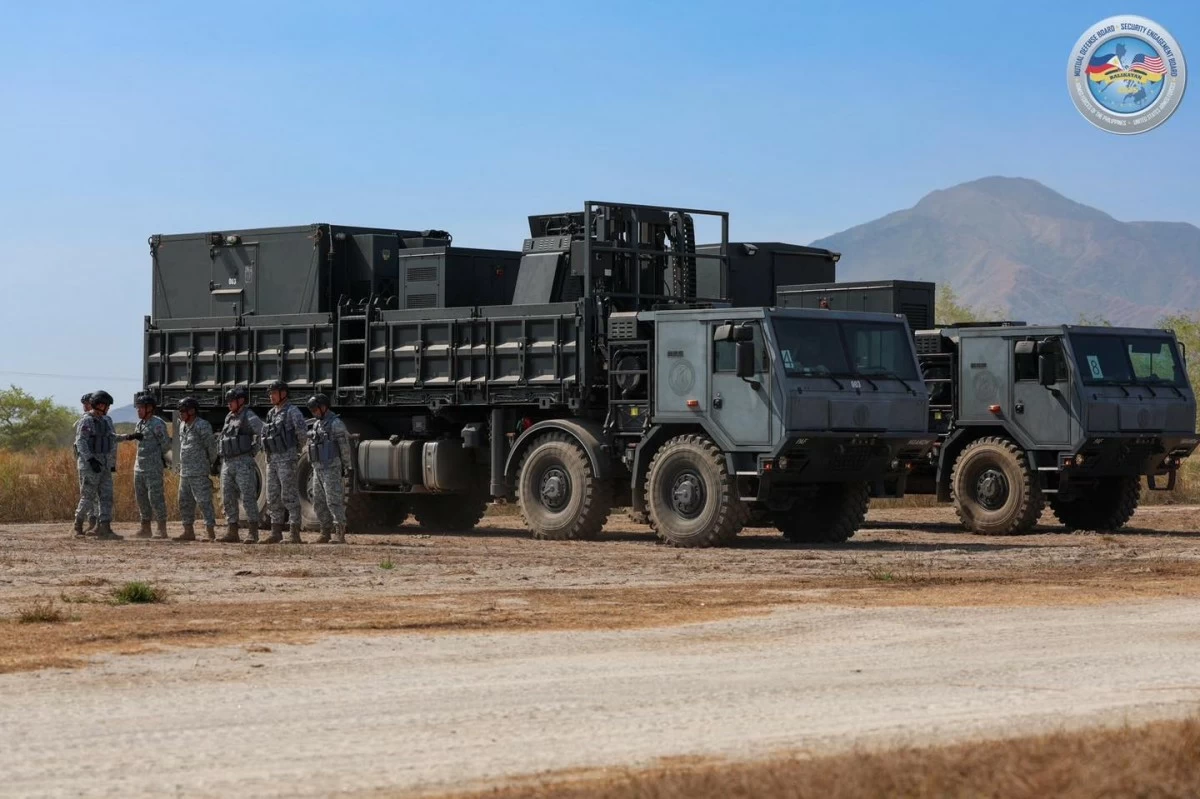
Philippine Air Force personnel conduct a security check prior to the activity as the PAF SPYDER Air Defense System participates in the Integrated Air and Missile Defense (IAMD) drill under Exercise Balikatan on April 28, 2026 at Naval Station Leovigildo Gantioqui (NSLG) in San Antonio, Zambales. (Photo: Armed Forces of the Philippines)
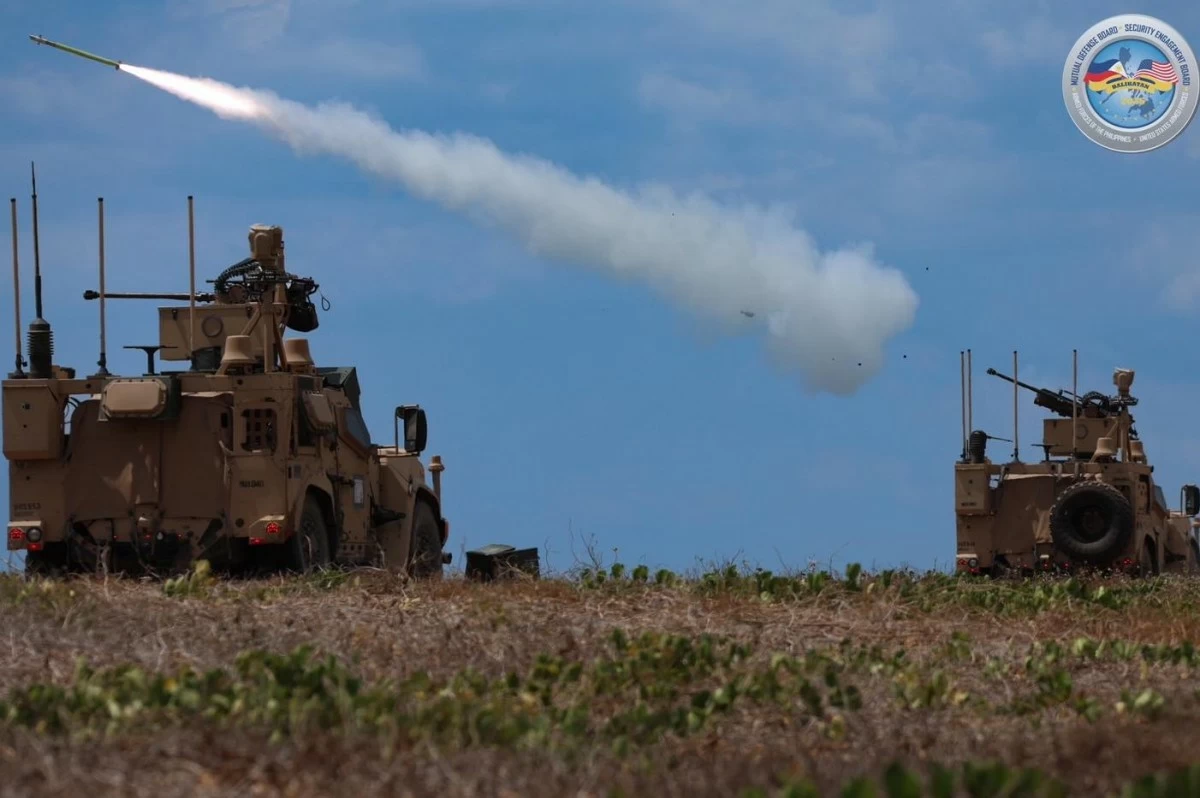
United States Marine Air Defense Integrated System (MADIS) fires during the Integrated Air and Missile Defense (IAMD) drill as part of Exercise Balikatan on April 28, 2026 at Naval Station Leovigildo Gantioqui (NSLG) in San Antonio, Zambales. (Photo: Armed Forces of the Philippines)
During the live-fire phase, US forces utilized Stinger missiles to intercept a “Banshee” drone — a target simulating a large unmanned aircraft — while .30 and .50 caliber machine guns were used to down smaller trainer drones swarming the Zambales coastline facing the West Philippine Sea (WPS).
Major Richmon Cayabyab, battery commander for the PAF SPYDER system, noted that the training highlighted critical operational needs.
“We learn a lot from our allies, we determine our gaps, and when we come back home, we address that gaps in order for us to perform well in our duty,” he said.
The IAMD exercise was observed by the Japan Air Self-Defense Force (JASDF) whose personnel manned the command and control (C2) systems.
China building ‘largest’ outpost in SCS – think tank
The focus on air defense and drone threats came as China pushes ahead with new construction in disputed waters, according to the Asia Maritime Transparency Initiative (AMTI), of the Washington-based think tank Center for Strategic and International Studies (CSIS).
A report by the AMTI published last month said China began major dredging at Antelope Reef in the Paracel Islands in October 2025. The reclaimed land is now estimated at about 1,490 acres.
The size is close to Panganiban (Mischief) Reef in the Spratly Islands, which spans around 1,504 acres and hosts major Chinese military facilities, the report noted.
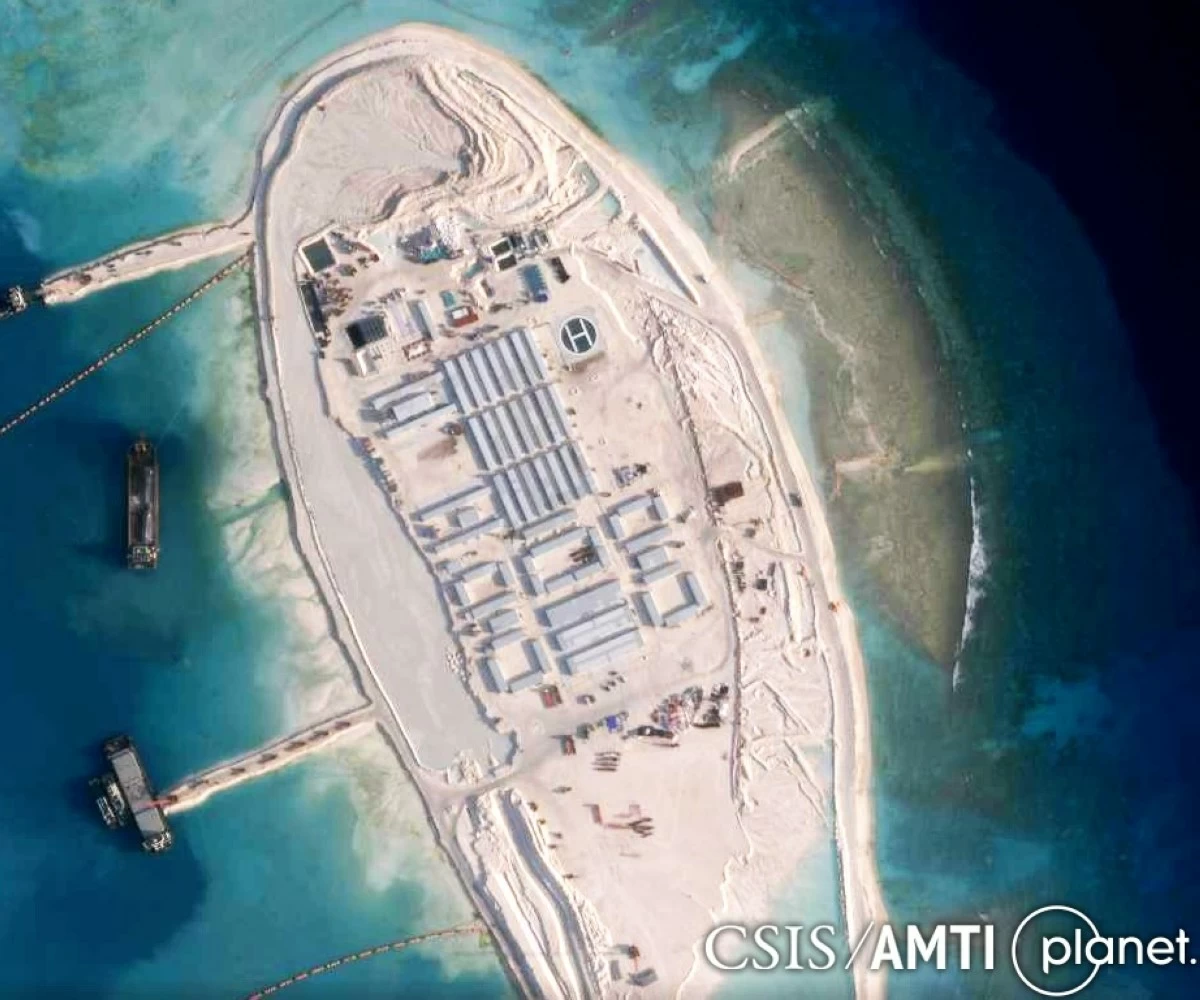
Antelope Reef (Satellite image: Asia Maritime Transparency Initiative, Center for Strategic and International Studies)
The report said Antelope Reef could support a 9,000-foot runway and an expanded harbor, allowing increased deployment of aircraft, ships, and maritime militia. It could also host missile systems and surveillance equipment.
The reef lies about 162 nautical miles from Hainan, China and 216 nautical miles from Da Nang, Vietnam. Its location could extend China’s monitoring and response reach in the northern South China Sea, the report said.
If fully developed, the outpost will likely host coastal defense emplacements, surveillance installations, and surface-to-air missile facilities similar to those practiced against during Balikatan.