







A galleon returns with Museo del Galeón
Looking into the history of the Espiritu Santo
Published Apr 29, 2026 12:59 pm


At A Glance
- Through its reincarnation, visitors revisit an important part of world history and maritime tradition.
The ship Espiritu Santo left Manila on its maiden voyage 424 years ago in 1602. It is back, centerpiece of the magnificent Museo del Galeón, inaugurated the other week by First Lady Louise Araneta Marcos. Reproduced from surviving plans and drawings in Spanish and Mexican archives, it is the full-size replica of one of the first Nao de China to cross the wide Pacific.
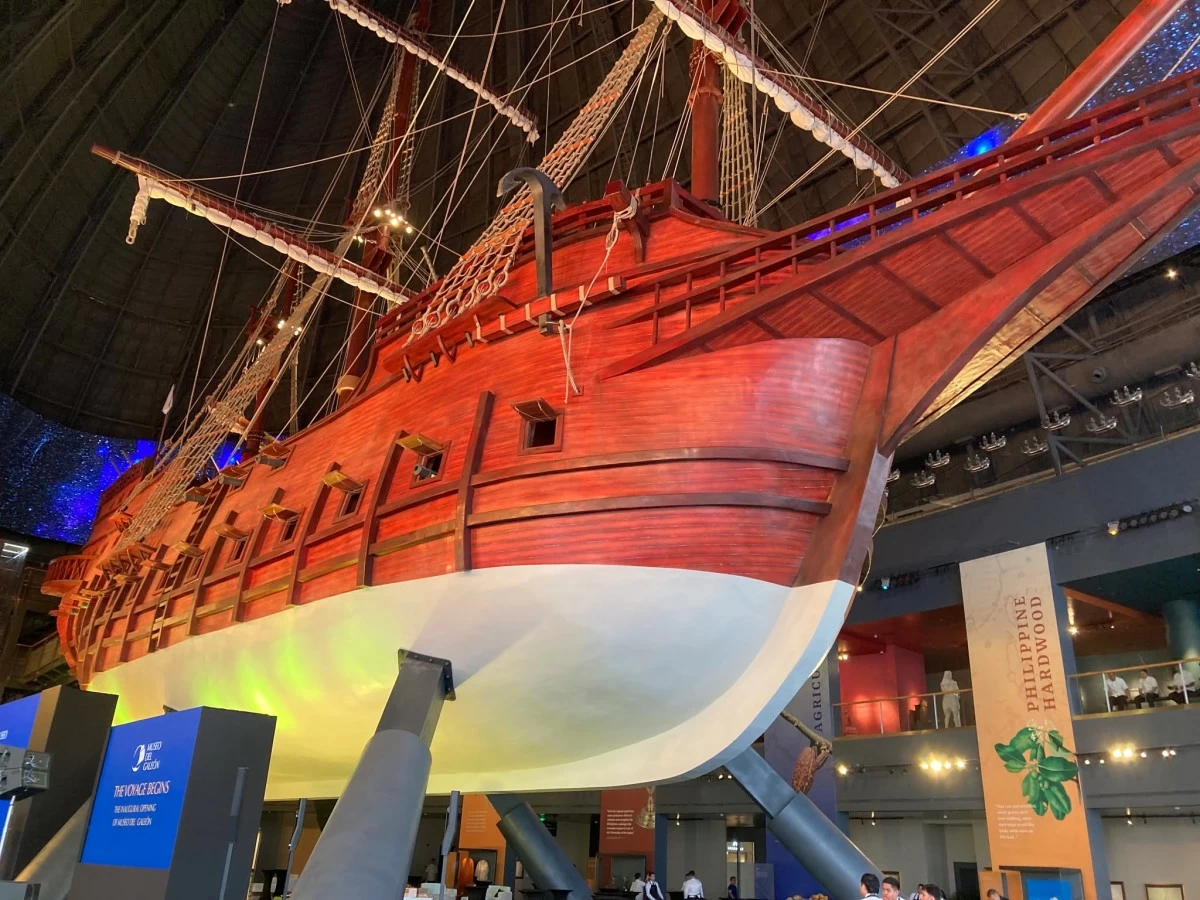
A JOURNEY TO OUR PAST The full-size replica of the galleon Espiritu Santo in the Museo del Galeón, Mall of Asia, Pasay City. (Photo: Poch Eulalia | Manila Bulletin Lifestyle)
The trade
The first galleon left Cebu in 1565 when Spanish colonization began, and the last returned from Acapulco in 1815 when Mexico declared independence from Spain.
Over the intervening 250 years, Nao de China brought silk, spices, porcelain, ivory, and other Asian luxury goods to Mexico. Sold at Acapulco and Mexico City Trade Fairs, the goods made their way to Europe and the rest of Latin America, where we now admire them in Royal Palaces, cathedrals, stately homes, and museums.
Part of the taxes collected in Mexico was earmarked as the Real Situado, the share of Filipinas intended for government operations, the construction of public buildings, churches, bridges, roads, and fortifications.
The same vessels returned to Manila with payment in silver mined mainly in Bolivia and Mexico, bringing civil servants, soldiers, and missionaries. Galleons also brought us useful plants, Western science and technology, culture and the arts, and ideas. Pineapple, tobacco, coffee, avocado, chico, kalachuchi, acacia, caballero, and many other medicinal, food, and decorative plants arrived on galleons. Images we still venerate—Antipolo’s Nstra. Sra. de la Paz y Buenviaje, Quiapo’s Black Nazarene, Sariaya’s Sto. Cristo de Burgos—arrived on galleons.
The ship
The Espiritu Santo was one of the first Nao de China. Through its reincarnation, visitors revisit an important part of world history and maritime tradition. Museum goers can enter the galleon and imagine themselves perhaps as a passenger or indio sailor.
Built in Cavite by our ancestors (through forced labor, if truth be told), the Espiritu Santos’ Main Deck was 40 meters long and 10 meters wide, about as large as two three-bedroom condo units. There were two lower levels, the Gun Deck and the orlop below the water line. Cannons were mounted on the Gun Deck to repel pirates and Spain’s Dutch and English enemies. The orlop was intended for spare rigging, sails, and ballast. Cargo was piled everywhere.
The ship was massively crowded and overloaded. Aboard were about 200 people—50 officers and passengers, and 150 sailors and soldiers. The precious cargo, packed tightly in bundles called boleta, was piled everywhere. Supposed to weigh no more than 300 tons total, the cargo was in reality 500 tons plus.
Cabins were on the Main Deck, intended for the admiral, ship officers, and super important passengers. Several were for rent at rates that only the wealthiest could afford. All else spent their days and slept wherever they could, on hammocks, atop cargo, on floors.
Unlike today, where giant metal ships are guided by satellite, traveling at great speed and built to withstand any typhoon or tsunami, galleons had to rely on the simplest equipment, experience, and prayer. They used compasses and astrolabes to gauge latitude and longitude, were guided by the stars, propelled by winds and ocean currents.
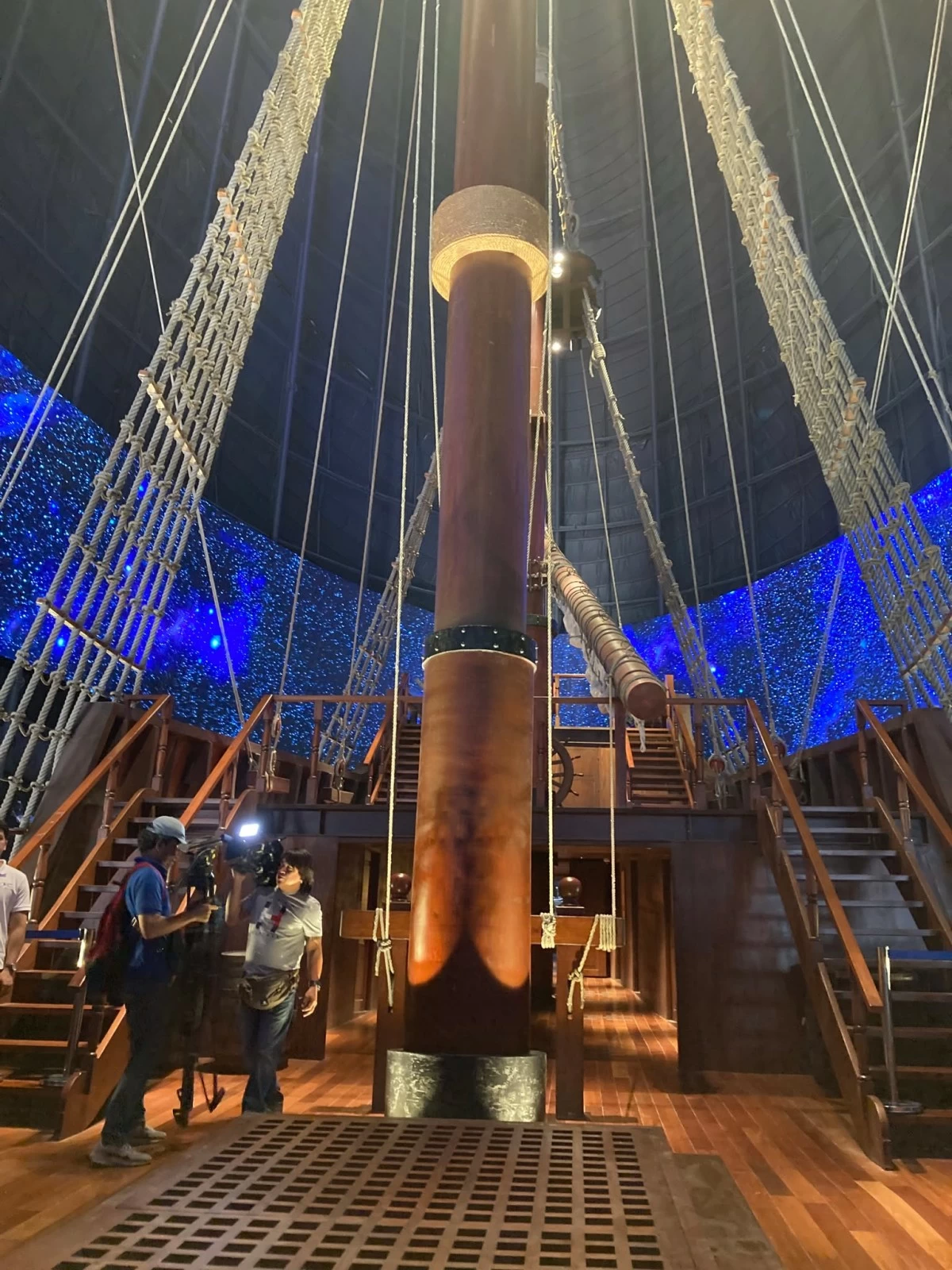
FULLY IMMERSED Museum visitors can step inside the ship to feel what it was like to be a passenger aboard the Espiritu Santo. (Photo: Poch Eulalia | Manila Bulletin Lifestyle)
The voyage
Timing was crucial. Small junks brought goods to Manila on the breezes of amihan, and galleons sailed with the winds of habagat. They had to avoid typhoons, hostile Japan, and head east at the proper latitude to bypass the doldrums and avoid the northern cold. Traders had to wait for payment to arrive from Mexico. They then had to sail to China or elsewhere to buy the goods and return to Manila on time for the next outward voyage.
Danger was ever-present. Typhoons could cripple ships, smash them on coral reefs, or force them to unfriendly shores. There was no escape from that most terrible fate of fire at sea. Limahong and friends waited in ambush for junks filled with trade goods or bringing silver between Manila and the Asian mainland. Dutch and English privateers waited outside Manila Bay, by the San Bernardino Strait, or along the Oregon and California coast to capture incoming ships.
Starvation and disease were ever-present. With no friendly ports along the way, there had to be enough food and fresh water for all, for the months it took to cross the Pacific. The eastward trip from Manila to Acapulco usually took five to six months on the North Pacific, and the return trip to Manila two to three months with the Trade Winds along the equator. However, records show that in 1607, the Espiritu Santo left Acapulco on July 10 and arrived in Manila five months later on Dec. 19. An eastward crossing left Manila on Aug. 2, 1617, and arrived in Acapulco on Jan, 12, 1618.
Fresh food could come only from whatever fish were caught en route and fresh water from whatever rain fell. Aggressive rats raided food stores. The importance of citrus was unknown, and scurvy felled passengers and crew.
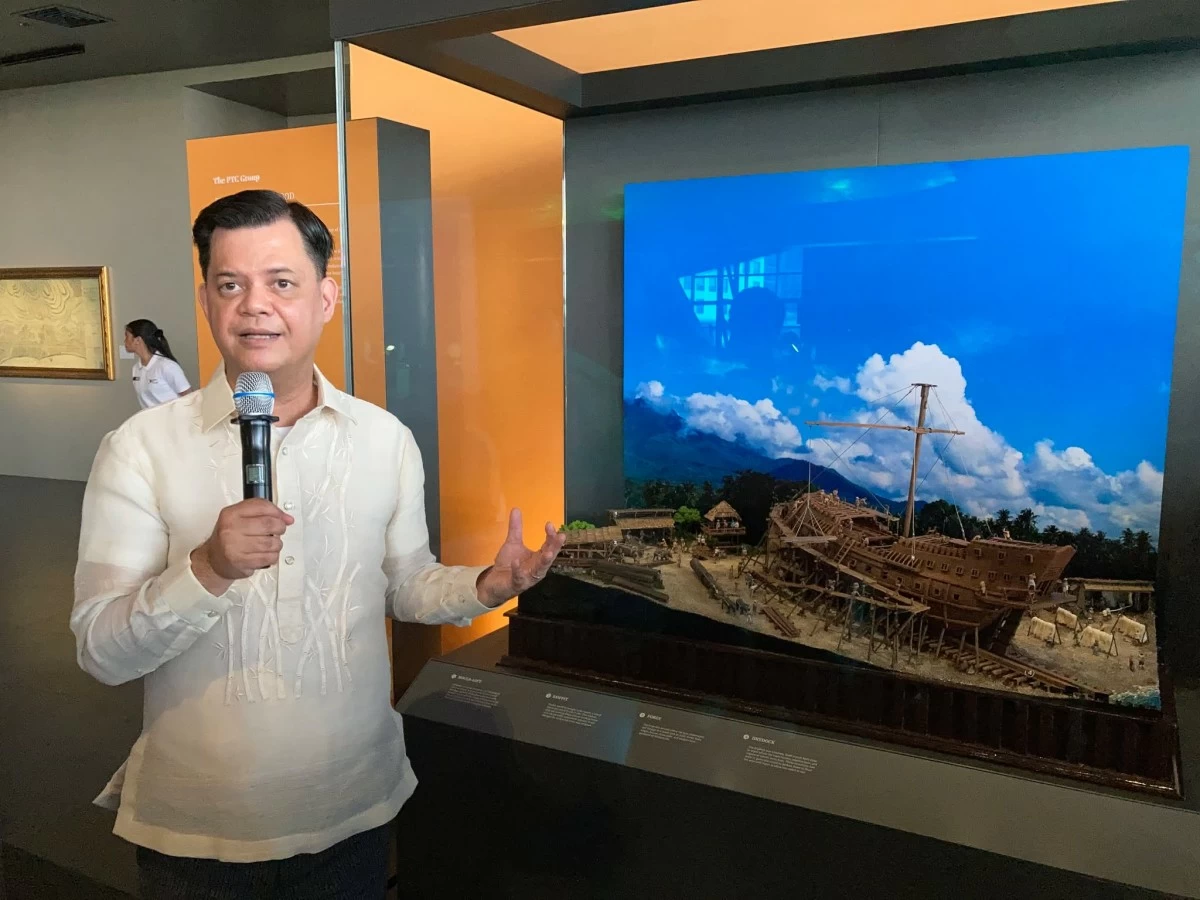
LEGACY WE BUILT Museo del Galeón executive director Manolo Quezon shares how Filipinos helped make galleons. (Photo: Poch Eulalia | Manila Bulletin Lifestyle)
The Museo del Galeón
It was the dream of Senator Edgardo A. Angara to build a Museum of the Galleon Trade and teach Filipino of today an important part of Philippine history that has been largely ignored. He began the work and laid the strong foundation that enabled the dream to become a reality even after the senator passed away in 2018.
The work was continued under the leadership of Museo chairman Ambassador Carlos Salinas, president Doris Magsaysay Ho, and trustees headed by SM’s Hans Sy, whose enthusiasm generated extraordinary support from Captains of Philippine industry including today’s mighty business leaders who pilot today’s Philippine Naos.
Notes: (a) Information on the Espiritu Santo was shared by Victor Gelano, managing director of the Museo del Galeón; (b) The replica galleon was built by Creer Fiberworkx Inc. of Angeles City; (c) Some of the veggies enumerated in the folk song “Bahay Kubo” arrived from the Americas via galleons, among them singkamás, manî, kalabasa, kamatis, patanì. Bayabas, camachile, chico, atis, and siniguelas are also from the New World. In exchange, indios who remained in Mexico taught locals how to make ceviche (kilawìn) and lambanóg, making skills that gave birth to tequila and margaritas.
Comments are cordially invited, addressed to [email protected]