








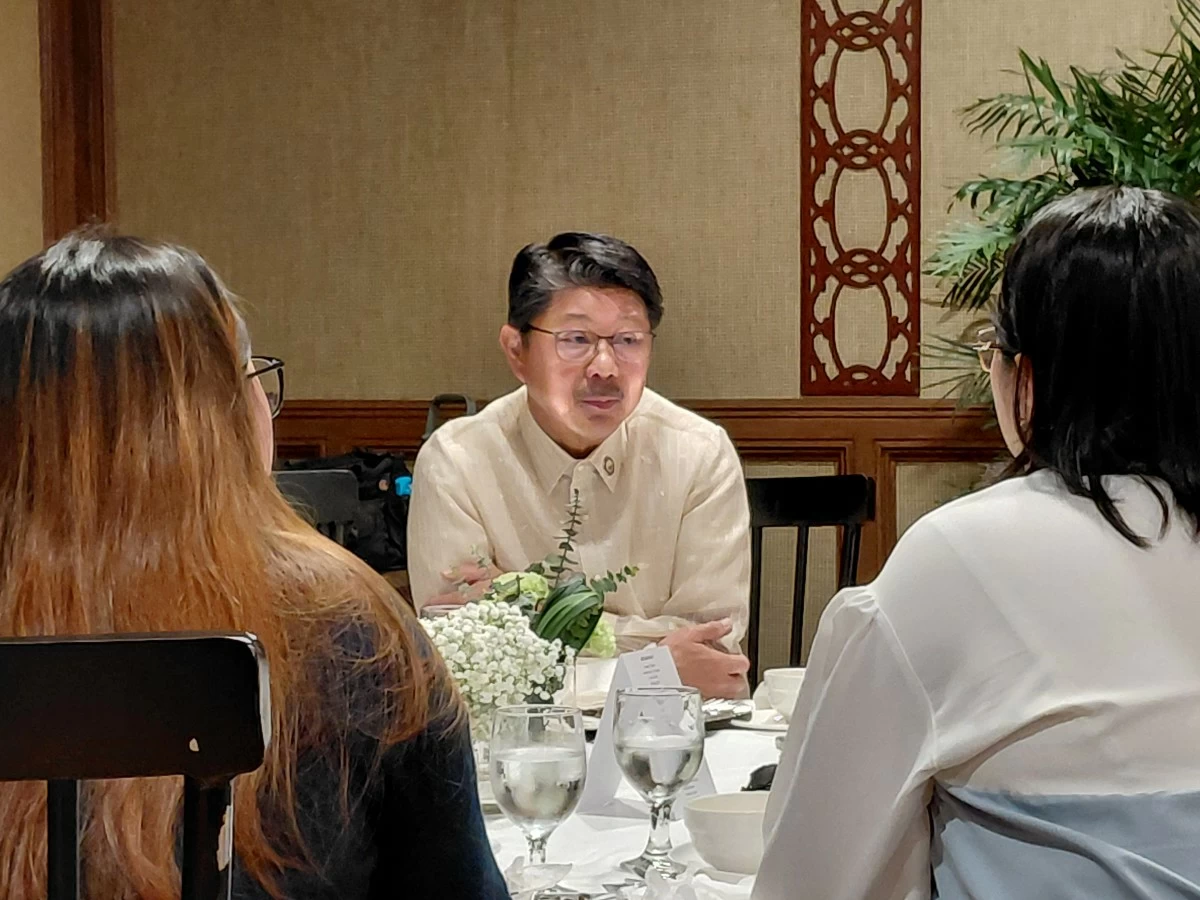
House Speaker Faustino “Bojie” Dy III called on women parliamentarians across Southeast Asia to push for systemic reforms that go beyond representation and deliver real power in governance.
Speaking at the fifth meeting of the coordinating committee of Women Parliamentarians of the ASEAN Inter‑Parliamentary Assembly (AIPA), Dy emphasized that inclusion must be measured not by presence but by impact.
“Progress is not enough. As we pursue a future‑ready and inclusive ASEAN, we must move beyond gender‑responsiveness toward true transformation—reshaping systems, dismantling barriers, and ensuring women have real decision‑making power,” Dy said.
The meeting, hosted virtually by the Philippines, gathered women lawmakers from across the region to advance cooperation on political participation, economic leadership, and inclusive governance. Dy anchored his keynote on building gender‑transformative and future‑ready parliaments.
“Transformation must go beyond representation. It must create real opportunity—for women to lead, to build enterprises, and for marginalized voices to be heard,” he added.
Dy linked women’s leadership to stronger institutions and lasting peace in Southeast Asia, stressing that peace is not merely the absence of conflict but trust in institutions and the future. “When women lead, peace becomes more durable,” he said.
The Speaker from Isabela's 6th district cited the Philippines’ National Action Plan on Women, Peace, and Security as part of efforts to promote inclusive and responsive governance. He underscored that people‑centered governance must be grounded in real needs, with budgets reflecting everyday realities and institutions that remain open and accountable.
Dy also highlighted the need to prepare for a future shaped by technology and climate risks. “A future‑ready ASEAN must be adaptive, inclusive, and responsible—ensuring no one is left behind,” he said.
He urged ASEAN lawmakers to turn commitments into concrete outcomes under the Women’s Political Participation and Leadership (WPPL) Plan of Action. “WAIPA must continue to move from platform to action. The WPPL Plan of Action gives us direction. Now, we must deliver,” Dy declared.
While the meeting was originally set in Bohol, it was held virtually following adjustments in ASEAN engagements amid global developments. Dy noted that the shift in format highlighted the resilience and adaptability of women leaders.
“The Philippines stands ready to work with you, to listen, and to serve,” Dy reaffirmed, stressing the country’s commitment to regional cooperation.
During the meeting, Dy appointed Laguna 1st district Rep. Ann Matibag as chairperson of WAIPA, even as he expressed confidence in her leadership. “I am confident that she will discharge this responsibility with dedication, integrity, and professionalism,” he said.
Matibag, in her first address as WAIPA chairperson, echoed Dy’s call for transformation, urging Southeast Asian lawmakers to build parliaments that are inclusive, adaptive, and responsive. “A future‑ready parliament is one that anticipates change, enhances oversight, and ensures legislation and public resources respond effectively to emerging risks and inequalities,” she said.
She warned that global shifts, including the energy crisis, disproportionately affect women, increasing unpaid work and limiting opportunities. Matibag stressed that transformation must be embedded in lawmaking and governance, integrating gender perspectives into legislation, oversight, and resource allocation.
Dy’s appointment of Matibag and his keynote message underscored a unified call: ASEAN must move beyond symbolic representation and build gender‑transformative, future‑ready institutions that deliver real power, resilience, and inclusion for women across the region (Ellson Quismorio)