

ADVERTISEMENT

Peso breaches record low of ₱61.3 per US dollar

Published Apr 28, 2026 04:17 pm
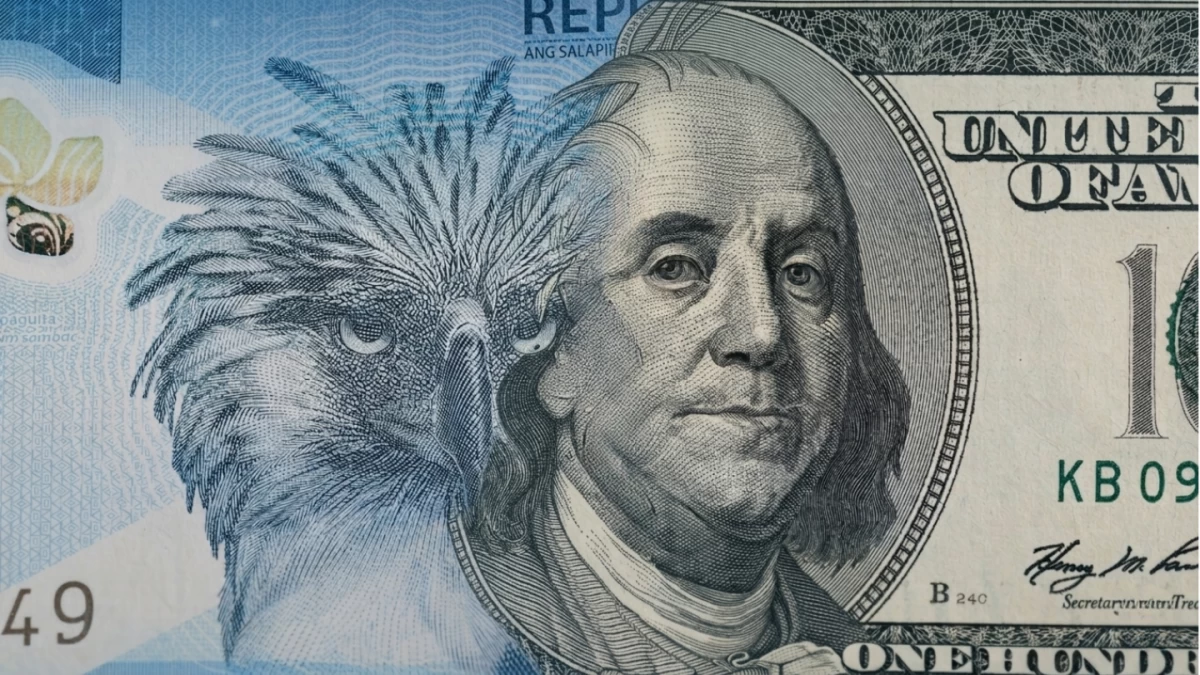
The peso tumbled to a fresh record low on Tuesday, April 28, breaching the 61-level as a resurgent United States (US) dollar and the broad exodus from emerging-market assets overwhelmed the central bank’s recent efforts to shore up the currency through tighter monetary policy.
The peso plunged to a new historic-low close of ₱61.3 against the US dollar, shedding a hefty 59 centavos from ₱60.71 last Monday, April 27.
Tuesday’s closing rate was also the local currency’s intraday low, while it reached a high of ₱60.77 after opening at ₱60.8. Total trading volume jumped to $1.75 billion from Monday’s $1.41 billion, according to the Bankers Association of the Philippines (BAP).
Before the latest drop, the peso’s previous record-low close was at ₱60.748:$1 last March 31.
SM Investments Corp. (SMIC) Group economist Robert Dan Roces said the breach of the 61-level should not be viewed as a failure of the central bank’s hawkish stance.
Last week, the BSP finally decided to deliver a 25-basis-point (bps) hike to 4.5 percent as inflation expectations are confronted with the risks of deanchoring.
Roces explained that while the rate hike provided some stabilization, the peso is grappling with a formidable combination of high US interest rates and steady domestic demand for dollars from importers.
“It helped, but stronger forces are at work,” said Roces. “US rates are still high, the dollar is strong, and money is moving out of emerging markets.”
Explaining the ongoing trend for the peso, Roces said this is because the foreign exchange (forex) market is looking at “where rates are headed, not just the last move, and may still be seeing a narrow gap with the US.”
“The peso’s weakness is driven more by global factors, and the hike likely slowed the drop rather than reversed it,” the economist added.
Aris Dacanay, an HSBC economist for the Association of Southeast Asian Nations (ASEAN), told reporters during an April 28 roundtable with the media that the peso’s touch to another record low is driven by the US dollar, a development also evident in the decline across other Asian currencies.
“There’s no magic number [with which the BSP could begin defending]. Our policy is that the exchange rate should be driven by market forces—wherever the market takes it,” Dacanay said, explaining that overly defending the peso would prompt the market to stop hedging their forex risk, a behavior that raises financial risk in the economy.
“The idea is to be more open to exchange rate volatility—as long as it isn’t too sharp. Sudden, sharp movements tend to have asymmetric effects [on inflation]. As long as movements are market-driven, and the pace and direction of volatility are well managed, that would be the appropriate policy stance,” he added.
He further noted that firms were already expecting a 61-level forex rate, translating to higher market prices now.
Singapore-based Oversea-Chinese Banking Corp. Ltd. (OCBC) said the Philippine peso and Thai baht could stay pressured as the Strait of Hormuz impasse keeps oil prices elevated.

Related Tags

PESO Robert Dan Roces HSBC SM Investments Corporation interest rates Bankers Association of the Philippines (BAP) Bangko Sentral ng Pilipinas (BSP)
ADVERTISEMENT
.most-popular .layout-ratio{ padding-bottom: 79.13%; } @media (min-width: 768px) and (max-width: 1024px) { .widget-title { font-size: 15px !important; } }

{{ articles_filter_1561_widget.title }}

.most-popular .layout-ratio{ padding-bottom: 79.13%; } @media (min-width: 768px) and (max-width: 1024px) { .widget-title { font-size: 15px !important; } }

{{ articles_filter_1562_widget.title }}

.most-popular .layout-ratio{ padding-bottom: 79.13%; } @media (min-width: 768px) and (max-width: 1024px) { .widget-title { font-size: 15px !important; } }

{{ articles_filter_1563_widget.title }}

{{ articles_filter_1564_widget.title }}

.mb-article-details { position: relative; } .mb-article-details .article-body-preview, .mb-article-details .article-body-summary{ font-size: 17px; line-height: 30px; font-family: "Libre Caslon Text", serif; color: #000; } .mb-article-details .article-body-preview iframe , .mb-article-details .article-body-summary iframe{ width: 100%; margin: auto; } .read-more-background { background: linear-gradient(180deg, color(display-p3 1.000 1.000 1.000 / 0) 13.75%, color(display-p3 1.000 1.000 1.000 / 0.8) 30.79%, color(display-p3 1.000 1.000 1.000) 72.5%); position: absolute; height: 200px; width: 100%; bottom: 0; display: flex; justify-content: center; align-items: center; padding: 0; } .read-more-background a{ color: #000; } .read-more-btn { padding: 17px 45px; font-family: Inter; font-weight: 700; font-size: 18px; line-height: 16px; text-align: center; vertical-align: middle; border: 1px solid black; background-color: white; } .hidden { display: none; }
function initializeAllSwipers() { // Get all hidden inputs with cms_article_id document.querySelectorAll('[id^="cms_article_id_"]').forEach(function (input) { const cmsArticleId = input.value; const articleSelector = '#article-' + cmsArticleId + ' .body_images'; const swiperElement = document.querySelector(articleSelector); if (swiperElement && !swiperElement.classList.contains('swiper-initialized')) { new Swiper(articleSelector, { loop: true, pagination: false, navigation: { nextEl: '#article-' + cmsArticleId + ' .swiper-button-next', prevEl: '#article-' + cmsArticleId + ' .swiper-button-prev', }, }); } }); } setTimeout(initializeAllSwipers, 3000); const intersectionObserver = new IntersectionObserver( (entries) => { entries.forEach((entry) => { if (entry.isIntersecting) { const newUrl = entry.target.getAttribute("data-url"); if (newUrl) { history.pushState(null, null, newUrl); let article = entry.target; // Extract metadata const author = article.querySelector('.author-section').textContent.replace('By', '').trim(); const section = article.querySelector('.section-info ').textContent.replace(' ', ' '); const title = article.querySelector('.article-title h1').textContent; // Parse URL for Chartbeat path format const parsedUrl = new URL(newUrl, window.location.origin); const cleanUrl = parsedUrl.host + parsedUrl.pathname; // Update Chartbeat configuration if (typeof window._sf_async_config !== 'undefined') { window._sf_async_config.path = cleanUrl; window._sf_async_config.sections = section; window._sf_async_config.authors = author; } // Track virtual page view with Chartbeat if (typeof pSUPERFLY !== 'undefined' && typeof pSUPERFLY.virtualPage === 'function') { try { pSUPERFLY.virtualPage({ path: cleanUrl, title: title, sections: section, authors: author }); } catch (error) { console.error('ping error', error); } } // Optional: Update document title if (title && title !== document.title) { document.title = title; } } } }); }, { threshold: 0.1 } ); function showArticleBody(button) { const article = button.closest("article"); const summary = article.querySelector(".article-body-summary"); const body = article.querySelector(".article-body-preview"); const readMoreSection = article.querySelector(".read-more-background"); // Hide summary and read-more section summary.style.display = "none"; readMoreSection.style.display = "none"; // Show the full article body body.classList.remove("hidden"); } document.addEventListener("DOMContentLoaded", () => { let loadCount = 0; // Track how many times articles are loaded const offset = [1, 2, 3, 4, 5, 6, 7, 8, 9, 10]; // Offset values const currentUrl = window.location.pathname.substring(1); let isLoading = false; // Prevent multiple calls if (!currentUrl) { console.log("Current URL is invalid."); return; } const sentinel = document.getElementById("load-more-sentinel"); if (!sentinel) { console.log("Sentinel element not found."); return; } function isSentinelVisible() { const rect = sentinel.getBoundingClientRect(); return ( rect.top < window.innerHeight && rect.bottom >= 0 ); } function onScroll() { if (isLoading) return; if (isSentinelVisible()) { if (loadCount >= offset.length) { console.log("Maximum load attempts reached."); window.removeEventListener("scroll", onScroll); return; } isLoading = true; const currentOffset = offset[loadCount]; window.loadMoreItems().then(() => { let article = document.querySelector('#widget_1690 > div:nth-last-of-type(2) article'); intersectionObserver.observe(article) loadCount++; }).catch(error => { console.error("Error loading more items:", error); }).finally(() => { isLoading = false; }); } } window.addEventListener("scroll", onScroll); });

Sign up by email to receive news.