ADVERTISEMENT

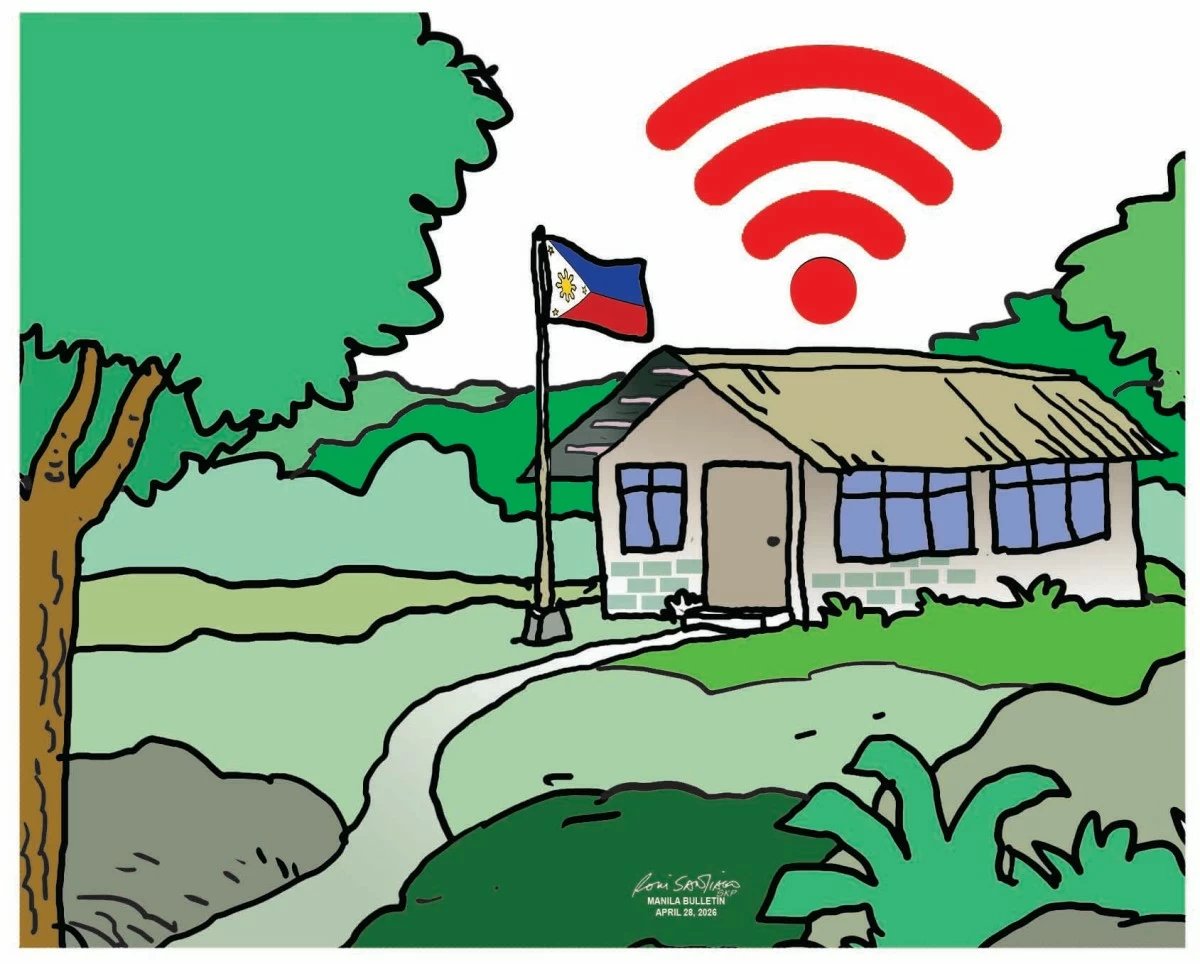
Free Wi-Fi as the backbone of a data-driven future

Published Apr 28, 2026 12:05 am  |  Updated Apr 27, 2026 06:14 pm
The promise of a truly connected Philippines is steadily taking shape through the convergence of two vital national efforts: the Department of Information and Communications Technology’s (DICT) implementation of the Free Wi-Fi for All Program under Republic Act No. 10929, and the Department of Education’s (DepEd) rollout of the Data Lake – “We Are IT” program. Together, they form a strategic tandem that could redefine how Filipinos learn, work, and participate in a rapidly digitizing society.
RA 10929, enacted in 2017, envisioned free internet access in public places across the country — in schools, plazas, transport hubs, and government offices — recognizing connectivity as a basic enabler of inclusive growth. Nearly a decade later, the program has evolved from a bold aspiration into a critical national infrastructure. By extending coverage to underserved and far-flung communities in Luzon, Visayas, and Mindanao, including the Bangsamoro Autonomous Region in Muslim Mindanao (BARMM), the DICT is laying the digital foundation upon which broader transformation can occur.
This is where DepEd’s Data Lake – “We Are IT” initiative finds its most potent ally. Designed to harness data analytics and digital tools to improve learning outcomes, the program relies heavily on stable and accessible internet connectivity. From enabling real-time monitoring of student performance to facilitating access to digital learning resources, the Data Lake initiative represents a paradigm shift in education governance. It moves the system away from fragmented, paper-based processes toward an integrated, data-driven ecosystem.
However, such ambition cannot thrive in a vacuum. Without reliable internet access, the most sophisticated data systems remain underutilized. The Free Wi-Fi program thus becomes the linchpin, or the indispensable backbone, that ensures the Data Lake initiative reaches every classroom, every teacher, and every learner, regardless of geography.
The implications are profound. In remote schools where educational resources have long been scarce, free internet access can open doors to a world of knowledge. Teachers gain access to training modules and collaborative platforms, while students can explore interactive content that enriches their learning experience. For policymakers, the availability of real-time data enables more responsive and evidence-based decision-making.
Yet, the road ahead is not without challenges. Infrastructure gaps, particularly in geographically isolated and disadvantaged areas, continue to test the limits of implementation. Ensuring the quality, speed, and security of connections is equally critical. Moreover, digital literacy must keep pace with technological deployment; access alone does not guarantee effective use.
This calls for sustained inter-agency collaboration, robust public-private partnerships, and vigilant oversight. Investments must not only expand coverage but also enhance capacity. Cybersecurity safeguards should be integral to system design, protecting sensitive educational data from emerging threats.
Equally important is community engagement. Local governments, school administrators, and civil society organizations must be active partners in maintaining and maximizing these digital assets. Ownership at the grassroots level will determine whether these programs achieve lasting impact.
The integration of DICT’s Free Wi-Fi initiative with DepEd’s Data Lake–“We Are IT” program signals a decisive step toward a more inclusive and future-ready Philippines. It underscores a simple yet powerful truth. Connectivity is no longer a luxury but a necessity.
As the nation advances toward digital transformation, the challenge is clear. Ensure that no Filipino is left offline, and therefore, no Filipino is left behind.

Related Tags

Editorial DepEd Wi-Fi
ADVERTISEMENT
.most-popular .layout-ratio{ padding-bottom: 79.13%; } @media (min-width: 768px) and (max-width: 1024px) { .widget-title { font-size: 15px !important; } }

{{ articles_filter_1561_widget.title }}

.most-popular .layout-ratio{ padding-bottom: 79.13%; } @media (min-width: 768px) and (max-width: 1024px) { .widget-title { font-size: 15px !important; } }

{{ articles_filter_1562_widget.title }}

.most-popular .layout-ratio{ padding-bottom: 79.13%; } @media (min-width: 768px) and (max-width: 1024px) { .widget-title { font-size: 15px !important; } }

{{ articles_filter_1563_widget.title }}

{{ articles_filter_1564_widget.title }}

.mb-article-details { position: relative; } .mb-article-details .article-body-preview, .mb-article-details .article-body-summary{ font-size: 17px; line-height: 30px; font-family: "Libre Caslon Text", serif; color: #000; } .mb-article-details .article-body-preview iframe , .mb-article-details .article-body-summary iframe{ width: 100%; margin: auto; } .read-more-background { background: linear-gradient(180deg, color(display-p3 1.000 1.000 1.000 / 0) 13.75%, color(display-p3 1.000 1.000 1.000 / 0.8) 30.79%, color(display-p3 1.000 1.000 1.000) 72.5%); position: absolute; height: 200px; width: 100%; bottom: 0; display: flex; justify-content: center; align-items: center; padding: 0; } .read-more-background a{ color: #000; } .read-more-btn { padding: 17px 45px; font-family: Inter; font-weight: 700; font-size: 18px; line-height: 16px; text-align: center; vertical-align: middle; border: 1px solid black; background-color: white; } .hidden { display: none; }
function initializeAllSwipers() { // Get all hidden inputs with cms_article_id document.querySelectorAll('[id^="cms_article_id_"]').forEach(function (input) { const cmsArticleId = input.value; const articleSelector = '#article-' + cmsArticleId + ' .body_images'; const swiperElement = document.querySelector(articleSelector); if (swiperElement && !swiperElement.classList.contains('swiper-initialized')) { new Swiper(articleSelector, { loop: true, pagination: false, navigation: { nextEl: '#article-' + cmsArticleId + ' .swiper-button-next', prevEl: '#article-' + cmsArticleId + ' .swiper-button-prev', }, }); } }); } setTimeout(initializeAllSwipers, 3000); const intersectionObserver = new IntersectionObserver( (entries) => { entries.forEach((entry) => { if (entry.isIntersecting) { const newUrl = entry.target.getAttribute("data-url"); if (newUrl) { history.pushState(null, null, newUrl); let article = entry.target; // Extract metadata const author = article.querySelector('.author-section').textContent.replace('By', '').trim(); const section = article.querySelector('.section-info ').textContent.replace(' ', ' '); const title = article.querySelector('.article-title h1').textContent; // Parse URL for Chartbeat path format const parsedUrl = new URL(newUrl, window.location.origin); const cleanUrl = parsedUrl.host + parsedUrl.pathname; // Update Chartbeat configuration if (typeof window._sf_async_config !== 'undefined') { window._sf_async_config.path = cleanUrl; window._sf_async_config.sections = section; window._sf_async_config.authors = author; } // Track virtual page view with Chartbeat if (typeof pSUPERFLY !== 'undefined' && typeof pSUPERFLY.virtualPage === 'function') { try { pSUPERFLY.virtualPage({ path: cleanUrl, title: title, sections: section, authors: author }); } catch (error) { console.error('ping error', error); } } // Optional: Update document title if (title && title !== document.title) { document.title = title; } } } }); }, { threshold: 0.1 } ); function showArticleBody(button) { const article = button.closest("article"); const summary = article.querySelector(".article-body-summary"); const body = article.querySelector(".article-body-preview"); const readMoreSection = article.querySelector(".read-more-background"); // Hide summary and read-more section summary.style.display = "none"; readMoreSection.style.display = "none"; // Show the full article body body.classList.remove("hidden"); } document.addEventListener("DOMContentLoaded", () => { let loadCount = 0; // Track how many times articles are loaded const offset = [1, 2, 3, 4, 5, 6, 7, 8, 9, 10]; // Offset values const currentUrl = window.location.pathname.substring(1); let isLoading = false; // Prevent multiple calls if (!currentUrl) { console.log("Current URL is invalid."); return; } const sentinel = document.getElementById("load-more-sentinel"); if (!sentinel) { console.log("Sentinel element not found."); return; } function isSentinelVisible() { const rect = sentinel.getBoundingClientRect(); return ( rect.top < window.innerHeight && rect.bottom >= 0 ); } function onScroll() { if (isLoading) return; if (isSentinelVisible()) { if (loadCount >= offset.length) { console.log("Maximum load attempts reached."); window.removeEventListener("scroll", onScroll); return; } isLoading = true; const currentOffset = offset[loadCount]; window.loadMoreItems().then(() => { let article = document.querySelector('#widget_1690 > div:nth-last-of-type(2) article'); intersectionObserver.observe(article) loadCount++; }).catch(error => { console.error("Error loading more items:", error); }).finally(() => { isLoading = false; }); } } window.addEventListener("scroll", onScroll); });

Sign up by email to receive news.