






Manila Bulletin
 Philippines
National
Exercise Balikatan: AFP, US, Australia, New Zealand test coastal defense in Palawan town facing West PH Sea
Philippines
National
Exercise Balikatan: AFP, US, Australia, New Zealand test coastal defense in Palawan town facing West PH Sea
Philippines
National
Exercise Balikatan: AFP, US, Australia, New Zealand test coastal defense in Palawan town facing West PH Sea
Exercise Balikatan: AFP, US, Australia, New Zealand test coastal defense in Palawan town facing West PH Sea
Published Apr 28, 2026 01:34 pm


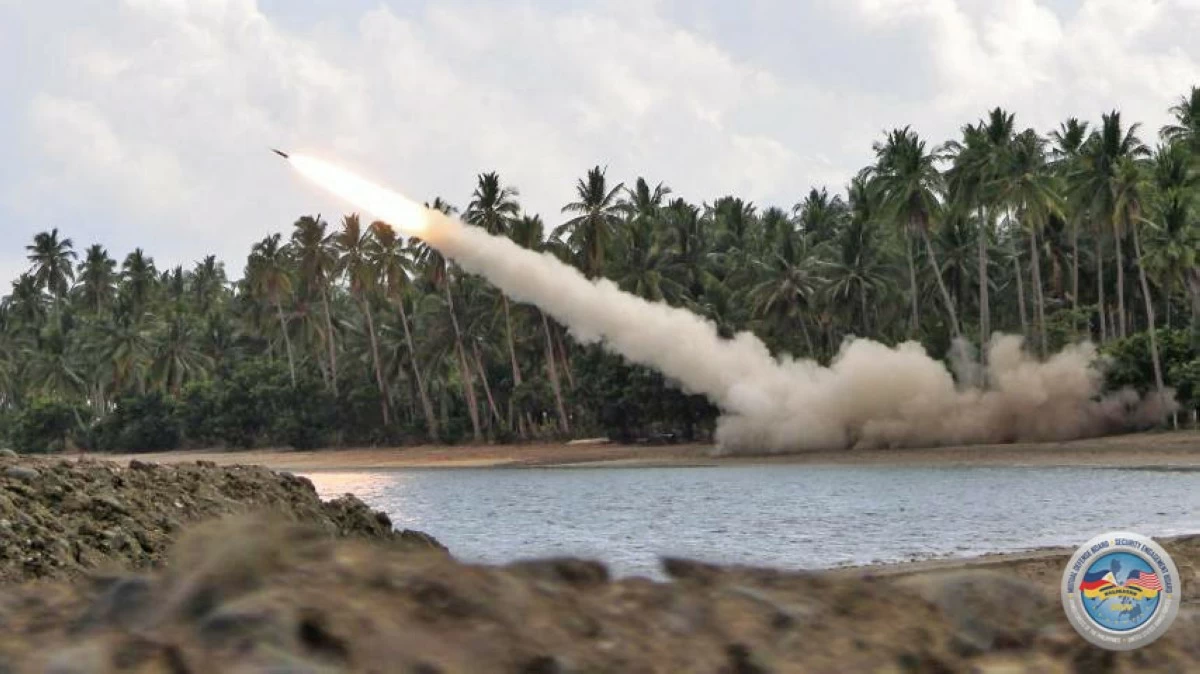
A rocket launch from the United States High Mobility Artillery Rocket Systems (HIMARS) illuminates the shoreline during the Counter-Landing Live Fire Exercise at Apurawan Beach in Aborlan, Palawan on April 27, 2026 as part of Exercise Balikatan. (Photo by Staff Sgt. Brandon Rickert, 7th Infantry Division, US Army)
Philippine and allied forces staged a large-scale coastal defense drill on Monday, April 27, simulating an enemy amphibious landing in a town facing the West Philippine Sea (WPS).
The Armed Forces of the Philippines (AFP), together with the United States Armed Forces, Australian Defence Force, and New Zealand Defence Force, carried out a counter-landing live fire exercise (CLLFX-West) at the Apurawan Beach Landing Site in Aborlan, Palawan as part of the 41st iteration of the Exercise Balikatan.
Led by the Philippine Marine Corps’ 3rd Marine Brigade, the drill tested how combined forces would detect, disrupt and deny hostile troops attempting to establish a beachhead along the coastline.
“The scenario that we had is a counter-landing operation. We assumed that we have enemy forces wanting to land on shore so we have the joint and combined forces among the AFP, US Marine Corps, US Army, US Air Force, Australian Defense Force and New Zealand Defense Force,” AFP Chief, General Romeo S. Brawner Jr. said.
Observers from Canada and France also witnessed the exercise.
The exercise demonstrated the capability of the troops to defend Philippine shores through coordinated and combined arms operations in a littoral environment.
By integrating fires from land, air, and maritime forces, they were able to detect, engage, and neutralize potential threats approaching from the sea, ensuring that any attempt to breach the coastline was met with a swift and unified response, Brawner explained.
The exercise was carried out with a layered defense involving air, land, and indirect fire assets such as the Philippine Air Force’s FA-50 fighter jets for air interdiction, and the United States' High Mobility Artillery Rocket System (HIMARS).
Ground units conducted coordinated strikes using artillery, mortars, light armored vehicles, anti-armor systems, heavy machine guns, and infantry weapons. Reconnaissance and precision fire support were integrated throughout the operation.
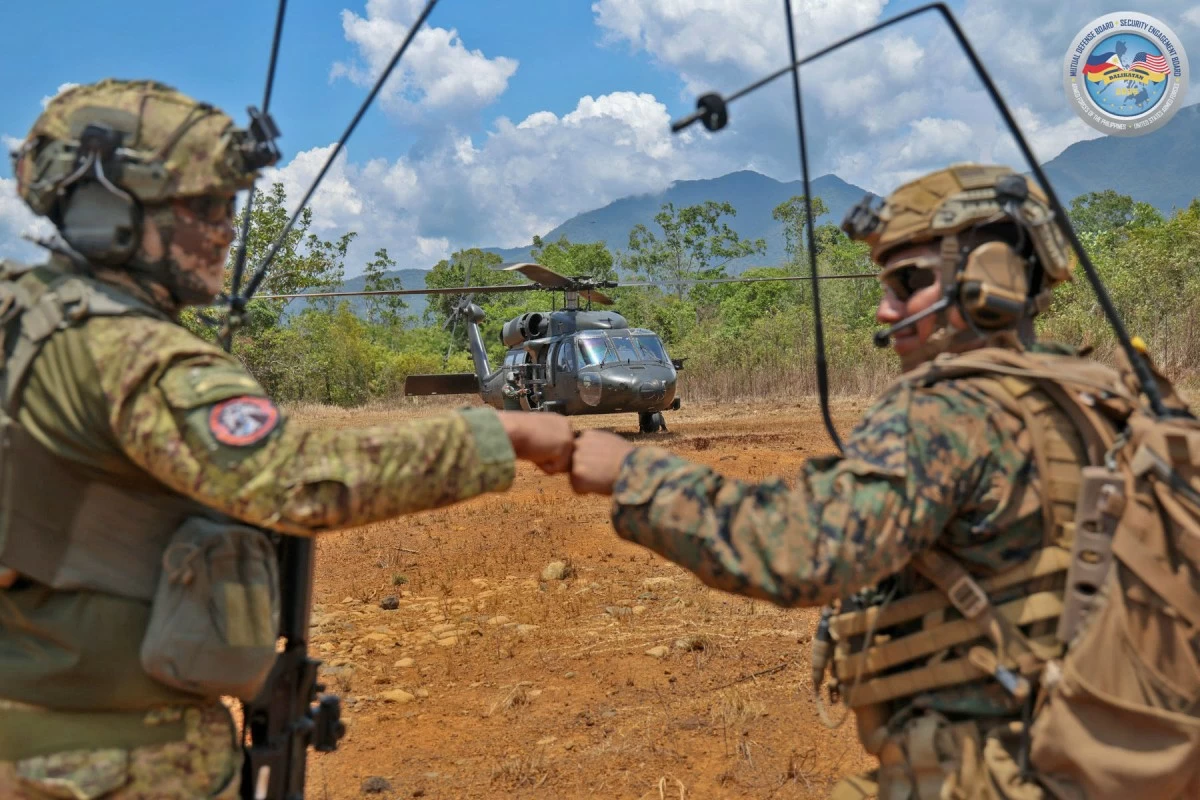
A Special Forces member from the Armed Forces of the Philippines (AFP) and a U.S. Marine share a fist bump in front of a Black Hawk helicopter during the Counter-Landing Live Fire Exercise - West in Apurawan Beach, Aborlan, Palawan on April 27, 2026 as part of Exercise Balikatan. (Photo by SSg Ambay PA/PAOAFP)
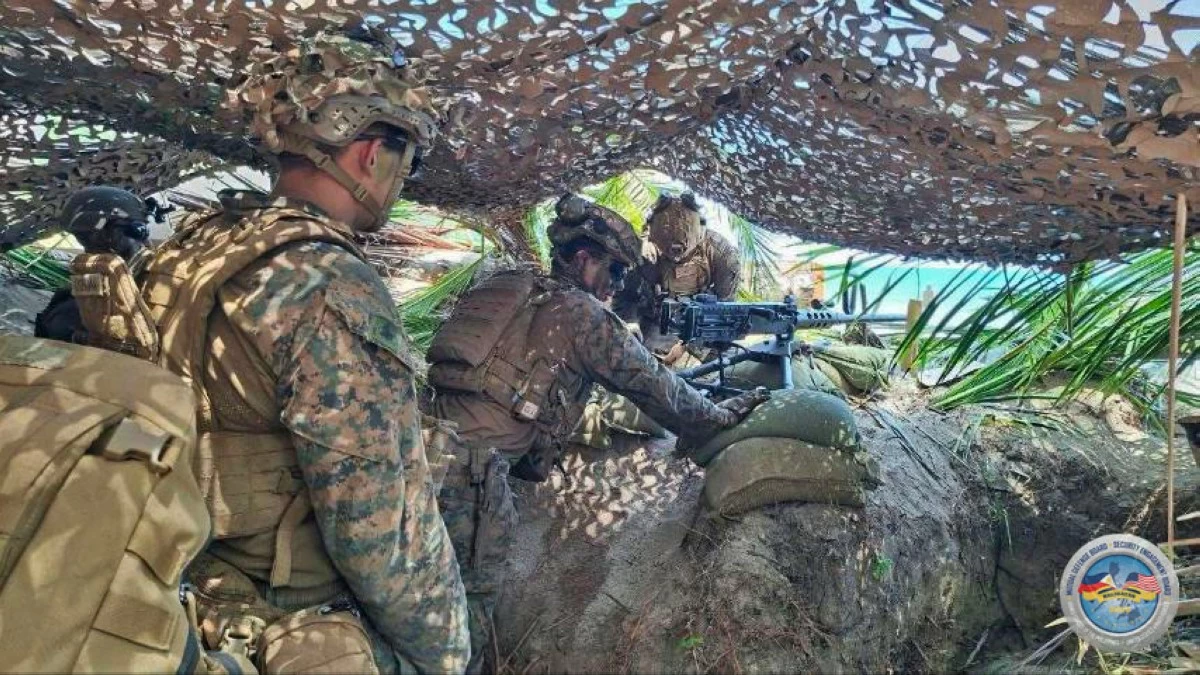
United States forces coordinate heavy machine gun suppression from a fortified position under a camouflage net during the Counter-Landing Live Fire Exercise at Apurawan Beach in Aborlan, Palawan on April 27, 2026 as part of Exercise Balikatan. (Photo by 3rd Marine Brigade, Philippine Marine Corps)
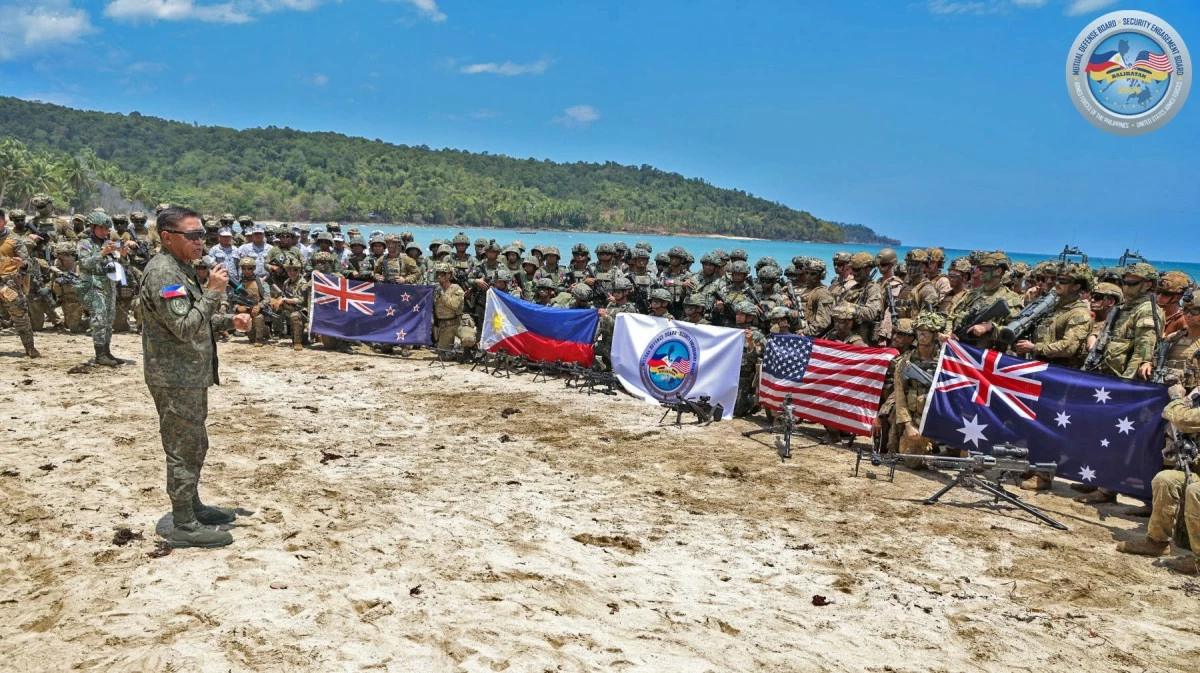
General Romeo S. Brawner Jr, Armed Forces of the Philippines (AFP) Chief of Staff, addresses troops from the Philippines, United States, Australia, and New Zealand at Apurawan Beach in Aborlan, Palawan following the successful Counter-Landing Live Fire Exercise (CLLFX-West) held on April 27, 2026 as part of Exercise Balikatan. (Photo by SSg Ambay PA/PAOAFP)
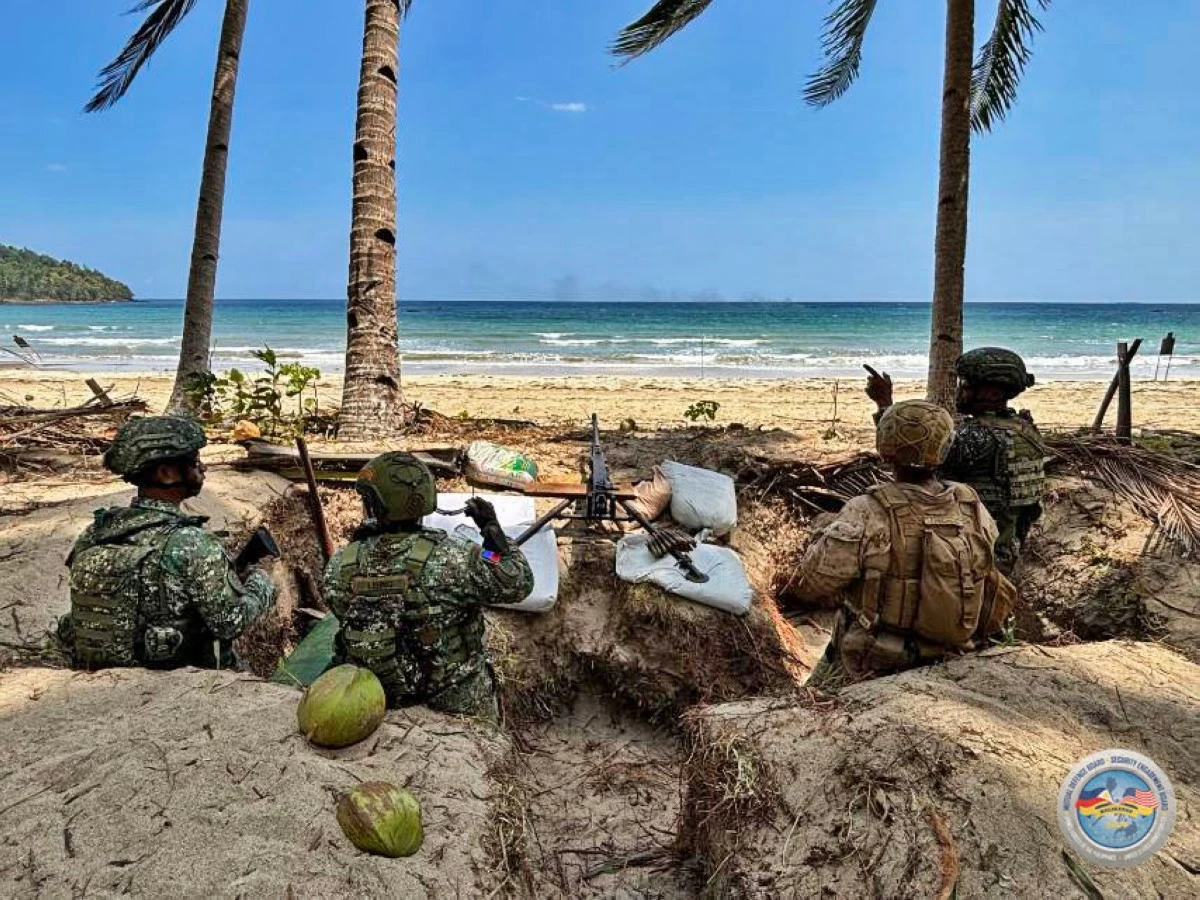
Philippine and United States Marines maintain a defensive posture in a beachfront trench during the Counter-Landing Live Fire Exercise at Apurawan Beach in Aborlan, Palawan on April 27, 2026 as part of Exercise Balikatan. (Photo by 3rd Marine Brigade, Philippine Marine Corps)
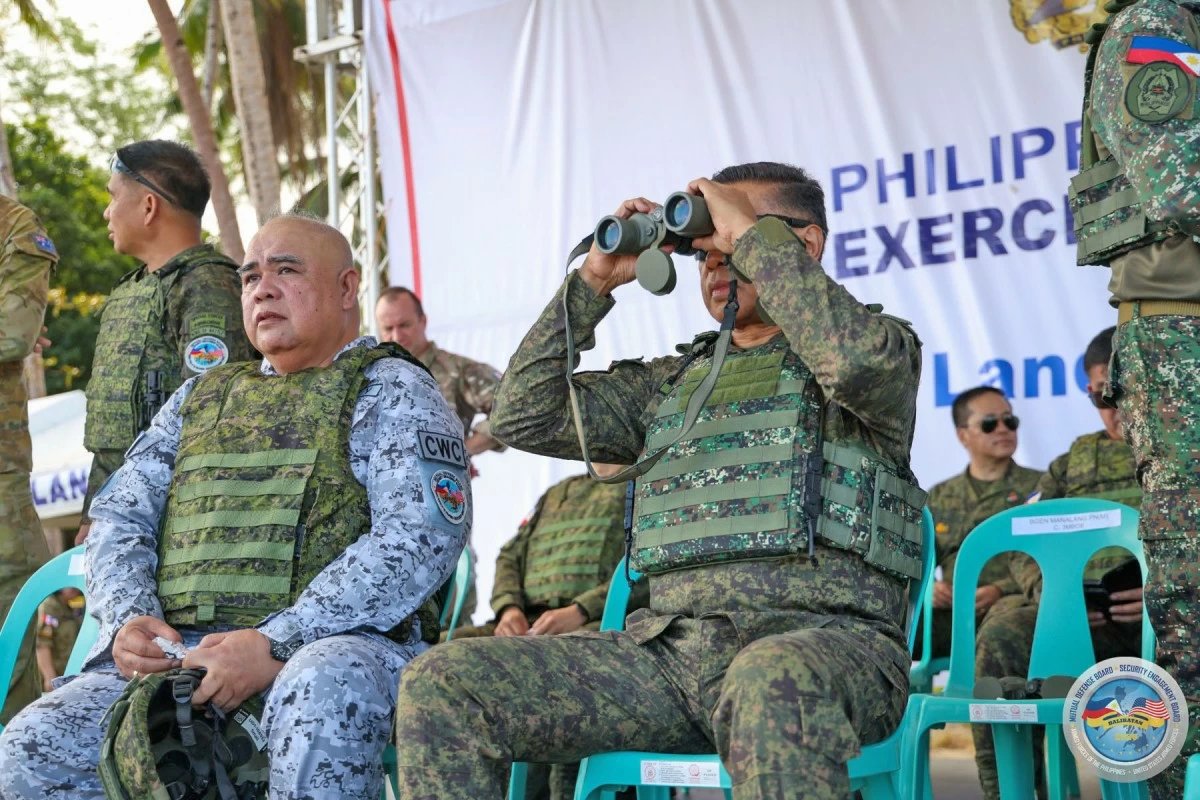
General Romeo S. Brawner Jr. (right), AFP Chief of Staff, and Vice Admiral Alan M. Javier, commander of Western Command, monitor the impact of synchronized air and land strikes during the Counter-Landing Live Fire Exercise (CLLFX-West) held on April 27, 2026 at Apurawan Beach Landing Site in Aborlan, Palawan during Exercise Balikatan. (Photo by SSg Ambay PA/PAOAFP)
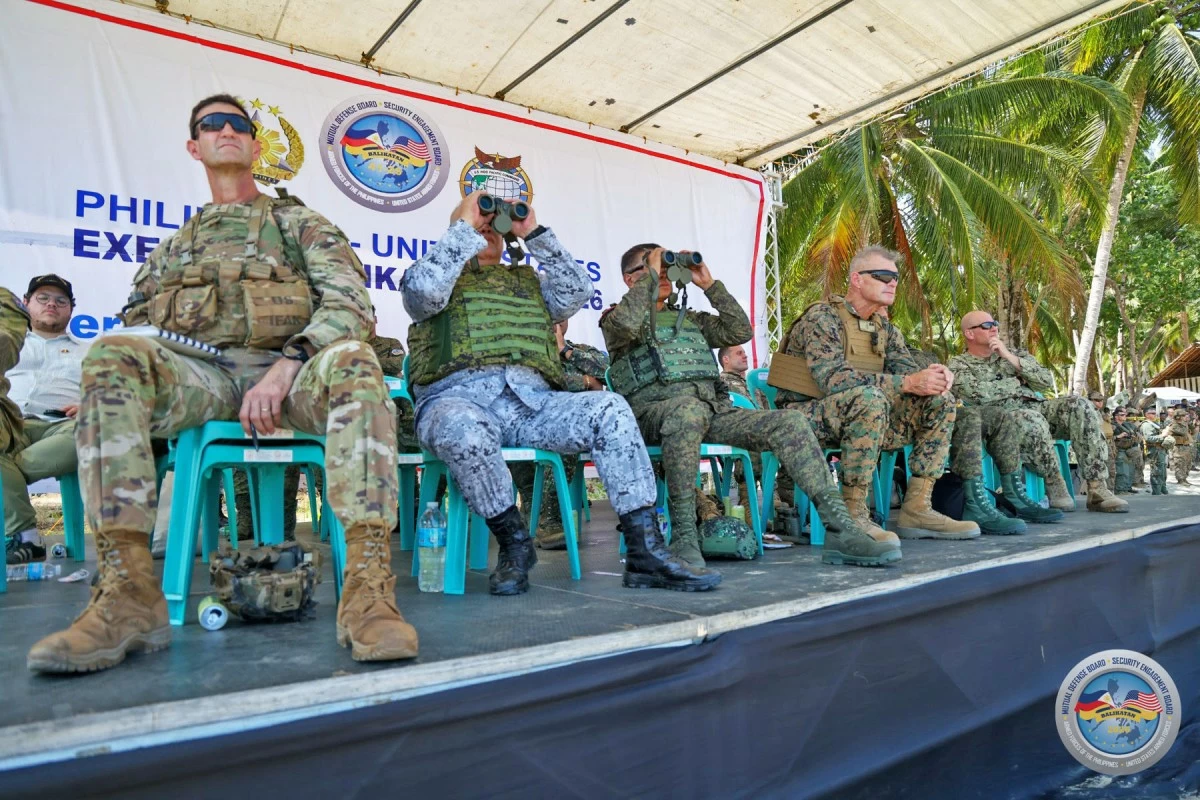
(L-R) Major General James Bartholomees, commander of the 25th Infantry Division, US Army; Vice Admiral Alan M. Javier, commander of Western Command; General Romeo S Brawner Jr, Armed Forces of the Philippines (AFP) Chief of Staff; Major General Thomas Savage, commander of the U.S. JTF for Exercise Balikatan 2026; and Rear Admiral Brent DeVore, commander of the Expeditionary Strike Group 3; monitor the impact of synchronized air and land strikes during the Counter-Landing Live Fire Exercise (CLLFX-West) held on April 27, 2026 at Apurawan Beach Landing Site in Aborlan, Palawan as part of Exercise Balikatan. (Photo by SSg Ambay PA/PAOAFP)
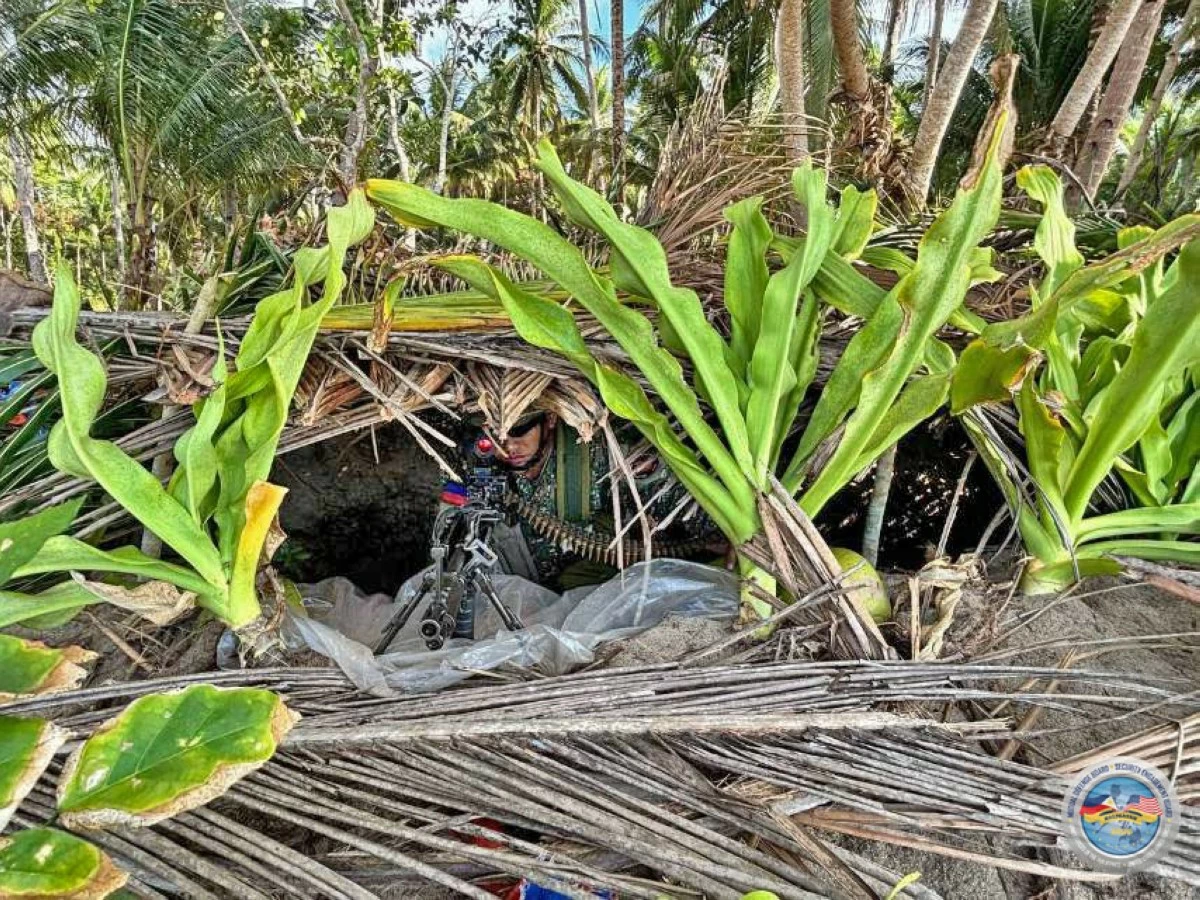
A Philippine Marine provides precision overwatch from a concealed littoral fighting hole during the Counter-Landing Live Fire Exercise at Apurawan Beach in Aborlan, Palawan on April 27, 2026 as part of Exercise Balikatan. (Photo by 3rd Marine Brigade, Philippine Marine Corps)
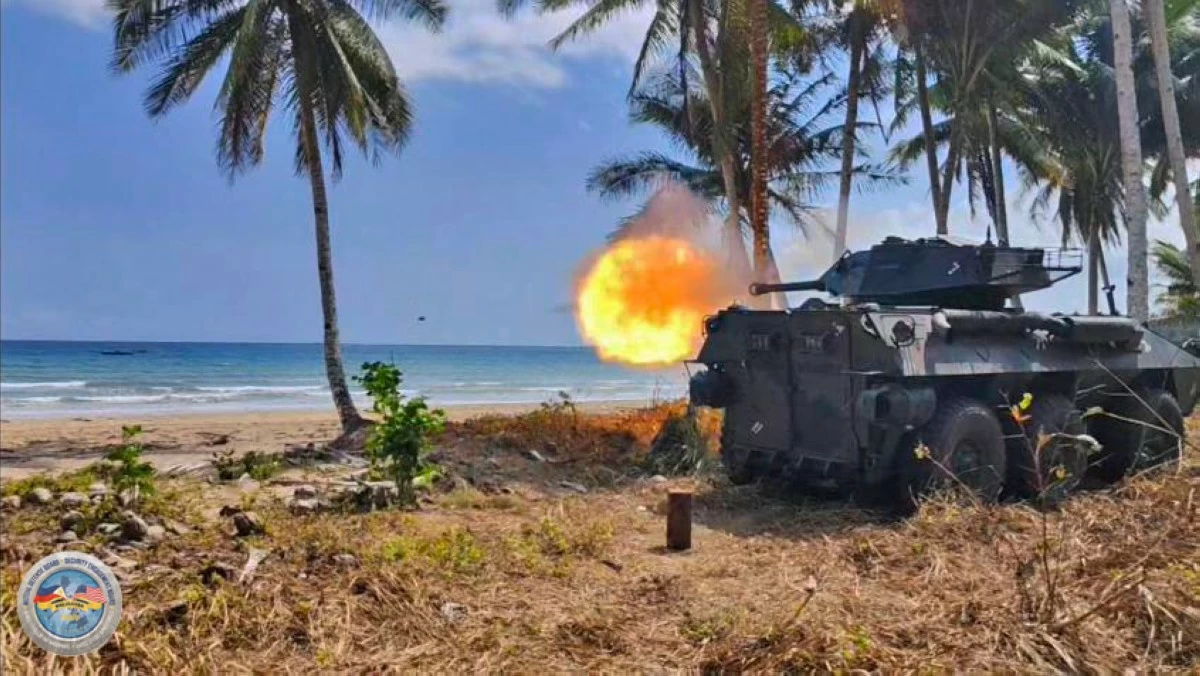
A light armored vehicle (LAV) deployed by the Philippine Marine Corps’ 3rd Marine Brigade engages simulated maritime threats during the Counter-Landing Live Fire Exercise - West in Apurawan Beach, Aborlan, Palawan on April 27, 2026 as part of Exercise Balikatan. (Photo by 3rd Marine Brigade, Philippine Marine Corps)
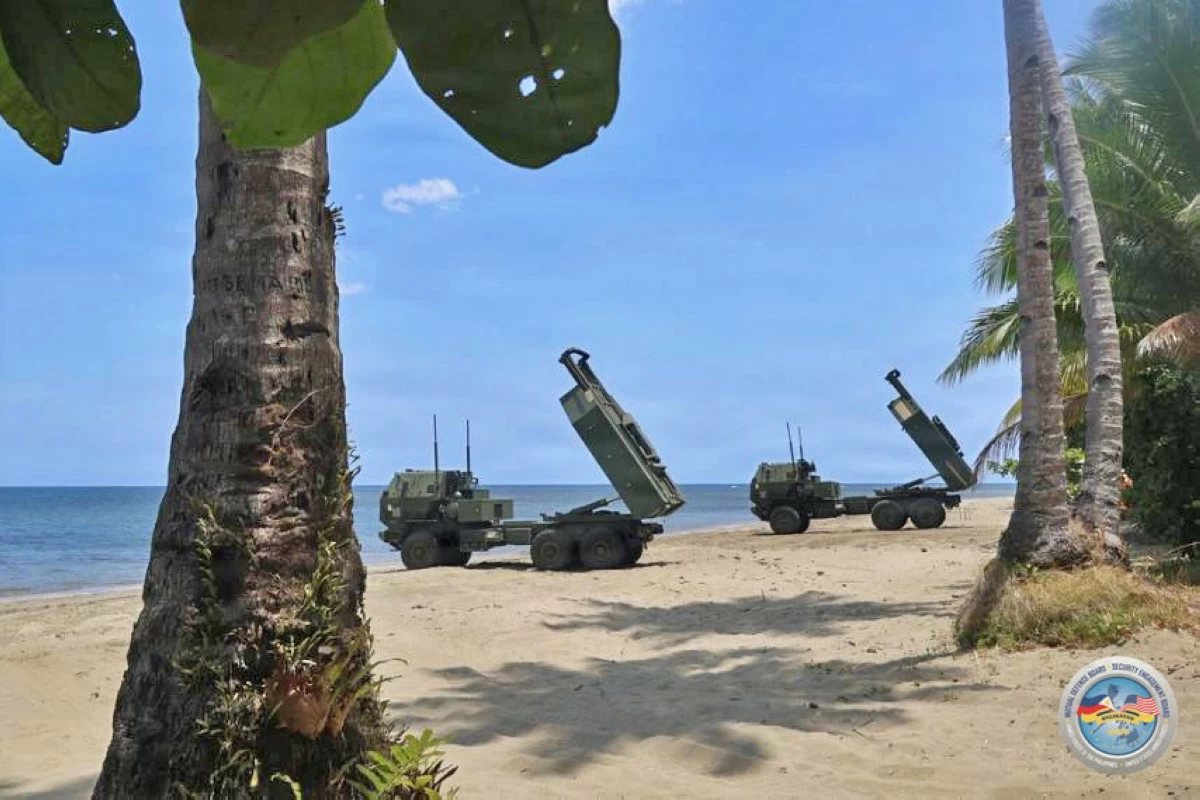
Two United States High Mobility Artillery Rocket Systems (HIMARS) stand ready on the coastline during the Counter-Landing Live Fire Exercise at Apurawan Beach in Aborlan, Palawan on April 27, 2026 as part of Exercise Balikatan. (Photo by Staff Sgt. Brandon Rickert, 7th Infantry Division, US Army)
Brawner underscored the importance of the exercise in Palawan, which faces WPS and sits near the Kalayaan Island Group (Spratly Islands), saying the location makes it central to defending Philippine territory and its resources.
“This area is very important because as we all know, Palawan is facing the West Philippine Sea, and it’s just across Kalayaan Island Group, which of course, we are defending as our exclusive economic zone, and where we get our resources, food and energy resources,” he said.
He added that the drills reflect both defense priorities and allied cooperation in the region.
“It’s really very important that we defend this territory of the Philippines and we are very fortunate that we have with us partners from like-minded nations who have really invested not just in the defense of the Philippines but in making sure that we can all work together in the defense of the region, the Indo-Pacific region,” Brawner said.
Heavy use of drones
Moreover, the AFP chief bared that the troops used unmanned systems “very heavily” such as aerial and surface drones, unlike with the previous Balikatan exercises.
“We had counter drone operations as well because as we see, the character of war around the world is changing, and we see the involvement of unmanned systems more and more in the modern warfare,” he said.
“If you saw how accurate our fires were against surface vessels, against unmanned surface vessels, even against drones, no matter how small they are, with our modern weapon systems and our great collaboration and cooperation among all the armed forces, we were able to hit the targets accurately,” the military chief added.
A simulated Non-Combatant Evacuation Operation was also conducted in Sitio Bubusawin and Sitio Long Point while a separate community outreach activity was held with the local government of Aborlan and Barangay Apurawan.
Aside from Brawner, top military officials observed the exercise including newly-installed Western Command (Wescom) commander, Vice Adm. Alan M Javier; Major General James Bartholomees, commander of the 25th Infantry Division, US Army; Major General Thomas Savage, commander of the U.S. JTF for Exercise Balikatan 2026; and Rear Admiral Brent DeVore, commander of the Expeditionary Strike Group THREE, U.S. Navy.