






 Business
Trade & Industry
DOE powers TESDA with solar to cut costs, train green workforce
Business
Trade & Industry
DOE powers TESDA with solar to cut costs, train green workforce
DOE powers TESDA with solar to cut costs, train green workforce


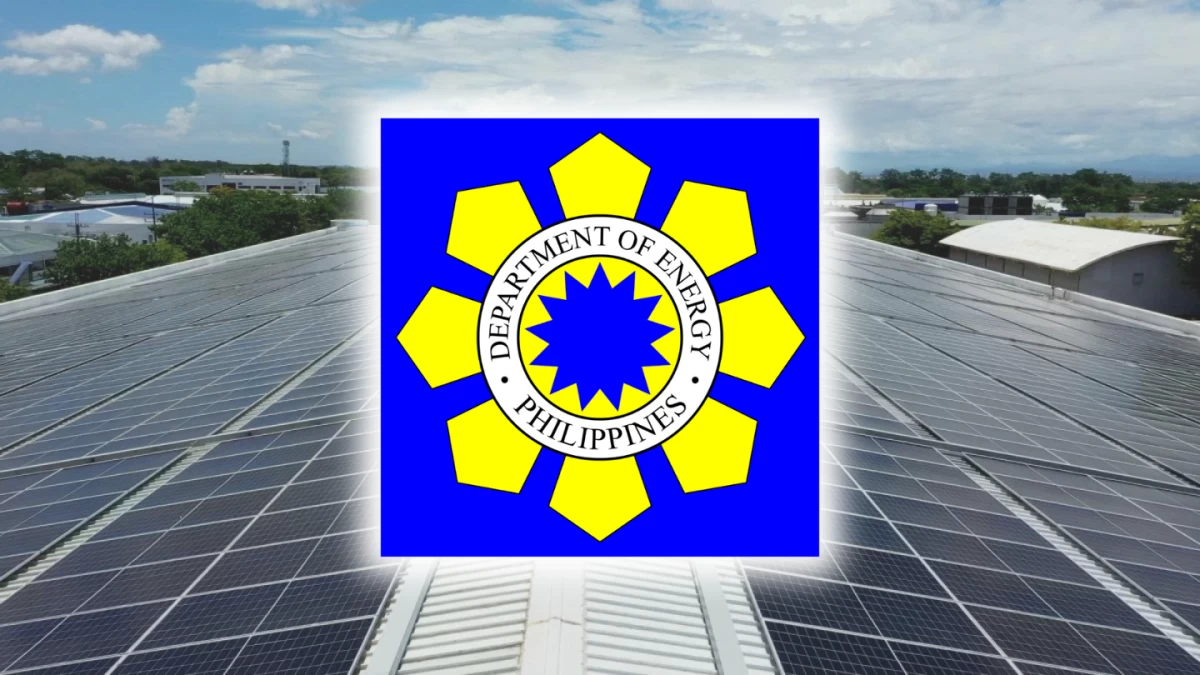
In a significant move toward modernizing public infrastructure and fostering green skills, the Department of Energy (DOE) officially turned over a 40-kilowatt-peak (kWp) solar photovoltaic (PV) system to the Technical Education and Skills Development Authority (TESDA).
In a statement on Monday, April 27, Energy Secretary Sharon Garin highlighted the DOE’s commitment to advancing vocational training by helping minimize TESDA’s monthly energy expenses at its complex in Taguig City, while at the same time reducing the load on the nation’s grid during peak hours.
“This is more than the turnover of a solar facility. It is proof that the country’s clean energy ambitions are taking shape in government institutions, in training centers, and in communities,” Garin said.
“TESDA plays a critical role in preparing Filipinos for the jobs of today and tomorrow. As the country works toward 35-percent renewable energy (RE) by 2030 and 50 percent by 2040, institutions like TESDA will help ensure that our workforce is ready for the opportunities of the clean energy economy,” Garin added.
The project is a flagship initiative under the Government Energy Management Program (GEMP), which mandates energy efficiency and the adoption of RE across state-owned facilities to reduce grid reliance and generate long-term fiscal savings.
According to the DOE, the savings generated by the facility will be redirected toward the TESDA’s core mission, including the enhancement of learning modules and the expansion of technical-vocational (tech-voc) access for Filipinos. Beyond the financial benefits, the rooftop installation serves as a training ground for trainees, providing a tangible example of clean energy technology in an academic setting.
TESDA Director General Kiko Benitez and Taguig City Mayor Lani Cayetano joined DOE officials in marking the milestone, which aligns with the Philippines’ ambitious RE targets. By integrating these systems into government buildings, the DOE aims to provide a replicable model for other public institutions to follow.
Garin further noted that the energy transition is not merely a shift in power sources but a workforce evolution. As demand for green jobs grows, the partnership ensures that workers are equipped with the technical proficiency required for the clean energy economy, she said.
While the summer season brings potential risks of higher demand, the DOE earlier assured that the country’s grids will not experience any yellow alerts next month, provided that power plants are functional and do not face any unforeseen shutdowns. - Gabriell Christel Galang