







Caritas Manila raises P406.5M in 2025
Published Apr 28, 2026 09:42 am


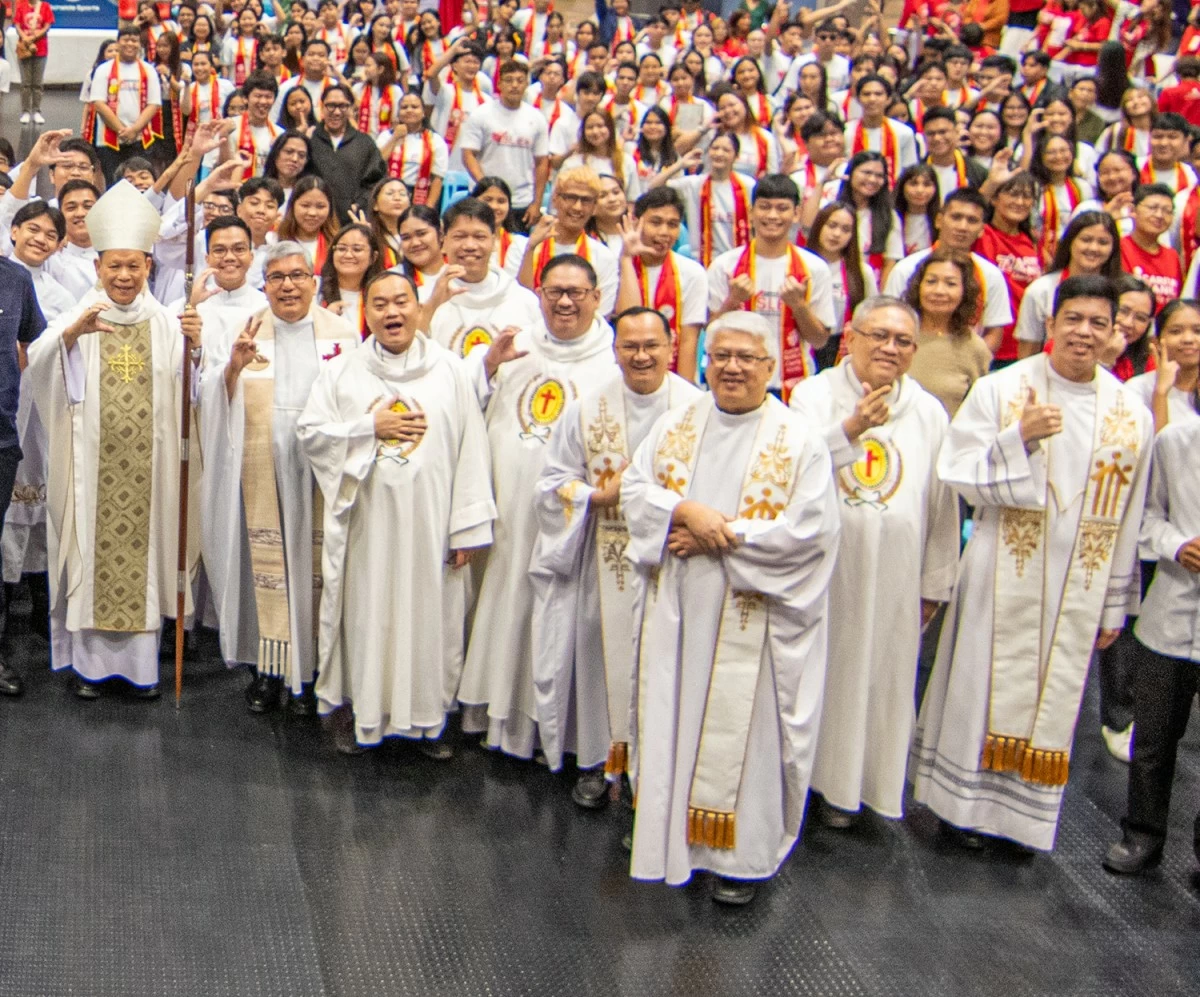
Manila Archbishop and Caritas Manila chairperson Jose Advincula, Caritas Manila executive director Anton CT Pascual, and other priests attend the 2025 Kairos and Annual Recognition event. (CARITAS)
Caritas Manila said it has raised P406.5 million in 2025 to fund scholarships, disaster response, health services, and community programs, according to its annual summary.
The social services arm of the Archdiocese of Manila said the funds supported initiatives including education, feeding programs, social enterprises, and assistance for persons deprived of liberty and recovering drug dependents.
“The mission of Caritas Manila is to help the poor help themselves,” Executive Director Fr. Anton CT Pascual said.
“We educate the youth. We provide livelihood. We transform lives. We change mindsets. We build communities. We encourage volunteerism. We serve the least, the last and the lost. We bring the power of charity to everyone,” he added.
Caritas Manila said its Youth Servant Leadership and Education Program (YSLEP) recorded 4,464 active scholars in 2025, with 1,168 graduates, including 309 who finished with honors.
Its alumni group, Caritas Manila Alumni Scholars Association (CAMASA), raised P2.4 million for its Balik Handog Program to support the scholarship initiative.
Under its disaster response and health programs, Caritas Manila reported providing P44.7 million in assistance to 24,126 families affected by fires and floods. Additional relief worth P7.17 million was distributed to areas affected by tropical storms, including dioceses in Cebu, Mati, Masbate, Romblon, Maasin, San Carlos, Infanta, Polillo Islands, San Jose, Legazpi, Virac, Ilagan, and Libmanan.
The Caritas In Action Crisis Assistance Program handled 15,080 cases from January to December 2025, covering requests for financial aid, food, medical expenses, funeral assistance, and referrals to government and private institutions. Some consultations were also conducted through Radyo Veritas.
Caritas Manila also allocated P10.6 million for its feeding and nutrition programs, Unang Yakap and Munting Pag-asa, which target malnourished children and mothers in urban poor communities such as Tondo and Baseco.
Its health initiative, All Is Well Health and Wellness Program, operated charity clinics with a budget of P15.5 million, providing consultations, medicines, and laboratory services for common illnesses, including hypertension and diabetes.
The group said its donations-in-kind program, Segunda Mana, generated P81.6 million in gross sales from reselling pre-loved items across 31 outlets, helping fund scholarships and other programs.
Caritas Manila’s restorative justice program allocated P2.7 million to assist 12,212 out-of-school youth through skills training and employment referrals. It also provided aid to about 6,000 persons deprived of liberty and their families, including food, hygiene kits, and counseling, along with religious services.
Its Sanlakbay Drug Rehabilitation Program continued to provide support for drug dependents in coordination with the United Nations Office on Drugs and Crime and the Philippine Drug Enforcement Agency.
Caritas Manila said volunteer efforts reached 3.3 million hours in 2025, equivalent to an estimated P287 million in value, with 5,818 registered volunteers.
The organization also continued its Gen 129 (Green Evolution Plant Project), which promotes urban farming and sustainable food production, including support for waste collectors through community-based initiatives.