






 Business
The Stock Market
AboitizPower accelerates renewables push as Middle East tensions drive fuel risks
Business
The Stock Market
AboitizPower accelerates renewables push as Middle East tensions drive fuel risks
AboitizPower accelerates renewables push as Middle East tensions drive fuel risks


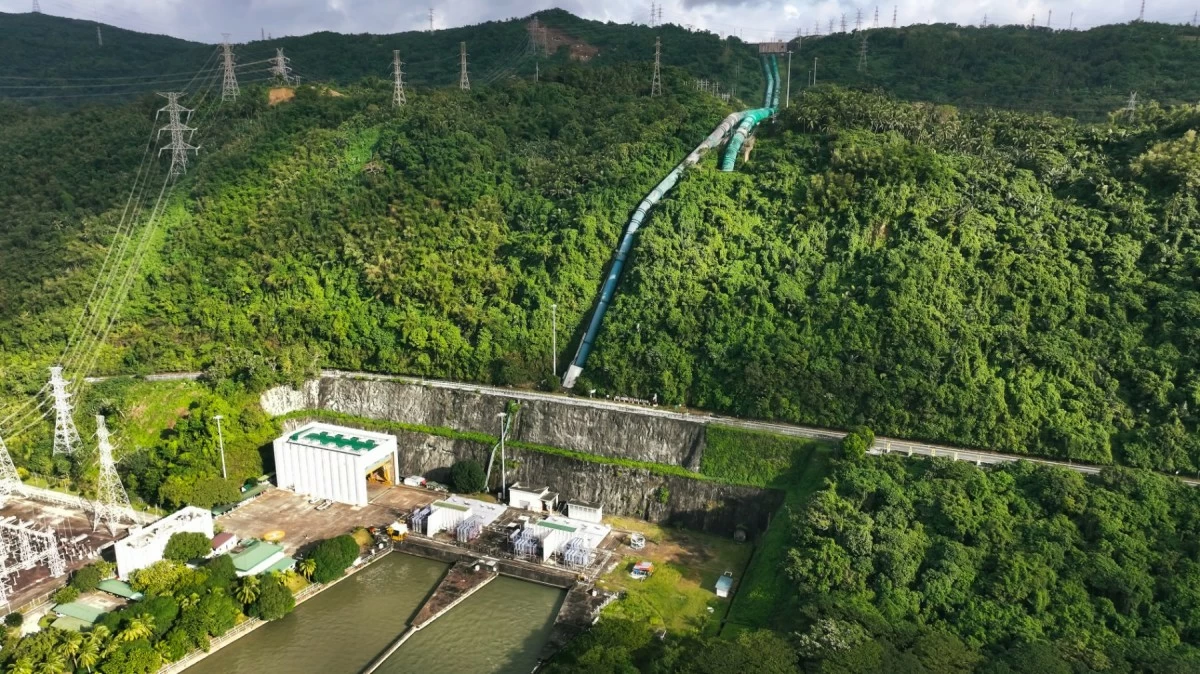
Intensifying geopolitical tensions in the Middle East have prompted Aboitiz Power Corp. (AboitizPower) to reinforce its strategic shift toward domestic renewable energy (RE) and implement stringent fuel procurement stress testing to protect consumers from potential supply disruptions and global price volatility.
During the company’s annual stockholders’ meeting (ASM) on Monday, April 27, AboitizPower Chief Financial Officer (CFO) Sandro Aboitiz said their energy assets may not be entirely affected by Middle Eastern tensions; however, they are impacted through fuel costs.
“Most direct exposure is for the cost of our fuel. As we import all the fuel for our baseload plants, our power supply agreements (PSAs) do provide meaningful pass-through protection on fuel costs, and that contractual structure remains a key mitigant for us,” he said, noting that this framework helps shield against crisis-inflicted price spikes.
Existing PSAs create a layer of cost-recovery protection, wherein movements in the global cost of fuel are reflected in the generation charge.
The CFO noted, however, that despite fuel costs affecting their assets, RE plays an even larger role. By scaling up its renewable portfolio, the company aims to establish a more resilient energy base that can withstand external shocks, ensuring that the stability of local power supply remains less dependent on the volatile global energy landscape while providing a long-term hedge for its captive customer base.
“Longer term, this crisis actually strengthens our strategic logic by the investments we’ve been making. Our push into renewables, solar, wind, hydro, and battery storage, reduces our long-term dependence on imported fuels. The CBK [Caliraya-Botocan-Kalayaan] acquisition, in particular, is a large, domestic resource, responsible asset, but is insulated from global price volatility,” he elaborated.
Unlike baseload facilities tied to international market prices, the 797-megawatt (MW) CBK complex is a large-scale domestic resource that is fundamentally insulated from price shocks amid global tensions. The facility was turned over by state-run Power Sector Assets and Liabilities Management Corp. (PSALM) last February to Aboitiz-led Thunder Consortium, in partnership with Japanese firms Sumitomo Corp. and Electric Power Development Co. Ltd. (J-Power).
Furthermore, AboitizPower allotted ₱62 billion for its full-year capital expenditure (capex) to accelerate its clean energy push. Although this capital outlay reflects a 43.7-percent drop from the previous year’s budget of ₱117.7 billion, the company is set to develop 639.5 MW worth of projects and 147 MW of RE with battery energy storage systems (BESS) that it won under the fourth round of the Green Energy Auction (GEA) of the Department of Energy (DOE).
“We continue to deploy capital strategically to accelerate our portfolio transition while maintaining grid reliability through our transition and distribution business groups,” said Danel Aboitiz, president and chief executive officer (CEO) of AboitizPower.
Currently, the 30-MW EAUC1 hybrid BESS in Mactan Island, Cebu province, and 48-MW TMI2 hybrid BESS in Nasipit town, Agusan del Norte province, are under development.
So far, AboitizPower has 2.3 gigawatts (GW) of attributable net sellable capacity following the addition of CBK assets to its portfolio.