ADVERTISEMENT

VP Sara's husband to file criminal complaint over 'diabolical' bank data leak

Lawyer Manases Reyes Carpio says alleged bank leak was used for 'political harassment' against his wife and the Duterte family; complaint names BSP, AMLC, and House officials

Published Apr 27, 2026 09:55 am
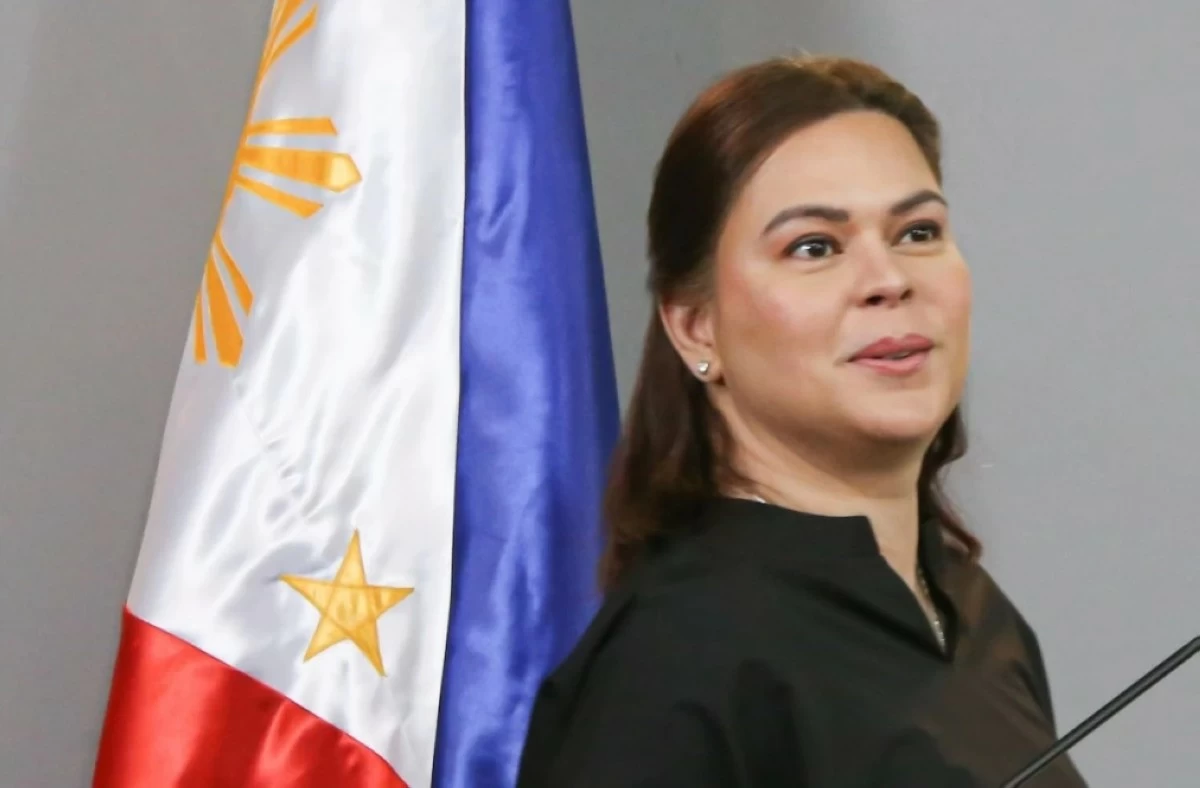
Vice President Sara Duterte (Manila Bulletin/file)
Vice President Sara Duterte’s husband, lawyer Manases Reyes Carpio, will file a criminal complaint on Monday, April 27, accusing financial regulators and House members of illegally disclosing confidential bank records.
In an advisory issued on April 26, Carpio said he is scheduled to file the complaint before the Quezon City Prosecutor’s Office at 11 a.m.
The complaint names Eli Remolona Jr., governor of the Bangko Sentral ng Pilipinas; Ronel Buenaventura of the Anti-Money Laundering Council; and members of the House Committee on Justice, including Gerville Luistro, Percival Cendaña, Chel Diokno, and Leila de Lima.
Alleged violations of banking and privacy laws
Carpio cited alleged violations of key financial and privacy statutes, including the Anti-Money Laundering Act of 2001, the Bank Secrecy Law, and the Data Privacy Act of 2012.
In his complaint, Carpio claims that the respondents “connived” to disclose classified and confidential financial records protected under Philippine law. These records, he said, include bank transactions, insurance payments, time deposits, investments, and even utility bill payments.
Carpio said he was compelled to pursue legal action not only to defend his wife, Vice President Duterte, and the Duterte family, but also to uphold the integrity of the banking and financial system and protect the public.
He stressed that under the Anti-Money Laundering Act (AMLA), as amended, the confidentiality of bank records is absolute and admits no exceptions, citing its critical role in ensuring the security, stability, and integrity of the financial system. He added that even members of the media are prohibited from disclosing such information and may face criminal liability.
“Congress itself enacted Section 8A of AMLA prohibiting disclosure in any manner of any reports submitted by banks to the AMLC,” Carpio said.
He further argued that such disclosures are strictly prohibited under AMLA confidentiality provisions, which bar the release of reports submitted by banks to the AMLC.
“There is no exception. The prohibition is absolute. That is what Congress itself enacted to preserve full security against any disclosure of any information or record obtained by the AMLC,” he added.
Claims of political harassment
Carpio said the legal action was filed not only to defend his wife and the Duterte family, but also to protect the broader banking sector and the public.
He warned that unauthorized disclosures could erode trust in financial institutions and create a “dangerous precedent” in which citizens’ financial data may no longer be secure.
Carpio alleged that the supposed AMLC leak was exploited not for legitimate regulatory purposes but as a tool for black propaganda and political harassment.
He claimed it was intended to damage the reputation of Vice President Sara Duterte and the Duterte family, describing the act as “diabolical.”
“AMLA is being weaponized to the maximum—even if illegal and contrary to law—for pure black propaganda with a view to the 2028 national elections,” Carpio said.
‘No one is safe’
The complainant further alleged that the leak of financial records was used for “black propaganda” and political harassment, particularly in the lead-up to the 2028 national elections.
He warned that the unauthorized disclosure sets a dangerous precedent, undermining the security of every citizen’s financial data under existing bank secrecy laws.
“No one is safe,” Carpio said. “Instead of our system being governed by law and due process, the ugly head of men seems to prevail,” he added.
He described the alleged actions as an improper use of anti-money laundering mechanisms, claiming these were weaponized for political purposes rather than legitimate regulatory enforcement.
Legal implications
Under Philippine law, violations of bank secrecy provisions, AMLA confidentiality rules, and data privacy protections may carry criminal liability, including imprisonment and substantial fines.
The case emerges amid heightened political tensions, with potential implications for financial regulation and data privacy enforcement in the country. 

Related Tags

Carpio complaint AMLC BSP Remolona case bank secrecy law Philippines AMLA violation complaint data privacy case Philippines Vice President Sara Duterte VP Sara Duterte
ADVERTISEMENT
.most-popular .layout-ratio{ padding-bottom: 79.13%; } @media (min-width: 768px) and (max-width: 1024px) { .widget-title { font-size: 15px !important; } }

{{ articles_filter_1561_widget.title }}

.most-popular .layout-ratio{ padding-bottom: 79.13%; } @media (min-width: 768px) and (max-width: 1024px) { .widget-title { font-size: 15px !important; } }

{{ articles_filter_1562_widget.title }}

.most-popular .layout-ratio{ padding-bottom: 79.13%; } @media (min-width: 768px) and (max-width: 1024px) { .widget-title { font-size: 15px !important; } }

{{ articles_filter_1563_widget.title }}

{{ articles_filter_1564_widget.title }}

.mb-article-details { position: relative; } .mb-article-details .article-body-preview, .mb-article-details .article-body-summary{ font-size: 17px; line-height: 30px; font-family: "Libre Caslon Text", serif; color: #000; } .mb-article-details .article-body-preview iframe , .mb-article-details .article-body-summary iframe{ width: 100%; margin: auto; } .read-more-background { background: linear-gradient(180deg, color(display-p3 1.000 1.000 1.000 / 0) 13.75%, color(display-p3 1.000 1.000 1.000 / 0.8) 30.79%, color(display-p3 1.000 1.000 1.000) 72.5%); position: absolute; height: 200px; width: 100%; bottom: 0; display: flex; justify-content: center; align-items: center; padding: 0; } .read-more-background a{ color: #000; } .read-more-btn { padding: 17px 45px; font-family: Inter; font-weight: 700; font-size: 18px; line-height: 16px; text-align: center; vertical-align: middle; border: 1px solid black; background-color: white; } .hidden { display: none; }
function initializeAllSwipers() { // Get all hidden inputs with cms_article_id document.querySelectorAll('[id^="cms_article_id_"]').forEach(function (input) { const cmsArticleId = input.value; const articleSelector = '#article-' + cmsArticleId + ' .body_images'; const swiperElement = document.querySelector(articleSelector); if (swiperElement && !swiperElement.classList.contains('swiper-initialized')) { new Swiper(articleSelector, { loop: true, pagination: false, navigation: { nextEl: '#article-' + cmsArticleId + ' .swiper-button-next', prevEl: '#article-' + cmsArticleId + ' .swiper-button-prev', }, }); } }); } setTimeout(initializeAllSwipers, 3000); const intersectionObserver = new IntersectionObserver( (entries) => { entries.forEach((entry) => { if (entry.isIntersecting) { const newUrl = entry.target.getAttribute("data-url"); if (newUrl) { history.pushState(null, null, newUrl); let article = entry.target; // Extract metadata const author = article.querySelector('.author-section').textContent.replace('By', '').trim(); const section = article.querySelector('.section-info ').textContent.replace(' ', ' '); const title = article.querySelector('.article-title h1').textContent; // Parse URL for Chartbeat path format const parsedUrl = new URL(newUrl, window.location.origin); const cleanUrl = parsedUrl.host + parsedUrl.pathname; // Update Chartbeat configuration if (typeof window._sf_async_config !== 'undefined') { window._sf_async_config.path = cleanUrl; window._sf_async_config.sections = section; window._sf_async_config.authors = author; } // Track virtual page view with Chartbeat if (typeof pSUPERFLY !== 'undefined' && typeof pSUPERFLY.virtualPage === 'function') { try { pSUPERFLY.virtualPage({ path: cleanUrl, title: title, sections: section, authors: author }); } catch (error) { console.error('ping error', error); } } // Optional: Update document title if (title && title !== document.title) { document.title = title; } } } }); }, { threshold: 0.1 } ); function showArticleBody(button) { const article = button.closest("article"); const summary = article.querySelector(".article-body-summary"); const body = article.querySelector(".article-body-preview"); const readMoreSection = article.querySelector(".read-more-background"); // Hide summary and read-more section summary.style.display = "none"; readMoreSection.style.display = "none"; // Show the full article body body.classList.remove("hidden"); } document.addEventListener("DOMContentLoaded", () => { let loadCount = 0; // Track how many times articles are loaded const offset = [1, 2, 3, 4, 5, 6, 7, 8, 9, 10]; // Offset values const currentUrl = window.location.pathname.substring(1); let isLoading = false; // Prevent multiple calls if (!currentUrl) { console.log("Current URL is invalid."); return; } const sentinel = document.getElementById("load-more-sentinel"); if (!sentinel) { console.log("Sentinel element not found."); return; } function isSentinelVisible() { const rect = sentinel.getBoundingClientRect(); return ( rect.top < window.innerHeight && rect.bottom >= 0 ); } function onScroll() { if (isLoading) return; if (isSentinelVisible()) { if (loadCount >= offset.length) { console.log("Maximum load attempts reached."); window.removeEventListener("scroll", onScroll); return; } isLoading = true; const currentOffset = offset[loadCount]; window.loadMoreItems().then(() => { let article = document.querySelector('#widget_1690 > div:nth-last-of-type(2) article'); intersectionObserver.observe(article) loadCount++; }).catch(error => { console.error("Error loading more items:", error); }).finally(() => { isLoading = false; }); } } window.addEventListener("scroll", onScroll); });

Sign up by email to receive news.