







Beyond chocolate and watches
How Switzerland is repositioning its global image in Manila
Published Apr 27, 2026 02:47 pm


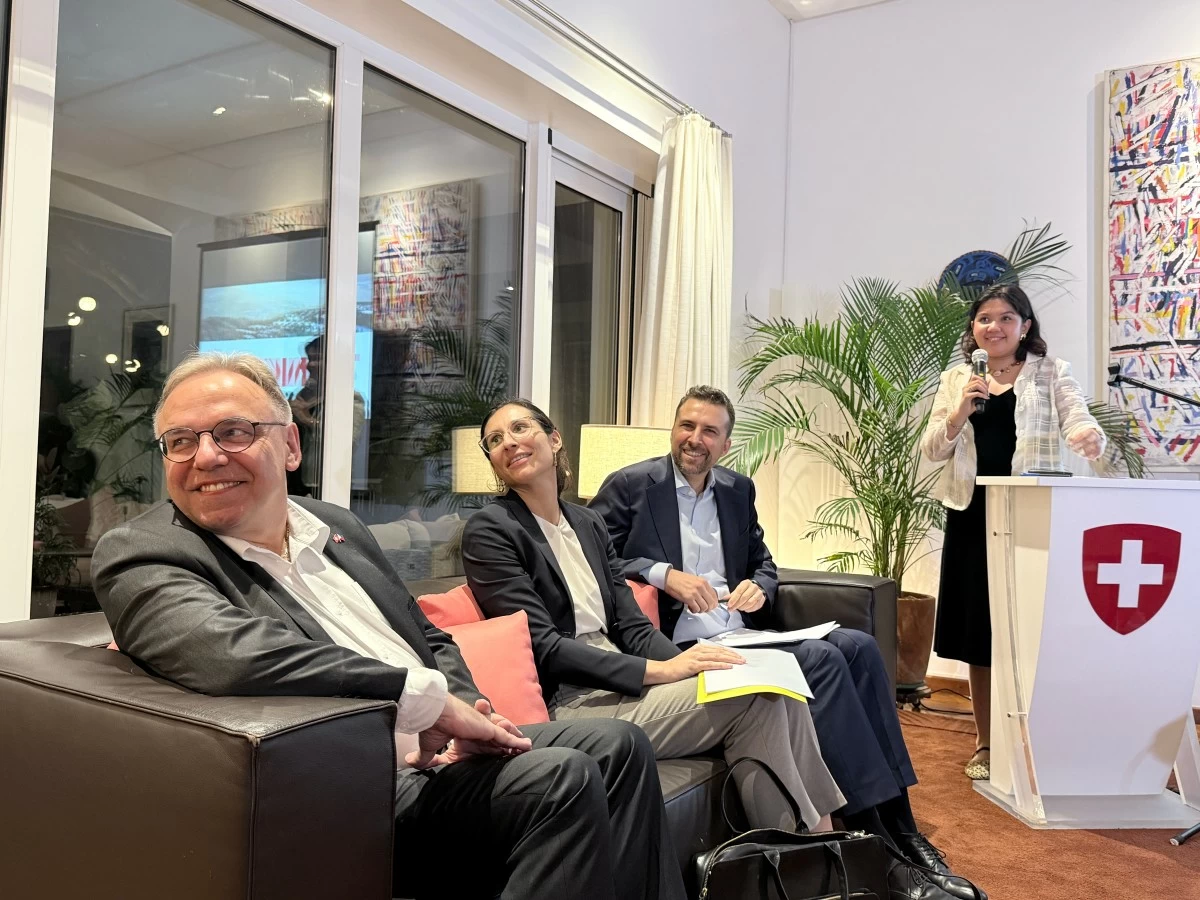
The Swiss Embassy team shares a light moment during a gathering for the media at the Swiss Ambassador’s residence.
“You understand the Philippine attitude and the culture only when you live here… when you speak with persons.”
It was a fitting reflection from Swiss Ambassador Nicolas Brühl, who recently welcomed members of the media into his residence in Manila for what is expected to be among his final press gatherings before his tour of duty concludes later this year.
The evening was framed as a conversation on where Switzerland and the Philippines stand today, how ties have evolved during his posting, and where future cooperation may still deepen. Trade, innovation, education, sustainability, peacebuilding, and humanitarian support all entered the discussion.
So did a broader point: Switzerland wants to be understood for more than the shorthand of chocolate, watches, and Alpine postcards.
Ask most people what comes to mind when they think of Switzerland, and those are still the predictable answers.
It is an image that has served the country well—recognizable, polished, and easy to export. But it is no longer the only story Switzerland wants to tell.
In Manila, the embassy has been steadily advancing a broader narrative—one centered on innovation, technical expertise, development cooperation, and practical partnerships in sectors relevant to a growing economy like the Philippines.
“We keep telling everyone… Switzerland is the number one country in innovation, and not a lot of people know about that,” Sofia Santelices, head of communications for the embassy, said during the gathering, pointing to the gap between global performance and public perception.
“We’re known for our chocolates, for our cheeses, but not for innovation… and I think it’s time to change that.”
That repositioning is visible in the embassy’s programs.
The Swiss Innovation Prize places Switzerland within conversations around entrepreneurship, research, and emerging industries—fields where the country has long excelled, though not always publicly associated outside specialist circles. Interest has been strong, with more than a hundred applications from across the Philippines submitted this year.
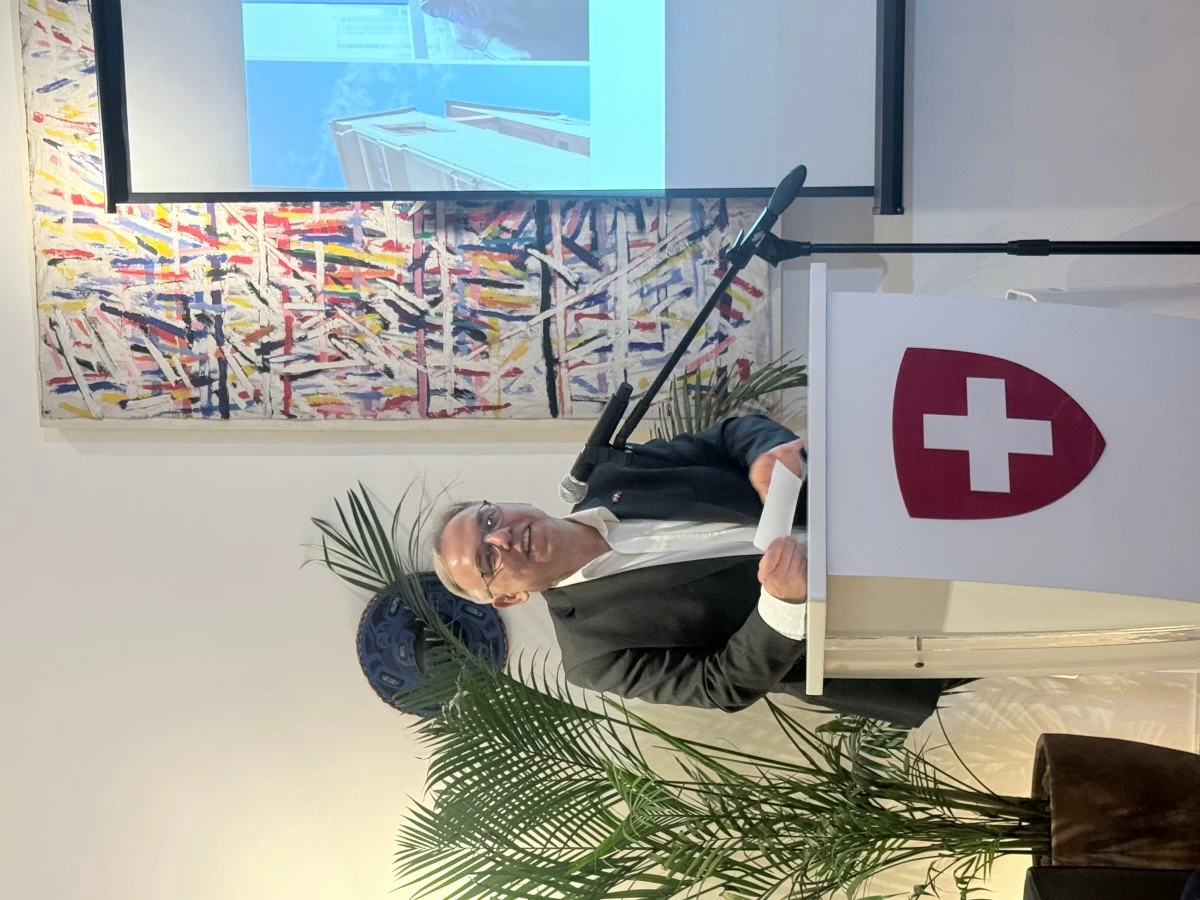
Swiss Ambassador Nicolas Brühl, set to end his tour of duty this year, says he will always have fond memories of the Philippines.
Education is being used with equal intent. Through initiatives such as the “Day of the Future,” Filipino students are introduced early to Swiss-linked industries and career possibilities. It is a long-view strategy: build familiarity through access and experience rather than slogans.
Economic engagement remains a foundation, but Switzerland’s message in Manila extends beyond commerce.
Deputy Chief of Mission Livia Meisser used her remarks to connect climate, humanitarian response, peacebuilding, and human rights—areas that reveal another side of Swiss diplomacy.
“When Hans-Christian and I arrived in the Philippines in early August last year, we very soon experienced how vulnerable the Philippines are to climate risks,” Meisser said, recalling how quickly the scale of the country’s environmental exposure became clear. She noted how they both grew up in the Alps and had seen glaciers disappear, while in the Philippines they witnessed the realities of climate change in a tropical island nation.
She pointed to the succession of disasters last year, including an earthquake and multiple typhoons that affected millions of Filipinos. In response, Switzerland contributed 500,000 Swiss francs—nearly P40 million—to the International Federation of Red Cross and Red Crescent Societies emergency appeal.
“This contribution supports multisectoral humanitarian assistance, including shelter, water and sanitation, health services, multipurpose cash assistance and protection,” she said, adding that special attention was given to women-headed households, persons with disabilities, the elderly, and socially marginalized communities.
For Meisser, the contribution reflected a wider philosophy.
“This intervention reflects Switzerland’s commitment not only to immediate relief, but to recovery that strengthens long-term resilience,” she said.
The embassy’s work also includes support for peace efforts in Mindanao.
“At the same time, the BARMM peace process remains a particular focus for the embassy,” Meisser said, noting that Switzerland has supported the Bangsamoro peace process since 2014, particularly in transitional justice and reconciliation.
She added that Switzerland is now partnering with the Geneva-based Centre for Humanitarian Dialogue to help sustain discussions between the government and the Moro Islamic Liberation Front on transitional justice and implementation of updated roadmaps.
Human rights, she stressed, remain central to Swiss foreign policy.
“The promotion and protection of human rights is, is and remains a cornerstone of Switzerland’s foreign policy,” Meisser said, citing support for projects involving education, child protection, indigenous rights, women’s empowerment, and assistance for human rights defenders.
The embassy itself offers a glimpse into how Switzerland approaches diplomacy internally.
Its deputy heads of mission, Meisser and Hans-Christian Baumann, operate under a job-sharing arrangement that remains uncommon in many foreign services. In practice, it reflects a system that recognizes family life as compatible with senior professional roles rather than in competition with them.
“It’s a classical win-win situation,” Baumann said of the arrangement.
For a country that often speaks about work-life balance, inclusion, and modern labor systems, it is an example of policy reflected in practice.
As Brühl prepares to conclude his posting, the message from his final months in Manila appears clear enough: Switzerland is not abandoning the image that made it famous. Rather, they’re expanding it.
The Philippines, with its young population, expanding economy, and openness to new partnerships, is a logical place to do so.