







When degustation becomes 'disgustation': The hype and bandwagon syndrome
Published Apr 26, 2026 12:05 am
|
Updated Apr 25, 2026 04:01 pm


HEARD IT THROUGH THE GRIPE-VINE
When you look at the landscape of serious Manila dining today, Tasting Menus and Degustation offerings are emblazoned on the marketing material of so many top-ranked restaurants – acting like its’ their surefire passport to credibility, and justifying the at-times outlandish fixed prices, and wine pairings. And we do get it, this trend of serving 10-12 small, chef-curated courses can showcase the chef’s artistry. In the restaurant’s favor, it also means control of the dining experience that’s on offer; helping promote efficiency, inventory management, reduced food waste – and yet, higher average spending per client.
If done right, it is the ultimate “cult of the chef” moment; with dining no longer just the physical and sensory activity of eating, but an educational and curated two to four hours of elevated taste and refinement. To extend the aura of it being so worthwhile, we have thrown in such buzzwords as sustainable sourcing, farm to table, and culinary theater. No stone is left unturned in the hype to make what used to be a simple night out for dinner, transform into an expensive feast for the senses.
But my questions are whether this is all “over cooked,” hyped up beyond reason, and quite often, an abuse of the bandwagon syndrome? Is it overkill masquerading as a new improved version of Manila fine-dining?
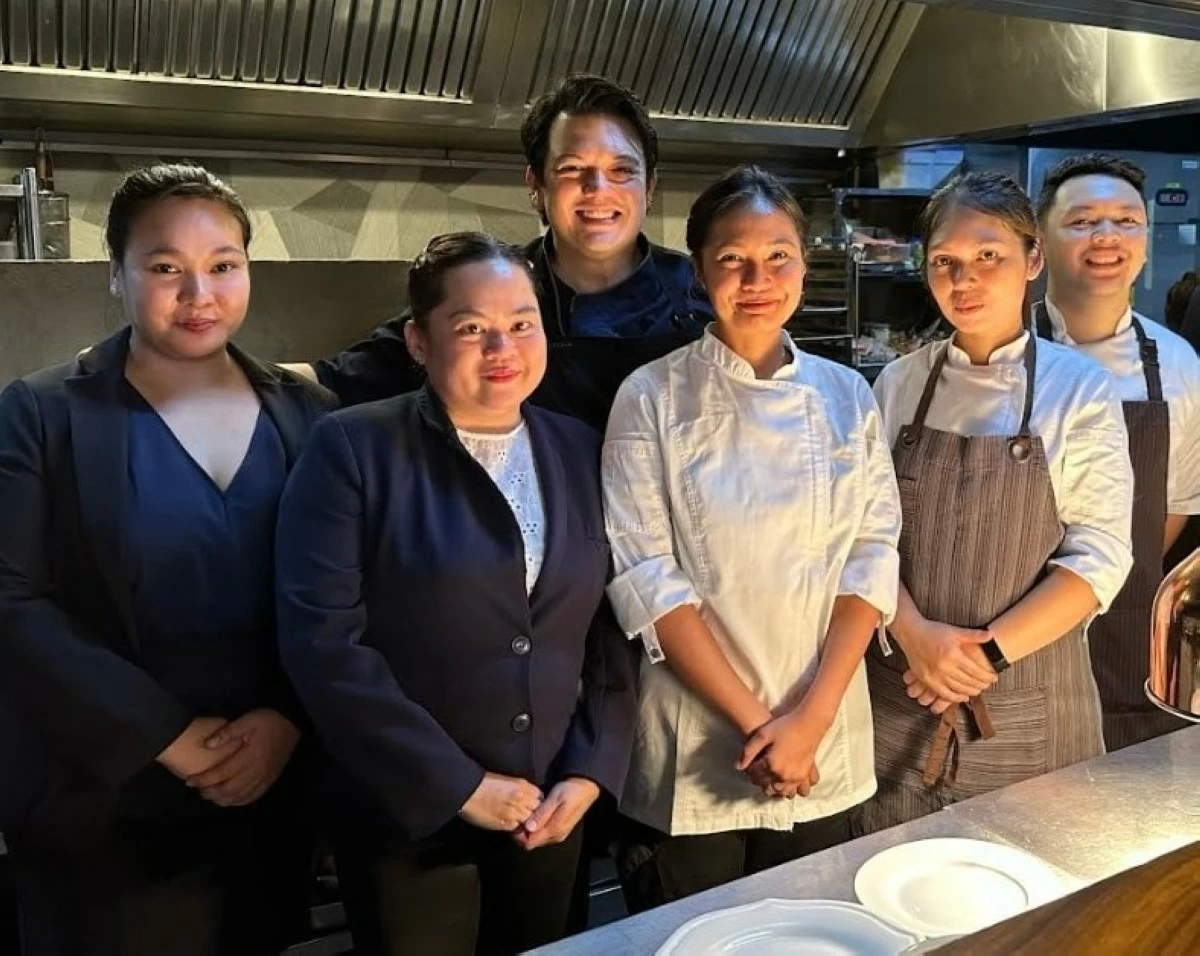
CHEF ROB PENGSON, a pioneer of ‘degustation’ in the Philippines — a photo I took in 2023, with his team of chefs and staff trainees.
Let’s first take a historical look at the concept of Tasting Menus. It already existed in the 19th century, at high-end eating establishments throughout Europe; but the contemporary version has its’ provenance in France, as part of the Nouvelle Cuisine movement of the 1970’s. Credit the likes of Paul Bocuse for the lighter, smaller, and numerous courses.
In the 80’s and 90’s El Bulli in Spain, and The French Laundry in the USA, would stretch Tasting Menus to even 20-30 courses. This would be Ferran Adria and Thomas Keller leading the trend. For the New York Times, this craze reached its peak in the early 2010’s; and post-pandemic, we have the shift to shorter, more sustainable, and even affordable, Tasting Menus. The rationale often used to justify the trend, and its continued popularity is that the bite-sized curated courses, keep palate fatigue from happening – which is when you have a large portion of a single dish, what we call “nakakaumay.”
But that’s the global trend. Do we see that here in Manila, or are we still cresting the “wave”? Is the local degustation bandwagon still finding numerous “joiners?”
For Philippine-style degustation history, I can think of Rob Pengson, and his wonderful punning The Goose Station (commenced operation in 2009), as the pioneer. Rob’s restaurant was located in BGC, literally a stone’s throw from Gallery by Chele. Ahead of its time, I enjoyed dining at Rob’s; but unfortunately, it shut down in 2016.
Back in 2018, when I was in Bangkok with Issa (Litton), we dined at Gaa (Thai and Indian), Paste (heritage Thai), and at Sühring (modern German). I appreciated the novelty of the exercise; but to be honest, it was Sühring that I remembered best, and how each course was really something to write home about. Just last year, Sühring was elevated to a Three-Star restaurant in the Thailand Michelin Guide (Gaa has Two Stars, and Paste has One Star). Here in Manila, if you asked me which Tasting Menus impressed me the most in the second half of 2025, I would say the ones at Casa Palma of Aaron Isip, and Metiz of Stephane Duhesme.
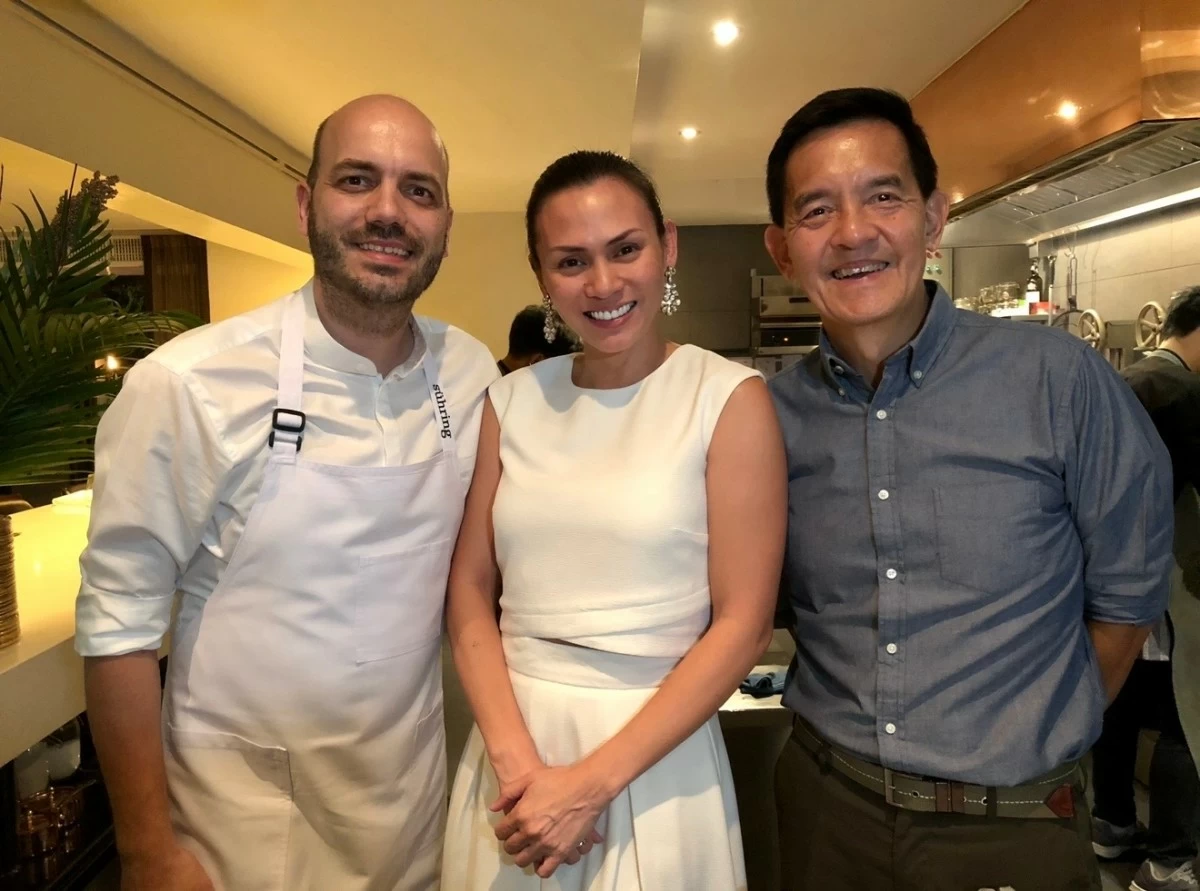
AT SÜHRING, Bangkok — with one of the twins, Thomas and Mathias Sühring; back in November 2018.
I made mention of palate fatigue above; and for me, over the last few years, it’s been a case of Tasting Menu fatigue, my “degustation ennui.” And you may well ask why; so allow me to count two major reasons.
First, it’s how more often than not, I only enjoyed two to three of the 10 courses that have been placed in front of me. But because of anticipation, or because internally we’re justifying the cost, we’ll gush about all the courses, when I know I would never order them on an “a la carte” basis if I returned. And that is a sad batting average when I’m asking myself if it was worth the price of admission.
Then, I find the degustation experience just too long. And it’s not just about the time in between courses, it’s how the Tasting Menu experience has evolved into performance art, and there are so many minutes spent on explaining the course, and giving us the back story of each ingredient. When your chatter is longer than the time it’ll take me to consume your bite-size course, you’ve struck out in my books. Just let me eat the frigging food, as I don’t need to know what the fish was doing, or contemplating, as it laid the tiny eggs that I’m about to consume!
Besides, I have the sneaking suspicion that one person is responsible for the spiels of the chefs at five to six Tasting Menu establishments. They now sound so alike, so cookie-cutter; that I could easily close my eyes, and flashback to the restaurant of the previous week. I’m not kidding. Can someone please verify this for me? I’d love to know if I’m right.
Yes, the emergence of all these degustation restaurants have raised the bar of our city’s dining landscape; but it’s also made it quite the chore to separate the quality from the hype – and believe me when I say it’s not that easy. Marketing and laying on the shtick is cheap and easy in this town, delivering the goods is another matter. Do you agree? Happy dining!