






Manila Bulletin
 World
Talks stumble as Iran's top diplomat leaves Pakistan and Trump says he told envoys not to go
World
Talks stumble as Iran's top diplomat leaves Pakistan and Trump says he told envoys not to go
World
Talks stumble as Iran's top diplomat leaves Pakistan and Trump says he told envoys not to go
Talks stumble as Iran's top diplomat leaves Pakistan and Trump says he told envoys not to go
Published Apr 26, 2026 07:35 am


ISLAMABAD (AP) — The latest ceasefire talks between the United States and Iran appeared to fail Saturday before they began, as Tehran's top diplomat left Pakistan and President Donald Trump soon afterward said he had told envoys not to travel to Islamabad.
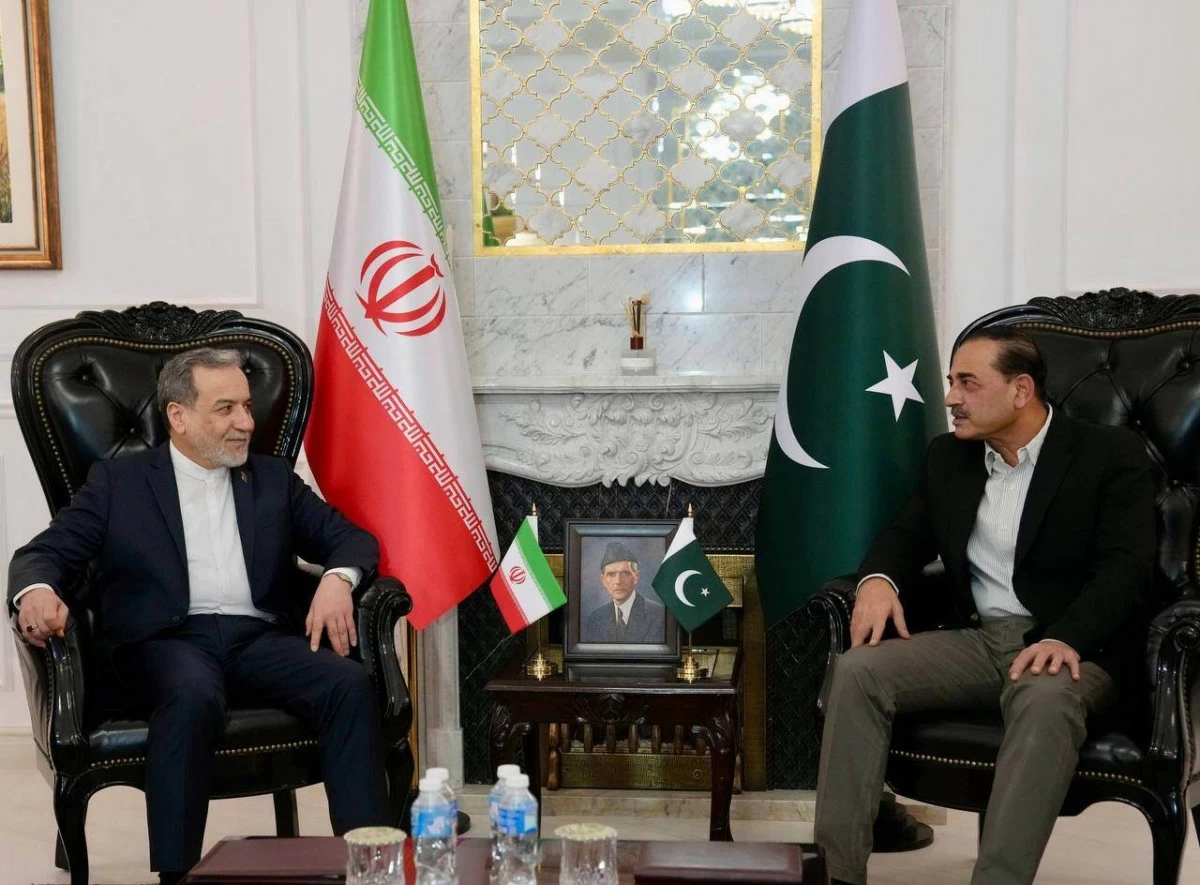
In this photo released by the Iranian Foreign Ministry, Iranian Foreign Minister Abbas Araghchi, left, meets with Pakistan's Army Chief Field Marshal Asim Munir in Islamabad, Pakistan, Saturday, April 25, 2026. (Iranian Foreign Ministry via AP)
The negotiations were meant to follow historic face-to-face talks earlier this month between the U.S., led by Vice President JD Vance, and Iran, led by parliament speaker Mohammad Bagher Qalibaf. But Iranian officials have questioned how they can trust the U.S. after its forces started blockading Iranian ports in response to Iran's war grip on the Strait of Hormuz waterway.
"If they want to talk, all they have to do is call!!!" Trump said on social media, adding: "Too much time wasted on traveling, too much work!" The White House on Friday said Steve Witkoff and Jared Kushner would be going to Islamabad.
Iran's Foreign Minister Abbas Araghchi left Islamabad on Saturday evening, two Pakistani officials told The Associated Press, speaking on condition of anonymity because they were not authorized to talk to the media.
"Shared Iran's position concerning workable framework to permanently end the war on Iran. Have yet to see if the U.S. is truly serious about diplomacy," Araghchi later said on social media.
Another ceasefire, between Israel and the Iranian-backed Hezbollah, was shaken Saturday as each side fired at the other and Israeli Prime Minister Benjamin Netanyahu ordered the military to "vigorously attack Hezbollah targets in Lebanon."
Iran had said any talks would be indirect
Trump this week announced an indefinite extension of the ceasefire with Iran. It has paused most fighting, but the economic fallout is growing two months into the war as global shipments of oil, liquefied natural gas, fertilizer and other supplies are disrupted by the near-closure of the Strait of Hormuz.
Both sides have continued to make military threats. Iran's joint military command on Saturday warned that "if the U.S. continues its aggressive military actions, including naval blockades, banditry, and piracy" it will face a "strong response."
Even before Saturday's developments, Iran's foreign ministry said any talks would be indirect and that Pakistani officials would convey messages. In Pakistan, Araghchi met with Army Chief Field Marshal Asim Munir and Prime Minister Shehbaz Sharif about what he called Iran's red lines for negotiations.
Araghchi went on to Oman, a mediator in talks before the war and the country on the other side of the Strait of Hormuz. The foreign minister will visit Pakistan again on Sunday before visiting Russia, the state-run IRNA news agency reported.
Trump later told journalists that within 10 minutes of him canceling the envoys' trip to Pakistan, Iran sent a "much better" proposal, with no details. He stressed that one of his conditions is that Iran "will not have a nuclear weapon."
Contentious points in talks include Iran's enriched uranium and the standoff on the Strait of Hormuz as well as concerns about Iran's missile program and its support for armed proxies in the region.
Tehran has noted that indirect talks with the U.S. last year and early this year over its nuclear program, the issue long at the center of tensions, ended with Iran being attacked by the U.S. and Israel, adding to its wariness.
The standoff around the strait continues
The price of Brent crude oil, the international standard, is nearly 50% higher than when the war began because of Iran's grip on the strait, through which a fifth of the world's oil passes in peacetime.
Iran attacked three ships this week, while the U.S. maintains a blockade on Iranian ports. Trump has ordered the military to "shoot and kill" small boats that could be placing mines.
Germany's Defense Minister Boris Pistorius said his country was sending minesweeper ships to the Mediterranean to help remove Iranian mines from the strait once hostilities end.
Also Saturday, Iran resumed commercial flights from Tehran's international airport for the first time since the war began with U.S. and Israeli strikes on Feb. 28. Flights were scheduled to depart for Istanbul, Oman's capital of Muscat and the Saudi city of Medina, according to state-run television.
A growing toll even as ceasefires hold
Since the war began, authorities say at least 3,375 people have been killed in Iran and at least 2,496 people in Lebanon, where new fighting between Israel and the Iran-backed militant group Hezbollah broke out two days after the Iran war started.
Trump announced Thursday that Israel and Lebanon had agreed to extend a ceasefire between Israel and Hezbollah by three weeks. Hezbollah has not participated in the Washington-brokered diplomacy.
But Israel struck southern Lebanon on Saturday, killing at least six people it aid were Hezbollah militants, and several rockets and drones were launched at Israel from Lebanon.
Additionally, 23 people have been killed in Israel and more than a dozen in Gulf Arab states. Fifteen Israeli soldiers in Lebanon, 13 U.S. service members in the region and six members of the U.N. peacekeeping force in southern Lebanon have been killed.