






Manila Bulletin
 Philippines
Shift to multi-domain training: PMA Class 2028 embraces joint force future
Philippines
Shift to multi-domain training: PMA Class 2028 embraces joint force future
Philippines
Shift to multi-domain training: PMA Class 2028 embraces joint force future
Shift to multi-domain training: PMA Class 2028 embraces joint force future
Published Apr 26, 2026 10:52 am


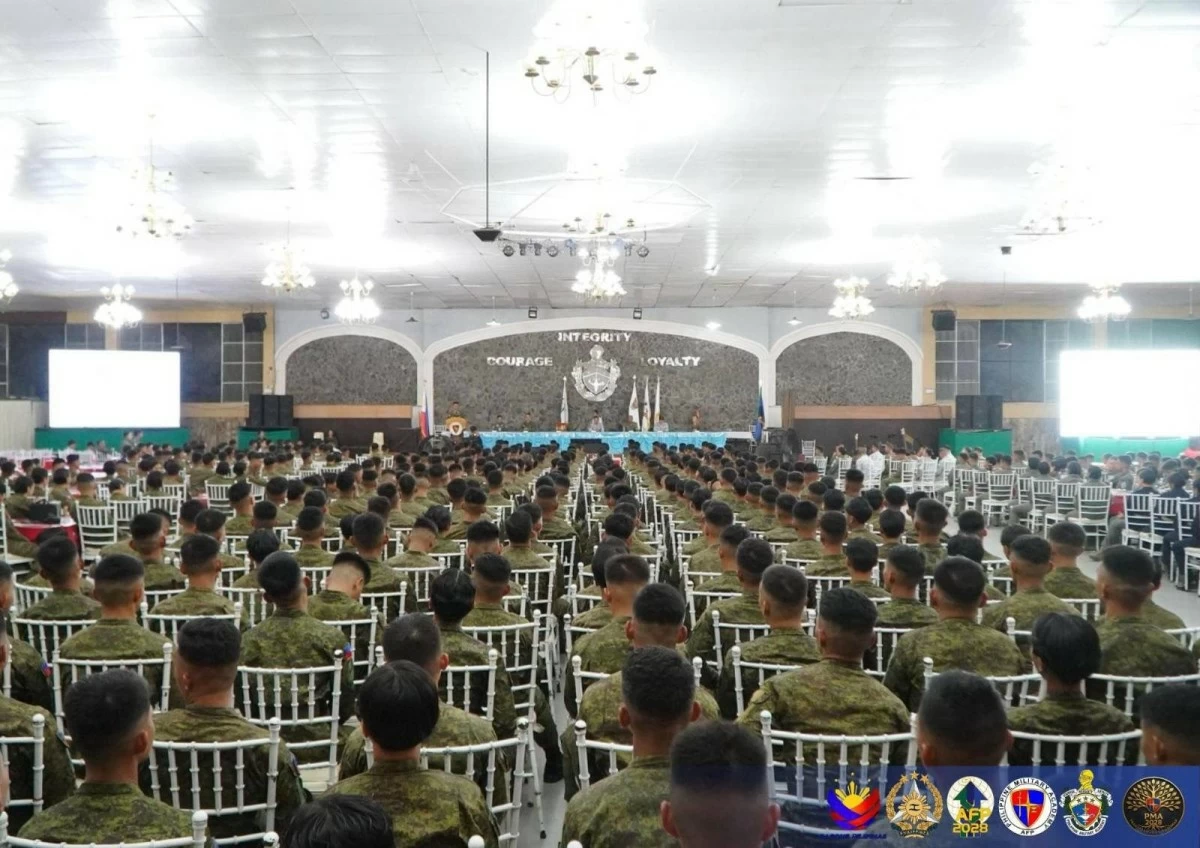
A total of 321 cadets of the Philippine Military Academy (PMA) “SIGLAB KASILAG” Class of 2028 learn what military service they will enter into once they become second class cadets in the next academic year during a Branch of Service Distribution ceremony at the PMA in Baguio City on April 24, 2026. (Photo: PMA)
The Philippine Military Academy (PMA) officially transitioned its sophomore cadets toward a specialized future as it awarded the Branch of Service (BOS) distribution to 321 members of the “SIGLAB KASILAG” Class of 2028.
The PMA said Sunday, April 26, that the tradition marked a transition point as the academy deepens its push toward multi-domain military training.
This means the cadets will be molded to handle modern conflicts that are no longer confined to a single space, such as a territorial defense scenario involving naval patrols, air surveillance, ground forces, and even cyber operations occurring simultaneously.
A total of 112 cadets were assigned to the Philippine Army, another 112 were designated as midshipmen for the Philippine Navy, while the remaining 97 will serve as aerocadets under the Philippine Air Force.
The distribution mirrored the pattern in the past three years as the Armed Forces of the Philippines (AFP) shifted its posture toward territorial defense and joint operations across land, sea, air, and emerging domains.
In his message, PMA Superintendent Vice Admiral Caesar Bernard N. Valencia said the branch assignment should not define how cadets think about future conflicts.
"The awarding marks a major milestone for the class as they prepare to become Second Class Cadets in the next academic year, when their training will shift to a more service-focused track," Valencia said.
“Regardless of the Branch of Service you will read upon opening your envelope, you must understand that the future fight will not be decided in a single domain. It will depend on soldiers who can think beyond traditional boundaries, who can adapt to rapid technological change, and who can make ethical decisions,” he added.
The PMA, founded in 1936 and long structured around service-specific tracks, has in recent years aligned its curriculum with the AFP’s modernization program, which focuses on “jointness” to support the military's goal of becoming a multi-theater and multi-domain force.
Valencia emphasized that the branch designations represent a role within a unified and modernizing force.
“Through more specialized, service-oriented training, while focusing on jointness, PMA remains committed to supporting the AFP’s transformation into a multi-theater and multi-domain force,” he said.