







PH firms hit infrastructure ceiling as AI adoption grows — study
By Yanro Ferrer
Published Apr 26, 2026 01:41 pm


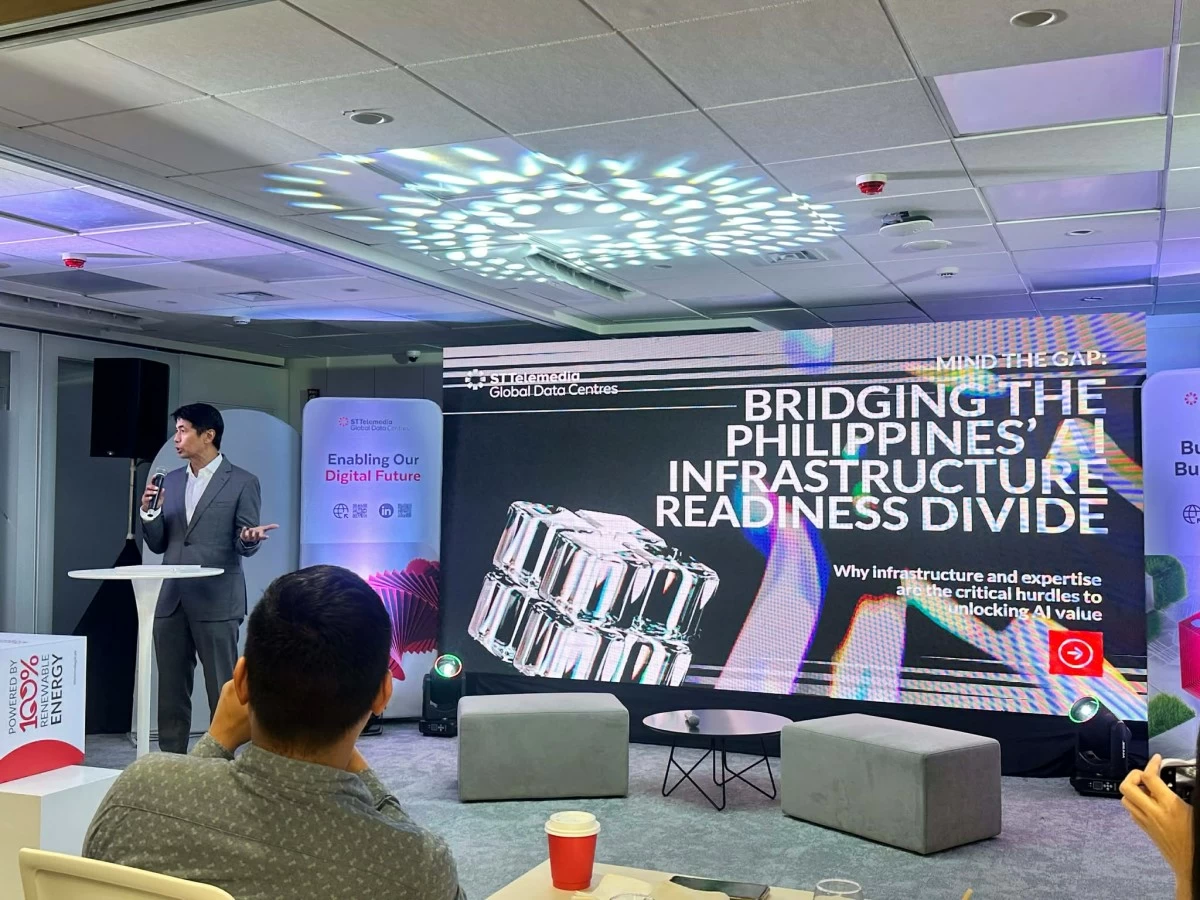
Philippine organizations are rapidly adopting artificial intelligence (AI), but most are struggling to scale their efforts due to infrastructure and capability gaps, according to a new study commissioned by ST Telemedia Global Data Centres (STT GDC).
The report, “Mind the Gap: Bridging the AI Infrastructure Readiness Divide,” found that 79% of Philippine organizations are already in the “Builder” stage, actively deploying early AI solutions. Yet only 2% have progressed to the “Integrator” stage, and none have reached “Leader” status, pointing to a sharp drop-off beyond initial adoption.
“AI adoption in the Philippines is no longer the challenge—scaling it is,” said Carlo Malana, president and CEO of STT GDC Philippines. “What we’re seeing is an infrastructure ceiling, where ambition is outpacing the systems needed to support it.”
Infrastructure bottlenecks stall progress
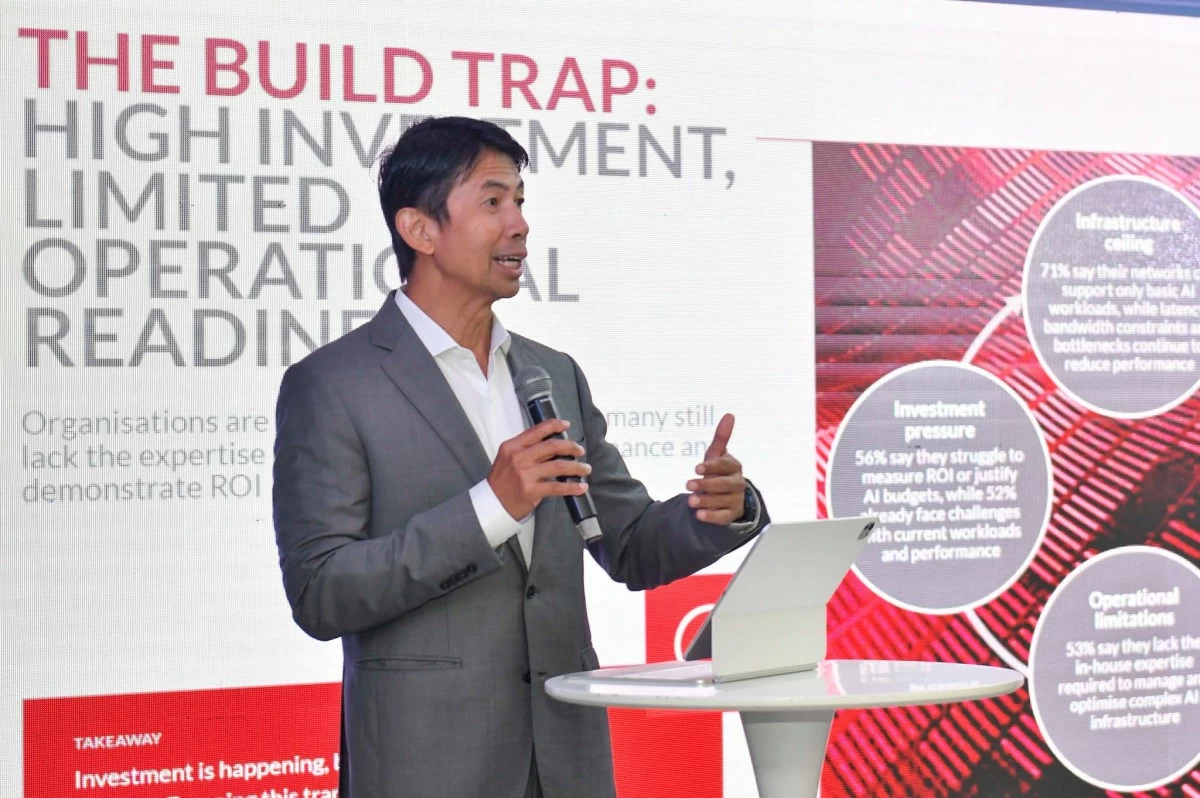
The study identifies infrastructure limitations as the primary constraint to scaling AI. Around 71% of respondents cited insufficient compute capacity, storage, or network bandwidth as the top barrier to advancing their AI initiatives.
Even where systems can support basic workloads, performance remains constrained. A similar share of organizations reported that latency, bandwidth limitations, and network bottlenecks are already affecting AI operations, limiting their ability to deploy more complex or mission-critical applications.
These findings reflect a broader regional pattern. Across Asia, 71% of organizations remain stuck in the “Building” phase, unable to translate early AI deployments into scalable, production-level systems.
The result is an execution gap: while organizations have the ambition and initial use cases, they lack the underlying infrastructure needed to operationalize AI at scale.
Talent and organizational readiness lag
Beyond infrastructure, the report highlights a significant talent and capability deficit.
More than three-quarters (76%) of Philippine organizations report critical AI talent gaps, while 53% say they lack the in-house expertise to manage complex AI infrastructure and operations.
“Readiness is not just about having the infrastructure in place, but also having the people and support needed to use it well,” Malana said, pointing to the need for operational expertise alongside technical investment.
Organizational culture also presents a barrier. The study found that 94% of respondents describe their organizations as skeptical, cautious, or ambivalent toward AI, suggesting that adoption challenges extend beyond technology into leadership alignment and workforce readiness.
A widening gap between expectations and investment
Despite these constraints, demand for AI is expected to grow rapidly. Nearly 46% of organizations anticipate AI workloads will increase by more than 50% over the next one to three years, yet only 3% say they are currently ready to scale high-demand workloads.
At the same time, 86% report allocating 5% or less of their total IT budgets to AI, raising concerns about whether current investment levels match future ambitions.
This mismatch between expectations and resources highlights a structural issue: organizations are planning for exponential AI growth while investing incrementally in the systems required to support it.
Infrastructure providers position themselves as enablers
STT GDC, a Singapore-headquartered data center provider, positions itself as part of the solution to these constraints by offering scalable infrastructure and connectivity.
“In a market like the Philippines, connectivity is both a technical and strategic requirement,” Malana said, noting that AI systems depend on high-speed, low-latency networks to function effectively at scale.
The company also pointed to sustainability as an emerging concern, as AI workloads become more energy-intensive. While only a small share of organizations currently prioritize sustainability in infrastructure decisions, Malana said efficiency would become increasingly critical for long-term viability.
Beyond infrastructure: emerging questions on AI safety
The findings also point to a broader, less discussed issue: the role of infrastructure in shaping AI risks.
While AI safety is often framed around models and algorithms, infrastructure determines how systems are deployed, scaled, and governed in real-world settings—from data storage and processing locations to system reliability and failure points.
However, industry responses continue to emphasize physical and operational safeguards, such as facility resilience and uptime, suggesting that wider system-level risks—particularly those linked to data governance, control, and large-scale deployment—remain an emerging area of focus.
A critical window for the Philippines
The Philippines’ strong adoption of AI positions it to benefit from the technology’s economic potential. But the report suggests that without addressing infrastructure, talent, and investment gaps, organizations risk remaining in a prolonged “builder” phase.
Across Asia, emerging markets are seen as having the opportunity to leapfrog legacy systems, provided they can align infrastructure development with regulatory frameworks, workforce readiness, and long-term strategy.
For Philippine organizations, the challenge is no longer whether to adopt AI, but whether they can build the systems required to sustain it at scale.