






Manila Bulletin
 Philippines
National
Data Lake, We Are IT joint venture connects 5,776 schools in PH's largest connectivity program
Philippines
National
Data Lake, We Are IT joint venture connects 5,776 schools in PH's largest connectivity program
Philippines
National
Data Lake, We Are IT joint venture connects 5,776 schools in PH's largest connectivity program
Data Lake, We Are IT joint venture connects 5,776 schools in PH's largest connectivity program
Published Apr 26, 2026 02:01 pm


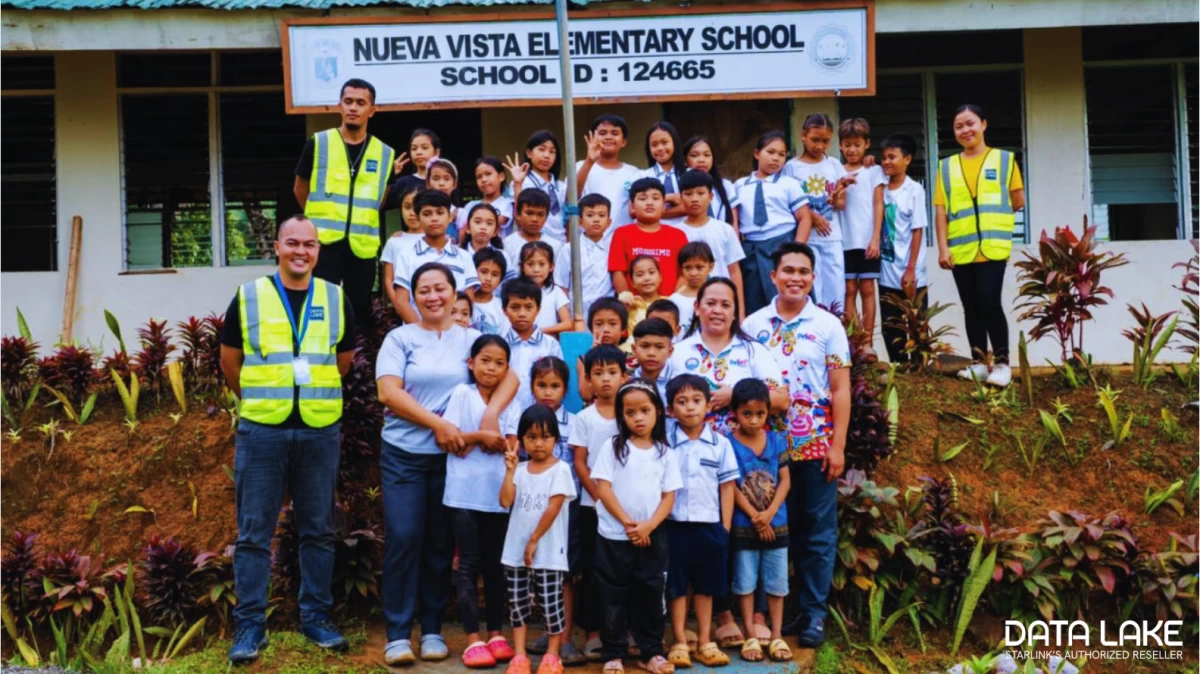
Teachers and students at New Vista Elementary School in Zamboanga del Norte during connectivity deployment.
The joint venture of Data Lake Inc. and We Are IT Philippines, Inc. will deliver satellite-based internet connectivity to 5,776 public schools nationwide under the Department of Information and Communications Technology (DICT)’s Provision of Internet Access via Low Earth Orbit Satellites (PIALEOS) project implemented in a single phase and representing one of the country’s largest school connectivity initiatives.
The joint venture draws on the combined strengths of its partners, including Data Lake Inc.’s position as the first and largest authorized Starlink partner in the Philippines, with extensive experience in deploying Low Earth Orbit (LEO) satellite connectivity for government and enterprise applications.
The project is being delivered through a joint venture model that integrates nationwide deployment capability with end-to-end connectivity management—from system design and installation to monitoring and support ensuring consistent, scalable, and accountable delivery across all sites
The successful deployment of this project followed a rigorous government procurement process, which adheres to national standards for transparency and accountability in the execution of public infrastructure initiatives.
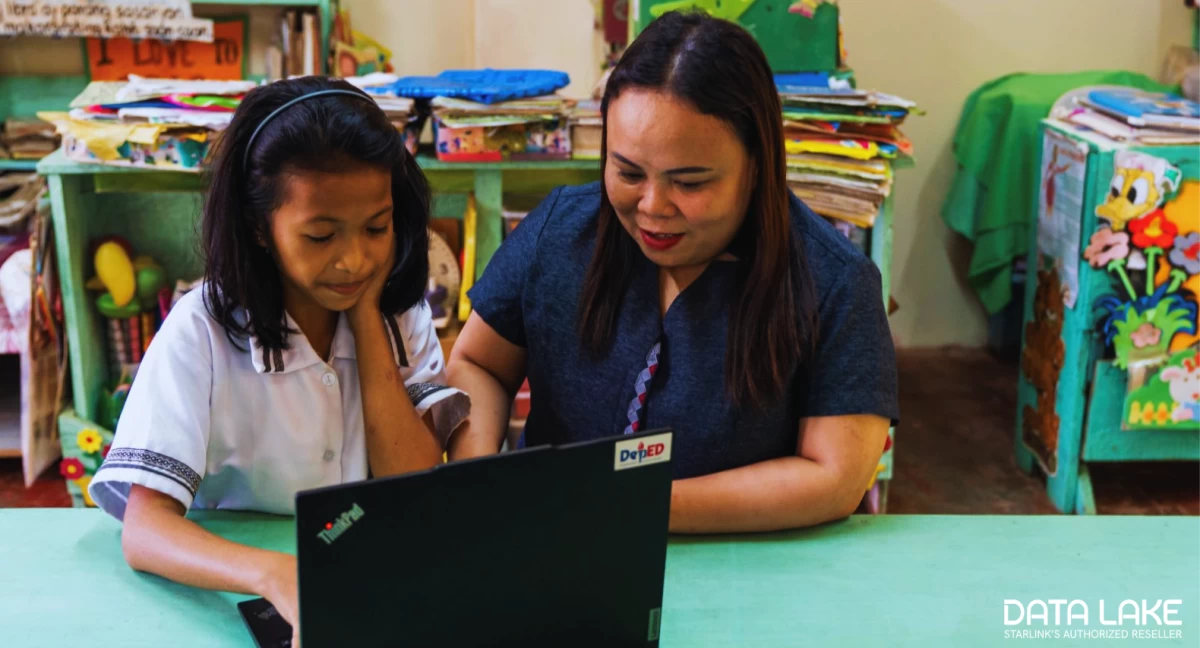
Students and teachers access satellite-enabled internet connectivity at New Rizal Elementary School, Zamboanga del Norte
Implementing the President’s directive to ensure full nationwide public school connectivity, the DICT is expanding the Free Wi-Fi for All Program under Republic Act No. 10929 to reach unserved Geographically Isolated and Disadvantaged Area (GIDA) schools. Secretary Henry Aguda stressed that universal internet access is a critical enabler of education and opportunity, a commitment supported by the Data Lake–We Are IT joint venture, which is deploying a standardized, enterprise-grade connectivity solution across GIDA communities to ensure consistency, reliability, and scalability nationwide.
Each deployment kit includes a complete, end-to-end connectivity and infrastructure package designed for reliable operation in remote environments. At its core is a Low Earth Orbit (LEO) satellite terminal, including Starlink systems, delivering high-speed, low-latency internet access. These systems are deployed within an enterprise-grade framework refined through large-scale satellite connectivity rollouts across the Philippines. This is supported by a cloud-managed router and a Wi-Fi 6 access point configuration to enable stable and extended wireless coverage across school facilities.
The system is complemented by secure equipment housing, structured cabling, mounting systems, and weatherproofing to ensure durability across varying site conditions. Free Wi-Fi signage and user instruction materials are also installed on-site to support accessibility, proper usage, and community awareness.
To address power instability in geographically isolated areas, each site is equipped with an Uninterruptible Power Supply (UPS) and appropriate power distribution components to provide surge protection and backup power. These systems are critical in mitigating voltage fluctuations, safeguarding equipment, and maintaining continuous internet connectivity for schools. All installations comply with Terms of Reference (TOR) requirements and safety standards to ensure operational reliability across all deployment sites.
The project formally commenced following the issuance of the Notice to Proceed by DICT, with a kickoff aligning representatives from DICT, the Department of Education (DepEd), and the joint venture partners to confirm operational responsibilities and transition into nationwide implementation.
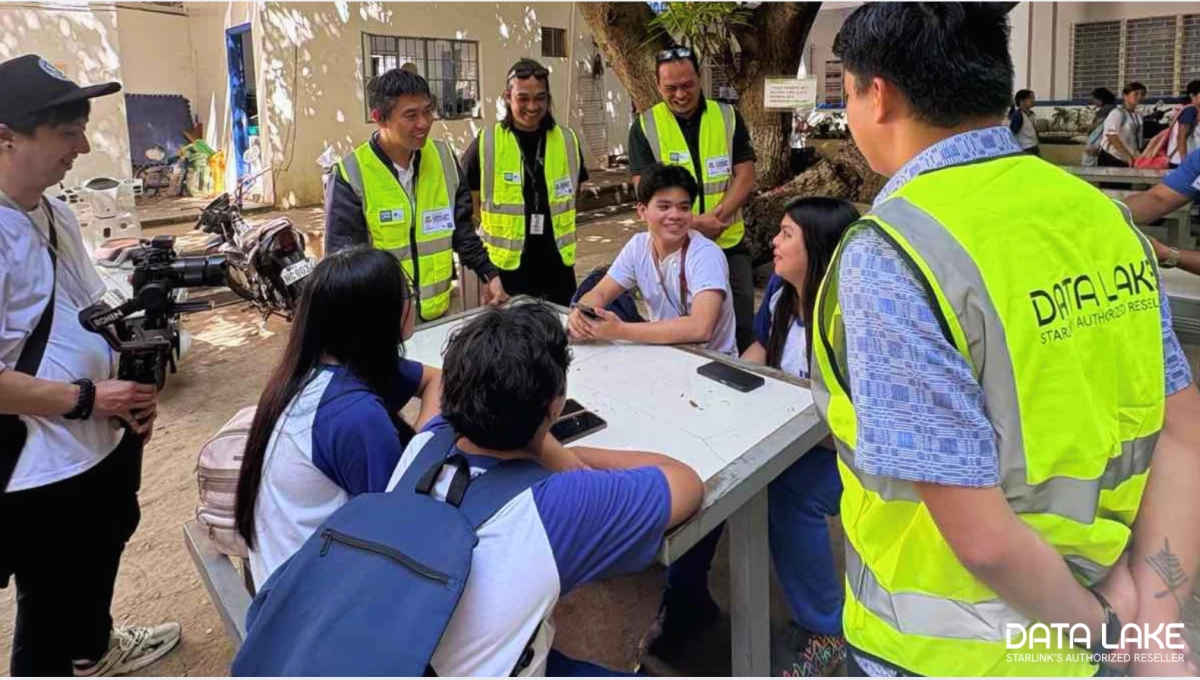
DICT Director Edgar Navarro engages with students of Janosa National High School, Binangonan, Rizal, on how free Wi-Fi is improving access to learning.
“So, we've been waiting on this moment so that we can actually start the implementation of this project. It's been a month or two that we're preparing this project. With the help of our executive team who are present here, the detailing team, and the DepEd, we were hoping the success of this project,” said Edgar Navarro.
“So, I don't think any project has gone through this length of connectivity in our country's history. This was an unprecedented collaboration between the two agencies. There were a lot of sleepless nights. The draft of the TOR, all the way to the contract, the procurement process, there was tight integration,” said Marcelino Veloso III.
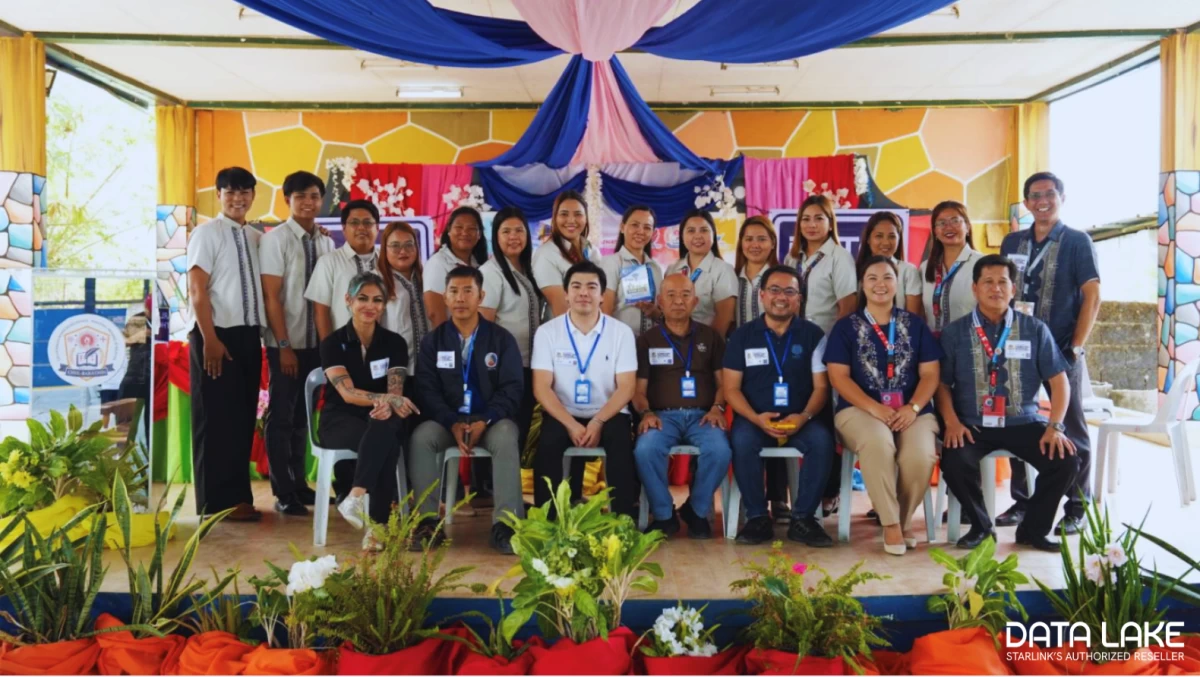
From left: Data Laka Inc MarComm Head Jan Llamado, DICT Director Edgar Navarro, DICT Asec. Christian Guingcangco, DICT Director Edward Pardre, DICT Director Dennis Morales, CMIS-Babatnin Principal Jessa Roque and Faculty members during the PIALEOS Site Visit in CMIS-Babatnin Malolos, Bulacan.
“For us, this is not just about winning a project. It's actually part of our mission and vision. It's really a partnership between public and private. The children are the future of our country,” said David Tanael.
As of April 2026, satellite connectivity installation and activations are fully completed for Lots 1, 2, and 3. This achievement validates full-scale implementation across Luzon, Visayas, and Mindanao, successfully connecting 3,786 public school sites. All strategic resources are now concentrated on the final deployment phase for Lot 4 (BARMM).
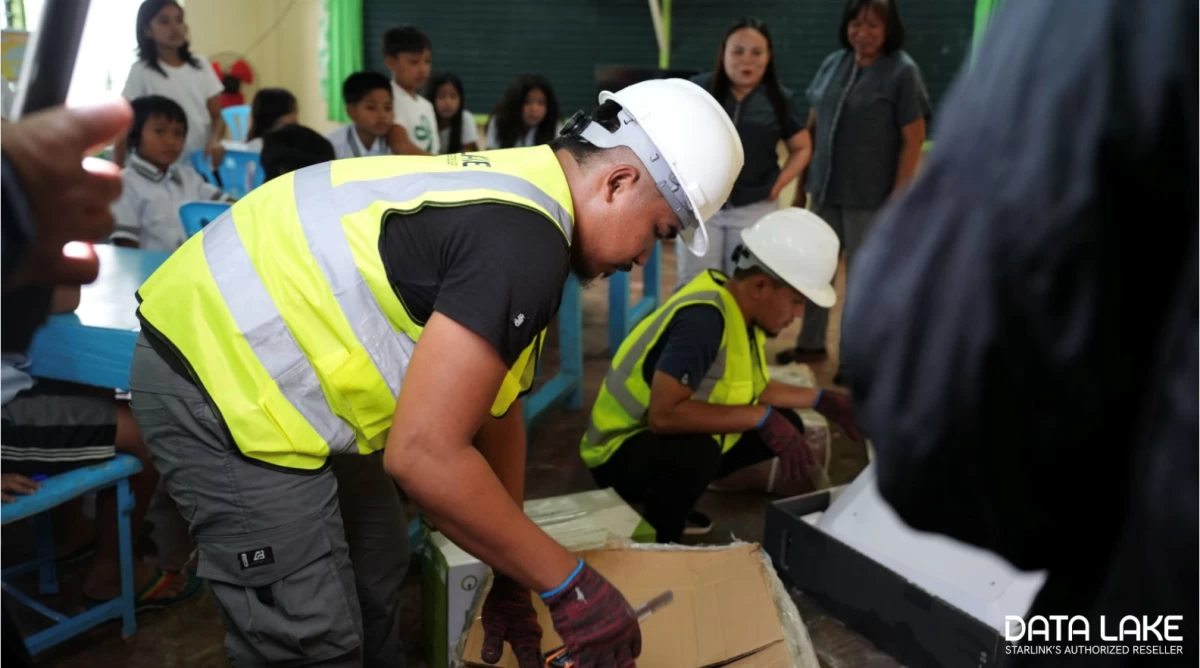
Students and teachers observe as installers set up the Starlink kit at New Rizal Elementary School, Zamboanga del Norte.
The rollout reflects the growing role of satellite-based connectivity in supporting education and public infrastructure, particularly in areas where traditional networks are not viable.
By expanding reliable internet access in remote communities, the PIALEOS project strengthens digital learning, improves access to educational resources, and supports more inclusive school connectivity across the country.